Unearthing the Wilderness: Why Zimbabwe’s Foot-Based Safaris Redefine the African Bush Experience


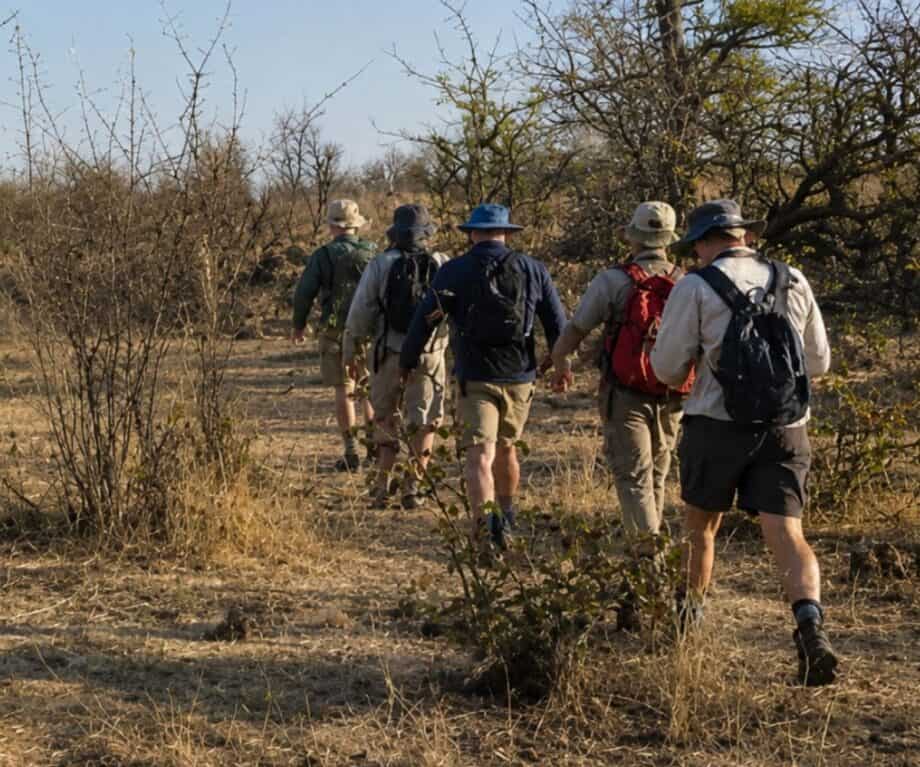
For generations, the traditional concept of a walking trail has followed a predictable, human-engineered blueprint. Hikers worldwide are accustomed to clearly marked routes, topographic maps clutched in hand, and paths meticulously designed to begin and end at the exact same trailhead, ideally featuring a scenic mountain summit or a panoramic viewpoint along the way. This structured approach to outdoor recreation relies on following a path cleared, mapped, and authorized by someone else. Yet, in Zimbabwe, the tourism and conservation sectors have long embraced a philosophy that deliberately rejects this standardized framework. Across its premier national parks and remote wilderness regions, walking is not merely an auxiliary activity bolted onto a conventional itinerary; rather, walking is the safari itself.
The Evolution of the African Walking Safari

To understand the unique positioning of Zimbabwe within the broader landscape of African adventure travel, one must examine the regional history of conservation tourism. While neighboring Zambia is universally recognized as the historical birthplace of the modern, guided walking safari—pioneered in the mid-20th century by legendary conservationists in the Luangwa Valley—Zimbabwe has quietly cultivated its own distinct identity. Over the past several decades, the country has earned a formidable, international reputation as one of the absolute finest places on the African continent to experience the untamed bush entirely on foot.
This reputation is not primarily built upon sheer volume of wildlife, although national parks like Hwange boast remarkable biodiversity and massive mammal populations. Instead, Zimbabwe’s premier status rests almost entirely upon the rigorous caliber of its guiding community. The Zimbabwe Professional Guides Association (ZPGA) oversees a licensing process that is widely regarded by wildlife authorities and safari operators as the most demanding, comprehensive, and rigorous training regime in all of southern Africa.
The Anatomy of a Zimbabwean Guide
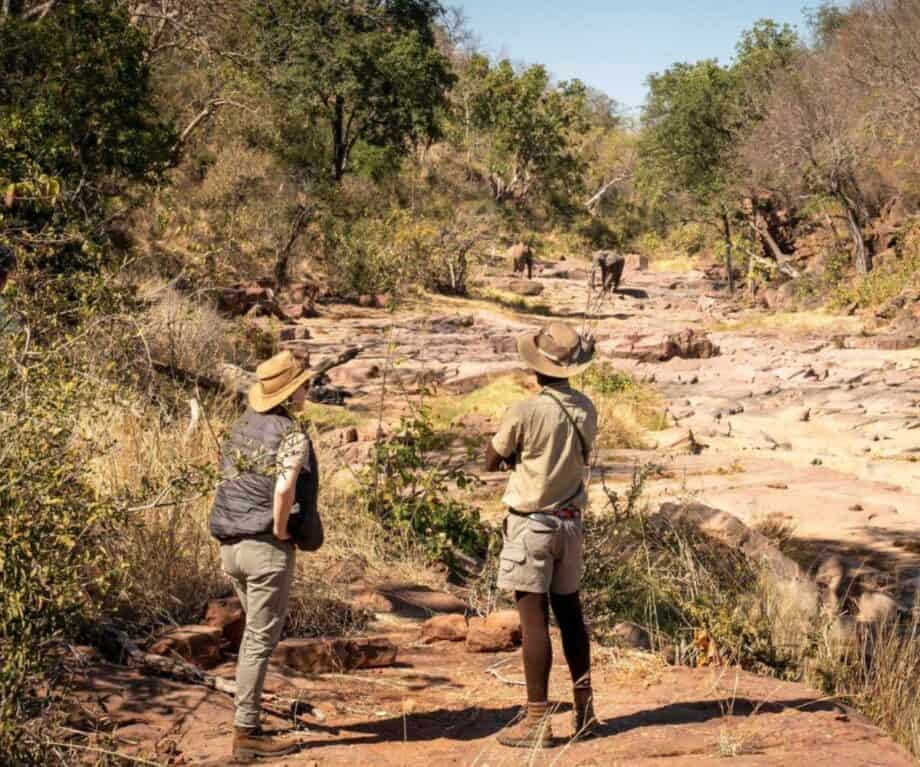
Earning a full Professional Guide license in Zimbabwe is an extraordinary undertaking that routinely requires years of intensive, hands-on apprenticeship. Trainee guides must independently master a staggering array of disciplines long before they are ever legally permitted to lead paying guests into territories populated by dangerous game such as elephants, lions, buffalo, and leopards.
The curriculum demands thousands of hours of dedicated study spanning theoretical and practical ecology, advanced bushcraft, complex animal behavior, precise tracking techniques, southern hemisphere astronomy, and comprehensive wilderness safety protocols. Furthermore, candidates must demonstrate an encyclopedic knowledge of botany, ornithology, and geology. A licensed Zimbabwean guide is not simply someone who points out animals; they are multidisciplinary naturalists. One guide might possess the preternatural ability to identify a specific bird species from a single, fleeting alarm call drifting through the canopy. Another might spot faint, fresh leopard tracks in hard-packed dirt before anyone else in the expedition has even glanced downward. A third might effortlessly lecture on the medicinal properties of scrub vegetation, the mechanics of termite mound construction, and the location of hidden subterranean water sources across kilometers of arid terrain.
Reading the Earth: Mechanics of the Trail
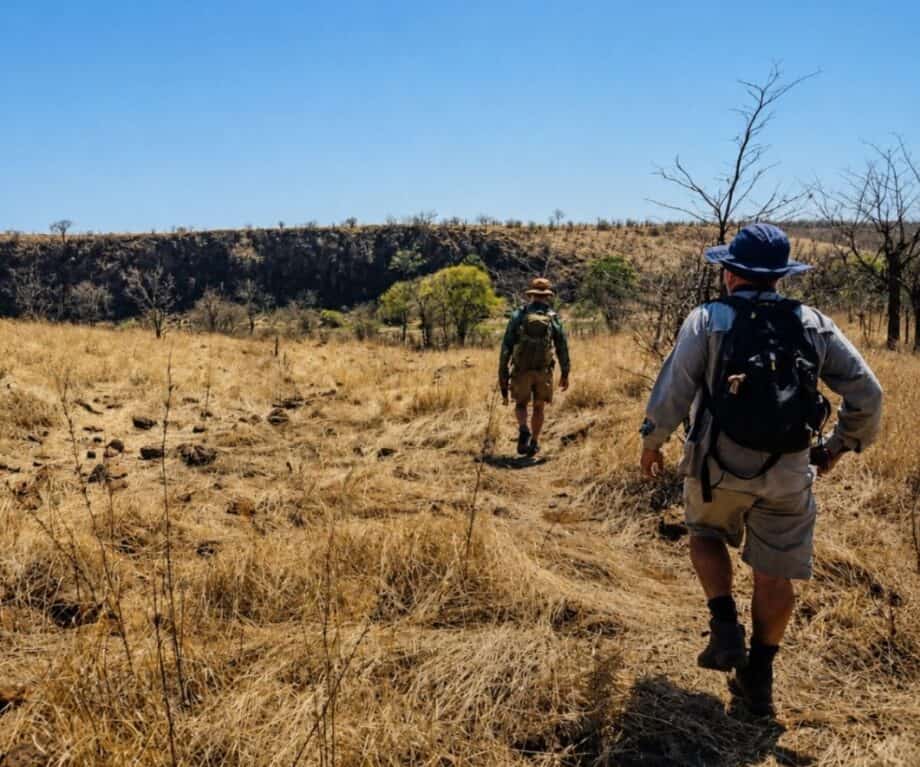
On a conventional motorized game drive, the primary objective is ocular acquisition—scanning the horizon or the tree line to locate and observe wildlife. In contrast, a walking safari in Zimbabwe transforms the experience from passive observation to active ecological literacy.
When a group sets out on foot, human senses must recalibrate to match the environment. The prevailing direction of the wind ceases to be a casual weather detail and becomes the single most critical factor determining safety and sighting potential. Distant alarm calls shouted by baboons or francolins transition from background noise into a complex, decipherable audio conversation regarding the movements of unseen predators. Fresh spoor pressed into the damp sand of a riverbank evokes the same visceral thrill as encountering the animal that left it. A snapped branch, a freshly scraped patch of earth, or an overturned stone begins to construct a vivid narrative of nocturnal events that the average traveler would otherwise stride straight past without a second thought.
Gradually, the bush ceases to be a scenic backdrop that tourists merely look at and becomes an intricate ecosystem that they begin to truly read and understand. The focus shifts away from rushing to the next headline-grabbing sighting and centers instead on decoding the rich history of everything that transpired before the human footprint arrived.
Northern Hwange National Park: A Geological Masterpiece
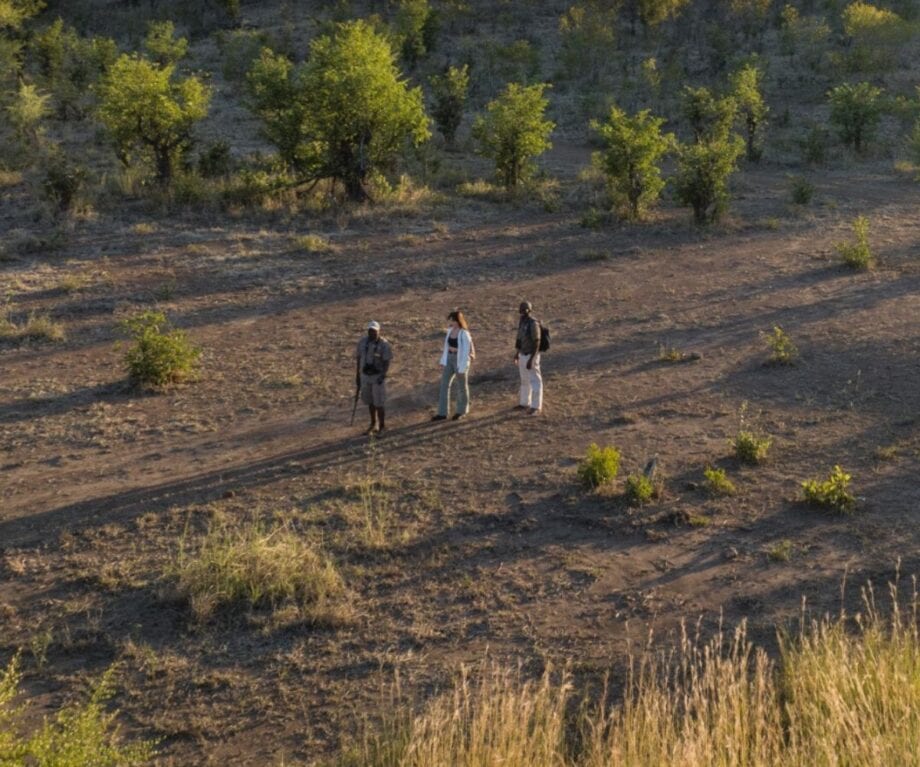
Nowhere is this immersive philosophy more vividly demonstrated than in the northern sectors of Hwange National Park, Zimbabwe’s largest and most famous wildlife reserve. While the southern and central regions of Hwange are predominantly characterized by vast, flat expanses of Kalahari sand and fossil river systems, the northern landscape is structurally and aesthetically distinct.
Northern Hwange is shaped by rugged sandstone hills, intricate natural springs, dramatic hidden gorges, and the winding course of the Deka River. This topography creates a complex mosaic of micro-habitats that feels almost custom-designed for foot-based exploration. Rather than bouncing between disparate locations in a four-wheel-drive vehicle, guests on a walking safari in northern Hwange gradually traverse a changing landscape. They follow ancient drainage lines where open woodlands seamlessly transition into rocky escarpments, permanent water seeps, and enduring game highways.
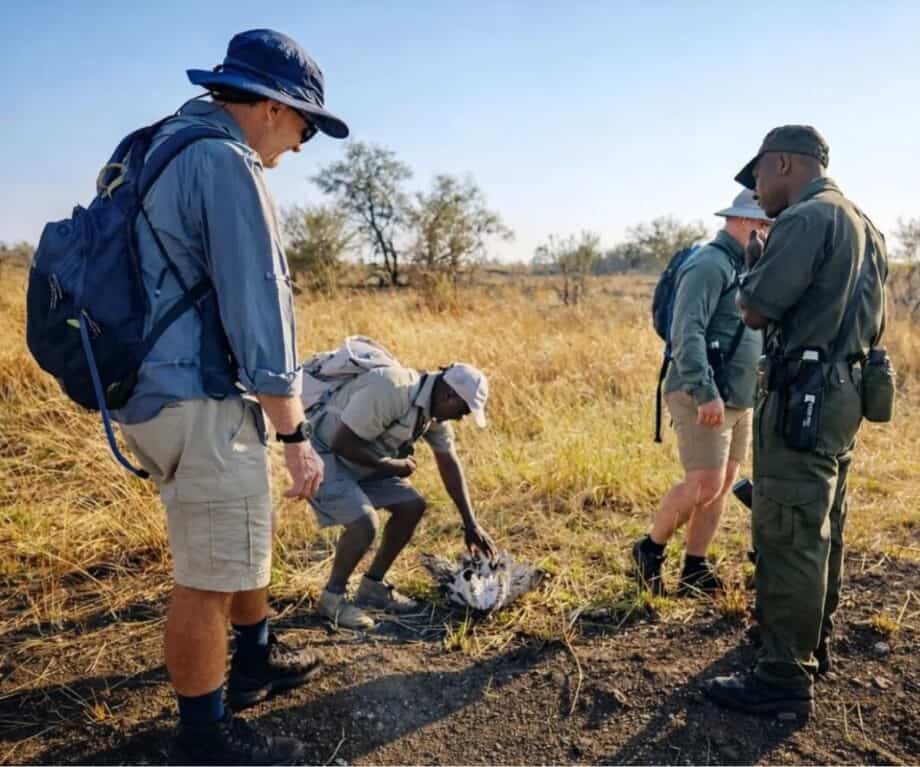
Crucially, northern Hwange offers an encounter with deep human history that extends far beyond contemporary wildlife viewing. Walking through this landscape frequently brings travelers into contact with ancient Nambya stone settlements, prehistoric San hunter-gatherer rock art sites, and vast petrified forests dating back millions of years. These archaeological touchstones reveal an undeniable historical truth: human beings have been reading, tracking, and coexisting with this specific wilderness for thousands of years. Consequently, a walking safari here naturally merges ecology, paleontology, and anthropology into a single, cohesive educational narrative.
The Strategic Advantage of Private Concessions
A significant portion of the premier walking safaris in northern Hwange takes place within exclusive private concessions rather than high-traffic public tourist zones. This operational distinction is critical to the quality and safety of the experience.
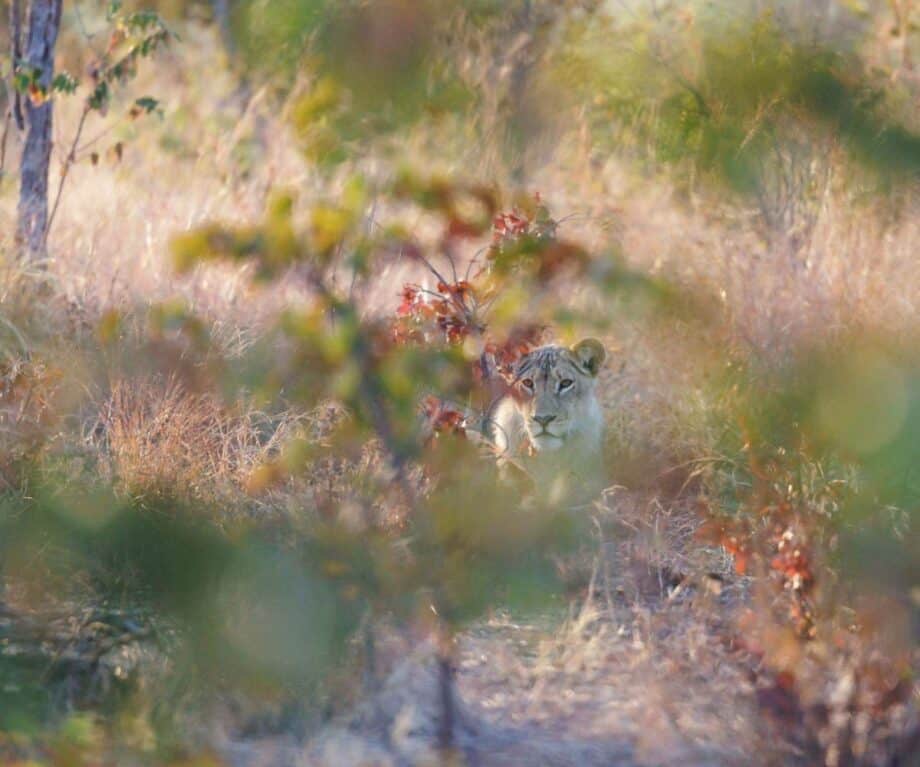
Operating within private concessions grants professional guides the absolute operational freedom to dynamically adapt each day’s itinerary based on real-time environmental conditions. If fresh lion spoor crosses the path at dawn, the group can pivot seamlessly to track the pride. If a breeding herd of elephants pauses to drink at a secluded spring, guides can orchestrate a patient, stationary observation stop lasting hours rather than minutes.
Furthermore, the absence of commercial tourism congestion guarantees a profoundly intimate wilderness encounter. There are no convoys of safari vehicles idling loudly around a single sighting, no rigid park gate closing times, and no artificial reminders of modern civilization intruding upon the sensory experience of the bush.
Broader Implications for Conservation and Sustainable Tourism
The burgeoning popularity of foot-based safaris in Zimbabwe carries broader economic and conservation implications for the region. As international travelers increasingly seek transformative, low-impact, and highly authentic travel experiences, conservation models that prioritize wilderness preservation over mass-market tourism are gaining vital momentum.
Private concessions and specialized walking operators provide crucial financial support for anti-poaching units, community employment, and habitat restoration. By demonstrating that high-value, low-density tourism can generate substantial revenue while leaving virtually no permanent physical footprint, these initiatives incentivize local communities and government authorities to safeguard natural corridors against industrial encroachment.
Redefining the Journey

Ultimately, the enduring appeal of Zimbabwe’s walking safari trails lies in their deliberate subversion of modern travel expectations. They are not engineered to efficiently transport tourists from an origin point to a destination. Instead, they are meticulously crafted to fundamentally alter how human beings perceive and interact with the natural world.
By the conclusion of a multi-day expedition on foot, most travelers find themselves fundamentally changed. They spend less time hunting for iconic mammal species and significantly more time deciphering the subtle ecological clues left in the dust. The tracks in the sand become as compelling as the beasts that carved them; the intricate alarm calls become as unforgettable as the direct sightings.
In this light, the complete absence of manicured, human-made walking trails makes absolute sense. After all, the finest walking paths in Zimbabwe were never constructed by engineers or planners—yet they have been faithfully walked, respected, and sustained for centuries by the wild inhabitants of the land.
Related posts: