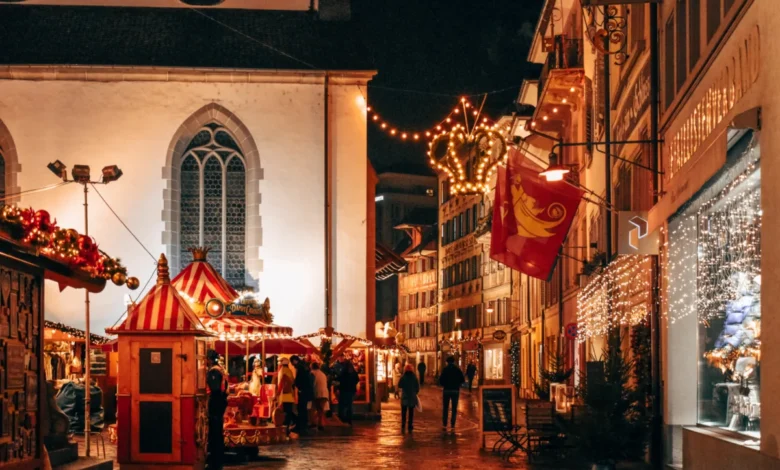
Switzerland transforms into a quintessential winter landscape during the Advent season, characterized by its snow-dusted Alpine peaks, historic medieval architecture, and a long-standing tradition of festive open-air markets. For the 2026 holiday season, travelers and locals alike are expected to flock to the country’s various cantons to experience a blend of Germanic, French, and Italian cultural influences. These markets are not merely retail events; they are vital pillars of the Swiss tourism economy and repositories of regional heritage, offering a distinct synthesis of artisanal craftsmanship, culinary tradition, and communal celebration.

Economic and Cultural Significance
The Swiss Christmas market industry serves as a significant driver for regional commerce during the final quarter of the year. According to local tourism bureaus, the surge in foot traffic to urban centers during this period provides a substantial boost to the hospitality and retail sectors. Small-scale artisans, who often produce goods exclusively for these markets, rely on the four-week Advent window to sustain their businesses through the winter. The cultural significance is equally profound; the markets maintain historic crafts—such as wood carving, candle dipping, and the production of traditional Lebkuchen (gingerbread)—that might otherwise face commercial decline in a globalized economy.

Key Destinations and Regional Characteristics
Basel: The Tri-National Hub
Basel remains arguably the most prominent destination for festive tourism, partly due to its unique geographical position at the confluence of Switzerland, France, and Germany. The Basel Christmas Market, split between the Barfüsserplatz and Münsterplatz, is frequently cited for its historical authenticity. The 2026 iteration, scheduled from November 26 to December 23, will feature its iconic illuminated Christmas tree and the traditional Christmas Pyramid. Local authorities highlight that the market’s longevity is supported by strict adherence to aesthetic standards, ensuring that only high-quality, traditional goods are sold, which preserves the city’s reputation as one of Europe’s premier festive destinations.

Bern: Traditionalism in the Capital
In the nation’s capital, the Waisenhausplatz market emphasizes traditional Swiss values. Unlike the high-glitz approach seen in larger global capitals, Bern focuses on a curated, cozy experience. The market is framed by natural fir-branch fencing, creating an olfactory atmosphere that defines the season. Running from November 27 through December 24, 2026, the market also hosts the "Altjahresmarkt" (Old Year’s Market) from December 28 to 31, providing a rare opportunity for post-Christmas trade that extends the tourism season.

Zurich: Urban Innovation
Zurich, Switzerland’s financial powerhouse, contrasts the historic with the modern. The Polarzauber (formerly Christkindlimarkt) located within the Hauptbahnhof (main train station) stands as one of the largest indoor markets in Europe. This location provides a logistical advantage, as it is seamlessly integrated into the country’s extensive rail network. The 2026 dates, spanning November 19 to December 24, cater to high-volume commuter traffic, proving that transit-oriented development can successfully support seasonal cultural events.

Montreux: The Riviera Experience
Montreux Noel, situated along the shores of Lake Geneva, represents the French-speaking influence on Swiss traditions. The market’s backdrop of the Alps and the lake creates a unique micro-climate that often allows for a more comfortable outdoor experience than the frigid high-altitude regions. The 2026 market will run from November 20 to December 24. A notable feature of Montreux is the integration of "The Magic of Santa," which has become a major draw for families, further diversifying the market’s demographic appeal.

Chronological Overview of 2026 Events
The following schedule outlines the primary dates for the 2026 season, reflecting the typical four-week duration of the Advent period:

- Zurich (Polarzauber): November 19 – December 24
- Montreux (Noel): November 20 – December 24
- Basel: November 26 – December 23
- Bern (Waisenhausplatz): November 27 – December 24
- Chur: November 27 – December 23
- Einsiedeln: November 27 – December 6
- Stein am Rhein (Schaffhausen): December 2 – January 3, 2027
- Lucerne: December 3 – December 21
- Rapperswil (St. Gallen): December 3 – December 20
Operational Logistics and Consumer Advice
For visitors planning to navigate these markets, experts advise factoring in the regional variability of the Swiss climate. While urban markets like Zurich are protected from the elements, others, such as the Einsiedeln market, are exposed to the mountain environment and require appropriate winter gear.

Furthermore, economic trends indicate that while digital payment systems are becoming more prevalent in Switzerland, small-scale vendors at these markets still frequently prefer or mandate cash transactions. Travelers are encouraged to carry Swiss Francs (CHF) to ensure seamless transactions at smaller stalls.

Strategic Impact and Future Outlook
The "market season" acts as a barometer for the Swiss tourism industry. By leveraging existing infrastructure—such as the Swiss Federal Railways (SBB)—cities are able to distribute the influx of visitors efficiently, preventing the overcrowding that often plagues other major European cities during the holidays.

From an analytical standpoint, the longevity of these markets is tied to their ability to resist homogenization. While global brands are increasingly encroaching on European markets, the Swiss model remains heavily protected by local regulations that mandate the sale of regional products. This protectionism ensures that the "Christmas experience" remains distinct, authentic, and economically viable for local producers.

As the 2026 season approaches, municipal organizers have emphasized a renewed focus on sustainability. This includes the implementation of reusable glühwein mugs and the prioritization of locally sourced food products. Such measures are part of a broader strategy to ensure that the environmental impact of the high-density tourism period is mitigated, allowing these centuries-old traditions to continue for future generations.

The success of these events in 2026 will likely serve as a blueprint for European holiday tourism, balancing the need for economic stimulation with the preservation of cultural integrity and the logistical challenges of winter travel. Whether in the historic, cobblestone streets of Chur or the bustling, metropolitan station of Zurich, the Swiss Christmas market remains a vital, enduring facet of European cultural life.