Returning to a destination after a long hiatus often presents a complex juxtaposition between cherished memories and the reality of a modern urban landscape. Seville, the capital of Andalusia, has undergone significant transformation over the past decade, shifting from a traditional regional hub to a global tourist destination defined by increased infrastructure, gentrification, and a rapidly evolving service economy. For many travelers, this evolution mirrors a deeper personal development—a transition from the tentative, phrasebook-reliant tourist to a more confident, linguistically capable visitor.

The Evolution of the Sevillian Landscape
Seville’s urban fabric has seen marked changes in recent years. Data from the local tourism board indicates a consistent rise in hotel occupancy and the development of high-end, boutique hospitality venues, often replacing the smaller, family-run guesthouses that characterized the city center twenty years ago. Public spaces, such as the Plaza Nueva, have undergone extensive renovation, favoring a more polished, tourist-centric aesthetic. While these developments have modernized the city, they have also altered the character of historic neighborhoods, sometimes creating a friction between the preserved "authentic" Seville and the contemporary, globalized version of the city.
However, the core sensory experiences of the city remain intact. The scent of orange blossoms, the tradition of sobremesa—the post-meal period of extended conversation—and the ritual of the tapas crawl continue to anchor the Sevillian experience. These cultural pillars offer a consistent baseline against which returning visitors measure their own personal growth.

A Chronology of Linguistic Development
The journey to linguistic competence in Spanish is rarely linear. For many, the initial experience of travel in Spain is marked by the "overconfident beginner" phase. Years ago, travelers frequently relied on limited phrasebooks, expecting that a collection of memorized sentences would suffice for basic navigation and social interaction.
The psychological impact of failed communication—the "maternal pity" often observed in service workers when a foreigner attempts and fails to communicate in broken Spanish—is a well-documented barrier. This often leads to "linguistic retreat," where travelers revert to English to avoid the discomfort of perceived inadequacy.

The shift toward actual fluency typically follows a distinct trajectory:
- The Initial Barrier: Dependence on rigid scripts and phrases, leading to paralysis when a conversation deviates from the expected path.
- The Pedagogical Pivot: Transitioning to one-on-one instruction, such as through digital platforms like Preply or traditional language schools. This phase focuses on spontaneity, forcing the learner to listen and respond in real-time without the safety net of pre-rehearsed dialogue.
- The Field Test: The application of these skills in "the wild"—real-world environments such as the bustling tapas bars of the Santa Cruz district or the local markets of the Plaza del Museo.
Data and Implications of Language Acquisition
Studies in second-language acquisition suggest that "communicative competence" is achieved not through the rote memorization of grammar rules, but through the successful navigation of high-stakes social interactions. When a traveler moves from a controlled classroom setting to a chaotic environment like a crowded bar, the brain is forced to prioritize meaning over perfection.

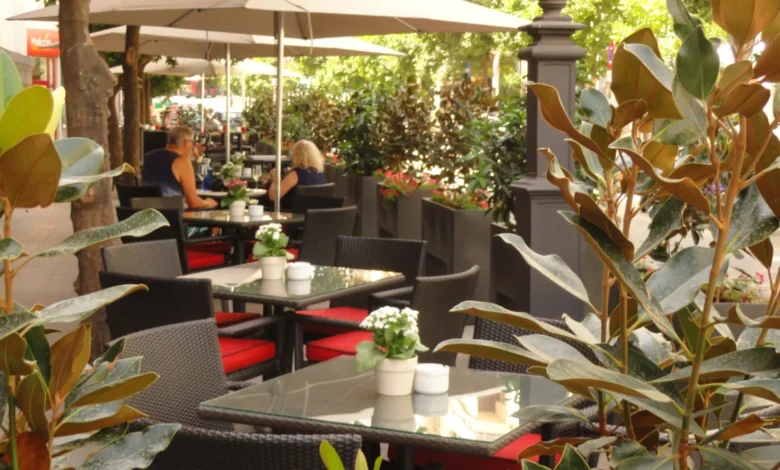
In the case of Seville, the transition is supported by the city’s social structure. The tapas culture, which requires quick, precise interactions, provides an ideal environment for low-risk, high-frequency practice. When a waiter asks a follow-up question, it acts as a test of the learner’s ability to process auditory information in a native context. The successful completion of these exchanges—ordering, clarifying, and confirming—serves as a critical psychological milestone, reinforcing the learner’s belief in their own capability.
Professional Perspectives on Cultural Immersion
Linguists and travel experts note that the "fear of speaking" is the single greatest obstacle for adult learners. According to language pedagogy experts, the "affective filter"—a hypothesis suggesting that stress and anxiety block the brain’s ability to acquire and produce language—is significantly lowered when the learner stops focusing on "performing" the language and starts focusing on the objective of the conversation.

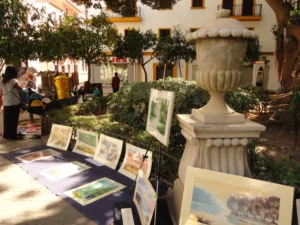
This was evidenced during recent observations at the Plaza del Museo art market. As artists and visitors engaged in discussions about technique and history, the language became a secondary tool. When the learner reaches the point of "forgetting they are speaking a foreign language," they have moved into a state of functional fluency. This does not imply perfect grammar or a native-level vocabulary, but rather the ability to sustain an exchange without the psychological need to translate mentally.
The Broader Impact: Why Local Language Matters
The implications of learning even a rudimentary level of the local language are profound. Beyond the logistical benefits of ordering food or finding directions, it fundamentally alters the traveler’s perception of the destination.

- Cultural Integration: Using local language demonstrates respect for regional culture, which often leads to more authentic and open interactions with local residents.
- Economic Engagement: Language-capable travelers are more likely to support small, local enterprises rather than relying solely on large, internationalized chains.
- Cognitive Benefits: The process of navigating a foreign city in its native tongue forces cognitive flexibility, improving the overall quality of the travel experience and personal development.
Analysis of the Modern Traveler’s Journey
The trajectory described—from the fear of failure in a foreign, unfamiliar environment to the confidence gained through structured learning and practical application—is a microcosm of the modern travel experience. As globalization continues to homogenize urban centers, the ability to communicate in a local language acts as a safeguard for cultural heritage.
Furthermore, the proliferation of online tutoring platforms has democratized this process. Where once language learning was restricted to expensive in-person courses or university programs, travelers can now access native speakers in real-time, regardless of their location. This shift has made it possible for "the traveler of average means" to achieve a level of communicative competence that was previously reserved for those with the time and resources for long-term immersion.

Looking Ahead: The Future of Cultural Travel
As the tourism industry in Spain continues to grapple with the effects of over-tourism, the emphasis is shifting toward "slow travel." This movement encourages deeper engagement with local communities rather than superficial sightseeing. Language acquisition is a vital component of this shift.
For the returning visitor to Seville, the city is no longer just a backdrop for a vacation; it becomes a classroom. The streets, the art markets, and the bars serve as the final examination. While the individual may remain far from "fluent" in the technical sense, the achievement lies in the removal of the barrier. The transition from fear to engagement represents a permanent change in how the traveler interacts with the world.

In conclusion, the journey to speaking Spanish in Seville is not merely an exercise in vocabulary and verb conjugation. It is a process of reclaiming the space between the tourist and the local. By moving beyond the comfort of the English-speaking bubble, travelers can access the true, unvarnished character of the city, one conversation at a time. The ultimate metric of success in this endeavor is not the absence of mistakes, but the presence of connection. As the traveler continues to return, the city remains a site of perpetual learning, proving that the most valuable souvenir from any trip is the ability to connect more deeply with the world around us.