Paris has long served as the global benchmark for high-end tourism, a city where the concept of luxury is woven into the very fabric of its urban planning, culinary traditions, and hospitality standards. For first-time visitors, the transition from viewing Paris as a series of monuments to experiencing it as a curated environment often involves a shift in perspective regarding "splurging." Industry data suggests that the luxury travel sector in France has seen a significant rebound in the post-pandemic era, with the high-end hospitality market in Paris alone projected to grow steadily as travelers prioritize "frictionless" experiences. Luxury in the French capital is increasingly defined not by ostentation, but by the removal of logistical stress, the granting of exclusive access, and the preservation of time. By investing in specific high-end services, visitors can bypass the common frustrations of over-tourism and engage with the city’s cultural heritage in a more profound, personal manner.

The Evolution of the Parisian Luxury Sector
The infrastructure of Parisian luxury is rooted in a centuries-old tradition of craftsmanship and service. From the establishment of the first "Grand Hotels" in the 19th century to the modern "Palace" distinction—a government-sanctioned tier above five stars—Paris has refined the art of hosting. In 2010, the French tourism development agency, Atout France, created the "Palace" label to highlight hotels that possess exceptional characteristics, such as heritage value, geographical location, and bespoke service. As of 2024, there are only 31 hotels in France with this distinction, many of which are concentrated in the heart of Paris. These establishments serve as the cornerstone of the luxury experience, offering an environment where the city’s elegance is reflected in every detail, from the scent of the lobby to the precision of the concierge services.
1. Seamless Arrivals via Private Chauffeur Transfers
The luxury experience begins the moment a traveler touches down at Charles de Gaulle (CDG) or Orly Airport. Navigating the RER train system or waiting in long taxi queues can introduce immediate friction into a trip. Consequently, many high-end travelers opt for private airport transfers. This service provides a professional meet-and-greet, real-time flight monitoring, and direct transportation to the hotel in a climate-controlled, high-end vehicle. Beyond the physical comfort, the primary value of a private transfer is the mental transition it allows; it transforms a logistical hurdle into a scenic introduction to the city, allowing visitors to observe the transition from the suburbs to the Haussmann-lined boulevards of the center without the stress of navigation.

2. Residing in a Certified Palace Hotel
Staying in a Palace-grade hotel, such as the Ritz Paris, Le Meurice, or the Hôtel de Crillon, is often described by hospitality experts as "inhabiting a story." These hotels are frequently housed in historic monuments and offer a level of service where staff-to-guest ratios are significantly higher than in standard luxury hotels. The "Palace" experience is defined by the "Clefs d’Or" (Golden Keys) concierges—an elite professional association of hotel concierges who specialize in fulfilling complex guest requests. Whether it is securing a last-minute table at a booked-out bistro or arranging a private viewing of a boutique, the concierge service acts as a key that unlocks the city’s more guarded treasures.
3. Private Access and After-Hours Museum Tours
The Louvre and the Musée d’Orsay are among the most visited cultural institutions in the world, often attracting millions of visitors annually. For a first-time visitor, the sheer volume of crowds can detract from the artistic experience. A burgeoning trend in luxury travel is the booking of private, expert-led tours or even after-hours access. A private guide can navigate the 72,735 square meters of the Louvre efficiently, ensuring that visitors see the Mona Lisa or the Venus de Milo without the typical "elbows-in-ribs" environment. This level of access transforms a museum visit from a test of endurance into a deep dive into art history, allowing for a quiet contemplation of brushwork and historical context that is impossible during peak hours.
4. Gastronomic Excellence at Michelin-Starred Establishments
French cuisine was added to UNESCO’s Representative List of the Intangible Cultural Heritage of Humanity in 2010, and Paris remains its epicenter. Dining at a Michelin-starred restaurant is a multi-sensory experience that extends beyond the plate. The Michelin Guide, which originated in France in 1900, sets a rigorous standard for quality, technique, and consistency. A meal at a two- or three-starred establishment involves a choreographed service where servers act as storytellers, explaining the provenance of ingredients and the inspiration behind each dish. For the visitor, this experience is about the "evening expanding" around the meal, encouraging a slower pace of life that is central to French "art de vivre."
5. Private Seine River Cruises
While the large "Bateaux Mouches" offer a standard view of the city’s riverfront monuments, a private boat hire on the Seine provides a significantly different perspective. Private vessels allow for a customized itinerary and a more intimate setting, often accompanied by champagne and gourmet appetizers. From the water, the architectural geometry of Paris—the curves of the Pont Neuf, the gothic spires of Notre Dame, and the iron lattice of the Eiffel Tower—becomes more apparent. This perspective is particularly valuable at night when the city’s "City of Light" moniker is realized through the synchronized illumination of its bridges and monuments.

6. The "Golden Triangle" and Place Vendôme Exploration
The "Triangle d’Or" (Golden Triangle) in the 8th Arrondissement and the Place Vendôme are the world’s headquarters for haute couture and high jewelry. Even for those not intending to purchase, a walk through these areas offers a masterclass in French aesthetics and craftsmanship. Place Vendôme, commissioned by Louis XIV, is an architectural marvel of symmetry. The windows of houses like Cartier, Van Cleef & Arpels, and Boucheron are essentially street-level museums of light and design. Engaging with these spaces provides insight into why Paris has maintained its status as the fashion capital of the world for centuries: it is an environment built on refinement and the meticulous attention to detail.
7. Rooftop Perspectives and High-Altitude Lounges
Parisian urban planning, largely dictated by Georges-Eugène Haussmann in the mid-19th century, created a uniform skyline of zinc-roofed buildings. To truly appreciate the city’s "geometry," one must gain elevation. Splurging on a table at a high-end rooftop bar or restaurant, such as those found at the top of the Peninsula Paris or the Cheval Blanc, offers a panoramic view that includes the Eiffel Tower’s hourly sparkle. Analysts note that these "view-centric" experiences are among the most sought-after by first-time visitors, as they provide a visual anchor for the city’s layout and a sense of scale that is lost at street level.

8. Personalized Fragrance and Beauty Consultations
Paris is the historic home of the perfume industry. A luxury experience that many visitors overlook is the private fragrance consultation. Historic perfume houses like Guerlain or boutique ateliers in the Marais offer sessions where experts help visitors identify scent profiles that match their personality and chemistry. This is a form of "experiential luxury" that results in a tangible, personal memento of the trip. It connects the visitor to the Grasse-to-Paris supply chain that has defined the global beauty industry for generations.
9. Exclusive Access to Restored Landmarks
Following the 2019 fire, the restoration of Notre Dame Cathedral has become a symbol of Parisian resilience. As the cathedral prepares for its full reopening, luxury tour operators are offering specialized heritage tours that focus on the craftsmanship involved in the restoration—from the oak timber framing to the cleaning of the stained glass. For a first-time visitor, engaging with the city’s landmarks through the lens of their preservation adds a layer of historical weight to the sightseeing experience, moving beyond the "checklist" approach to travel.
10. Indulging in Artisanal Pâtisserie Traditions
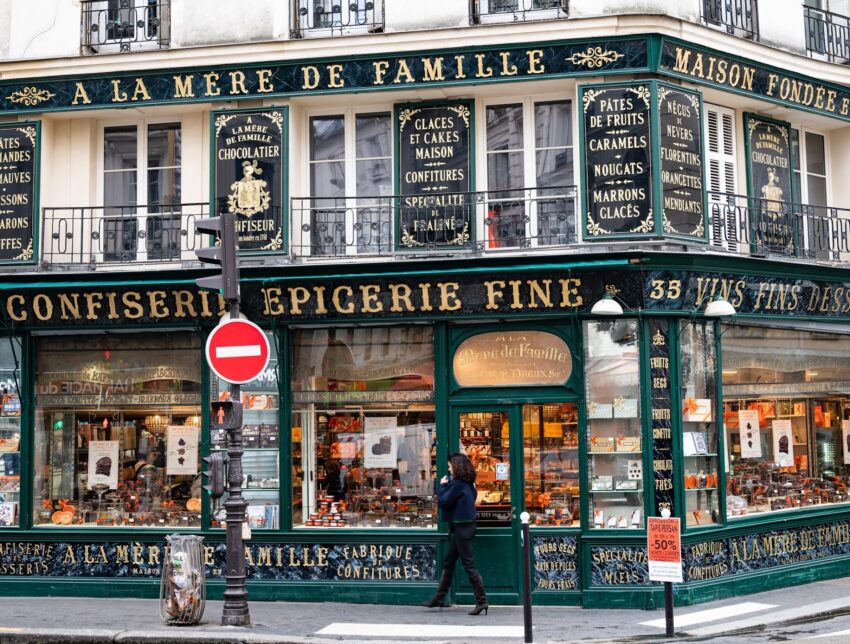
The final luxury experience is found in the city’s legendary pâtisseries. While macarons are available globally, the experience of purchasing them from a flagship boutique like Ladurée or Pierre Hermé is a ritual. The history of the macaron—dating back to the 18th century—is a testament to the French obsession with culinary precision. These "dainty cookies" represent a small-scale luxury that is accessible yet deeply rooted in tradition. Visiting a high-end tea salon (salon de thé) for "le goûter" (afternoon snack) allows visitors to participate in a social ritual that has remained largely unchanged for over a century.
Analysis: The Impact of Quality over Quantity
The shift toward luxury experiences in Paris reflects a broader trend in the global travel industry: the move from "ticking boxes" to "meaningful engagement." Economic data from the Paris Convention and Visitors Bureau indicates that while luxury travelers represent a smaller percentage of total visitors, their contribution to the local economy—through the support of traditional crafts, high-end hospitality, and fine dining—is disproportionately high.

By choosing one or two significant splurges, such as a private museum tour or a stay in a historic hotel, visitors often report a higher level of satisfaction and a deeper emotional connection to the city. These experiences act as a buffer against the "travel fatigue" that often plagues first-time visitors to major metropolises. Ultimately, luxury in Paris is a tool for presence. It allows the traveler to stop navigating and start observing, ensuring that the version of Paris they take home is not one of crowds and stress, but one of grace, beauty, and intentionality.