
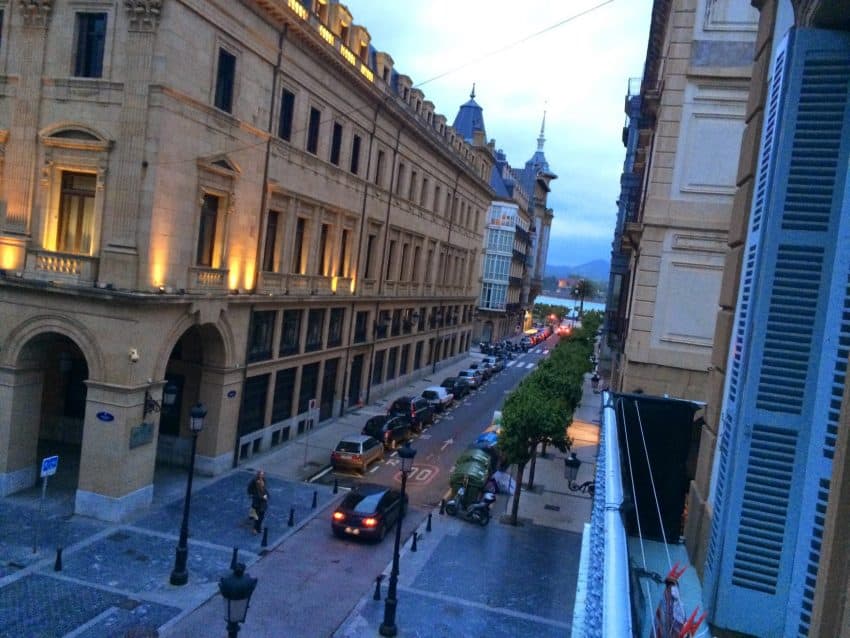
The architectural remnants of Europe’s historic gambling culture often hide in plain sight, integrated seamlessly into the civic and administrative machinery of modern municipalities. A prime example stands in San Sebastián, Spain, where the city hall occupies the former Gran Casino, a Belle Époque masterpiece inaugurated in 1887. Originally built to cater to the Spanish royal family and international elites arriving from Biarritz, the establishment ceased operations as a gaming house when Spain outlawed gambling in 1924. Today, municipal councillors debate urban logistics and municipal refuse collection in chambers originally designed for high-stakes baccarat.
This adaptive reuse of gaming palaces highlights a broader historical trajectory. The card game most commonly associated with modern commercial hubs like Las Vegas did not originate in the Nevada desert. Instead, its roots trace through centuries of European aristocracy, spa towns, and coastal resorts. The game evolved from early Spanish and French precursors, leaving behind an architectural footprint that spans centuries of shifting legal frameworks, economic strategies, and cultural movements.
Chronology of a Card Game: From Renaissance Spain to the Venetian Ridotto
The historical record indicates that the foundational mechanics of modern blackjack—specifically the target number of twenty-one and the dual value of the ace—predate the formal establishment of institutional casinos. In his 1602 exemplary novel Rinquete y Cortadillo, Spanish author Miguel Cervantes described a game called veintiuna (twenty-one), played by card sharps along the docks of Seville. The literary evidence confirms that the core mathematical objective of the game remained consistent over four centuries.
As the game migrated northward into France during the eighteenth century, it became known as vingt-et-un. It gained substantial traction within the royal courts of Versailles, surviving the political upheavals of the French Revolution and subsequently diffusing into broader European society.
Institutionalized gambling, however, began earlier in Italy. In 1638, the Venetian Senate authorized the opening of the Ridotto within a wing of the Palazzo Dandolo at San Moisè, situated near Piazza San Marco. Venice was facing a surge in unregulated, illicit gambling during its annual carnival season. To regain fiscal and social control, the state determined that operating a centralized, regulated venue was the most effective countermeasure.
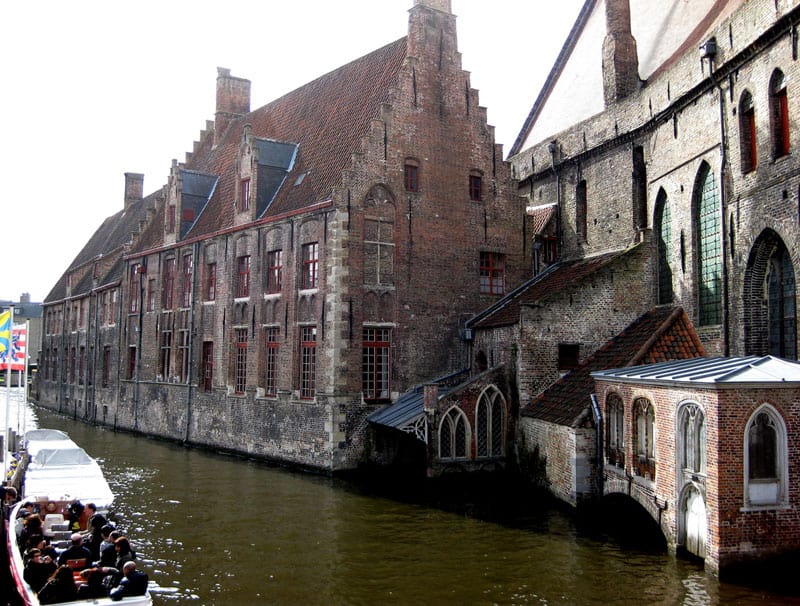
The Ridotto operated under strict protocols designed to maintain social order. Patrons were required to wear masks, and conduct was actively policed by state authorities. Furthermore, high financial stakes were enforced to restrict access exclusively to the Venetian nobility, effectively barring the lower economic classes. Despite generating substantial state revenue, the senate ultimately ordered the closure of the Ridotto in 1774, concluding that the institution was quietly bankrupting the patrician class and destabilizing the republic’s social hierarchy.
The Nineteenth-Century Migration to German Spa Towns
By the early nineteenth century, shifting regulatory landscapes forced the gambling industry to relocate. In 1837, France implemented a nationwide ban on public gambling houses. In response, operators crossed the Rhine River into the German Confederation, where numerous spa towns sought to revitalize their local economies through tourism and leisure.
In 1838, entrepreneur Jacques Bénazet assumed control of the gaming tables in Baden-Baden. His son, Edouard Bénazet, subsequently commissioned Parisian designers to renovate the Kurhaus, endowing the German spa destination with opulent salons reminiscent of the Palais Royal. This strategic pivot transformed Baden-Baden into a premier destination for European aristocracy, literary figures, and cultural icons. Fyodor Dostoevsky famously frequented the establishment, experiencing severe financial losses that later informed his 1866 novella The Gambler. Decades later, actress Marlene Dietrich characterized the Baden-Baden casino as the most beautiful in the world.

The operational model of these spa-town casinos relied on a symbiosis between health tourism and leisure economics. Visitors utilized thermal facilities such as the Friedrichsbad—a nineteenth-century Roman-Irish bathhouse featuring a structured, multi-stage hydrotherapy routine—while patronizing the gaming salons during evening hours.
Establishment of the Monte Carlo Monopoly
The era of German spa gambling came to an abrupt halt in 1872 when German Chancellor Otto von Bismarck prohibited public gaming houses across the German Empire. Capitalizing on this regulatory vacuum, François Blanc—who had previously operated the facilities in Homburg—relocated his operations to the Principality of Monaco, where he had been developing the Société des Bains de Mer since 1863.
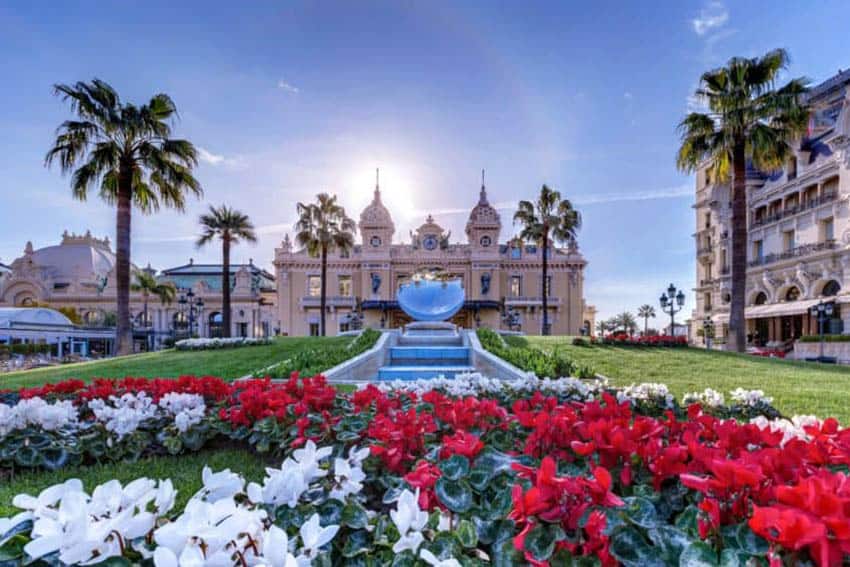
Monaco’s ruling Grimaldi family faced severe financial distress due to the loss of tax revenues from neighboring towns that had seceded. The establishment of the Monte Carlo Casino provided an alternative economic foundation for the microstate. To mitigate domestic social unrest, the Monegasque government instituted a strict legal prohibition: citizens of Monaco were, and remain, barred from entering the gaming rooms. The institution was engineered entirely to extract capital from foreign visitors, enabling the principality to operate without levying a domestic income tax upon its residents.

Architect Charles Garnier, fresh from completing the Paris Opera, designed the ornate Salle Garnier, which opened in 1879 within the Monte Carlo Casino complex. This architectural expansion solidified the Riviera’s status as the epicenter of European high-society leisure.
Wartime Neutrality and the Transatlantic Crossing
During the twentieth century, European casinos frequently doubled as geopolitical listening posts. Following the outbreak of the Second World War, Estoril in neutral Portugal emerged as a primary hub for exiled European royalty, diplomats, intelligence operatives, and refugees. The Casino Estoril functioned as a nexus of international espionage, hosting figures whose clandestine activities later inspired Ian Fleming during his tenure with British Naval Intelligence. Fleming’s observations in Estoril in 1941 directly informed the conceptualization of his debut 1953 James Bond novel, Casino Royale.
By the mid-twentieth century, the gravitational center of commercial gaming shifted westward. The State of Nevada legalized gambling in 1931, prompting the mass commercialization of casino games across the United States. During this transatlantic migration, vingt-et-un adopted its modern moniker. Etymological accounts suggest the term "blackjack" originated from a promotional bonus offered by American establishments in the early days of legal gaming, wherein players holding an ace of spades alongside a black jack (either the jack of spades or clubs) received an enhanced payout. While definitive documentation remains sparse, the linguistic shift accompanied the standardization of the game’s rules within commercial American casinos.
Economic and Cultural Implications
The evolution of these historic gaming properties illustrates a broader paradigm in European urban development. What began as state-controlled fiscal instruments in Renaissance Venice transformed into instruments of aristocratic leisure in nineteenth-century spa towns and geopolitical safe havens during wartime.
Today, municipal authorities across Europe continue to manage the physical legacy of this era. Structures originally engineered to generate revenue for monarchs, nobility, or sovereign states have been successfully integrated into public infrastructure. From the municipal offices housed within San Sebastián’s former Gran Casino to the preserved facades of the Ridotto in Venice, these buildings serve as physical reminders of a leisure economy that laid the structural groundwork for modern commercial gaming.
Related posts: