Unearthing Culinary History at Nasi Lemak Tanglin: Kuala Lumpur’s Iconic Breakfast Institution

Nasi lemak stands as an undisputed culinary emblem of Malaysia, celebrated for its deceptively simple yet harmonious synthesis of flavors and textures. Stretching from the southern provinces of Thailand through peninsular Malaysia and into Singapore, this quintessential comfort food commands a daily consumption of tens of millions of plates. Among the myriad establishments vying for supremacy in the Klang Valley, Nasi Lemak Tanglin, situated within the Kompleks Makan Tanglin in Kuala Lumpur, occupies a revered historical and gastronomic position. Operating continuously since 1948, the institution has weathered decades of rapid urbanization, shifting political landscapes, and evolving culinary trends to remain a cornerstone of traditional Malaysian gastronomy.
Historical Origins and Cultural Significance
The genesis of nasi lemak is deeply intertwined with the agrarian history of the Malay Peninsula. Historically prepared by rural villagers as a portable, energy-dense meal for farmers heading into paddy fields or rubber plantations, the dish derives its name from the method of cooking rice in rich coconut milk. The literal translation, "fat rice," underscores the foundational ingredient, which is traditionally infused with fresh pandan leaves to impart a subtle, aromatic fragrance. Over the latter half of the 20th century, as Malaysia transitioned from an agricultural economy to a modern industrial nation, nasi lemak transitioned from a humble rural breakfast into a unifying national dish transcending ethnic and socioeconomic boundaries.
Nasi Lemak Tanglin emerged in the post-World War II era, opening its doors in 1948 amidst a period of significant socioeconomic reconstruction in British Malaya. Founded during a time when food stalls operated primarily as mobile pushcarts or modest open-air operations, the stall eventually secured a permanent footing within the Kompleks Makan Tanglin food complex. Over nearly eight decades of continuous operation, the establishment has preserved its commitment to traditional preparation methods, resisting the homogenization often associated with modern commercial food franchises. Culinary historians frequently cite Tanglin as a living archive of mid-century Malaysian hawker culture, illustrating the endurance of heritage recipes passed down through generations of culinary artisans.
Logistics, Operations, and Daily Rhythms

The operational dynamics of Nasi Lemak Tanglin reflect the high demand characteristic of Kuala Lumpur’s premier heritage food destinations. Operating daily from 7:00 AM to 1:00 PM, the stall routinely experiences peak congestion during the mid-morning hours. Patrons navigating the vicinity often encounter saturated parking infrastructure, necessitating multiple rotations within the Kompleks Makan Tanglin lot to secure vehicle accommodation.
By 10:00 AM, the seating area—shielded by retractable awnings designed to mitigate the region’s frequent tropical downpours—typically reaches full capacity. The establishment operates on a strict supply-and-demand model, wherein all prepared rice, sambal, and accompanying proteins are sold out daily, frequently exhausting inventory by 11:30 AM. This consistent depletion underscores the meticulous forecasting required by the kitchen staff to balance freshness with volume. To enhance the dining atmosphere, the open-air communal seating area regularly features live musical performances, notably showcasing "Pop Yeh Yeh," a localized genre of mid-1960s psychedelic rock and pop music popular in Malaysia and Singapore. This integration of local auditory culture with traditional dining reinforces the communal, social function of the food complex.
Gastronomic Anatomy and Culinary Methodology

The enduring appeal of Nasi Lemak Tanglin lies in its adherence to foundational culinary principles coupled with an extensive array of supplementary dishes. The base dish consists of rice steeped in coconut milk and aromatic pandan leaves, accompanied by mandatory textural and flavor contrasts: crispy fried anchovies (ikan bilis), roasted peanuts, and fresh cucumber slices.
Central to the dish’s flavor profile is the sambal—a chili-based paste that requires hours of precise reduction. Unlike commercial iterations, a traditional artisanal sambal involves slow-cooking shallots, garlic, chili varieties, and often tamarind or sugar to achieve a delicate balance of heat, sweetness, and acidity. This paste acts as the binding agent that unites the rich coconut rice with the diverse array of proteins available at the counter.
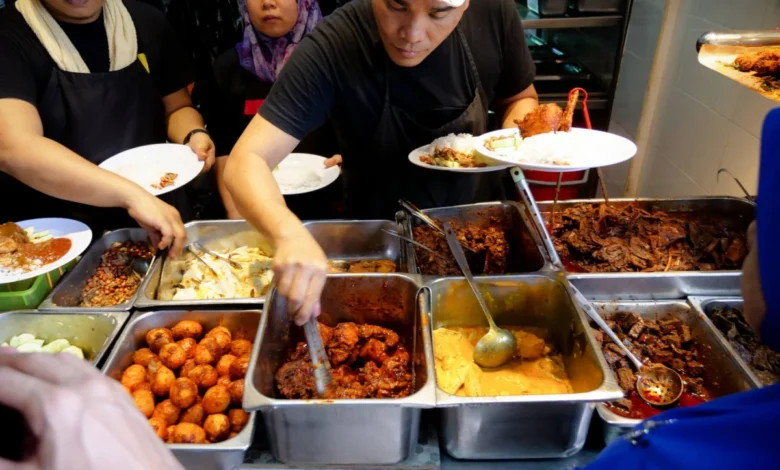
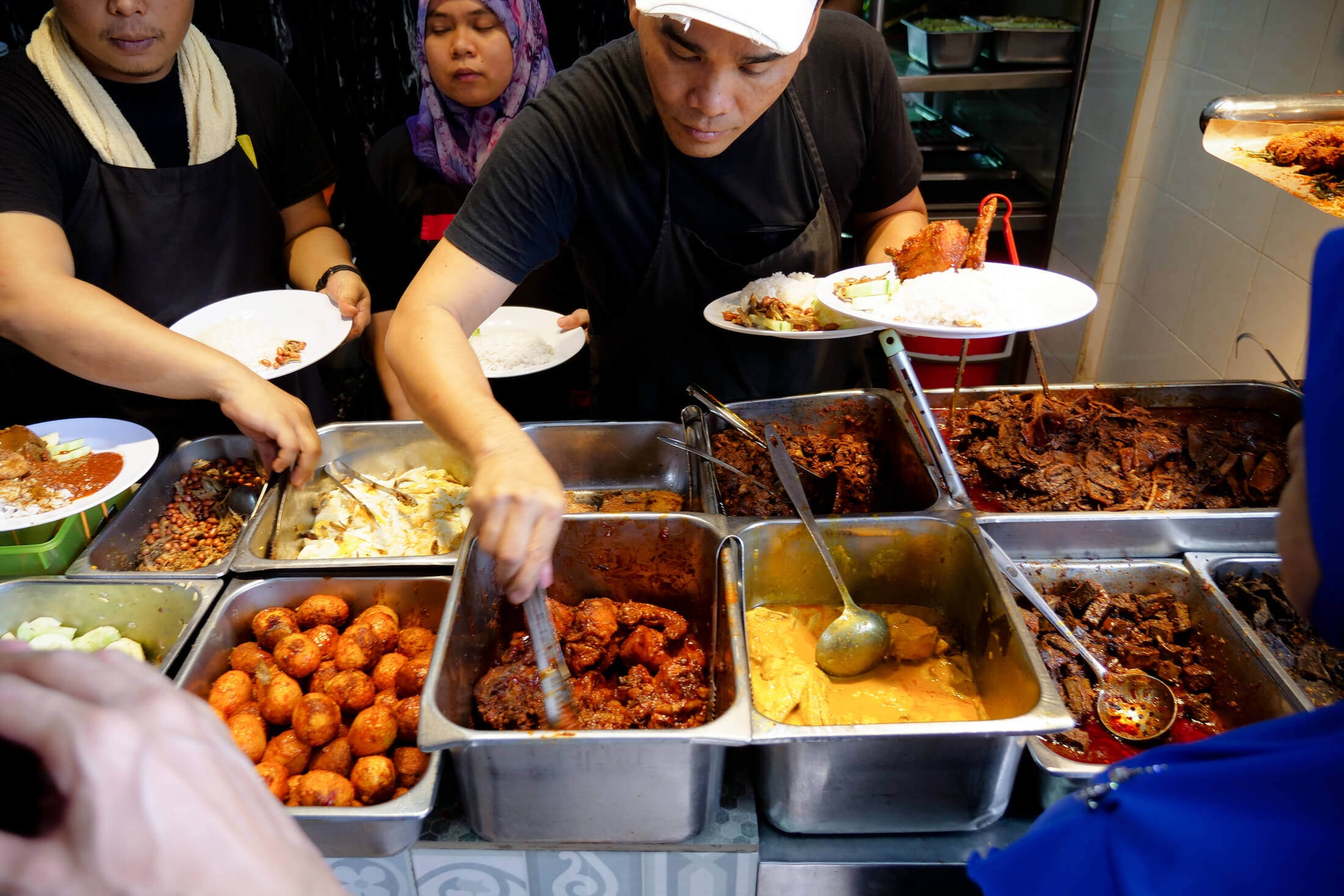
The ordering process requires patrons to queue at the primary serving counter, where a foundational bed of coconut rice is plated before being customized with an array of curries and meats. While traditional presentations of nasi lemak across Malaysia frequently utilize folded banana leaves, Nasi Lemak Tanglin utilizes reusable ceramic plates. This operational choice aligns with broader municipal and national environmental initiatives aimed at reducing single-use plastics and mitigating the ecological degradation associated with the over-harvesting of banana foliage in protected jungle ecosystems.

Protein Variations and Regional Delicacies
Beyond the standard accompaniments, Nasi Lemak Tanglin offers an expansive selection of curries, vegetables, and offal-based dishes that elevate the meal from a simple breakfast to a substantial midday feast. Regular patrons frequently recommend specialized additions, notably beef spleen (locally referred to as limpa or kolong) and beef intestines. The spleen, prepared by braising in a dense, dark brown spiced curry sauce, yields a rich and unctuous texture.
Additional offerings include beef rendang, cooked slowly in coconut milk and spices until the liquid is fully absorbed, and cockles (kerang). The culinary practice of requesting a "bonus ladle"—whereby the chef pours extra rendang or curry broth directly over any exposed white rice—ensures that every grain functions as an absorbent medium for the complex spice blends. The inclusion of a fried egg (telur mata kerbau), standard across Malaysian coffee shops and hawker centers, completes the plate. Culinary purists frequently advocate for eating the meal by hand, a practice believed to enhance the tactile and sensory integration of the warm curry oils with the individual grains of rice.

Economic Impact and Affordability
Despite its status as a prominent cultural landmark, Nasi Lemak Tanglin maintains an accessible pricing structure that underscores the democratic nature of Malaysian hawker food. A foundational plate of basic nasi lemak starts at approximately 2 Malaysian Ringgit (MYR), with supplementary proteins and eggs adding between 1 MYR and 5 MYR per item. A comprehensive meal for a group of four diners typically amounts to approximately 35 MYR (roughly equivalent to $8.50 USD), demonstrating the economic viability of traditional hawker cuisine as an affordable option for both budget travelers and local residents.
Broader Implications for Urban Tourism and Heritage Preservation

The enduring popularity of Nasi Lemak Tanglin highlights broader trends in urban culinary tourism within Southeast Asia. As metropolitan centers like Kuala Lumpur undergo rapid modernization and gentrification, traditional food complexes face increasing pressures from commercial development and changing consumer demographics. Institutions like Tanglin serve as vital cultural anchors, preserving intangible heritage through the intergenerational transfer of culinary knowledge.
Furthermore, establishments operating within communal food complexes contribute significantly to the local micro-economy, supporting independent suppliers of poultry, spices, and agricultural produce. Urban planners and tourism boards increasingly recognize these historical hawker centers as essential assets in destination marketing, drawing international visitors seeking authentic cultural engagement. Through its steadfast adherence to traditional recipes, operational consistency, and cultural integration, Nasi Lemak Tanglin remains an essential case study in the preservation of Malaysian gastronomic heritage within a contemporary urban environment.
Related posts: