The Ultimate Guide to Family Vacations in Jackson Hole, Wyoming: A Year-Round Destination for Adventure and Luxury

Jackson Hole, Wyoming, has long held a legendary reputation across North America and beyond as a world-class winter ski destination, rivaling the dramatic peaks of the Swiss Alps. However, a significant paradigm shift has taken place among modern family travelers. Tourism boards, hospitality groups, and family travel specialists note that Jackson Hole has successfully transitioned into a premier, highly sought-after year-round vacation destination. Nestled at the foot of two of America’s most treasured national parks—Grand Teton and Yellowstone—and boasting an extensive collection of high-end luxury accommodations, upscale resorts, and bespoke guest ranches, the region offers an unrivaled combination of rugged wilderness and refined comfort. Yet, parents planning an escape to this alpine valley frequently encounter a familiar dilemma: keeping children thoroughly engaged beyond merely gazing at majestic mountain vistas. Fortunately, Jackson Hole provides a diverse, extensive portfolio of seasonal and all-weather activities designed to captivate travelers of all ages, ensuring that a multi-day family itinerary remains dynamic, educational, and deeply memorable.

The geographical layout of Jackson Hole places travelers at the very doorstep of remarkable ecological diversity. Grand Teton National Park sits mere minutes from downtown Jackson, presenting immediate opportunities for wildlife viewing, morning safaris, and alpine exploration. Meanwhile, the sprawling expanse of Yellowstone National Park—America’s first national park, established in 1872—is accessible via day trips, though navigating its renowned geothermal features requires careful logistical planning due to multi-hour driving times from the valley floor. To manage these distances effectively, family travel advisors and local tour operators frequently recommend scheduling dedicated overnight stays closer to Yellowstone’s borders or engaging professional guides. According to regional tourism data, summer and winter visitor demographics have evolved significantly over the past decade. Families now account for a substantial percentage of the tourism economy, prompting local outfitters, museums, and adventure companies to expand their family-oriented offerings significantly, ranging from gentle river floats to private interpretive nature walks.
When the snow melts and the valley thaws, Jackson Hole transforms into a vibrant playground for warm-weather exploration. Spring brings an energetic awakening to the local ecology; however, families planning a spring break getaway must account for seasonal variables. Rivers swell significantly due to high-altitude snowmelt, making water-based activities like rafting unpredictable, while hiking trails often remain muddy well into May. On the positive side, spring marks a period of high wildlife activity as animals emerge from winter hibernation, offering exceptional viewing conditions in the parks well in advance of the heavy summer tourist influx. By June, summer weather settles in, bringing ideal temperatures for outdoor pursuits alongside peak visitor volume. To mitigate the impact of heavy crowds during July and August, industry experts strongly advise booking accommodations—particularly luxury properties in Teton Village and downtown Jackson—months in advance. Furthermore, investing in private guided excursions, such as dawn wildlife safaris into Yellowstone or Grand Teton, allows families to bypass congestion and observe bison, elk, moose, and grizzly bears during their most active hours.

Equestrian traditions run deep in the Teton County region, making horseback riding a cornerstone of the summer family itinerary. A wide array of trail networks caters to all skill levels, from novice children to seasoned equestrians, supported by both commercial outfitters and historic family-owned ranches. While standard trail rides generally enforce a minimum age requirement of eight years old, younger children can participate in supervised pony lead-arounds. It is increasingly common for families to pair a multi-day stay in Jackson Hole with an immersive week-long dude ranch vacation in neighboring valleys or states. For those seeking aquatic thrills, the Snake River carves a dramatic path through the valley, offering starkly contrasting experiences. Thrill-seeking families with older children meeting specific age and height restrictions can tackle exhilarating whitewater rapids, while younger children and toddlers can enjoy tranquil, scenic float trips. To elevate the experience, premier travel partners frequently arrange private riverside cookouts, allowing families to dine directly on the banks of the Snake after a day on the water. Other popular warm-weather pursuits include half-day guided mountain biking tours, ATV excursions outside park boundaries, rock climbing instruction, and professional fly-fishing lessons. As evening approaches, the valley’s remarkably low light pollution enables private guided stargazing experiences, turning the clear night skies into an open-air classroom for astronomy and constellation mapping.
As autumn arrives, Jackson Hole experiences a dramatic shift in pace. Fall is widely considered the least predictable season regarding weather conditions—snowstorms can materialize as early as September—yet it remains the quietest period in terms of tourist volume. Biologists and park rangers note that autumn is a visually stunning time to visit Yellowstone and Grand Teton as foliage turns gold and fauna aggressively forage in preparation for the harsh winter months. For homeschooling families or those whose schedules are not strictly bound by traditional academic calendars, autumn presents an ideal window for a tranquil, unhurried wilderness expedition. Conversely, winter casts Jackson Hole into a bustling alpine wonderland. Skiers and snowboarders flock to Jackson Hole Mountain Resort, renowned for its steep, challenging terrain and formidable vertical drop. While the resort’s legendary expert runs often draw advanced winter athletes, management maintains comprehensive ski school operations and dedicated beginner terrain zones to accommodate families and novice learners. Substantial annual snowfall anchors the local winter economy, though conditions fluctuate throughout the season.

Beyond downhill skiing and snowboarding, Jackson Hole’s winter tourism sector thrives on a diverse array of non-skiing adventures. Families seeking a reprieve from the slopes frequently partake in dog sledding, snowmobiling, horse-drawn sleigh rides, snow tubing, and outdoor ice skating. Private guided snowshoe hikes through dense, snow-laden forests have also emerged as a top-rated recommendation among luxury travel clients, offering an active, immersive way to experience the pristine backcountry away from commercial resort crowds. In Yellowstone, winter road closures restrict standard automobile traffic, but visitors can access the park’s interior via specialized guided snowcoach tours or snowmobile expeditions, providing rare opportunities to spot wolves, bison, and other wildlife moving effortlessly through deep snowpacks.
Regardless of weather fluctuations—whether caught in an unexpected autumn snow flurry or a sudden spring rain shower—Jackson Hole maintains an impressive roster of indoor and all-weather attractions. A prime itinerary pairing is the National Museum of Wildlife Art, situated just north of downtown, and the adjacent National Elk Refuge. The museum features extensive galleries, an on-site cafe overlooking a sprawling meadow, a dedicated children’s gallery, and an interactive puppet theater. Directly adjacent, the National Elk Refuge serves as a vital winter habitat for thousands of elk migrating down from higher elevations. From mid-December through early April, the refuge operates popular horse-drawn sleigh rides that bring visitors within yards of massive herds. During the green seasons, the refuge remains a prime location for spotting pronghorn, bald eagles, and migratory birds. Families with younger children also benefit from cultural hubs such as the Jackson Hole Children’s Museum, which relocated to a prominent downtown facility featuring immersive, nature-inspired interactive exhibits designed to foster tactile learning and creative play.

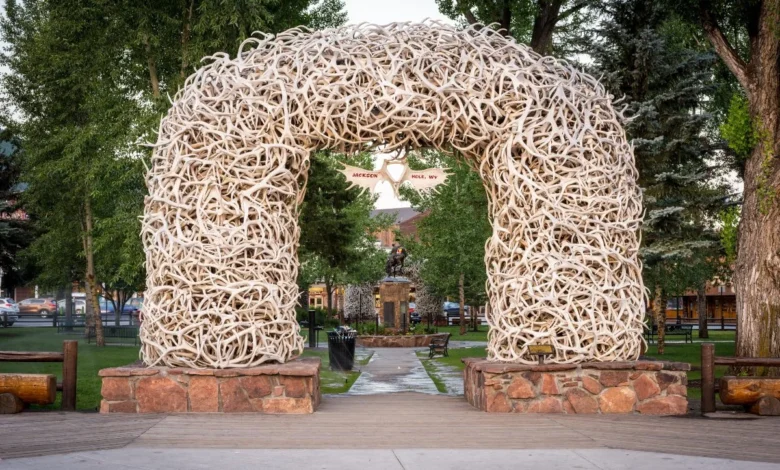
Downtown Jackson itself bridges the gap between historic Wild West heritage and contemporary sophistication. The town square, instantly recognizable by its towering arches constructed entirely from naturally shed elk antlers, serves as a central gathering point surrounded by high-end boutiques, art galleries, and historic saloons. Walkable and located roughly 15 minutes from the primary lodging hubs in Teton Village, downtown offers an eclectic culinary scene ranging from casual cafes to upscale fine dining establishments. Local logistics experts advise families—particularly those renting upscale cabins or vacation homes—to utilize the town’s well-stocked grocery stores to provision for long driving excursions into the national parks or to keep hungry children fueled between outdoor outings.
From a logistical and economic standpoint, tourism officials emphasize that Jackson Hole’s evolution into a year-round destination requires careful financial and schedule planning. Peak seasons—spanning mid-summer and mid-winter holidays—command premium pricing across accommodations, air travel, and guided services. Industry analysts note that while independent travel is entirely feasible, utilizing professional family travel advisors significantly enhances the quality of a Jackson Hole vacation by securing priority reservations, vetted private guides, and customized itineraries that seamlessly bridge high-end luxury with rugged outdoor exploration. Whether families choose to spend a week exploring the valley independently or integrate Jackson Hole into a broader regional road trip spanning Montana, South Dakota’s Black Hills, and Mount Rushmore, the region endures as an exceptional American landscape capable of delivering profound inspiration and adventure across every month of the calendar year.
Related posts: