The spirits industry is currently witnessing a significant shift in consumer preference as bartenders and mixologists move away from the hyper-complex, garnish-heavy trends of the last decade toward a renewed appreciation for foundational, spirit-forward classics. Among these, brandy—specifically high-quality Cognac and Armagnac—is reclaiming its status as the cornerstone of the cocktail canon. Historically essential to the evolution of mixology, from the Georgian punches of the 18th century to the iconic cocktails of the 19th and 20th centuries, brandy is experiencing a cultural resurgence that emphasizes technical precision and historical reverence.
The Historical Evolution of the Brandy Cocktail
To understand the current resurgence of brandy, one must look back to the early 19th century, a period defined by the codification of the "cocktail" as a distinct category of mixed drink. In 1806, the Balance and Columbian Repository defined a cocktail as a stimulating liquor composed of spirits, sugar, water, and bitters. Brandy, specifically Cognac, was the primary spirit used in these early formulations due to its prevalence in global trade routes.
The chronology of the brandy cocktail is punctuated by legendary recipes:
- 1830s–1850s: The emergence of the Sazerac in New Orleans, blending French Cognac with the newly developed Peychaud’s Bitters.
- 1870s: The popularization of the Brandy Crusta, which introduced the concept of the sugared rim and the lemon peel garnish.
- 1920s: The Golden Age of the Sidecar and the Brandy Alexander, which utilized the spirit’s inherent creaminess and ability to balance citrus.
- 1940s: The refinement of the Vieux Carré, a complex drink that further cemented the role of brandy in the high-end hotel bar culture of the American South.
Victor Triebel, co-founder of Bar Rêve in Brooklyn, suggests that this return to brandy is not merely a trend, but a necessary correction. "In a world of fleeting fads, brandy cocktails provide an opportunity to slow down and reconnect with the modern cocktail movement’s roots," Triebel notes. This sentiment is echoed across the industry, where "restraint" has become the new buzzword for premium bar programs.
The Sazerac: A Study in Restraint
The Sazerac remains the definitive expression of the brandy cocktail. Its profile—short, potent, and aromatic—serves as the antithesis to the sugary, overly diluted drinks that dominated the early 2000s. Kirk Estopinal of New Orleans institutions Cane & Table and Cure describes the drink as a benchmark for professional competency. "The Sazerac is perfect, subtle, and respectful to the spirit," he explains. "It tastes like it was made by someone who has nothing to prove."
The drink’s history is inextricably linked to the geography of New Orleans. In the mid-19th century, Antoine Peychaud, a Creole apothecary, began producing his eponymous bitters in the French Quarter. Legend suggests he served his concoctions in egg cups—known as a coquetier in French, from which the word "cocktail" is theorized to derive—alongside a pour of Sazerac de Forge & Fils cognac.
The drink underwent a forced evolution in the late 1800s due to the phylloxera epidemic in Europe, which decimated French vineyards and effectively cut off the supply of cognac to the United States. During this era, bartenders transitioned to rye whiskey. Today, the most refined versions of the cocktail often employ a split-base, utilizing both cognac and rye to capture the fruit-forward depth of the former and the spicy, peppery structural backbone of the latter.
Technical Analysis and Ingredients
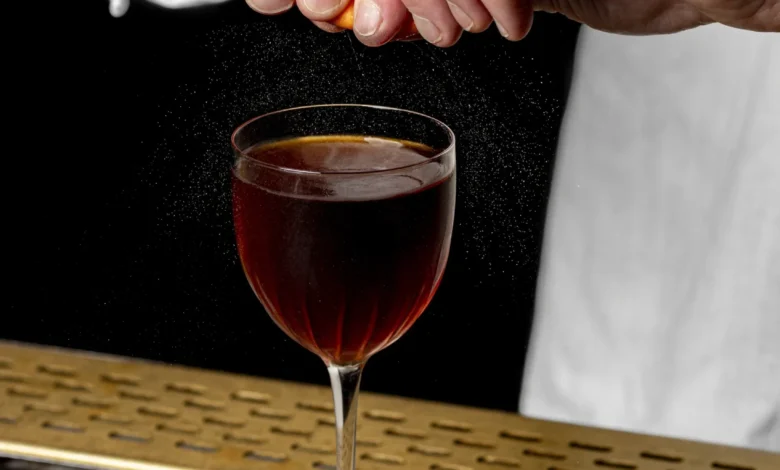
The modern preparation of the Sazerac has moved toward precision, moving away from the "rinse and dump" method of the past in favor of atomized absinthe. This technique provides the necessary aromatic anise notes without overwhelming the palate or creating an overly wet glass.

The composition of a professional-grade Sazerac relies on high-quality, authentic components:
- The Spirit: A combination of 25ml Cognac and 25ml Rye.
- The Sweetener: 5ml of a 2:1 sugar syrup to provide mouthfeel without excess dilution.
- The Bitters: A mandatory dash of Peychaud’s Bitters for floral, cinnamon-scented complexity, often augmented by a single dash of Angostura.
- The Aromatic Finish: An absinthe mist.
The choice of Cognac is paramount. Producers like Sazerac de Forge & Fils have sought to recreate the pre-phylloxera style of spirit, using old, rare grape varieties and extended aging processes. For the collector, the scarcity of these spirits is reflected in extreme pricing; The Savoy’s American Bar in London, for instance, has famously offered a £5,000 version of the Sazerac featuring 1858-vintage cognac and 1950s-era Pernod.
Contemporary Producers and the Role of Armagnac
While Cognac dominates the luxury market, there is a growing interest in the nuanced profiles of Armagnac. Xavier Padovani, director of the Experimental Cocktail Club (ECC), highlights that Armagnac often exists in the shadow of its more famous relative, yet offers a rounder, softer flavor profile that is arguably more versatile for modern mixology.
Producers such as Fanny Fougerat are redefining the category by focusing on site-specific "terroir" rather than the traditional house-blending methods. Fougerat’s Iris Poivré XO has become a staple for bars seeking to add a unique, sophisticated edge to their cocktail menus. Meanwhile, the ECC group has collaborated with houses like Hine and Ragnaud Sabourin to create proprietary blends specifically designed for their cocktail programs, demonstrating a shift toward vertical integration between the farm and the bar.
Broader Economic and Mixological Implications
The resurgence of brandy is not confined to high-end cocktail bars; it is indicative of a broader move toward "functional luxury." As consumers become more educated about the provenance of their spirits, the demand for transparency in production—such as the site-specific distillation practiced by Fougerat—has increased.
From an economic perspective, the brandy category is benefiting from the "premiumization" trend. According to industry analysis, consumers are increasingly willing to pay a higher price point for spirits that offer a clear narrative and a sense of history. The Sazerac, with its deep roots in apothecary culture and its reputation as a "corpse-reviver," fits perfectly into the modern consumer’s desire for drinks that feel both intellectual and historical.
The implications for the hospitality sector are clear: by focusing on classic, brandy-based cocktails, bars can reduce the complexity of their inventories while increasing the quality of the guest experience. The shift away from mass-produced mixers toward the "spirit, sugar, water, bitters" formula allows establishments to showcase their technical prowess through the quality of their ice, their choice of glassware, and their mastery of the stir.
Conclusion: A Return to the Fundamentals
As the industry looks toward the next decade, the "brandy-first" approach represents a maturation of cocktail culture. By prioritizing the spirit—whether it is the floral, coast-influenced notes of a Borderies cognac or the earthy, robust qualities of an Armagnac—bartenders are ensuring that the craft remains tethered to its origins. The Sazerac, in all its simplicity and complexity, stands as a testament to this philosophy: a drink that, when made with respect for the past, remains one of the most sophisticated experiences a glass can hold. As the modern bar continues to evolve, the lessons of the 19th-century French Quarter remain as relevant today as they were when Antoine Peychaud first opened his apothecary doors.