Día de los Muertos in Puerto Vallarta: A Comprehensive Cultural Overview of Mexico’s Most Iconic Celebration

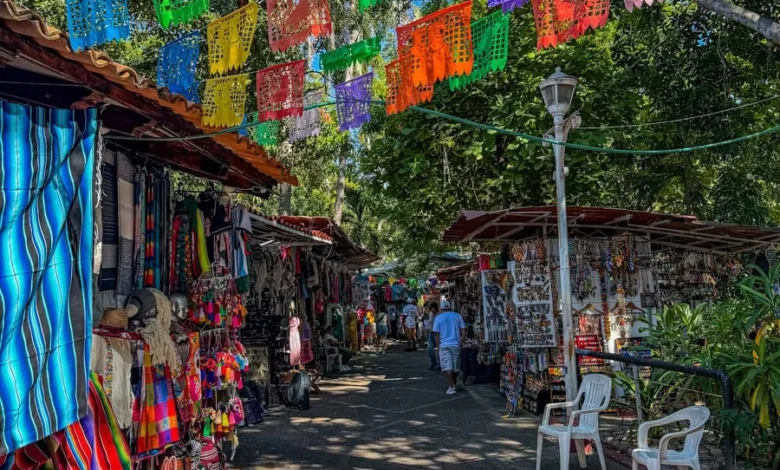
Día de los Muertos in Puerto Vallarta represents a profound intersection of indigenous heritage, colonial history, and contemporary tourism. As late October arrives, the coastal city of Puerto Vallarta transforms into a living gallery of remembrance, where public spaces, cemeteries, and hospitality venues converge to honor the cycle of life and death. The celebration, recognized by UNESCO as an Intangible Cultural Heritage of Humanity, is not a mourning ritual but a vibrant, communal effort to bridge the gap between the living and the deceased.
The Evolution and Historical Significance of the Holiday
The roots of Día de los Muertos extend back thousands of years to pre-Hispanic Mesoamerican civilizations, particularly the Aztec, Toltec, and Nahua people, who viewed death as a natural phase in the continuum of life. Following the Spanish conquest, these indigenous rituals were syncretized with Catholic observances, specifically All Saints’ Day and All Souls’ Day. In modern Puerto Vallarta, this heritage is meticulously maintained. The city’s geography—nestled between the Sierra Madre Mountains and the Banderas Bay—provides a unique backdrop for the celebration, blending traditional mountain-village customs with the cosmopolitan flair of a major tourist destination.
Chronology of the Commemoration
The festivities in Puerto Vallarta follow a precise, multi-day calendar that dictates the specific spirits being honored:

October 27: Dedicated to the souls of pets who have passed away. This day has gained significant traction in recent years, with local animal welfare organizations and families setting up altars featuring photos and favorite toys of beloved animals.
November 1: Known as Día de los Inocentes or the Day of the Little Angels, this date is reserved for the souls of children. The atmosphere is often lighter, with offerings of toys, sweets, and white flowers symbolizing purity.
November 2: The culmination of the event, dedicated to the souls of adults. This is the most active day, characterized by elaborate parades, cemetery vigils, and the final display of the massive public ofrendas.
Public Installations and Civic Engagement

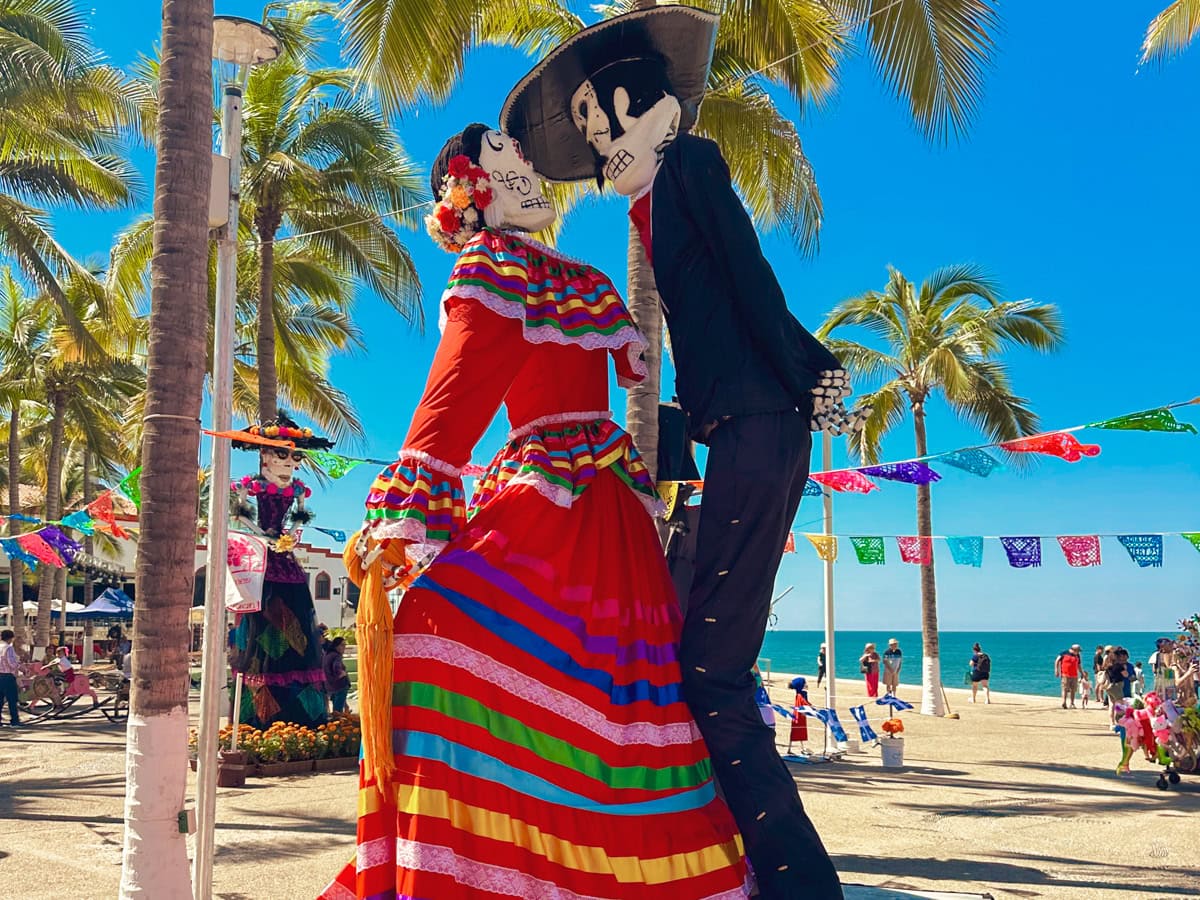
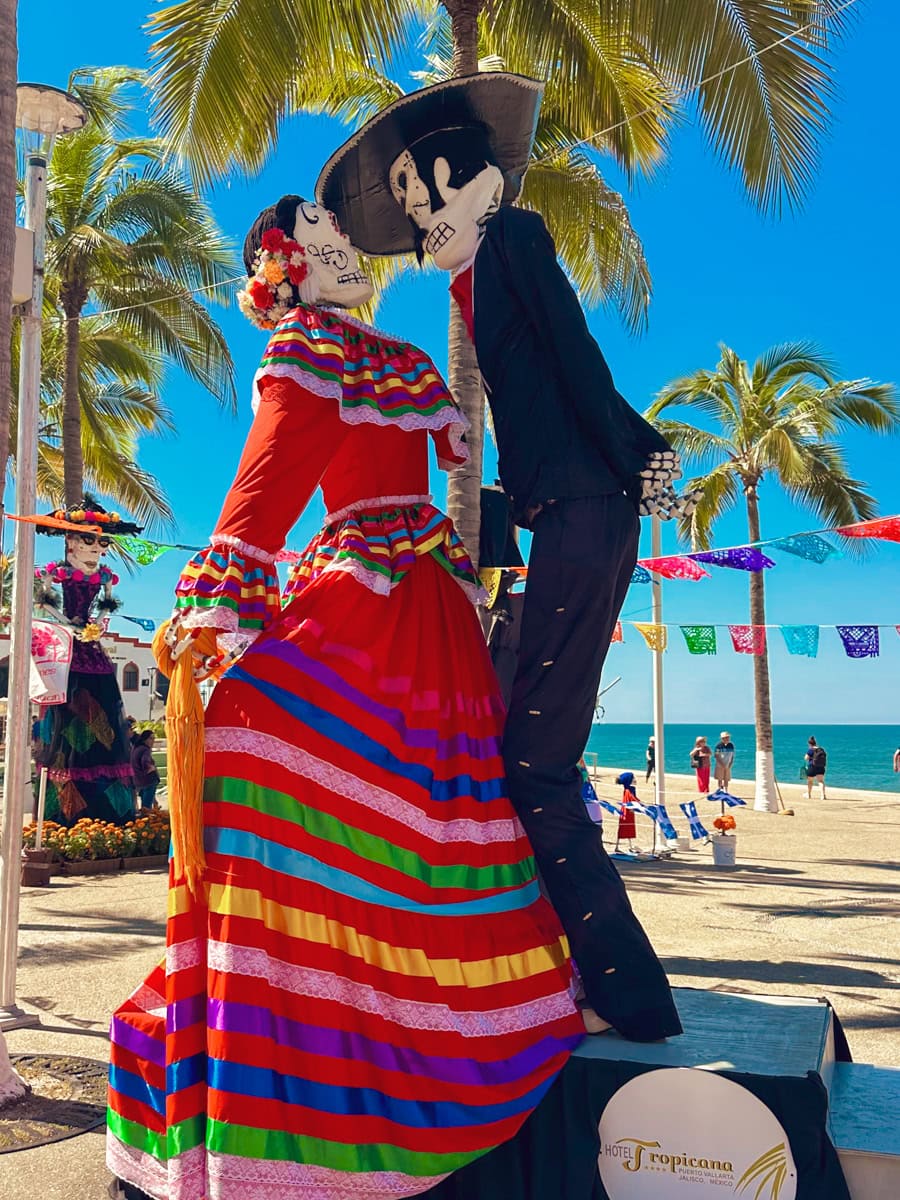
The centerpiece of Puerto Vallarta’s celebration is the Malecón, the city’s iconic seaside boardwalk. Each year, the municipal government and local stakeholders collaborate to host the world’s tallest Catrina. The La Calavera Catrina, originally created by illustrator José Guadalupe Posada and later popularized by muralist Diego Rivera, serves as a satirical reminder that death is the great equalizer. The installation of these figures—often exceeding 70 feet in height—is a feat of engineering that has set international records and serves as a major draw for cultural tourism.
In the Plaza de Armas, the city’s historic center, the municipal government erects a central ofrenda honoring the city’s founder, Don Guadalupe Sánchez. These altars are constructed following strict traditional guidelines: they must include the four elements—earth (represented by food), wind (represented by delicate papel picado), water (placed in a pitcher to quench the spirit’s thirst), and fire (candles to light the way).

Cinco de Diciembre Cemetery: A Study in Community and Memory
The Cinco de Diciembre Cemetery, located just north of the downtown core, offers a more intimate and authentic perspective on the holiday. Unlike the spectacle of the Malecón, this location focuses on family-centric traditions. Families spend hours cleaning gravesites, repainting headstones, and adorning them with marigolds (cempasúchil). The scent of these vibrant orange flowers is believed to guide the spirits home. It is common to witness families remaining at the gravesite until dawn, accompanied by mariachi bands playing the favorite songs of the departed—a practice that underscores the holiday’s focus on joy and continuity rather than sorrow.

Gastronomic Traditions and Economic Impact
The culinary aspect of Día de los Muertos is central to the event’s economic significance. Traditional dishes served during this period include pozole, a hominy-based stew; tamales; and the quintessential pan de muerto, a sweetened bread decorated with bone-shaped dough.

From an economic standpoint, the period between late October and early November marks a critical shoulder-season boost for the hospitality sector. Data from the Puerto Vallarta Tourism Board indicates that hotel occupancy rates consistently rise during these dates, as international visitors seek an "authentic" Mexican experience. Local businesses, including restaurants in the Zona Romántica and the Centro, report significant increases in revenue as they adapt their menus to include traditional holiday fare. The integration of tourism and tradition has created a symbiotic relationship; while hotels provide the infrastructure and marketing, the local community provides the cultural authenticity that prevents the celebration from becoming a mere performance.
Institutional Participation and Modern Adaptations

Major resorts, such as Velas Vallarta and Casa Velas, have integrated educational components into their programming. By offering guided tours of their onsite ofrendas and hosting workshops on sugar skull (calavera) painting, these institutions serve as conduits for cultural transmission. Industry experts note that this approach helps manage tourist expectations and ensures that visitors engage with the holiday respectfully.
The inclusion of Halloween elements—such as costume contests and trick-or-treating—has sparked debates among purists. However, the prevailing view in Puerto Vallarta is that these modern adaptations do not dilute the tradition but rather coexist with it, reflecting the city’s diverse demographic of local residents and international expatriates.

Broader Implications and Cultural Sustainability
The sustainability of the Día de los Muertos celebration in Puerto Vallarta relies on the active participation of the younger generation. The "Gran Desfile de Día de Muertos," or the Great Day of the Dead Parade, is a vital vehicle for this. By involving schools, dance troupes, and local artisans, the parade ensures that the symbolism of the holiday—the importance of memory, the acceptance of mortality, and the value of community—is passed down.

The societal impact of these events is significant. In an era of increasing global homogenization, the persistence of localized, distinct traditions serves as a foundation for community identity. The act of publicly honoring the dead reinforces social bonds, as the preparation for the holiday requires collective labor, shared resources, and a consensus on who is being remembered.
Looking ahead, the city faces the challenge of managing the environmental and logistical impact of increased foot traffic during the celebrations. Authorities have implemented waste management strategies around the cemeteries and the Malecón to handle the influx of visitors, signaling a transition toward more managed, sustainable event planning.

Conclusion
Día de los Muertos in Puerto Vallarta is a complex, multi-layered event that transcends its reputation as a tourist attraction. It is an annual reaffirmation of life, a logistical undertaking of significant scale, and a vital cultural anchor for the city. Through the careful balance of public spectacle and private observance, Puerto Vallarta continues to provide one of the most comprehensive windows into the Mexican soul. As the city evolves, the holiday remains a steadfast commitment to the idea that those who are gone are never truly lost, provided they are remembered with joy, color, and tradition.