The modern hospitality industry has undergone a significant transformation in how it approaches indoor aquatic amenities, moving beyond simple fitness-oriented lap pools to elaborate, climate-controlled environments designed for leisure, architectural impact, and family engagement. As global travel patterns shift to accommodate seasonal variances, luxury and mid-range hotels alike are investing heavily in indoor water facilities to ensure year-round occupancy and guest satisfaction. This report examines 30 of the most significant indoor hotel pools worldwide, analyzing their engineering, historical significance, and the strategic role they play in the contemporary travel economy.
The Architectural Evolution of Indoor Aquatic Spaces
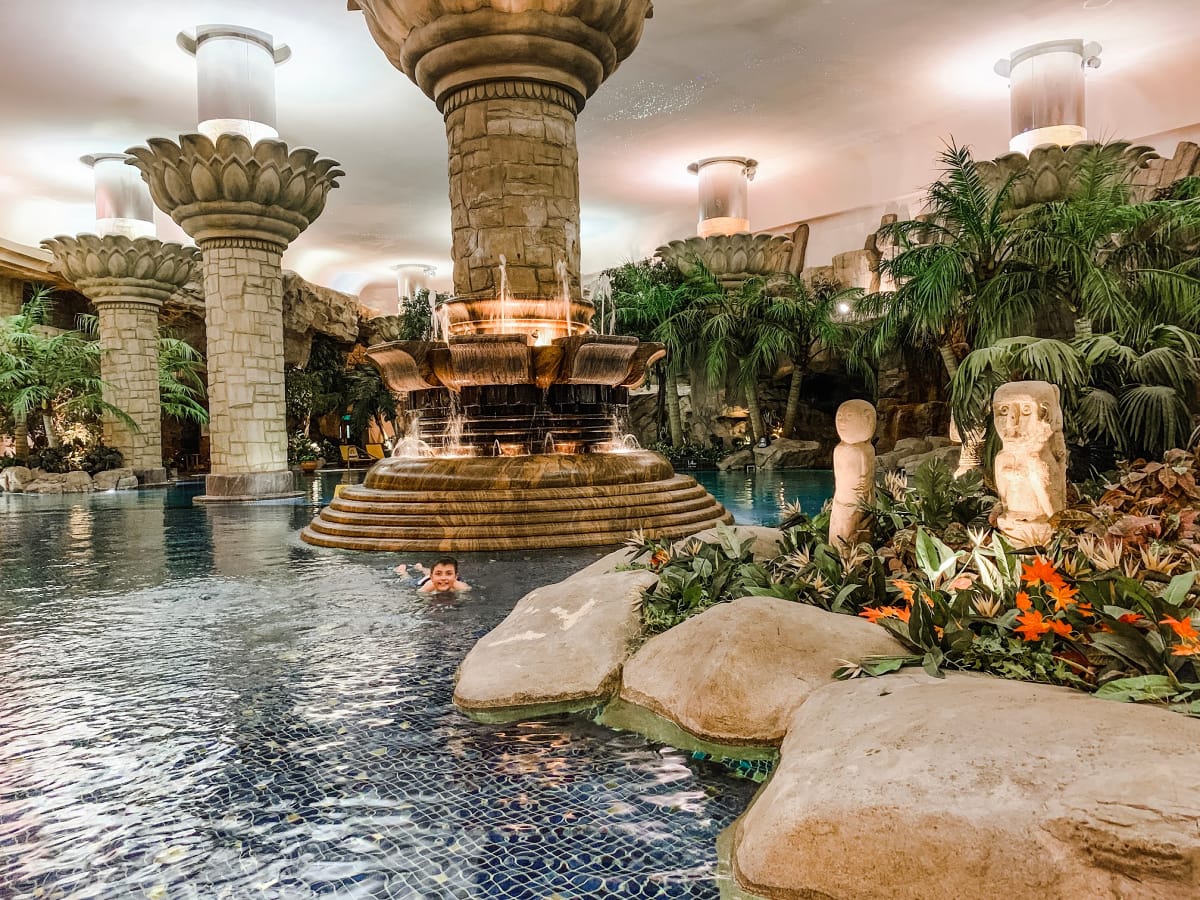
The shift toward high-end indoor aquatic centers began in earnest during the mid-20th century, but the current era is defined by the integration of advanced climate control technologies and aesthetic design. Hotels such as The Peninsula Chicago have set the standard for urban luxury, utilizing floor-to-ceiling glass to provide guests with a connection to the cityscape while maintaining a controlled, heated environment. Similarly, the Grand Hyatt Beijing’s Club Oasis represents a transition toward immersive, theme-based environments that utilize lighting, soundscapes, and biological elements to create an atmosphere independent of external weather conditions.
Notable Installations in Global Markets
- The Peninsula Chicago (Chicago, Illinois): Featuring a half-Olympic-sized pool, this installation is a prime example of urban engineering, providing expansive views of Lake Michigan.
- Grand Hyatt Beijing (Beijing, China): Renowned for its "Club Oasis," this facility incorporates complex water features and artistic lighting, demonstrating the trend toward immersive, sensory-focused pool design.
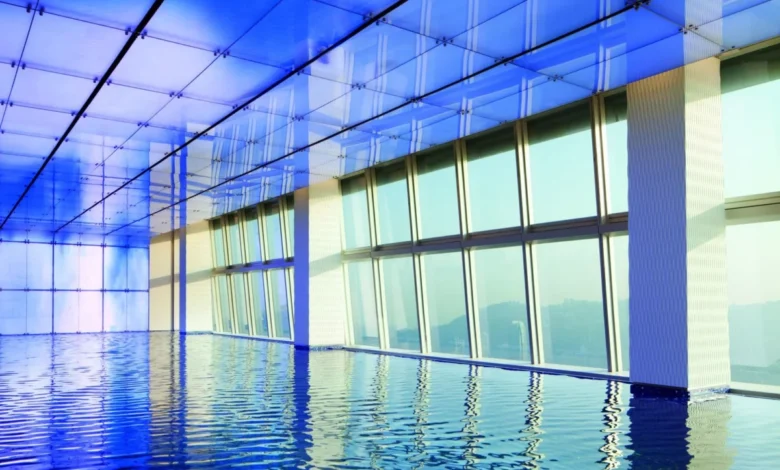
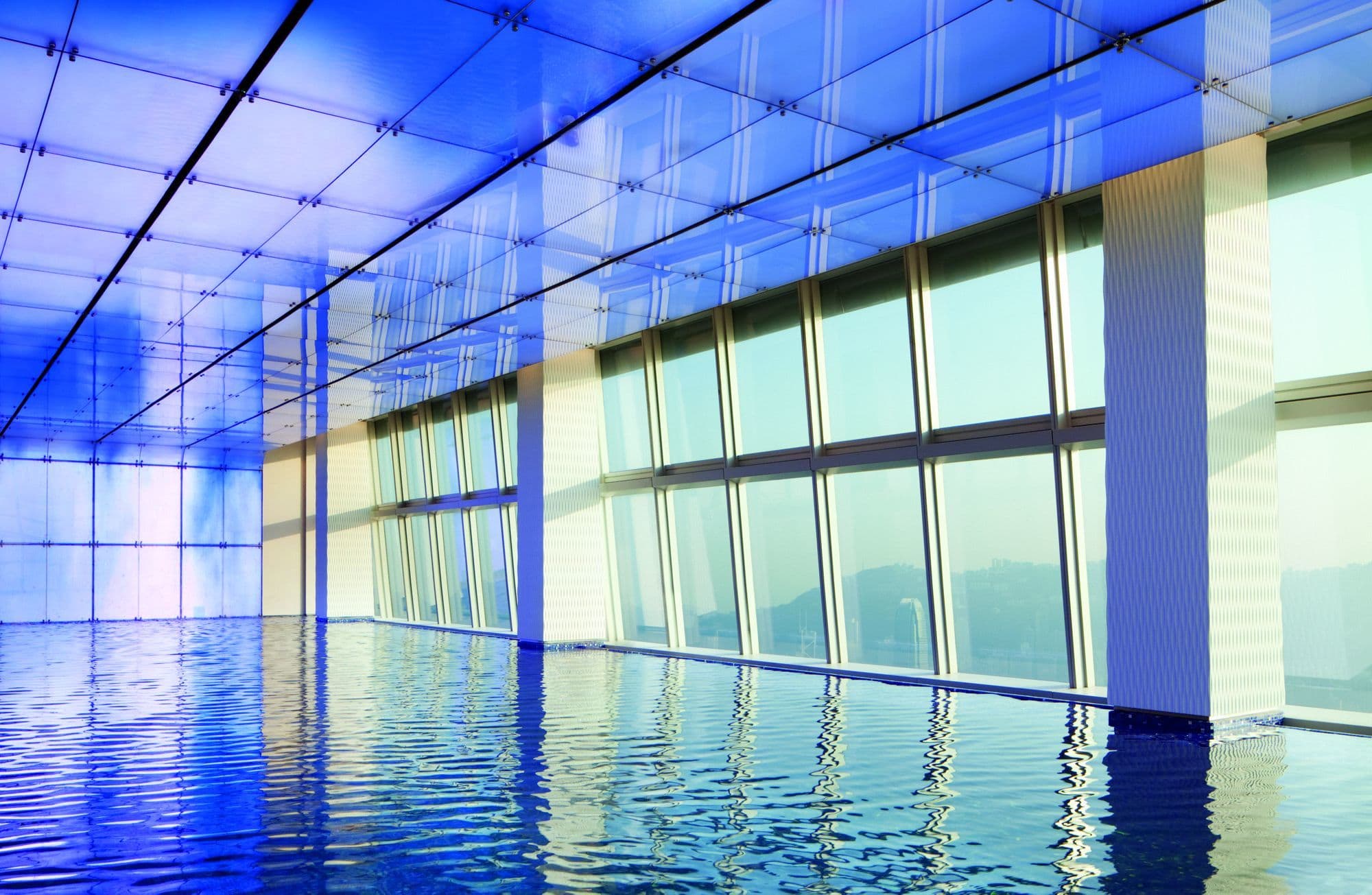
- The Ritz-Carlton Hong Kong (Hong Kong, China): Situated on the 118th floor, this pool represents the pinnacle of high-altitude aquatic engineering, utilizing LCD projection technology to enhance the visitor experience.
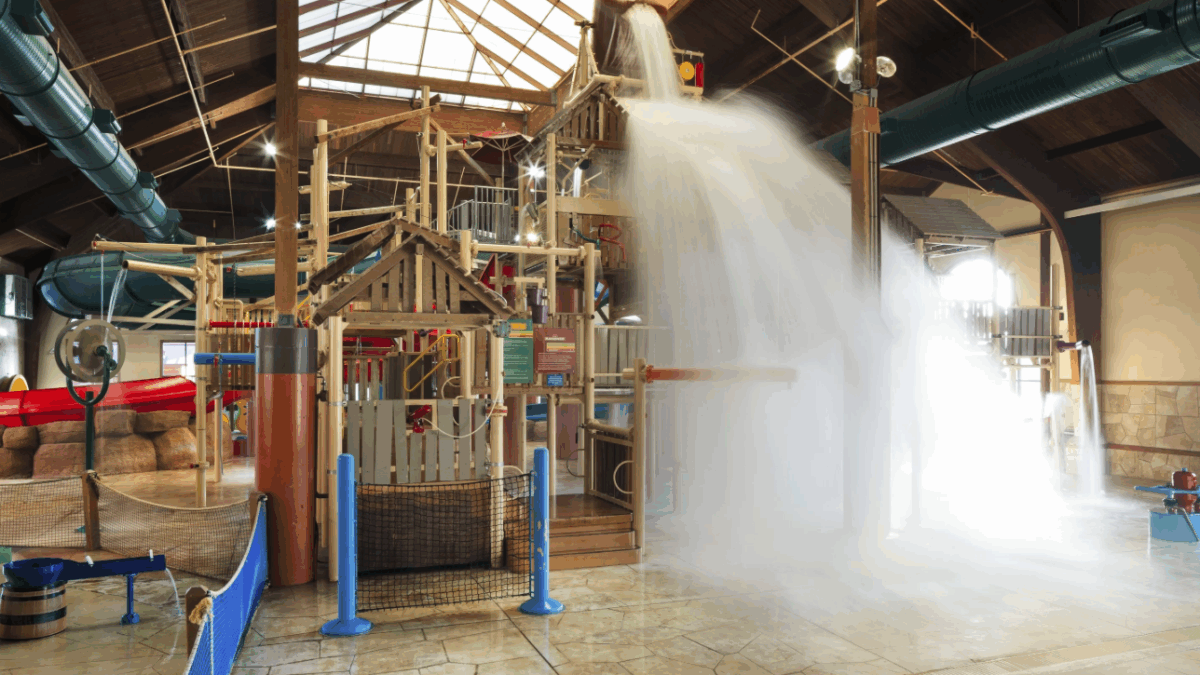
- Great Wolf Lodge (Wisconsin Dells, Wisconsin): A cornerstone of the indoor water park industry, this property demonstrates the shift toward high-capacity, family-centric recreational infrastructure.
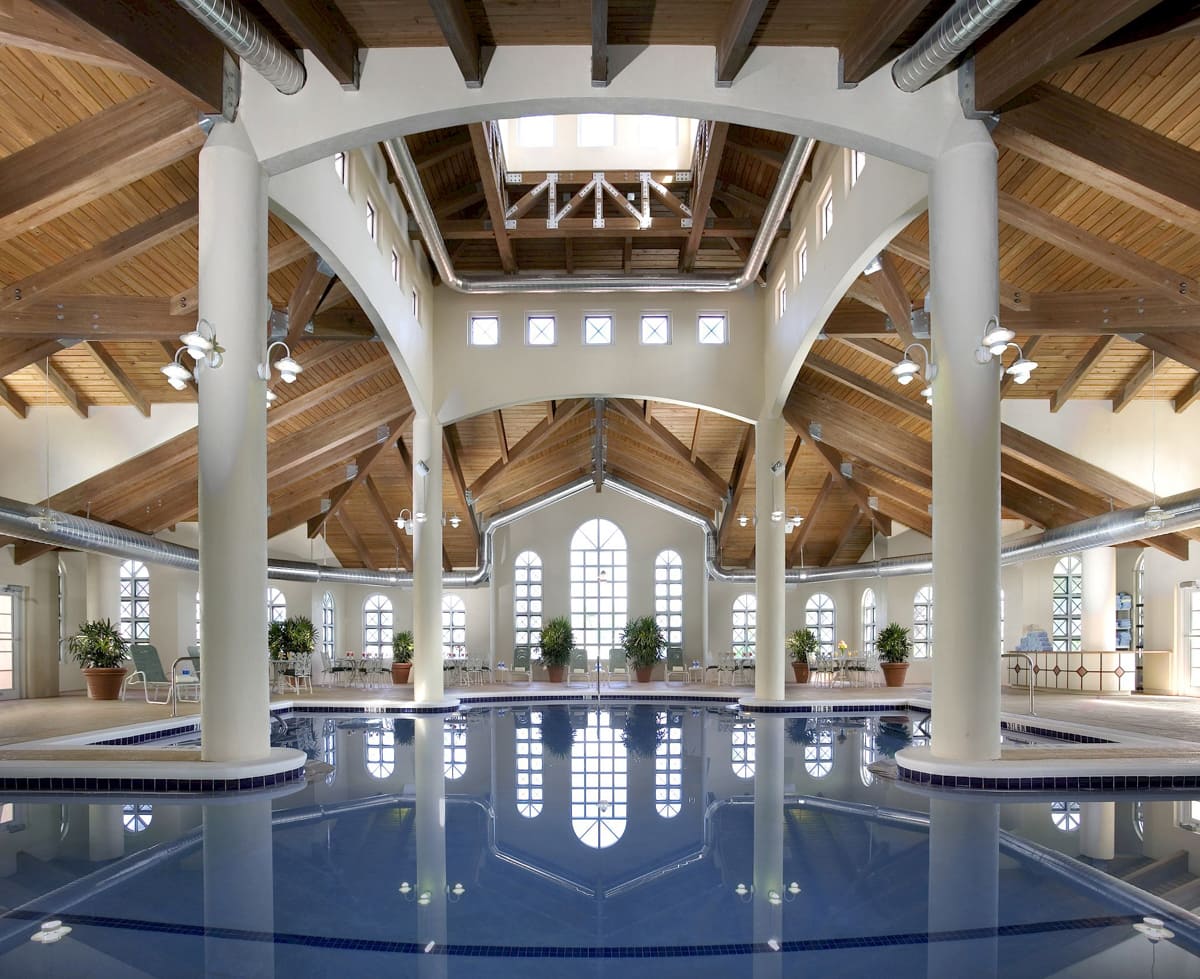
- Hammock Beach Golf Resort & Spa (Palm Coast, Florida): This property highlights the utility of indoor facilities as a contingency for inclement weather in traditionally outdoor-focused markets.
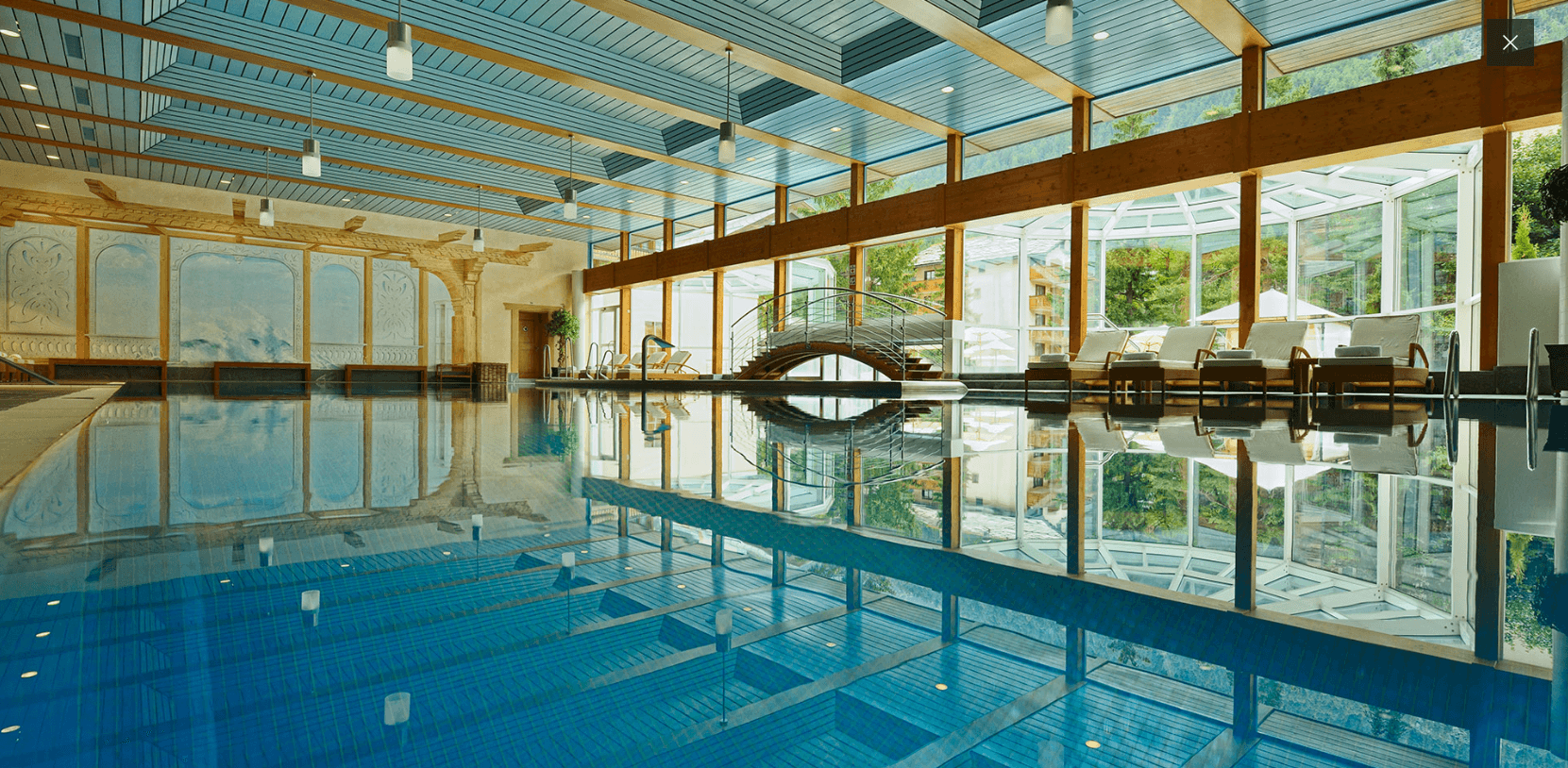
- Hotel Mont Cervin Palace (Zermatt, Switzerland): By providing an indoor-outdoor interface at high altitudes, this hotel addresses the need for alpine leisure during extreme winter conditions.
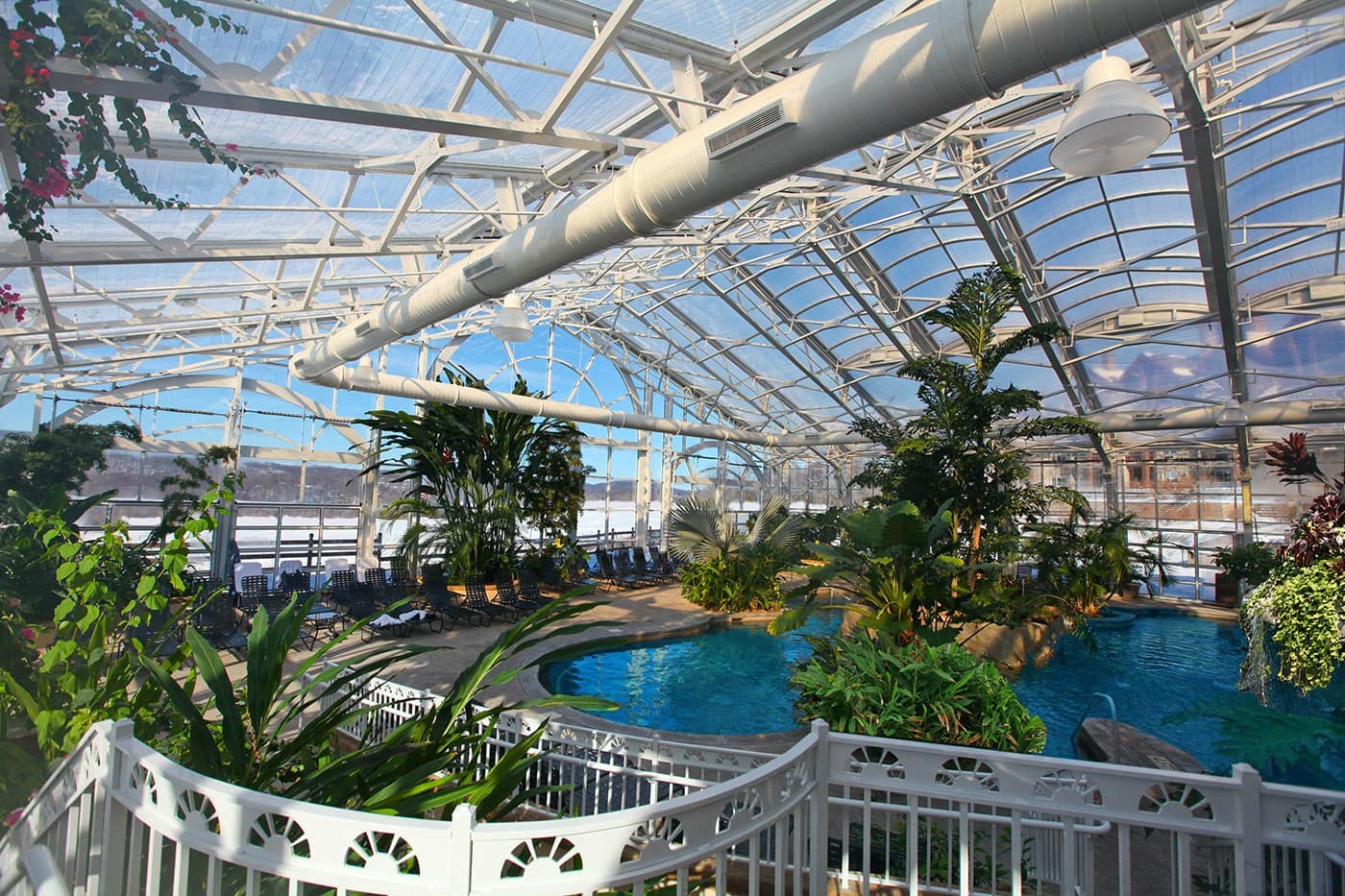
- Grand Cascades Lodge (Hamburg, New Jersey): This facility gained industry attention for its use of German Foiltec roofing, which allows for near-total light transmission, mimicking outdoor conditions indoors.
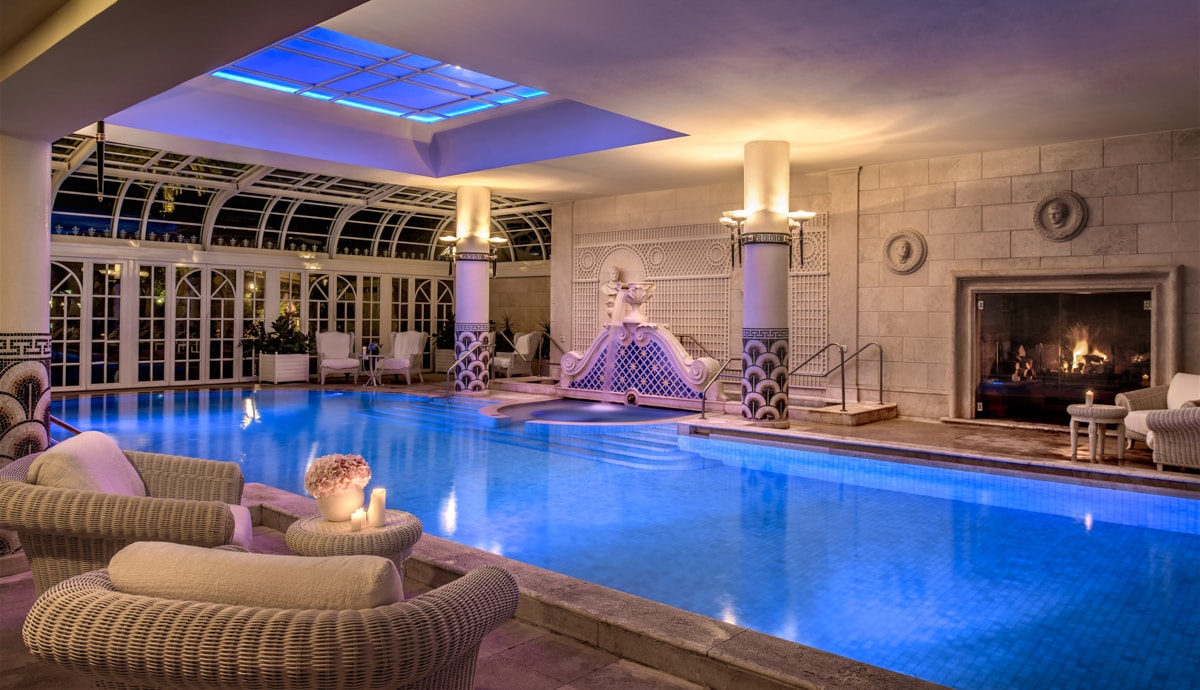
- Rome Cavalieri (Rome, Italy): The use of a glass atrium at this property reflects a commitment to maintaining a Mediterranean aesthetic while providing a climate-protected environment.
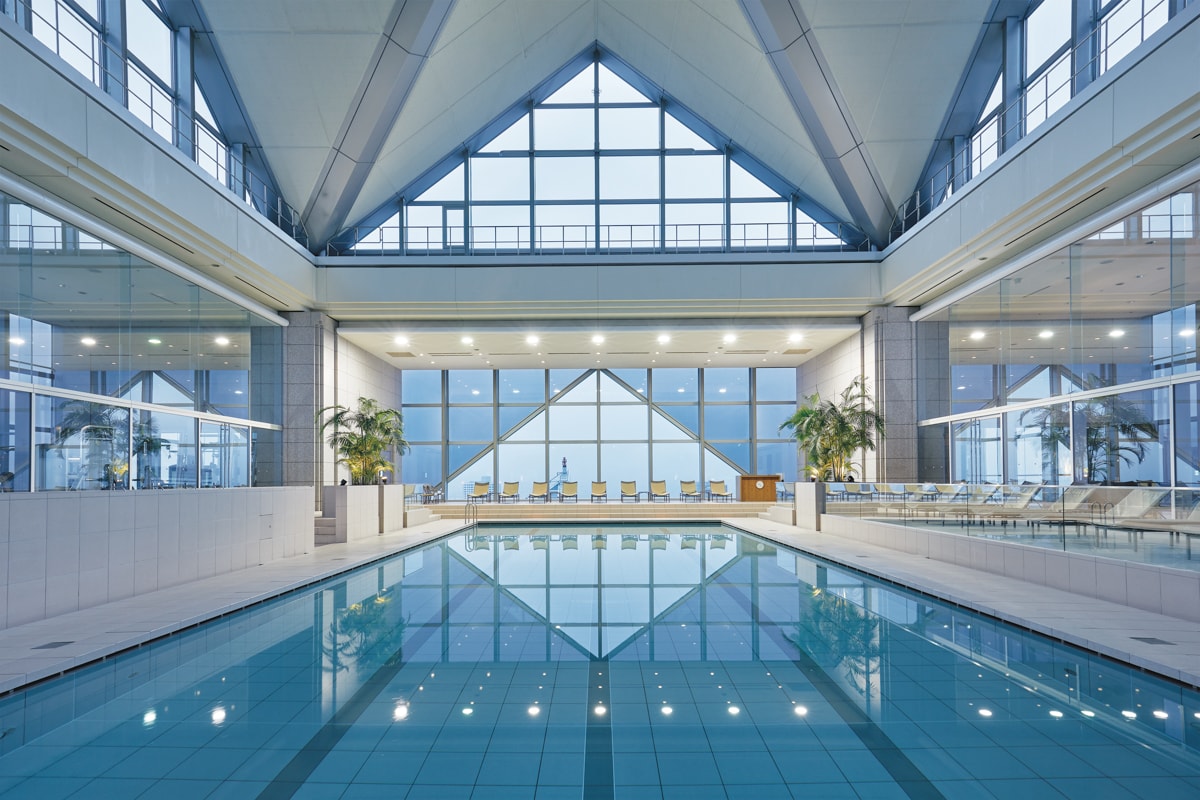
- Park Hyatt Tokyo (Tokyo, Japan): Famous for its cinematic appearances, this facility utilizes high-altitude atrium design to maximize natural light.
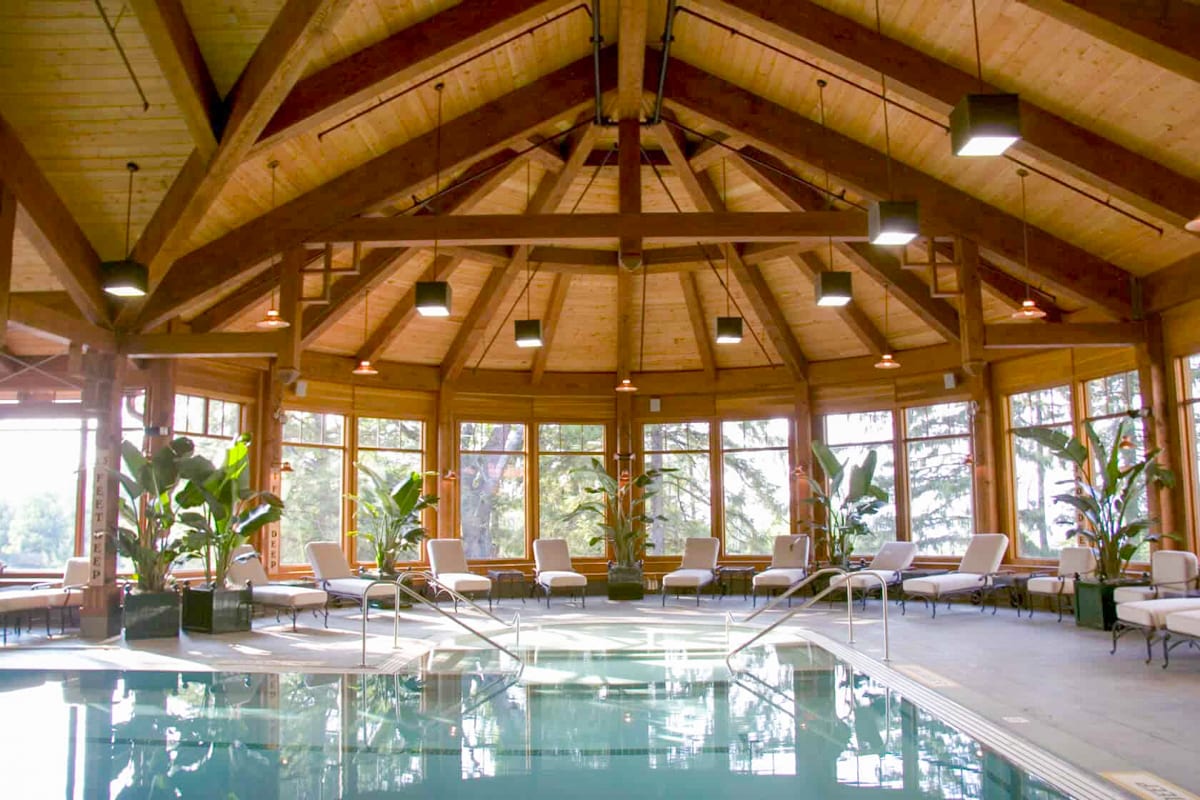
- Mohonk Mountain House (Hudson Valley, New York): An example of historical preservation meeting modern amenity upgrades, offering unique forest views.
Engineering and Operational Considerations
The operation of an indoor pool at a professional hotel level involves more than just water circulation. Modern facilities must manage humidity levels, air quality, and energy consumption. The use of mineral-based cleaning systems, such as those found at the One Aldwych in London, reflects a growing industry preference for chlorine-free environments, which reduces the chemical load on the facility and improves the guest experience for those with sensitive skin.
Furthermore, the integration of "indoor-outdoor" designs—where the water surface remains continuous while the enclosure moves or remains open—has become a hallmark of luxury resorts. Properties like the Hotel Metropole Monte-Carlo utilize these designs to offer flexibility during shoulder seasons, allowing for a seamless transition as weather patterns change.
Economic Impact and Guest Demographics
The inclusion of an indoor water park or high-end pool is a significant driver of ADR (Average Daily Rate) and occupancy during off-peak seasons. In regions like the Midwest United States, properties such as Wilderness at the Smokies Resort or Hershey Lodge have utilized their massive indoor aquatic footprints to convert seasonal destinations into year-round revenue generators. The data suggests that families prioritize these amenities when booking, leading to longer average lengths of stay.
For urban hotels, the indoor pool serves a dual purpose: it acts as a luxury amenity for business travelers and a key leisure attraction for families. The Fairmont Olympic Hotel in Seattle and The Langham in Chicago leverage their historic architecture to offer a premium environment that differentiates them from standard chain hotels.
Strategic Implications for the Hospitality Sector
The trend toward these facilities is not without challenges. The capital expenditure required to maintain a state-of-the-art indoor pool is substantial, involving ongoing costs for water filtration, dehumidification, and staff training. However, the market demand for these facilities appears to be inelastic. Travelers increasingly view the presence of an indoor, well-maintained pool as a baseline requirement for "full-service" classification.
As the industry moves forward, we can expect to see an increase in:
- Sustainable energy usage: Incorporating geothermal or solar heating for pool water.
- Digital integration: Enhancing the guest experience with immersive visual and audio technology.
- Wellness-centric design: Shifting from recreational splash zones to therapeutic and spa-oriented water experiences.
Summary of Regional Diversity
The geographical distribution of these pools, from the high-altitude resorts in the Swiss Alps to the urban centers of Tokyo and Chicago, highlights the global nature of this demand. Whether the goal is to provide a shelter from a blizzard in Zermatt or a refuge from the humidity of a Houston summer, the indoor hotel pool remains a vital component of the modern guest experience.
As hotels continue to navigate the complexities of guest expectations, those that offer high-quality indoor aquatic environments will likely continue to outperform those that rely solely on external environmental factors. The 30 properties highlighted here represent the benchmark for excellence in this sector, combining technical prowess with a sophisticated understanding of guest psychology and leisure needs.

Conclusion and Future Outlook
The evolution of the indoor hotel pool from a simple tiled rectangle to an immersive, technologically advanced, and architecturally significant space is a testament to the sophistication of the modern hospitality industry. By providing a controlled environment that is both visually stunning and physically restorative, these 30 properties demonstrate that the boundaries of luxury are limited only by the ambition of the designers and the technological tools at their disposal. For the traveler, these facilities offer more than just a place to swim; they offer a consistent experience of comfort and leisure, regardless of the climate outside. As the industry continues to innovate, the focus will undoubtedly shift toward even greater integration of sustainability and sensory-rich experiences, ensuring that the indoor aquatic center remains a fixture of the world’s most prestigious hotels for decades to come.