La Reserve Firenze Brings a New Standard of Residential Luxury to the Heart of Florence

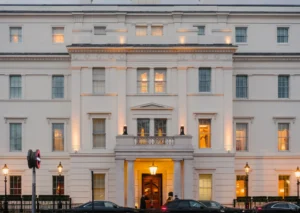
The historic landscape of Florence, Italy, has long been defined by its rigid division between grand, crowded tourist corridors and the quiet, lived-in alleyways of the Oltrarno district. This fall, the launch of La Reserve Firenze—a boutique residential hospitality project helmed by Grégory and Olivia Marciano—represents a strategic pivot in how the luxury travel sector addresses the growing demand for authentic, private immersion. Located just a ten-minute stroll from the epicenter of Renaissance history at the Piazza della Signoria, the property occupies a revitalized 15th-century palazzo, marking a significant transition from its former iteration as a functional hub for international students to a high-end, six-unit serviced apartment complex.
A Transformation of Heritage Architecture
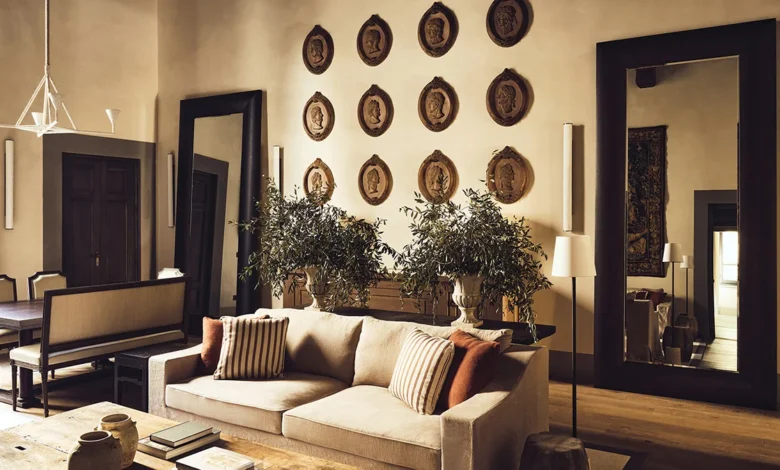
The architectural renovation of the property, executed by the Paris-based firm Gilles & Boissier, reflects a modern sensibility toward heritage conservation. By stripping away the utilitarian partitions of the building’s student-housing era, the designers have restored the grand proportions of the piano nobile while integrating a contemporary, minimalist aesthetic. The project, which officially opened its doors this autumn, is the result of years of meticulous restoration, a process that required balancing the strict regulations of Italian historical preservation with the requirements of 21st-century luxury amenities.
For Grégory Marciano, who relocated his family from Paris to Florence in 2019, the project was never intended to be a traditional hotel. Instead, it was conceptualized as a "home-away-from-home" for the discerning traveler. The property offers six distinct units, each designed to provide total privacy, appealing to a demographic of travelers—ranging from public figures seeking anonymity to honeymooners—who prioritize seclusion over the common areas typical of five-star hospitality.

The Evolution of the Luxury Traveler
The emergence of La Reserve Firenze is part of a broader shift in the travel industry. According to industry experts, there has been a measurable increase in demand for "high-touch residential" experiences. Travelers are increasingly rejecting the impersonal nature of large-scale hotel chains in favor of properties that offer the autonomy of a private residence combined with the comprehensive service infrastructure of a luxury hotel.
Andrea Grisdale, CEO and founder of the luxury travel firm IC Bellagio, notes that this trend is driven by a desire for convenience and intimacy. "We see a segment of the market that says, ‘I want my own space, but I also want the capability to have a concierge fulfill a request at two in the morning,’" Grisdale explains. This service model allows guests to feel integrated into the urban fabric of Florence rather than sequestered in a tourist bubble.
Historical Context and Regional Integration
Florence’s Oltrarno neighborhood, historically known as the "craftsman’s quarter," remains one of the few areas of the city where the local population continues to live and work in the traditional sense. By situating the property here, the Marcianos are tapping into a niche market that values the "authentic" Italian experience—the ability to shop at local markets, engage with neighborhood artisans, and dine at venues where the owner is a familiar face.
The Marcianos have expanded this concept beyond the palazzo itself by occasionally opening their private family villa to guests. Notably, the villa, which has a provenance linked to the Gucci family, provides additional facilities, such as private tennis courts, that are rarely available in the constrained footprint of the city center. This tiered offering—a central apartment for daily life and a suburban villa for recreation—mirrors the lifestyle of the historic Florentine elite.

The Off-Season Advantage
Travel data indicates that the peak summer season in Florence has become increasingly challenging for visitors, with overcrowding frequently cited as a deterrent to the quality of the travel experience. The "off-season" window, extending from late autumn to early spring, is now being promoted by travel specialists as the optimal time to visit.
During these quieter months, the dynamics of the city shift. Restaurateurs and artisans, no longer overwhelmed by the surge of summer tourists, are more available for meaningful engagement with visitors. This cultural accessibility is a key component of the value proposition offered by properties like La Reserve Firenze. When guests dine in the city during the off-season, the hospitality experience is transformed from a transactional encounter into a more communal, personal event.
A Curated Guide to the Local Experience
To facilitate this integration, local experts, including those from IC Bellagio, have identified several key institutions that define the contemporary Florentine experience:
- Cibrèo: Eschewing the conventional pasta-heavy menu, this establishment focuses on elevating traditional peasant cuisine, such as stuffed pigeon and complex, slow-cooked meats, into a refined gastronomic experience.
- Dinicaffè: As the only coffee roaster remaining in the historic city center, it serves as a critical point of contact for understanding the region’s deep-rooted coffee culture.
- Giacosa 1815: Historically recognized as the birthplace of the Negroni, this bar serves as a social anchor for the city. Its ability to transition from an afternoon aperitivo spot to a late-night digestivo haunt makes it a focal point for the city’s social life.
- Il Bisonte: Representing the pinnacle of Tuscan leather craftsmanship, this boutique emphasizes local production, with all items crafted by artisans working within a 19-mile radius of the store.
Economic and Sociological Implications
The development of high-end residential properties in historically significant buildings has long been a subject of debate among urban planners. While these projects contribute to the preservation of deteriorating structures—many of which would otherwise remain dormant or fall into further disrepair—they also raise questions regarding the gentrification of historic city centers.

However, from an economic standpoint, the "serviced apartment" model provides a sustainable revenue stream that supports the local economy through the employment of local staff, the use of regional artisans for restoration, and the promotion of nearby small businesses. The Marcianos’ approach, which emphasizes the building’s history and its integration into the neighborhood’s social fabric, suggests a model for development that attempts to mitigate the "tourist-trap" phenomenon by encouraging guests to participate in the local economy rather than consuming it from a distance.
Future Outlook
As the tourism sector continues to recover and evolve, the success of La Reserve Firenze will likely serve as a case study for future developments in other major Italian cultural centers such as Venice or Rome. The combination of historical architecture, highly curated service, and a deliberate focus on the "local" experience is proving to be a winning strategy for properties targeting the ultra-high-net-worth segment.
For now, the palazzo stands as a testament to the idea that heritage properties can remain relevant in the modern era if they are willing to adapt their internal functions to meet the changing needs of the global traveler. With nightly rates starting at approximately $1,500, the property positions itself squarely in the luxury market, signaling confidence that there is significant, sustained demand for a quiet, sophisticated, and deeply authentic slice of life in the heart of the Renaissance.
As the winter months approach, the property enters its first full season of operations. Whether it can maintain the balance between the exclusivity of a private residence and the community engagement required for an "authentic" experience remains to be seen, but the early indicators suggest that the project is well-positioned to redefine the standards of luxury accommodation in Florence. By choosing to prioritize the "resident" over the "tourist," the Marcianos have effectively tapped into a long-standing aspiration of the international traveler: to live, if only for a short time, as a true Florentine.