The Lens, the Law, and the Tragedy: How the Oklahoma City Bombing Created a Landmark Copyright and Employment Case

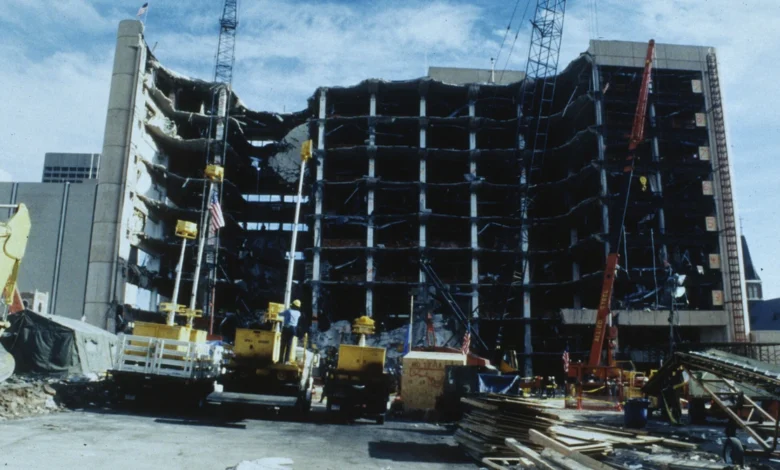
On the morning of April 19, 1995, a domestic terrorist attack devastated the Alfred P. Murrah Federal Building in downtown Oklahoma City, claiming 168 lives, injuring hundreds, and shaking the American conscience. Amidst the chaos, smoke, and shattered concrete, a quiet legal battle began to take shape just three feet apart—one that would redefine the boundaries of intellectual property, corporate ownership, and the "work made for hire" doctrine in United States copyright law.
While history famously remembers the harrowing image captured by bank credit specialist Charles Porter IV—an iconic photograph of firefighter Chris Fields cradling one-year-old victim Baylee Almon that earned a 1996 Pulitzer Prize—a parallel visual narrative emerged from a company safety coordinator named Lester "Bob" LaRue. Armed with his employer’s camera, company film, and a gas utility vehicle, LaRue shot 44 frames that morning. One of those exposures made its way onto the cover of the May 1, 1995, issue of Newsweek. Yet, rather than establishing LaRue as a celebrated photojournalist, those frames ignited a multi-year legal war over who actually owned the copyright to history: the man behind the camera or the corporation that paid his salary.
Chronology of a Crisis: From the Blast to the Courtroom
The unfolding events of April 19, 1995, and the subsequent legal fallout followed a distinct, rapid trajectory from emergency response to corporate retribution and federal litigation.
- April 19, 1995: A fertilizer bomb detonates outside the Murrah Federal Building at 9:02 a.m. Lester LaRue, safety coordinator for the Oklahoma Natural Gas Company (ONG), responds to the scene in a company vehicle, investigating potential gas leaks and capturing photographs between emergency duties. Standing feet away, Charles Porter IV captures his Pulitzer-winning frame.
- Late April to May 1995: LaRue’s film is developed at a local Moto-Photo counter. Newsweek requests the negatives, and LaRue’s frame lands on the magazine’s cover. Concurrently, LaRue signs with the Sygma photo agency for worldwide syndication and licenses the image for merchandise. ONG executives raise internal conflict-of-interest concerns regarding an employee profiting from a national tragedy.
- May 18, 1995: Oklahoma Natural Gas formally asserts its ownership over the photographs, demanding that LaRue surrender rights and any financial proceeds.
- September 8, 1995: After refusing a two-day ultimatum to concede ownership and turn over earnings to victim relief funds, LaRue is terminated by ONG after 32 years of loyal service.
- October 5, 1995: Oklahoma Natural Gas files a federal lawsuit against LaRue to establish copyright ownership. Shortly after, victims’ family members intervene, asserting right-of-publicity claims.
- 1996–1998: Federal district and appellate courts rule decisively that the photographs were created within the scope of LaRue’s employment, granting full copyright ownership to the utility company and awarding statutory damages.
- March 14, 2000: The Oklahoma Court of Civil Appeals affirms summary judgment against LaRue in his wrongful termination suit, cementing the legal reality that private corporate policies regarding intellectual property supersede employee claims under these circumstances.
Dissecting the Work Made for Hire Doctrine
At the heart of the federal litigation was a fundamental misunderstanding of copyright law by many independent-minded creators who find themselves capturing newsworthy events while on the clock. Under Title 17 of the United States Code, specifically Sections 101 and 201(b), a "work made for hire" encompasses any work prepared by an employee within the scope of their employment. In such instances, unless a formal, signed written instrument explicitly states otherwise, the employer is legally considered the author and owner of all associated rights.
LaRue’s legal counsel attempted to argue that capturing a catastrophic bombing cover photo fell outside the normal business operations of a natural gas utility company. During depositions, company president David Kyle noted that nothing on the Newsweek cover related directly to the commercial distribution of natural gas. However, the United States Court of Appeals for the Tenth Circuit swiftly dismissed this defense as preposterous.
The appellate panel outlined a definitive test for scope of employment: Did photography fall under the general responsibilities of his safety role? Did the event occur during working hours? Were company resources—such as the camera, film, vehicle, and processing budget—utilized? Did the employee maintain continuous communication with the office without logging personal time? Because all factual answers pointed affirmatively toward ONG, the subject matter of the photograph itself became secondary. The physical act of pressing the shutter was legally eclipsed by the institutional umbrella under which LaRue operated.
The Conflict of Interest and the Firing of a "Company Man"
Beyond copyright law, the human toll of the case centered on corporate governance and the ethics of disaster profiteering. Oklahoma Natural Gas maintained a strict conflict of interest policy requiring employees to avoid situations where personal financial interests conflicted with company interests.
While ONG executives were unconcerned with the journalistic exposure of the magazine cover, they expressed acute anxiety over the optics of a utility employee monetizing a national tragedy. When LaRue signed with the Sygma photo agency and pursued merchandise licensing—including unmarketed T-shirts and a series of bronze-look commemorative statues—management issued an ultimatum. They demanded he assign all rights to the company and surrender his proceeds to victim relief funds.
LaRue, then 57 years old and boasting more than three decades of uninterrupted service as a "company man," refused the directive. He had donated a fraction of his earnings—roughly $4,209 out of more than $38,000 in income—to charitable causes, but kept the remainder. On September 8, 1995, ONG terminated his employment.
The subsequent federal lawsuit resulted in the court enjoining LaRue from any further use of the images and awarding ONG statutory damages amounting to $34,623.50. Deprived of a jury trial due to procedural missteps by his legal representation regarding filing deadlines, LaRue found himself stripped of both his livelihood and his intellectual property.
The Irony of the Right of Publicity: When a Face is Legally Invisible
While the copyright battle waged between employee and employer, a parallel legal challenge was introduced by Aren Almon, whose one-year-old daughter Baylee was killed in the blast, and firefighter Chris Fields. On November 9, 1995, they intervened in the lawsuit under Oklahoma’s right of publicity statutes, arguing that their likenesses had been exploited without consent.
Under Oklahoma law, a right of publicity claim requires that a person be "readily identifiable" to the naked eye through a casual inspection of the photograph. However, when the Tenth Circuit judicial panel examined the archival copies of the Newsweek cover and related frames, they confronted a striking reality: the infant’s face was entirely obscured, revealing nothing more than hair color and approximate size. Meanwhile, firefighter Chris Fields had his head turned down and away, his features shadowed entirely by his firefighting helmet, leaving only a ambiguous smudge that might have been a mustache.
Evidence introduced during the proceedings demonstrated that even a fire dispatcher who knew Fields intimately could not conclusively identify him from the photograph alone on the night of the bombing; identification had to be inferred by recognizing the station number "5" emblazoned on his helmet.
Despite the emotional weight of the image, the court ruled strictly on statutory boundaries. Because the legislation made no provision for external context, captions, or public knowledge, the judiciary concluded that the photograph could legally depict any firefighter and any baby. One of the most emotionally resonant and widely recognized images of the late 20th century was deemed, in the eyes of Oklahoma law, to feature nobody in particular. Consequently, the intervenors’ claims were defeated by the very visual ambiguity that made the photo universal.
Broader Implications for Modern Content Creators and Corporate Employees
Decades after the ruling, the legal precedent established in the LaRue litigation remains a vital cautionary tale for modern content creators, staff photographers, corporate communications personnel, and safety officers operating in digital environments.
In an era where smartphones turn every workforce member into a potential photojournalist, the legal boundaries governing work-for-hire frameworks are frequently misunderstood. The LaRue case underscores several critical principles:
- Resource Allocation Matters: Utilizing company-owned equipment, vehicles, time, or expense accounts heavily biases ownership claims toward the employer, regardless of creative initiative or artistic merit.
- The Necessity of Written Agreements: Section 201(b) permits the reallocation of copyright ownership between employer and employee, but it mandates a formal, signed written instrument executed prior to creation. Verbal understandings or retroactive contracts hold no legal weight.
- Subject Matter is Not a Shield: Creators frequently assume that if a photograph falls outside the direct commercial scope of their employer’s daily operations, they retain personal rights. The courts have repeatedly clarified that the operational context of the shoot supersedes the creative content of the image.
- Freelancers vs. Employees: Independent contractors and freelancers maintain significantly stronger statutory protections under copyright law, whereas W-2 employees face steep hurdles when capturing newsworthy material while performing professional duties.
Legacy of a Tragedy and a Divided Frame
Lester LaRue passed away years after the legal battles concluded, his 32-year career as a utility safety coordinator concluding not with a pensioned retirement, but with an abrupt termination and a federal injunction. Chris Fields retired as a major from the Oklahoma City Fire Department in 2017 after more than three decades of service, dedicating his post-career to supporting first responders dealing with operational trauma. The site of the Murrah Federal Building now stands as the Oklahoma City National Memorial, featuring the Field of Empty Chairs—one for each of the 168 lives lost.
Yet, the legal skeleton left behind by the disaster continues to haunt the intersection of journalism, employment law, and intellectual property. The image that graced the cover of Newsweek—a symbol of profound human grief, rescue, and resilience—remains a legal anomaly: a masterclass in institutional ownership, where the man who pressed the shutter lost his career, the subjects depicted were legally rendered invisible, and the copyright belonged entirely to a natural gas utility.