Listening to the Pacific Crest Trail: How One Hiker Mapped the Acoustic Landscape of America’s Famous Thru-Hike

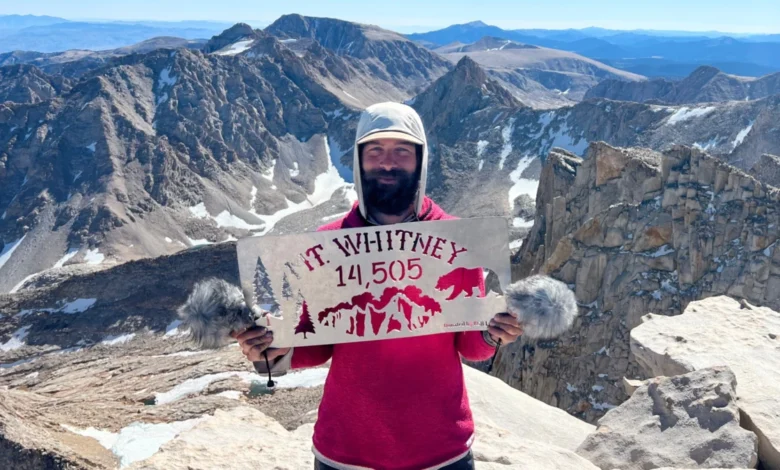
Most long-distance backpackers document their monumental journeys through conventional visual mediums. Photo albums overflow with sweeping vistas of the Sierra Nevada, sunrises over the Cascade Range, and selfies captured at the Mexican and Canadian borders. For decades, the visual archive has remained the gold standard of trail commemoration. However, when Los Angeles-based sound artist, composer, and field recordist Tom Kelly set out to tackle the 2,650-mile Pacific Crest Trail (PCT) in 2023, he chose to immortalize the experience through an entirely different sensory lens. Carrying 40 ounces of specialized professional audio equipment across deserts, mountain passes, and dense forests, Kelly embarked on a multi-month mission to capture the true acoustic fingerprint of the American wilderness.
The culmination of this grueling physical and artistic endeavor is a newly released, interactive, and freely accessible sound map. Spanning the entire length of the PCT, the digital resource allows users to click on specific geographic points and listen to high-fidelity field recordings captured precisely at those coordinates. Following two meticulous years of post-processing, archiving, and digital design, Kelly’s project bridges the gap between raw backcountry immersion and digital accessibility. The initiative offers a profound alternative to traditional outdoor media, inviting armchair travelers, nature enthusiasts, and fellow thru-hikers alike to experience the trail not by what it looks like, but by what it sounds like.
The Weight of Sound: Logistics and Equipment on the Trail
Thru-hiking the Pacific Crest Trail is already a formidable logistical challenge. Ranging from the scorching expanse of the Mojave Desert to the freezing, unpredictable weather of Washington state, every ounce carried in a backpack matters. For traditional backpackers, minimizing base weight is a holy grail; every gram saved prevents joint injury, exhaustion, and failure. Yet, Kelly willingly added 40 ounces of extra cargo to his pack to accommodate professional-grade recording gear.
This hardware typically included specialized microphones, wind protection blimps, portable digital recorders, and auxiliary power banks. Operating such equipment in the backcountry requires immense patience and discipline. While most exhausted hikers crawl into their tents at dusk to nurse blisters and prepare for the next day’s mileage, Kelly frequently found himself performing field recordings in adverse conditions.
In an interview with reporter Amelia Arvesen, Kelly recounted the friction between physical exhaustion and artistic dedication. Recalling a tranquil evening by an alpine lake, he described waking up in the dead of night to the haunting, resonant call of a great horned owl echoing across the water. While the romantic instinct might suggest springing into action, the reality of backcountry sound recording often clashes with basic human comfort. The last thing a fatigued hiker wants to do, Kelly noted, is abandon a warm sleeping bag, assemble audio rigs, hike to a strategic location, and execute a precise recording process in the dark. Despite these physical hurdles, Kelly persisted, driven by an ingrained compulsion to interface with his environment through sound.
A Chronology of the 2023 Thru-Hike
The genesis of the PCT sound map predates Kelly’s 2023 thru-hike. As a trained composer and professional field recordist rooted in Los Angeles, Kelly had long utilized portable recording devices as a primary method for engaging with the spaces he inhabited. Bringing a recorder along on travels was not a novel departure for him, but rather a continuation of a lifelong artistic practice.
However, applying this methodology to a continuous 2,650-mile trek elevated the experiment into a grander narrative. Kelly did not set out with a definitive blueprint for a published public project. When he laced up his boots at the southern terminus at Campo, California, in the spring of 2023, he merely intended to maintain a daily practice of focused listening and acoustic documentation.
The turning point of the journey occurred early on, deep within the Mojave Desert. Stationed just north of the Los Angeles Aqueduct—a stark, arid landscape defined by intense sunlight and vast, sweeping horizons—Kelly sat down directly on the desert floor, deployed his recording rig, and simply listened. It was in this seemingly mundane moment of stillness that the conceptual weight of the project crystallized. Amid the overwhelming scale of the desert and the immense physical undertaking of the thru-hike, Kelly experienced a profound sense of alignment. The juxtaposition of the massive geographic corridor against these intimate, fleeting acoustic micro-moments provided the emotional anchor that sustained the rest of the journey.
For the next several months, Kelly traversed California, Oregon, and Washington, pausing his forward momentum countless times to document the shifting soundscapes. His microphones captured the gentle, bubbling cadence of snowmelt creeks in the High Sierra, the rhythmic chirping of desert insects, the violent rustling of high-altitude grasses whipped by Pacific gales, the heavy percussion of rain striking a tent fly, and the muted chatter of fellow backpackers sharing trail stories.
Upon reaching the northern terminus at Manning Park in Canada, the physical journey concluded, but the arduous technical phase began. Over the course of two years, Kelly sifted through hundreds of hours of raw audio. He cleaned, edited, synchronized, and mapped the data, culminating in the launch of his interactive digital platform.
Background Context: The Acoustic Ecology Movement
Kelly’s project arrives at a time of growing global interest in acoustic ecology—the study of the relationship between human beings and their environment, mediated through sound. Pioneers of the field, such as acoustic ecologist Gordon Hempton, have long argued that natural silence is an increasingly endangered natural resource. As human development, commercial flight paths, highway expansion, and industrial noise pollution infiltrate even the most remote wilderness areas, true acoustic purity becomes exceedingly rare.
The Pacific Crest Trail, while celebrated as a pristine wilderness corridor, is not entirely immune to anthropogenic noise. Hikers frequently cross highways, pass near agricultural lands, or hear the distant drone of commercial aircraft overhead. Kelly’s recordings capture this complex acoustic reality. The sound map does not merely romanticize nature; it presents an honest acoustic portrait of a modern long-distance trail, where pristine natural soundscapes occasionally intersect with the echoes of human civilization.
Furthermore, field recording in wild spaces serves a vital archival purpose. As climate change rapidly alters ecosystems across the American West—evidenced by catastrophic wildfires, shifting precipitation patterns, and the degradation of native habitats—audio documentation provides baseline scientific and cultural data. Future generations may look back at recordings like Kelly’s to understand how the acoustic signatures of these ecosystems shifted during an era of unprecedented environmental transition.
Broader Implications and Public Reception
The release of the PCT sound map has resonated deeply within both the outdoor recreation community and the broader arts sector. By lowering the barrier to entry for sensory wilderness appreciation, the map offers a vital lifeline to populations who may not have the physical ability, financial resources, or time to undertake a multi-month thru-hike.
Accessibility in the outdoors has traditionally focused on physical infrastructure—such as ADA-compliant trails, adaptive gear, and informational brochures. Kelly’s project expands this definition into the digital and sensory realms, proving that immersion can transcend physical presence. Individuals with mobility impairments, chronic illnesses, or financial constraints can navigate the digital map, click on a coordinate in the Goat Rocks Wilderness or the heat-baked plains of Southern California, and close their eyes to experience the acoustic reality of the trail.
Moreover, the project offers a psychological counter-narrative to modern digital consumption. In an era dominated by hyper-fast visual media—such as short-form video algorithms and heavily filtered photo feeds designed for instant gratification—Kelly’s sound map demands a different kind of engagement. It requires the listener to slow down, practice patience, and listen actively.
As Kelly noted in his reflections on the project, the primary gift he hopes to offer the public is the ability to tap into the same state of mindfulness he discovered in the Mojave Desert. By temporarily escaping the visual saturation of modern life and tuning into the subtle frequencies of the natural world, listeners can experience a grounded sense of place. Whether used as a meditative tool by urban residents seeking psychological respite or as an educational resource for aspiring backpackers, the Pacific Crest Trail sound map transforms a solitary physical achievement into a shared, immersive public acoustic commons.