Three Common Hiking Movement Mistakes That Lead to Trail Injuries and How to Fix Them

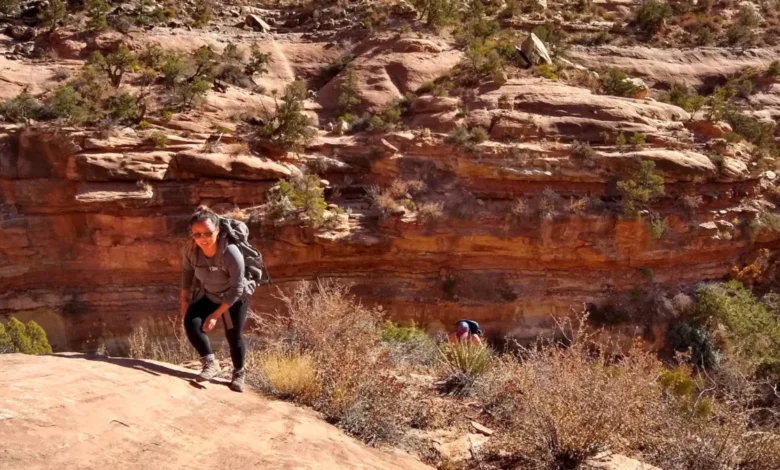
When covering dozens or even hundreds of miles on rugged terrain, minor inefficiencies in physical movement rarely remain minor. Over the course of thousands of steps in a single day, repeating a single faulty movement pattern hundreds of times places cumulative strain on joints, tendons, and muscles. While everyday life in urban or office environments rarely highlights these subtle biomechanical quirks, the physical demands of backpacking, steep ascents, and long descents rapidly unmask them. As fatigue sets in, these unaddressed strength imbalances and movement errors manifest as nagging knee pain, aching hips, or debilitating lower back strain. Physical therapists and wilderness medicine experts increasingly emphasize that proper trail biomechanics are just as critical to injury prevention as carrying a well-fitted pack or maintaining proper hydration. Understanding the mechanics behind common hiking injuries allows outdoor enthusiasts to correct their form before a preventable injury abruptly ends a trek.
The Biomechanics of Fatigue: Why Small Errors Compound on the Trail
The human body is an exceptionally adaptable machine, yet long-distance hiking pushes skeletal and muscular systems to their absolute limits. During a typical eight-hour hike, an individual may take anywhere from 15,000 to 25,000 steps. If a hiker exhibits even a millimeter of inward knee collapse or a slight over-stride with each of those steps, the surrounding soft tissues absorb thousands of pounds of misplaced force over the course of the day.
According to sports medicine data compiled by orthopedic researchers, overuse injuries account for the vast majority of evacuation requests and medical interventions on long-distance routes like the Appalachian Trail and the Pacific Crest Trail. Unlike acute trauma—such as a sudden ankle sprain from a loose rock—overuse injuries develop insidiously. They begin as a faint ache in the patellar tendon or a dull throb in the hip flexors, gradually worsening until the hiker can no longer bear weight. By addressing the root causes of these repetitive strain injuries through targeted strength training and conscious form adjustments, hikers can significantly extend their backcountry longevity and enjoy pain-free miles.
Mistake #1: The Inward Knee Collapse (Valgus Collapse)
One of the most prevalent mechanical failures observed in tired hikers is the tendency of the knee to drop inward during the stance phase of a step, a phenomenon known clinically as dynamic knee valgus. This issue rarely appears during the first mile of a fresh morning hike. Instead, it emerges as cardiovascular and muscular fatigue degrades central nervous system control over the lower extremities.
The knee joint itself operates primarily as a hinge, possessing limited structural stability on its own. It relies entirely on the coordinated strength of the muscles above it—specifically the gluteus medius and maximus—and the muscles below it in the lower leg and ankle. When these stabilizing muscle groups tire, they fail to keep the femur and tibia in proper alignment, causing the knee to cave toward the midline of the body. Over time, this repetitive inward tracking places immense friction and asymmetrical pressure on the patella and the meniscus, frequently leading to patellofemoral pain syndrome, commonly referred to as "runner’s knee."
Corrective Strategy: The Step-Down Exercise
To combat dynamic knee valgus, hikers must train the stabilizing musculature to maintain joint alignment under load. The step-down exercise is widely regarded by physical therapists as one of the most effective movements for building this specific capacity.
To perform the exercise correctly:
- Stand on a secure 4- to 6-inch elevated platform or step using your right foot.
- Flex your left foot upward, mimicking the motion of taking your foot off a gas pedal.
- Slowly and deliberately lower your left heel toward the ground, keeping your hips completely level.
- Lightly tap your left heel on the floor while maintaining the flexed position of the ankle. A wall or countertop may be used for initial balance support.
- Return to the starting position.
Fitness professionals recommend performing two to three sets of six to 10 controlled repetitions per side. As neuromuscular control and strength improve, the height of the step can be gradually increased by 2 to 4 inches.
Coaching Insight: The primary objective is visual alignment. Throughout the movement, the knee of the standing leg should remain tracking directly over the second toe. When fatigue sets in during practice or on the trail, the natural inclination is to rush the movement. Hikers should intentionally decelerate, prioritizing immaculate form over speed.
Mistake #2: Over-Striding on Ascents and Descents
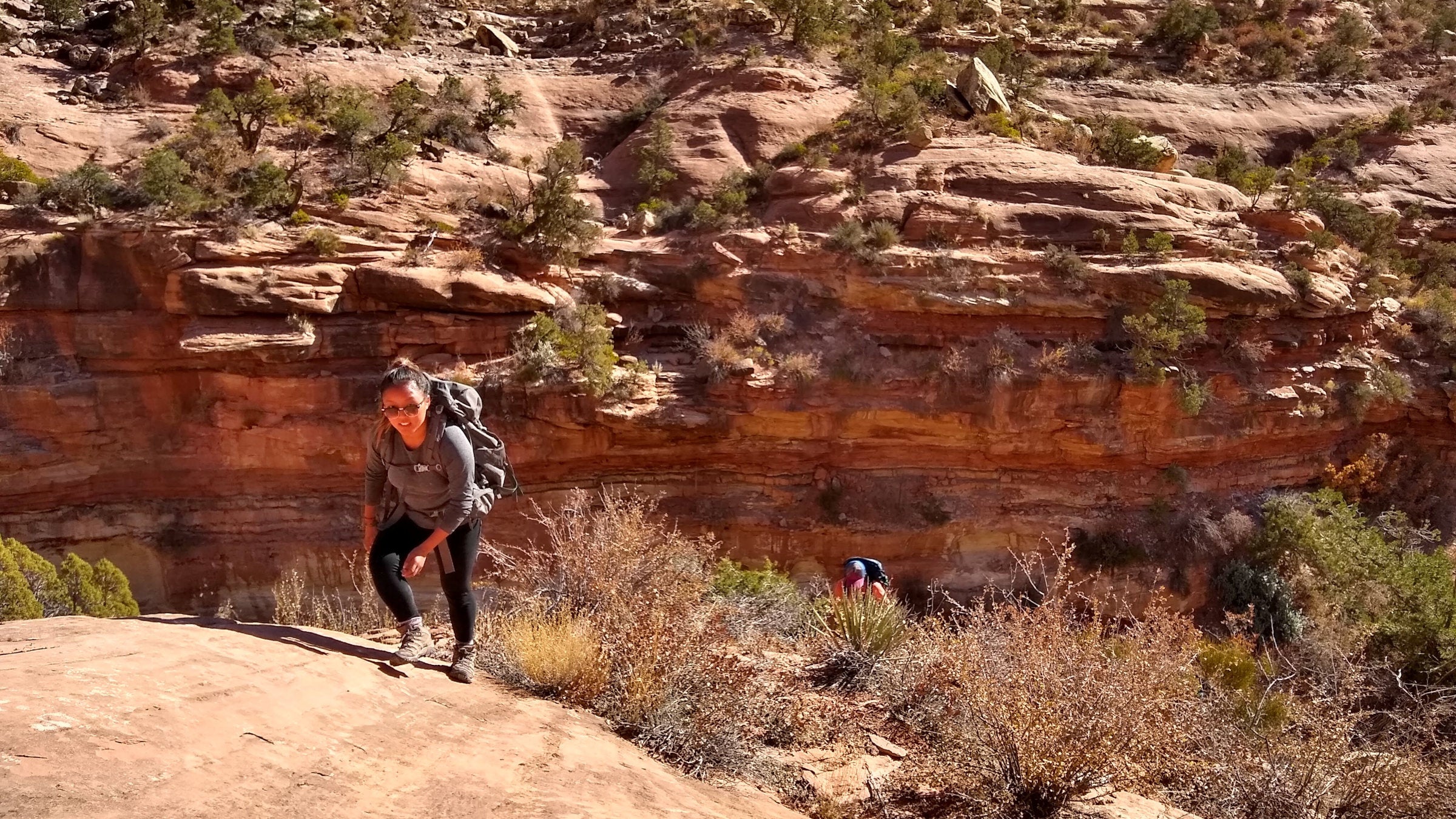
Another ubiquitous error among backpackers is over-striding, a habit characterized by placing the leading foot significantly forward of the body’s center of gravity. This error occurs most frequently when hikers attempt to increase their pace on flat sections or when gravity pulls them rapidly down steep, technical declines.
When a hiker over-strides, the lead leg acts as a biological brake, forcing the soft tissues—including the hamstrings, calves, and quadriceps—to absorb the deceleration forces rather than allowing the skeletal structure to transfer the impact downward into the earth. Descending a mountain while over-striding multiplies the gravitational forces acting upon the joints, placing extraordinary stress on the knees and the lower back. Tendons and ligaments are forced to work far beyond their evolutionary design parameters, heightening the risk of severe tendonitis and joint inflammation.
Corrective Strategy: Shortening the Stride and Increasing Cadence
The remedy for over-striding is deceptively simple, though it requires conscious mental effort to override habitual movement patterns. Hikers must intentionally shorten their stride length while simultaneously increasing their cadence—taking quicker, lighter, and more frequent steps.
By keeping the feet positioned directly underneath the body’s center of mass, the skeletal system naturally assumes the burden of shock absorption. Tendons and ligaments are spared excessive eccentric loading, drastically reducing the incidence of soft-tissue injuries.
Trail coaches recommend dedicating 30- to 60-second intervals throughout a hike to strictly monitor and shorten stride length. Repeatedly calling conscious attention to foot placement eventually hardwires the new pattern into muscle memory, transforming a fatiguing habit into an automatic, efficient gait.
Coaching Insight: Cultivate the mental mantra of "feet underneath me." Resist the temptation to reach forward with the leading leg, especially when navigating downhill slopes where momentum encourages over-striding.
Mistake #3: Losing Pelvic and Hip Control
Every single step taken on an uneven wilderness trail is an exercise in single-leg balance. The hips and pelvis serve as the central command center for this kinetic chain, controlling the stability of both the torso and the lower limbs.
When core and hip stabilizers become exhausted, the pelvis loses its horizontal stability. It may begin to drop from side to side with each step (a presentation known as a Trendelenburg gait), or the torso may sway excessively over the planted leg. This lack of centralized control forces the lower back and surrounding hip structures to compensate for the instability, resulting in acute lower back pain, tight hip flexors, and persistent hip aches that can persist long after the hike has ended. Hikers typically notice this failure most acutely when stepping over large fallen logs, climbing steep rock staircases, or traversing tilted, uneven terrain.
Corrective Strategy: The Hip Airplane Exercise
Regaining foundational hip and pelvic control requires exercises that challenge rotational stability and single-leg endurance. The hip airplane is a gold-standard movement used by physical therapists to retrain these pathways.
To execute the hip airplane:
- Position yourself near a sturdy wall, trekking pole, or countertop for light balance support.
- Stand on one leg with a slight, soft bend in the knee, hinging forward at the hips while maintaining a completely flat, neutral spine.
- Slowly and with absolute control, rotate your torso and pelvis over the standing leg by lifting the non-standing hip upward toward the ceiling.
- Reverse the motion by rotating the hip downward, returning smoothly to the starting position.
Medical and fitness professionals stress that this exercise is not about achieving a wide range of motion. Success is measured by the ability to control the rotation of the pelvis without wobbling or losing balance on the standing leg.
Broader Implications for Long-Distance Backpackers
As outdoor recreation continues to surge in popularity, emergency search-and-rescue teams and wilderness medical personnel report a steady stream of preventable injuries linked directly to biomechanical fatigue. While physical conditioning programs for backpackers traditionally focus on cardiovascular endurance and raw muscle strength—such as carrying heavy weighted packs on stair climbers—biomechanical efficiency is frequently overlooked.
Sports scientists note that integrating targeted movement corrections into pre-trip conditioning regimens yields immediate dividends on the trail. By correcting issues like dynamic knee valgus, over-striding, and pelvic instability before embarking on extended wilderness expeditions, hikers can safeguard their physical health, mitigate the risk of debilitating chronic pain, and ensure that their adventures end with memorable vistas rather than unplanned medical evacuations. Incorporating these simple, evidence-based corrective exercises into a weekly fitness routine requires minimal equipment but delivers profound protection for the miles ahead.