The Ultimate Guide to Booking a Surf Camp in Morocco: Pricing, Packages, and Regional Comparisons

When planning a surfing holiday along the Atlantic coast of Morocco, evaluating the true cost of a week-long package requires looking far beyond the initial advertised rates. A surf camp priced at €450 per week can easily end up costing just as much—or more—than a €550 package once incidental expenses like airport transfers, daily lunches, equipment upgrades, or private room accommodations are factored into the total.
To understand current market conditions, an analysis of 18 active surf offers across the prominent Moroccan coastal hubs of Taghazout, Tamraght, Aourir, and Imsouane provides a comprehensive look at what travelers can expect to pay, what inclusions are standard, and how each destination shapes the overall visitor experience. All four towns sit along a contiguous stretch of the Atlantic coastline north of Agadir, making them geographically accessible within a single trip while offering distinct cultural and atmospheric identities.
Market Pricing and Regional Breakdown
Recent data compiled from active regional surf packages reveals that advertised starting prices for standard seven-day itineraries range significantly. Across 16 directly comparable week-long packages evaluated, headline prices spanned from €405 to €819, with a median starting price of €493. Roughly half of the evaluated packages fell below this median, while the remaining half exceeded it.
To maintain analytical accuracy, shorter promotional offers—such as three-day coaching weekends or standalone paddleboarding sessions—were excluded from the primary week-long comparison to prevent skewing the baseline data. Because these figures represent a point-in-time snapshot, final consumer pricing fluctuates based on seasonal demand, chosen room configurations, and personalized add-ons.
A regional breakdown of median starting prices highlights notable variations across the coastline:
- Tamraght: Median starting price of €449 (based on 7 comparable packages)
- Aourir: Median starting price of €484 (based on 4 comparable packages)
- Imsouane: Median starting price of €546 (based on 4 comparable packages)
- Taghazout: Median starting price of €819 (based on 1 comparable package)
While Taghazout registered the highest single median price in the sample, industry analysts caution that a single data point reflects the positioning of that specific camp rather than a universal municipal standard. Conversely, Tamraght emerged as the most budget-accessible and commercially saturated area, offering the highest volume of comparable packages at the lowest median rate.
Standard Inclusions Versus Hidden Costs
Understanding what is covered under a headline price is critical for accurate budgeting. Across the surveyed packages, standard inclusions typically consist of shared or private accommodation, scheduled surf lessons or guided sessions, foam or hard surfboard and wetsuit rentals, daily beach transportation, and breakfast. Many mid-tier and premium camps also incorporate lunch and evening dinners into their weekly rates.
However, airport transfers remain the most inconsistent variable across the industry. While some operators bundle transfers from Agadir Al Massira Airport into their base rates, others treat them as an additional fee.
Industry veterans note a common consumer pitfall: travelers frequently select the lowest headline-priced camp, only to discover upon arrival that meals, gear upgrades, and airport logistics are billed separately. By the conclusion of the week, cumulative out-of-pocket expenses frequently match or exceed the cost of a higher-priced all-inclusive alternative. Furthermore, package valuations differ significantly regarding the intensity of coaching, inclusion of secondary wellness activities like yoga, and overall instructor-to-student ratios.
Geographic Profiles: Choosing the Right Town
The coastal stretch north of Agadir transitions rapidly from urban environments to rugged, ocean-facing landscapes. As travelers move up the coastal highway, surfboards strapped to vehicle rooftops and guesthouses featuring drying wetsuits signal an economy deeply integrated with international board-riding culture. Each town along this route offers a distinctly different pace of life.
Taghazout functions
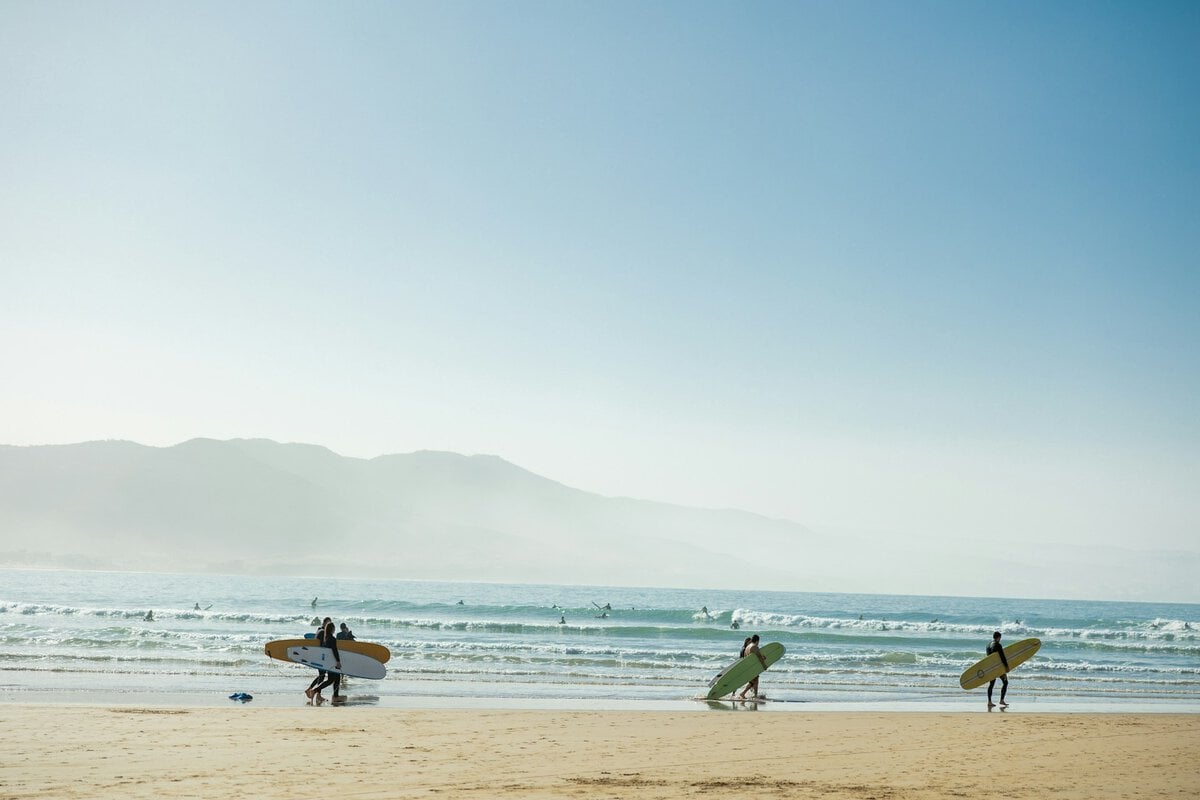
as the bustling epicenter of Morocco’s surf tourism industry. Characterized by a dense concentration of international surf schools, lively cafes, marine-view restaurants, and vibrant social venues, it appeals to travelers seeking an energetic community atmosphere alongside immediate access to world-class point breaks.
Tamraght offers a more residential and subdued alternative. Located just south of Taghazout, it provides a calmer environment while maintaining close proximity to the same high-performance surf breaks. Its lower median price point and quieter streets make it a preferred base for travelers looking to balance active days on the water with peaceful evenings.
Aourir, often referred to locally as Banana Village due to the abundance of banana plantations surrounding the area, presents a deeply authentic Moroccan atmosphere. Its commercial landscape is less saturated by tourism, offering visitors a more localized cultural immersion while remaining within easy commuting distance of regional surf spots.
Imsouane, situated roughly 115 kilometers north of Agadir, operates at a significantly slower, more isolated pace. Centered around a traditional fishing harbor famed for its exceptionally long right-hand point break, Imsouane attracts longboarders and travelers seeking a rustic, community-driven village experience. Daily life here revolves around fresh seafood, local tagines, and unhurried ocean sessions.
Evaluating Camp Operations and Wave Selection
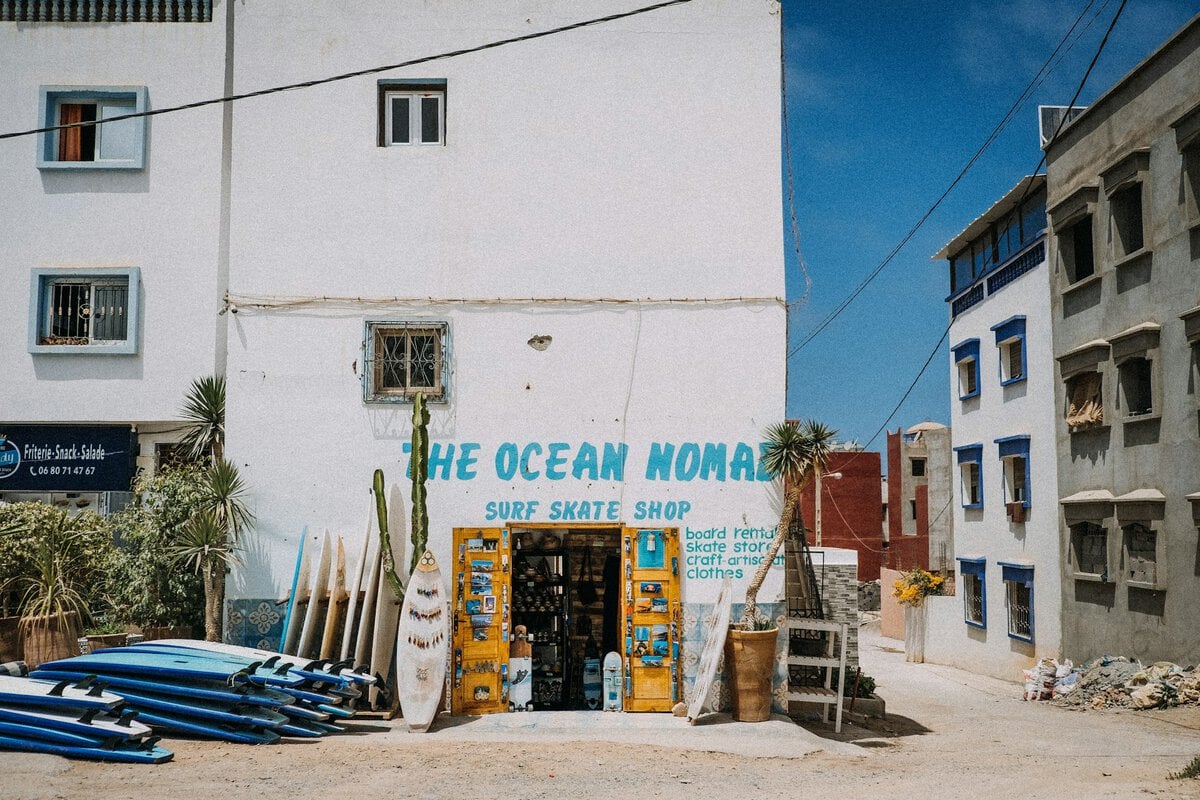
Selecting a surf camp involves more than comparing room types and catering options. A critical factor in any surf holiday is how camp operators make daily operational decisions regarding wave selection.
Professional surf camps do not simply paddle out at the nearest stretch of sand. Each morning, experienced instructors evaluate regional swell charts, tide movements, wind directions, and lineup congestion across multiple breaks. Around the Taghazout and Tamraght corridor, this morning assessment typically includes inspecting popular spots such as Banana Point, Devil’s Rock, and Panoramas before determining where to transport guests. Consequently, the quality of a surf camp is heavily determined by the expertise of its instructors and their ability to place guests in safe, appropriate waves tailored to their skill level.
Socio-Cultural Context and Local Heritage
While the Atlantic coast has evolved into an international hub for adventure tourism, its communities possess deep historical roots that predate modern surf culture. The region is heavily shaped by Amazigh (Berber) heritage, with traditional economies rooted in coastal fishing, small-scale agriculture, and family-run commerce. Today, local residents, Moroccan surfers, international digital nomads, and seasonal travelers coexist within these compact coastal settlements, resulting in a cultural landscape where surf tourism has layered atop traditional community structures rather than replacing them.
Because Morocco is an Islamic nation, daily routines are harmonized with traditional prayer schedules, family customs, and religious observances such as Ramadan. Travelers are advised to observe respectful social norms, particularly by dressing conservatively away from the immediate beach environment and seeking permission before photographing local residents. Culinary traditions remain a central feature of daily life, with staples such as freshly baked Moroccan bread, mint tea, and amlou—a rich, traditional spread made from roasted almonds, argan oil, and honey—serving as dietary foundations across local cafes and camps.
Practical Logistics for Travelers
Timing a Moroccan surf trip depends largely on individual skill levels and weather preferences. While surfable swells occur year-round along the Atlantic coast, autumn and spring offer optimal compromises between consistent wave quality, favorable weather, and manageable visitor volumes. Winter months bring powerful northern swells suited for intermediate and advanced surfers, accompanied by water temperatures averaging between 16.5°C and 18°C (requiring a standard 3/2mm wetsuit), whereas summer months feature smaller waves and warmer water temperatures hovering around 20°C to 21°C.
Logistical planning typically begins at Agadir Al Massira Airport. Pre-booked private transfers to Taghazout and Tamraght take approximately 45 to 60 minutes, with standard vehicle rates averaging around €30 to €35. Taxis are readily available at the airport terminal, though passengers are strongly encouraged to negotiate fares prior to departure. Journeys to Imsouane require a longer transit of roughly two hours by road, with transfer costs scaling accordingly. Alternatively, travelers arriving from Marrakech can expect a three-to-four-hour drive or bus journey to reach the coastal surf zone.
Ultimately, maximizing value on a Moroccan surf holiday depends on comprehensive pre-trip research. By evaluating total package inclusions—including transport, equipment quality, accommodation standards, and localized coaching expertise—travelers can successfully navigate the market and select an itinerary that aligns precisely with their surfing objectives and travel expectations.
Related posts: