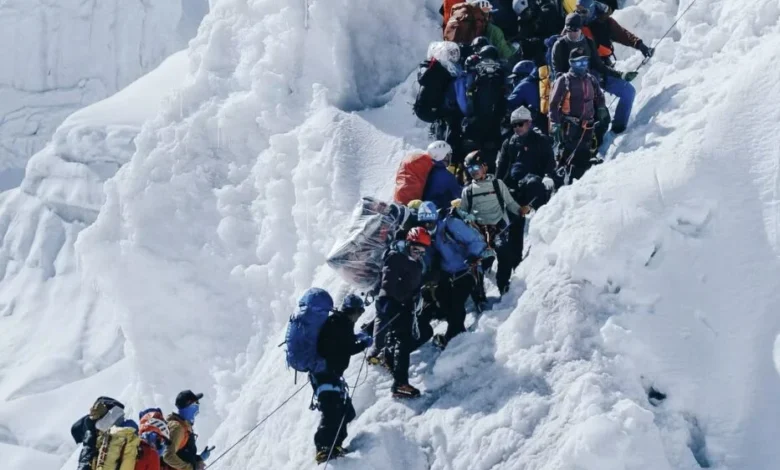
The autumn climbing season on Manaslu, Nepal’s eighth-highest peak at 8,163 meters, has reached a critical juncture as an avalanche struck the upper reaches of the mountain, forcing a temporary suspension of summit pushes. The incident, which occurred just hours before the scheduled rope-fixing team was set to secure the final route, highlights the precarious balance between the mountain’s volatile conditions and the unprecedented human density currently concentrated on its slopes. As search and rescue operations continue and logistics are recalibrated, the mountaineering community is grappling with the dual threats of environmental instability and the physical risks posed by record-breaking numbers of climbers.
Chronology of the Avalanche Incident
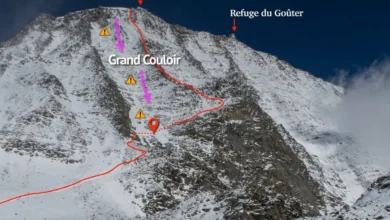
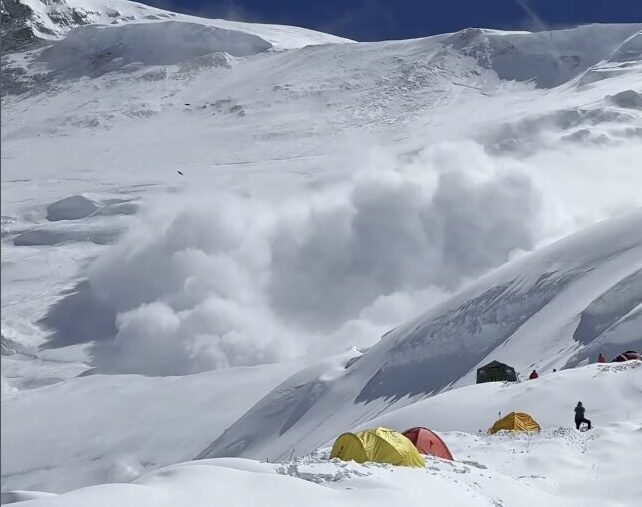
The situation on Manaslu escalated yesterday afternoon when a significant avalanche was triggered on a snow slope situated directly below Camp 4. At approximately 1:30 pm local time, Dandu Sherpa, who was documenting the ascent, witnessed the slide as it cascaded down the shoulder of the summit ridge. While the camp itself remained outside the direct path of the debris, the avalanche effectively buried a critical section of previously fixed ropes that were essential for the final ascent.
The impact was immediate. The Expedition Operators’ Association of Nepal (EOAN) rope-fixing team, who were poised to traverse the area, were forced to halt their progress. The loss of the fixed ropes rendered the final approach unsafe, necessitating an emergency logistical pivot. Early this morning, a secondary team of Sherpa guides mobilized from Camp 3, carrying approximately 1,300 meters of new rope to replace those lost in the slide. As of the latest reports, this team is working to re-establish the route, with hopes of opening the summit path within the next 24 to 48 hours.
Escalating Human Traffic and Logistical Strain
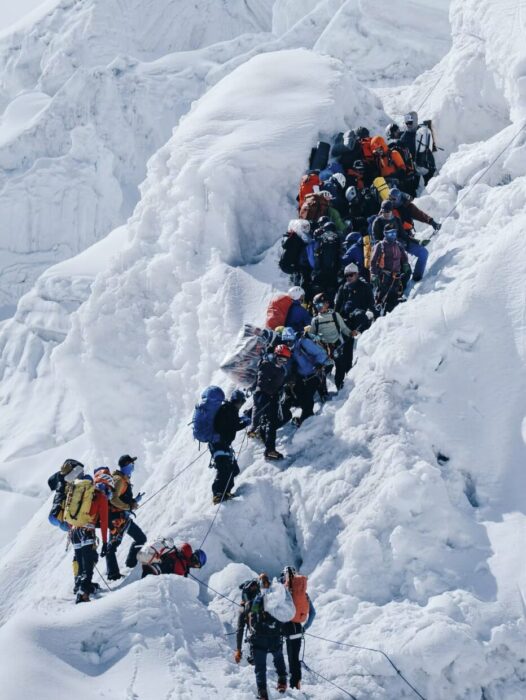
The logistical complications caused by the avalanche are exacerbated by the extreme congestion currently present on the mountain. Data from the Department of Tourism and expedition outfitters indicates that this season has attracted a record-breaking volume of interest. With over 480 foreign climbers officially registered and an estimated support staff of more than 500 local guides and high-altitude porters, the total population on Manaslu exceeds 1,000 individuals.
This density has already manifested in bottlenecks at key technical sections of the route. Footage captured by climbers earlier this week at the serac-laden transition between Camp 1 and Camp 2 reveals long, slow-moving queues. In high-altitude environments, such delays are not merely inconvenient; they are dangerous. Extended wait times in "bottleneck zones"—areas prone to objective hazards like falling ice or avalanches—increase the cumulative exposure time for every climber on the line.
Fatalities and Safety Concerns
Compounding the logistical crisis is a somber human toll. The mountain has claimed its second life this season with the passing of a 50-year-old Singaporean climber, Lau Wee Seng. According to 8K Expeditions, Seng began experiencing symptoms of altitude-related distress while descending from Camp 2. Despite attempts to manage his condition, he succumbed to his illness while resting. This tragedy follows the earlier death of Tashi Sherpa, a 20-year-old porter who was discovered deceased in his tent at Base Camp last week.
These incidents have intensified the discourse regarding safety protocols on Manaslu. The mountain’s topography, specifically its narrow, vertiginous final ridge, presents a significant bottleneck that is ill-suited for the volume of commercial traffic it now hosts. Experts are questioning whether the current model of rapid, cost-optimized expeditions is sustainable given the physical constraints of the peak.
Industry Analysis: The "False Summit" Debate
The debate over safety has extended to the definition of the summit itself. Many commercial expeditions have traditionally aimed for the "false summit" or the fore-summit, which is significantly wider and easier to navigate. However, with the push for the "true" summit, the pressure on the final, razor-thin ridge has reached an all-time high.
Halung Dorchi Sherpa of Summit Force has publicly proposed that authorities and expedition leaders consider formalizing a policy that allows or encourages climbers to stop at the fore-summit to mitigate the risks of crowding on the technical, final meters. While this measure is met with resistance from those seeking the true peak, others argue that it is a necessary adaptation to the reality of mass-commercialization.
Another proposed strategy is the staggering of summit windows. While large companies like Seven Summit Treks and 14 Peaks Expeditions generally attempt to coordinate their efforts, the narrowing of weather windows—often defined by short periods of stable wind and precipitation levels—tends to force all teams toward the mountain at the same time. When a weather window is only 48 to 72 hours long, the ability to "disperse the flow of people" becomes mathematically difficult, if not impossible.
Broader Implications for Himalayan Mountaineering
The current state of Manaslu serves as a microcosm for the broader shifts in Himalayan mountaineering. The rise of the commercial expedition industry has democratized access to 8,000-meter peaks, but it has also shifted the management of these mountains from traditional alpine ethics to large-scale logistics.
The environmental reality, however, remains indifferent to these trends. Precipitation levels over the past ten days have created unstable snowpacks, directly contributing to the avalanche that stalled the rope-fixers. The interaction between human traffic and natural instability is a recurring theme in modern Himalayan climbing. As the window for the next summit attempt approaches—predicted for September 21 to 23—the focus will shift to how the mountain holds up under the weight of hundreds of simultaneous attempts.
For now, the mountain remains a volatile testing ground. The teams at the higher camps are currently waiting for the green light from the rope-fixing crew. Whether the route can be secured in time to accommodate the massive queue of climbers remains the defining question of the season. The tragedy of the recent fatalities serves as a stark reminder that regardless of the number of permits issued or the efficiency of logistical planning, Manaslu retains the capacity to dictate the terms of engagement.
As the industry looks toward the coming days, the primary concern remains the safety of those navigating the path from Camp 4 to the summit. With the route compromised and the population density at record levels, the next 72 hours will be critical in determining whether this season concludes with a successful summit push or further underscores the inherent dangers of the current, high-traffic approach to high-altitude mountaineering. The eyes of the climbing world are fixed on the mountain, waiting to see if the infrastructure can hold under the pressure of the crowds or if the environment will force a more cautious, measured pace.