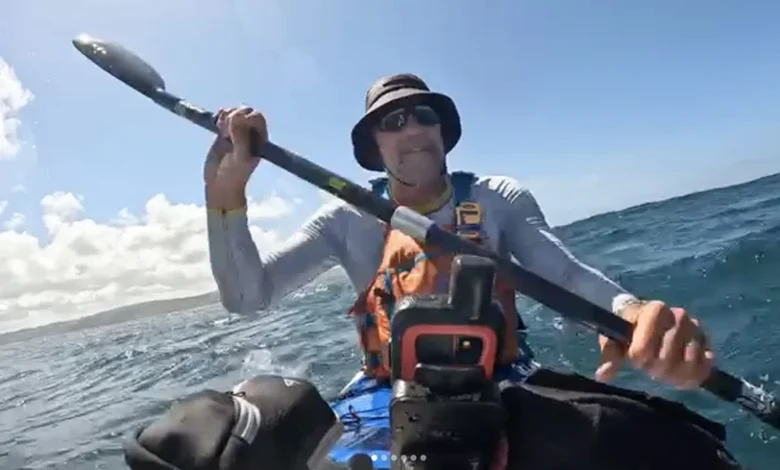
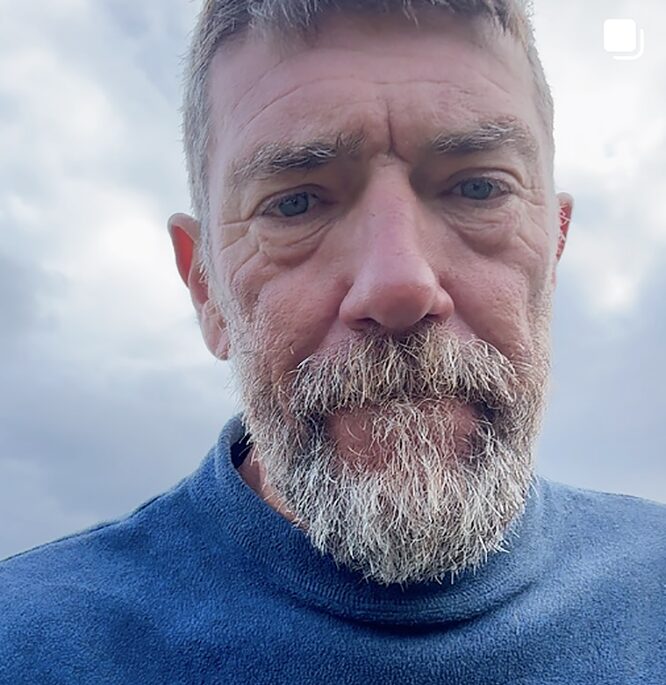
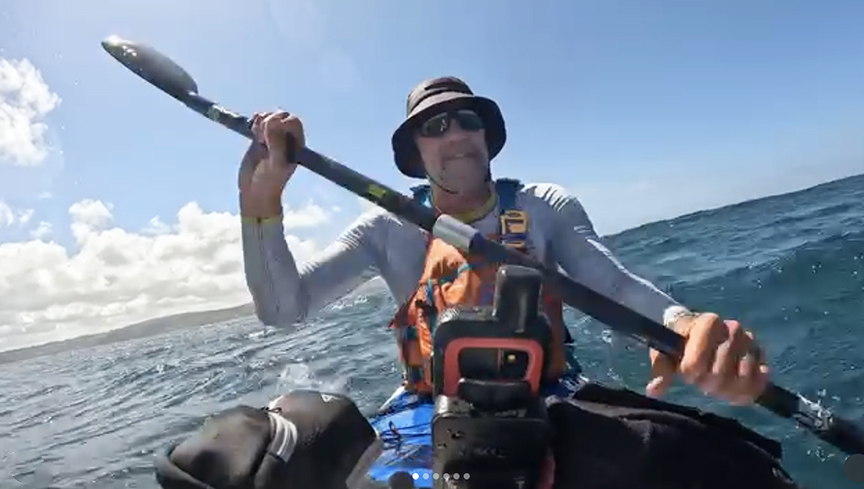
The waters surrounding Great Britain represent one of the most challenging maritime environments for small-craft navigation, characterized by complex tidal races, high-density shipping lanes, and unpredictable North Atlantic weather patterns. On September 13, 58-year-old Ian Hayward officially closed a 3,185-kilometer loop, completing a solo kayak circumnavigation that began on April 26 in Lowestoft. By successfully navigating the coastline clockwise, Hayward joined an elite group of fewer than 15 individuals who have accomplished this feat solo, marking his transition from a career in outdoor education to the annals of extreme endurance sports.
A Career Culminating in the Deep Blue
Hayward’s background provided the technical foundation necessary for such a high-stakes expedition. Having spent decades honing his craft in diverse disciplines—including slalom, surf, marathon, and sprint paddling—he possessed the requisite muscle memory and situational awareness. However, the circumnavigation of Britain introduced a variable he had not previously mastered: the sustained, multi-week psychological and physical pressure of long-distance sea kayaking. Despite his extensive history in open canoeing and sea kayaking since his youth, this project represented his first true long-haul expedition, requiring a fundamental shift in how he managed caloric intake, sleep, and equipment maintenance over a 141-day period.
Chronology of the Expedition
The journey commenced on April 26, moving northward from the Lowestoft coastline. The initial stages of the expedition were defined by the navigation of the Thames Estuary, an area notorious for high-volume commercial traffic that demands constant vigilance from small-vessel operators.
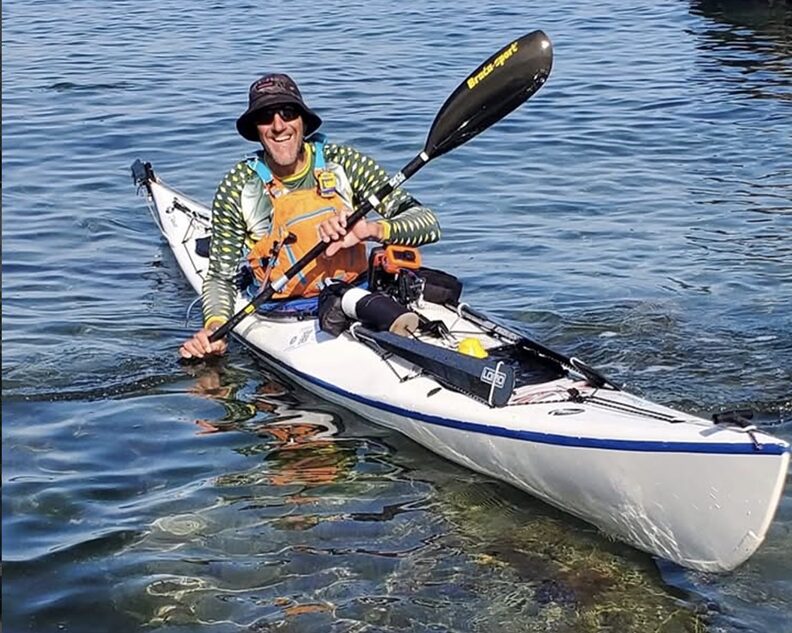
Throughout May and June, Hayward worked his way through the English Channel, an area characterized by its intricate headlands and the constant threat of tidal surges. As the summer progressed, the expedition transitioned into the more rugged environments of the Welsh coastline and the western reaches of Scotland. These regions introduced significant environmental hazards, including the notorious Cape Wrath and the turbulent waters of the Pentland Firth. The final leg of the journey involved the crossing of the exposed North Sea, where the lack of shelter and the potential for rapid meteorological shifts tested the limits of his resilience.
The Technical Demands of the Route
According to Performance Sea Kayak, which maintains the authoritative register of such circumnavigations, the total distance of 3,185 kilometers is not merely a measurement of length but a measurement of logistical complexity. A standard sea kayak is capable of carrying sufficient rations for approximately 30 days. Given that Hayward’s journey spanned 141 days, he was forced to implement a rolling supply chain, frequently stopping at coastal settlements to replenish food and equipment.
The nature of the expedition required significant reliance on the goodwill of local communities. Hayward frequently utilized the hospitality of local sailing clubs, which provided him with temporary shelter and, in many cases, a respite from the isolation inherent in solo paddling. These intermittent social interactions were critical for morale, particularly when navigating the stretches between remote outposts where rescue resources are limited.
Historical Context and Precedents
The benchmark for this journey was established in 1980 by Paul Caffyn and Nigel Dennis, who completed the first successful circumnavigation of the British coastline in 85 days. Their expedition set the standard for equipment and route planning, highlighting the necessity of accounting for weather-bound days.
The first solo completion followed in 1986, achieved by American paddler Chris Duff. Duff’s subsequent career, which included circumnavigations of Iceland and New Zealand’s South Island, solidified his status as a pioneer in the sport. His experiences, detailed in the literature of sea kayaking, underscore the solitary nature of the challenge. The record for the most successful solo circumnavigations belongs to John Willacy, the only individual to have completed the route in both directions: clockwise in 2012 (72 days) and counter-clockwise in 2015 (83 days).
In contrast to these endurance-focused journeys, the sport has recently shifted toward speed. In the summer of 2025, Sebastian Szubski, a former Olympic canoeist, established a new Fastest Known Time (FKT) by completing the circuit in under 37 days. Szubski’s performance highlights the evolution of the sport, moving from survival-based expeditioning to elite athletic performance.
Analysis of Resilience and Risk
Throughout the expedition, Hayward’s commentary shifted away from the physical metrics of mileage and speed, focusing instead on the cognitive demands of the journey. He frequently described the expedition in terms of decision-making and environmental interpretation. The distinction between a "calm, serene" environment and a "terrifying" one can occur within minutes, often dictated by the interaction between wind direction and tidal flow.
From a physiological perspective, a 141-day duration places significant strain on the upper body and core. The repetition of the paddle stroke, combined with the instability of the kayak in heavy swell, necessitates a high degree of core conditioning. Hayward’s ability to sustain this effort at 58 years of age provides a data point for the longevity of athletes in endurance sea kayaking, potentially marking him as the oldest individual to successfully complete the solo route—a claim currently pending formal verification by governing bodies.
Broader Implications for the Paddling Community
The success of Hayward’s expedition serves as a case study for the intersection of traditional navigation and modern technology. While GPS and satellite communication have made long-distance sea kayaking safer than it was in the era of Caffyn and Dennis, the fundamental risks remain unchanged. The ability to read the ocean, understand meteorological charts, and maintain psychological stability in total isolation remains the hallmark of a successful expeditioner.
Furthermore, the logistical nature of these trips highlights the importance of the "blue economy" and the role of coastal infrastructure. Sailing clubs, marinas, and local councils provide the essential network that makes such adventures possible. The fact that only 36 individuals have completed this route since 1980 speaks to the exclusivity of the challenge. It is not merely a test of physical strength but a comprehensive examination of a paddler’s ability to manage risk, navigate complex maritime environments, and maintain a sustained, singular focus over several months.
Conclusion and Future Outlook
As Ian Hayward settles back into life following his return, his journey stands as a testament to the enduring appeal of the British coastline as a frontier for human endeavor. His completion of the 3,185-kilometer circuit is more than a personal milestone; it is a contribution to the growing body of knowledge regarding long-distance sea navigation. While younger, faster athletes may continue to push the boundaries of speed and efficiency, the endurance-based approach adopted by paddlers like Hayward preserves the traditional spirit of the expedition.
For the community of sea kayakers, the 13th solo completion of Great Britain represents a benchmark of competence and persistence. Whether or not his age record is officially ratified, Hayward’s 141-day journey reinforces the reality that the ocean remains an unpredictable partner, and that success in such environments is defined as much by one’s capacity for judgment as by one’s physical endurance. The record books will reflect his name alongside the legends of the sport, ensuring that his 2026 expedition remains a reference point for future generations of adventurers seeking to test their limits against the currents of the North Atlantic.