Delta Air Lines versus KLM Royal Dutch Airlines: A Transatlantic Premium Economy Showdown

The transatlantic travel market has experienced a fundamental shift over the past decade, driven largely by airlines recalibrating their cabin layouts to capture a rapidly growing demographic of travelers willing to pay for enhanced comfort without absorbing the steep financial commitment of lie-flat business class. For decades, the aviation industry operated primarily on a rigid three-class model: economy, business, and first class. Today, as first class has been phased out on the vast majority of North American and European routes, the middle ground—known broadly as premium economy—has expanded into one of the most fiercely contested sectors in commercial aviation.
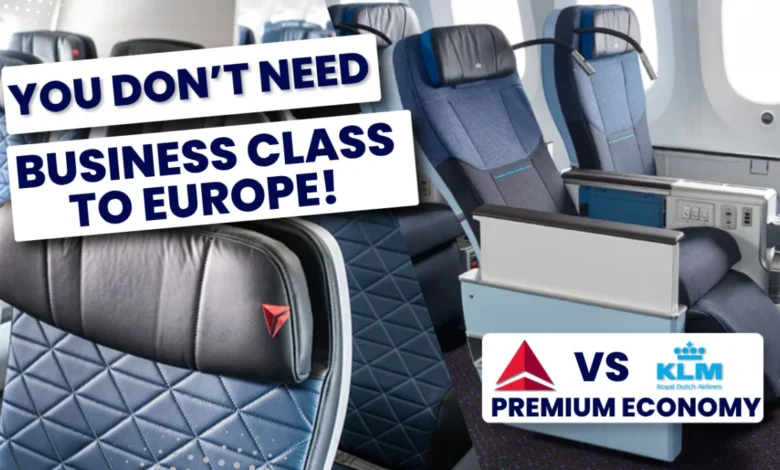
To evaluate how two of the industry’s most prominent SkyTeam alliance carriers stack up against one another, aviation analysts Gunnar and a colleague recently put two of the market’s leading transatlantic premium economy products to a direct test. The evaluation pitted Delta Air Lines and its proprietary Delta Premium Select against KLM Royal Dutch Airlines and its competing KLM Premium Comfort product. Both airlines operate as close trans-Atlantic joint-venture partners, yet their product execution, hard-product design, and onboard service delivery reveal distinct strategic approaches to modern long-haul travel.
The core question facing modern travelers is whether spending thousands of dollars or hundreds of thousands of airline miles on a business-class seat is truly justified for an overnight flight to Europe, or if premium economy delivers an optimal balance of bodily rest and fiscal prudence. By examining every facet of the journey—from airport check-in efficiency and security priority to seat ergonomics, culinary execution, digital amenities, and overall sleep quality—this comparative analysis provides vital insight for consumers navigating the complexities of modern airfare pricing.
Background Context: The Rise of Premium Economy on Transatlantic Routes
The introduction and subsequent expansion of premium economy cabins by legacy carriers was not a random market adjustment, but a calculated response to macroeconomic trends and shifting consumer behavior. Following the 2008 global financial crisis, corporate travel budgets tightened significantly, forcing many businesses to downgrade executive travel policies from business class to economy. Simultaneously, affluent leisure travelers began seeking affordable ways to upgrade their flying experience on long-haul routes exceeding seven hours.
Recognizing an uncaptured revenue stream, international airlines began retrofitting widebody fleets to include a dedicated cabin positioned between standard economy and business class. This intermediate tier typically features wider seats, increased pitch, greater recline capabilities, dedicated footrests, upgraded dining options, enhanced amenity kits, and priority airport services. For airlines, premium economy generates significantly higher revenue per square foot than standard economy while costing a fraction of the weight, space, and service requirements of a full business-class suite.
Within the SkyTeam alliance, Delta Air Lines and KLM Royal Dutch Airlines operate under a joint venture that allows them to coordinate schedules, pricing, and capacity across the Atlantic. Despite their close operational alignment, each carrier maintains distinct cultural and structural approaches to cabin design and passenger service. Delta introduced its Delta Premium Select (DPS) product incrementally across its widebody fleet, aiming to deliver a sleek, modern, and distinctly American corporate hospitality experience. Meanwhile, KLM developed its Premium Comfort product as part of a multi-year fleet refresh, focusing on Dutch design sensibilities, sustainability initiatives, and ergonomic efficiency.
Methodology and Flight Parameters of the Test
To maintain absolute journalistic integrity and objectivity, the evaluation was conducted under real-world conditions on regularly scheduled commercial flights. Crucially, the reviewers utilized their own financial resources, accumulated miles, and personal cash to purchase the tickets, declining all promotional comp tickets, media rates, or airline-sponsored upgrades. This ensures that the review reflects the unvarnished passenger experience rather than a curated media presentation.
The comparative testing was divided across two distinct aircraft types commonly deployed on key North American-to-European corridors:
- Delta Air Lines Airbus A330-900neo: Operating a flagship long-haul route, this modern, fuel-efficient widebody aircraft represents the pinnacle of Delta’s current transatlantic fleet strategy. The aircraft features a sophisticated cabin environment characterized by modern LED mood lighting, advanced air filtration systems, and a quieter cabin architecture.
- KLM Royal Dutch Airlines Boeing 777-200: Serving as a workhorse of KLM’s long-haul fleet, this twin-engine widebody offers a traditional yet thoroughly modernized interior layout. KLM integrated its bespoke Premium Comfort cabin into these aircraft to harmonize passenger standards across its intercontinental network.
Both routes involved overnight eastbound trans-Atlantic journeys—the ultimate test for any premium seating product. Overnight flights are notoriously challenging for travelers seeking restorative sleep due to compressed schedules, cabin lighting transitions, and the physical constraints of sitting upright or semi-reclined for seven to nine hours.
Step-by-Step Passenger Journey Comparison
The modern airline experience begins long before a passenger steps onto the aircraft. Ground services, check-in efficiency, baggage allowances, and priority boarding significantly influence the overall value proposition of any premium ticket.
Check-In, Baggage, and Airport Priority
Both Delta Premium Select and KLM Premium Comfort passengers generally receive enhanced ground benefits compared to standard economy ticket holders. These typically include Sky Priority access, which streamlines the check-in process, dedicated baggage drop lanes, accelerated security screening where available, and priority baggage handling upon arrival at the destination.
Delta’s implementation of Sky Priority at major hubs provides a seamless, highly digitalized experience. Passengers can utilize automated kiosks, expedited bag-drop counters, and digital boarding passes integrated seamlessly into the Fly Delta mobile application. The application delivers real-time notifications regarding gate changes, boarding times, and baggage tracking, offering a high degree of transparency and control.
KLM offers a similarly robust ground experience, particularly at its primary hub, Amsterdam Airport Schiphol (AMS). As a foundational hub for SkyTeam, Schiphol provides structured priority lanes for premium passengers. However, operational bottlenecks and security queue fluctuations at major European hubs can occasionally impact the speed of the ground experience, a factor largely outside the airline’s direct control. In terms of checked luggage allowances, both carriers typically permit two complimentary checked bags for premium economy passengers, representing a substantial savings over standard economy baggage fees.
Cabin Environment, Seating Architecture, and Ergonomics
The defining characteristic of any premium economy product is the physical seat. Both Delta and KLM have invested heavily in bespoke seating hardware designed to maximize personal space without compromising overall aircraft density.
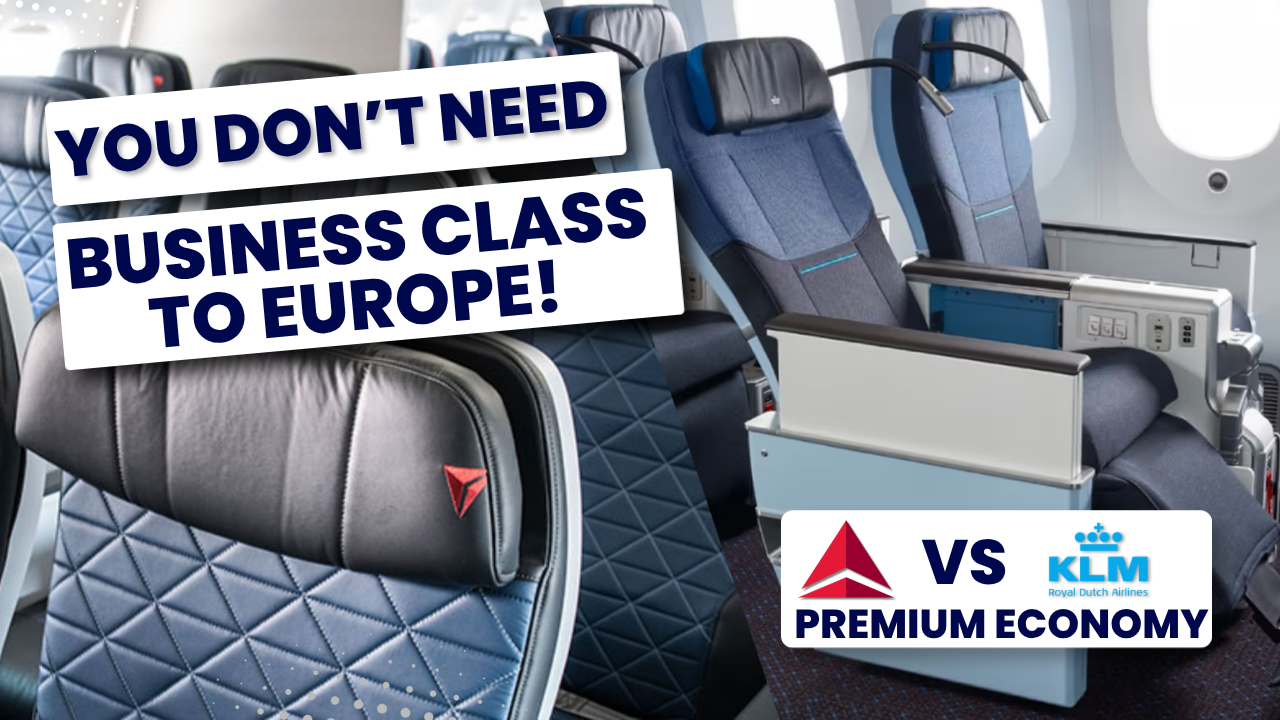
Delta Premium Select on the Airbus A330-900neo features a dedicated, intimate cabin separate from both economy and business class. The seats are arranged in a comfortable configuration, typically 2-3-2 on widebody aircraft, which ensures that passengers have direct access to either an aisle or a window, minimizing the disruption of middle-seat confinement common in standard 3-4-3 economy cabins.
The Delta Premium Select seat boasts an increased width (generally around 18.5 to 19 inches) and a generous pitch of approximately 38 inches, providing ample legroom for passengers of varying heights. A notable feature of the seat is its integrated fold-out legrest and footrest, which articulates smoothly to support the legs during sleep or relaxation. The recline is substantially deeper than standard economy, allowing passengers to lean back comfortably without infringing significantly on the personal space of the passenger seated directly behind them. Furthermore, the seat includes dedicated power outlets, USB ports, and a larger, high-definition touch-screen entertainment monitor.
KLM Premium Comfort on the Boeing 777-200 presents an equally compelling design philosophy. KLM partnered with prominent industrial designers to create a proprietary seat that emphasizes ergonomic support and sustainable material sourcing. The cabin layout on the Boeing 777 is configured in a 2-4-2 arrangement, which, while slightly denser than Delta’s 2-3-2 layout on certain aircraft, still offers significant relief from standard economy crowding.
The KLM Premium Comfort seat features a hard-shell design. This is a critical engineering distinction: because the seat reclines within its own rigid shell, the passenger behind experiences zero loss of knee room or personal living space when the passenger in front reclines. This eliminates the common friction point of reclining seats invading personal boundaries. The seat offers generous recline capabilities, a sturdy fold-out footrest integrated into the seat structure or bulkhead, and a customized headrest with adjustable wings for optimal neck support during sleep.
Catering, Dining, and Beverage Selection
Food and beverage service on overnight transatlantic flights plays a psychological and physiological role in helping passengers transition across time zones. Both airlines have structured their premium economy catering to sit visibly above standard economy offerings, incorporating elements inspired by business class while maintaining streamlined service delivery.
Delta Premium Select elevates the dining experience through enhanced meal trays, real glassware, metallic cutlery, and regionally inspired menu choices. Meals are served with a complimentary selection of beers, spirits, and fine wines curated by master sommeliers. The presentation feels deliberate and refined, bridging the gap between mass-market airline catering and boutique dining. Between meal services, passengers have access to dedicated snack baskets and beverage availability, though comprehensive mid-flight snack options remain more robust in business class.
KLM takes a distinct approach rooted in Dutch hospitality and environmental consciousness. The airline’s Premium Comfort catering concept emphasizes seasonal ingredients, locally sourced products, and thoughtfully designed tableware made from lightweight, recycled materials. KLM’s meals often feature distinct starter courses, hot main options with genuine culinary depth, and carefully crafted desserts. Like Delta, KLM provides an upgraded beverage menu featuring specialty beers, wines, and spirits. A notable differentiator for KLM is its emphasis on waste reduction, utilizing biodegradable or reusable components throughout the meal service without sacrificing the perception of luxury.
In-Flight Entertainment, Connectivity, and Amenities
Modern travelers expect seamless digital connectivity and robust entertainment libraries during long-haul transit. Both airlines deliver competitive digital ecosystems, though user interfaces and hardware performance vary.
Delta’s seatback entertainment system is powered by state-of-the-art touchscreens offering an extensive library of Hollywood blockbusters, international films, television series, audiobooks, and live satellite television channels. Delta has also made high-speed Wi-Fi a cornerstone of its passenger experience, offering complimentary messaging for SkyMiles members and reliable browsing capabilities for purchase across its widebody fleet.
KLM offers an equally intuitive touchscreen entertainment system equipped with hundreds of hours of multi-language content, interactive flight maps, and noise-reducing headphones provided specifically for premium cabin guests. Connectivity via onboard Wi-Fi is available, though pricing structures and bandwidth speeds can fluctuate depending on satellite coverage over the North Atlantic corridor.
Amenity kits provided in both cabins offer essential comfort items designed to mitigate the physical toll of dry cabin air and long-haul travel. Delta partners with premium lifestyle brands to supply travel kits containing eye masks, toothbrushes, dental paste, and skincare products. KLM provides a sustainably produced amenity kit containing similar essentials, packaged in a compact, reusable pouch designed with distinct Dutch artistic flair.
Sleep Quality Analysis: Can You Actually Rest?
The ultimate benchmark for any overnight premium cabin review is sleep architecture: How many hours of uninterrupted, quality sleep can a passenger realistically achieve?
In standard economy, achieving deep sleep is notoriously difficult due to limited recline, narrow seat widths, and frequent disturbances from neighboring passengers. In business class, the fully flat bed virtually guarantees restorative horizontal sleep, though at a significant financial premium.
Both Delta Premium Select and KLM Premium Comfort occupy the middle spectrum. Neither seat converts into a flat horizontal bed; instead, they offer deep, ergonomic reclines supported by articulating footrests and adjustable headrests.
The review findings indicate that while neither product replaces the restorative capacity of a true lie-flat business class suite, both premium economy offerings provide a dramatic improvement over standard economy. The combination of increased pitch, which prevents knee impingement, and the mechanical support of integrated footrests allows passengers to achieve a semi-fetal or deeply reclined posture conducive to stage-three sleep cycles.
Delta’s deeper recline angle on the Airbus A330-900neo provides a slightly superior physical contour for side sleepers, whereas KLM’s hard-shell design on the Boeing 777-200 ensures absolute privacy and zero intrusion from neighboring seats, creating a secure, cocoon-like environment that aids psychological relaxation. Passengers accustomed to sleeping upright on commercial flights will find that premium economy bridges the gap effectively, enabling several hours of light-to-moderate sleep sufficient to function upon arrival in Europe.
Financial Implications and Value Proposition Analysis
The decision to purchase premium economy ultimately rests on a complex economic calculation: evaluating the cash or mileage differential between standard economy, premium economy, and business class.
Historically, business class tickets across the Atlantic frequently range from $3,000 to over $7,000 round-trip, or between 100,000 and 300,000 loyalty miles depending on dynamic pricing models and seasonal demand. Standard economy tickets, by contrast, can often be secured for $500 to $1,000, or 30,000 to 60,000 miles. Premium economy typically occupies the middle tier, pricing out at roughly $1,200 to $2,500, or 70,000 to 130,000 miles.
For budget-conscious corporate travelers or leisure flyers unwilling to absorb the exorbitant cost of business class, premium economy represents the optimal sweet spot. The incremental cost over standard economy buys tangible physical assets: precious inches of legroom, superior seat width, enhanced meal quality, priority boarding, and an elevated probability of arriving at a European destination feeling physically rested rather than entirely depleted.
Industry analysts note that demand for premium economy cabins has outpaced standard economy growth across major global carriers. Airlines have responded by increasing the physical footprint of premium economy cabins within their widebody fleets, occasionally reducing the size of the standard economy cabin to accommodate the surging demand. This structural shift underscores the willingness of modern consumers to pay for incremental comfort in an era of denser aircraft configurations.
Conclusion: Evaluating the SkyTeam Contenders
The comparative evaluation of Delta Premium Select and KLM Premium Comfort demonstrates that both SkyTeam alliance partners offer world-class intermediate cabin products tailored to the evolving demands of transatlantic travelers.
Delta Air Lines excels in digital ecosystem integration, cabin ambiance, and a refined, hospitality-driven service flow on its modern Airbus A330neo fleet. The seat ergonomics and comprehensive entertainment options provide an exceptionally smooth journey for travelers prioritizing modern aircraft amenities and digital connectivity.
KLM Royal Dutch Airlines counters with an innovative, sustainably conscious approach centered on its proprietary hard-shell seating architecture on the Boeing 777-200. By eliminating seat recline intrusion and emphasizing ergonomic support within a localized Dutch design framework, KLM delivers a private, highly structured environment optimized for physical comfort and rest.
Ultimately, whether a traveler chooses Delta, KLM, or any other major carrier offering a competitive premium economy product, the consensus among frequent flyer analysts is clear: for overnight flights across the Atlantic, premium economy successfully bridges the vast comfort chasm between standard economy and business class. For the vast majority of travelers seeking enhanced rest without paying the steep financial penalty of a lie-flat bed, walking past business class to settle into a premium economy seat is a decision few travelers are likely to regret.