The landscape of modern branding is a complex tapestry woven from elements that transcend mere product description. It is an art form that seeks to resonate with an audience on an emotional and psychological level, evoking a feeling or association that transcends the literal. This principle is evident in some of the world’s most recognizable brands, which often employ abstract or symbolic representations rather than explicit depictions of their offerings. Consider Apple, a company whose iconic fruit logo bears no direct relation to the sophisticated technology it produces. Similarly, McDonald’s employs the universally recognized golden arches, a symbol that conjures associations with fast food but doesn’t detail the specific menu items. Even in the digital realm, Marques Brownlee, known as MKBHD, a prominent tech reviewer, has built a brand that, on its surface, offers no overt indication of his technical expertise. This divergence between brand representation and product reality raises a fundamental question: what truly defines a successful brand?
This inquiry into the efficacy of branding strategies has been a persistent contemplation for many, including professionals who have navigated the corporate world and individuals forging their own entrepreneurial paths. In past professional capacities, it was not uncommon to encounter companies whose names offered no direct clue to their services or products. In such instances, a carefully chosen visual icon often served as a crucial narrative anchor, designed to capture attention and imbue the brand with a distinct identity. This approach leverages the power of visual cues to build recognition and foster a connection with the consumer.
The Evolution of Brand Recognition: From Explicit to Implicit
The evolution of branding is perhaps best illustrated by examining the trajectory of well-established companies. Pepsi, for example, once known as Pepsi-Cola, has over time shed the explicit mention of its product from its name. This transition was facilitated by the brand’s increasing recognition, allowing it to rely on its established identity rather than a descriptive moniker. This phenomenon is not unique to the beverage industry. The camera industry also provides a compelling case study. While specific brands might initially feature descriptive elements, the enduring power of their visual identity and marketing efforts allows them to cultivate a name that stands for quality and innovation in the photographic space, irrespective of a literal translation.
The Challenge of Gaining Visibility in a Crowded Market
In a marketplace saturated with competing messages, the challenge of making a brand noticed is paramount. A strong visual design is widely acknowledged as a foundational element in this endeavor. It acts as the initial point of contact, the visual handshake that introduces a brand to its potential audience. Without a compelling and memorable visual identity, even the most innovative products or services can struggle to cut through the noise and capture the attention of consumers. The development of a distinctive visual language is therefore not merely an aesthetic consideration but a strategic imperative for brand success.
A Personal Journey: Crafting the Darren J Spoonley Photography Brand
The author’s own branding journey, under the banner of Darren J Spoonley Photography, highlights the intrinsic connection between personal identity and professional branding. With a name that is inherently tied to the business, the imperative was to ensure its prominent inclusion. In the nascent stages of establishing the photography business, the aspiration was to create a brand that seamlessly integrated personal identification with a clear articulation of professional services. The author’s multifaceted skill set, encompassing photography, videography, writing, education, and podcasting, presented a branding challenge. While the use of icons to represent these diverse skills was considered, the potential for misinterpretation or lack of immediate recognition posed a significant risk.
Opting for a more transparent approach, the brand was built around the author’s name, a direct enumeration of his professional competencies, and a camera icon. This deliberate choice aimed to ensure immediate clarity regarding the primary focus of the business. While this strategy may have yielded initial success, a persistent feeling that the brand lacked a certain dynamism – a need for a fresher, more stylized, and uniquely identifiable presence, while retaining its core visual clarity – remained. This internal dialogue underscores the ongoing nature of brand development and the pursuit of optimal representation.
Enter Zawa: An AI-Powered Solution for Brand Creation
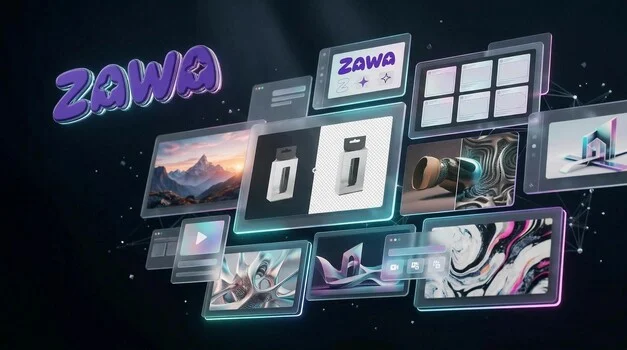
The emergence of Zawa, a company that reached out to Fstoppers regarding their innovative product, presented a timely opportunity. The author’s contemplation of a brand refresh coincided with Zawa’s promise to streamline and demystify the brand creation process, particularly by reducing the often substantial costs associated with hiring design agencies. The proposition of an AI-driven suite of tools designed to address common pain points in brand development was compelling. Zawa’s web-based platform, characterized by a user interface reminiscent of the intuitive design of Canva, offered a promising initial impression.
The core functionality of Zawa revolves around its AI logo generator and comprehensive brand suite creation capabilities. The process is initiated by providing simple prompts, which the AI then utilizes to generate a tailored brand asset package. This approach significantly democratizes the brand creation process, making sophisticated design tools accessible to a broader range of individuals and businesses. The ability to generate professional-grade branding elements with minimal technical expertise represents a significant advancement in the field.
The Rebranding Process: Leveraging AI for a Modern Identity
The author’s engagement with Zawa began with a specific objective: to rebrand an existing logo and an accompanying professional photograph into a cohesive and modern brand suite. The process involved uploading these existing assets and providing a concise directive: "This is my existing logo. I want you to rebrand it and then give me a full brand kit. The logo needs to be modern and fresh. Here is an image of me also to help with this task." This clear, albeit brief, instruction set the stage for the AI’s analytical and generative capabilities.
AI’s Analysis: Deconstructing Existing Assets
Within approximately one minute of submitting the assets and prompt, Zawa provided an initial analysis. This included an assessment of the existing logo, noting its foundational elements, and an interpretation of the user’s photograph, identifying key visual characteristics and potential stylistic directions. Following this preliminary analysis, the AI requested clarification on specific elements the user wished to retain or modify, prompting a response to pursue a fresh, contemporary approach. This iterative feedback loop, facilitated by AI, allows for a degree of customization and refinement that is often absent in fully automated systems.
Defining the New Brand Direction: AI’s Strategic Vision
The AI’s proposed design direction articulated a clear strategic vision for the rebrand. The core concept centered on establishing a cohesive, modern visual identity that effectively bridged technical media expertise with an approachable, organic teaching style. This conceptual framework informed the selection of visual elements, aiming to create a brand that was both professional and relatable. The brand tone was defined as professional, approachable, contemporary, expert, and natural, encapsulating the desired perception. Furthermore, the AI outlined the technical specifications for the brand assets, including social media avatars, YouTube lower thirds, podcast cover art, and photography watermarks, ensuring comprehensive coverage across various platforms.
Logo Design Proposals: A Spectrum of Creative Possibilities
Following the strategic definition, Zawa presented four distinct logo design proposals, each exploring a different creative avenue. These proposals spanned a spectrum from minimalist graphic styles to more typography-centric approaches, all meticulously aligned with the established design guide. The speed at which this process unfolded was remarkable; the AI managed to comprehend the brief, analyze the provided assets, and present structured, diverse outputs within a mere two minutes. This rapid turnaround time represents a significant departure from traditional design workflows, where such ideation phases can often extend over days or even weeks.
The Outcome: A Swift and Comprehensive Brand Toolkit
The culmination of this AI-driven process yielded four distinct branding directions. Upon selecting a preferred direction, Zawa proceeded to generate a complete logo and brand toolkit. This entire process, from initial upload to final toolkit generation, reportedly took between five to seven minutes. The author further explored the AI’s capabilities by requesting additional design iterations, ultimately selecting an option that resonated particularly well with the genre of landscape photography. This efficiency and the quality of the output suggest a powerful new paradigm for brand development.
Exploring Additional AI-Powered Features: Content Creation and Inspiration
Beyond logo and brand kit generation, Zawa offers a suite of additional tools designed to enhance content creation and marketing efforts. One notable feature allows users to generate social media posts from a single image upload. By providing images related to a digital location guide and a book titled COAST, Zawa rapidly produced multiple social media post ideas within two minutes. While these suggestions required some refinement, the overall output provided a valuable starting point for content ideation and online sharing. This functionality is particularly beneficial for individuals and businesses seeking inspiration or struggling to maintain a consistent online presence. The platform’s array of tools caters to users with varying levels of design experience, positioning Zawa as a viable solution for those seeking a comprehensive and accessible design suite.
Pricing and Value Proposition: A Competitive Market Entry
Zawa’s pricing model appears to be strategically positioned within the competitive market for design and branding tools. The cost of employing a traditional design agency for even a fraction of the tasks that Zawa can perform would likely exceed the monthly subscription fee for the software. The platform utilizes a credit-based system for each request, providing users with a clear understanding of their usage and associated costs. While this means use is not unlimited, it offers a predictable expenditure model. This approach balances the need for robust functionality with a sustainable business model, ensuring that the powerful AI capabilities remain accessible without prohibitive ongoing costs.
The Engine Behind the Innovation: AI Integration and Workflow
The underlying technology powering Zawa is a sophisticated integration of various AI tools, including Nano Banana, agent-based systems, Midjourney, and ChatGPT. By leveraging these specialized AI services, Zawa acts as a central orchestrator, taking a single user prompt and disseminating it to the appropriate platforms to generate the desired outputs. This unified approach eliminates the need for users to navigate multiple AI providers and interfaces, consolidating the entire branding and design workflow into a single, streamlined experience. The ability to harness the distinct strengths of various AI models from one central hub significantly enhances efficiency and user convenience.
Limitations and Future Outlook: The Evolving Nature of AI
Despite the impressive capabilities of Zawa, it is crucial to acknowledge the inherent limitations of current AI systems. When tasked with generating additional assets, the AI’s outputs, while generally strong, occasionally contained minor errors that necessitated manual adjustment. For instance, when presented with covers for eight location guides, the AI generated its own interpretations, even introducing new locations not present in the original material. This indicates that while AI can significantly augment the creative process, it is not yet a fully automated solution. These limitations appear to be characteristic of the current state of AI technology rather than a specific failing of the Zawa platform itself.
Concluding Thoughts: A Glimpse into the Future of Branding
The experience of testing Zawa has been profoundly illuminating, offering a compelling glimpse into the future of brand creation. The platform demonstrates a remarkable capacity to save time and deliver solid, impactful outputs, although the quality of these results is intrinsically linked to the clarity and specificity of the input provided by the user. Zawa effectively delivers on its promises, producing results that are, on the whole, quite impressive. The ultimate test of a branding tool lies in its ability to create an identity that is both effective and indistinguishable from human-designed work. If viewers, upon encountering the generated brand assets for the first time, cannot discern their AI origin, then Zawa has succeeded in its mission. Even if a discerning eye can detect the AI’s influence, the work produced still stands as a testament to the platform’s capability to generate high-quality, scrutinized work. This technological advancement heralds a new era in branding, where sophisticated design is more accessible and efficient than ever before.