The Essential Paris Travel Guide: A Comprehensive Five-Day Itinerary for Navigating the French Capital’s Cultural and Historic Landmarks

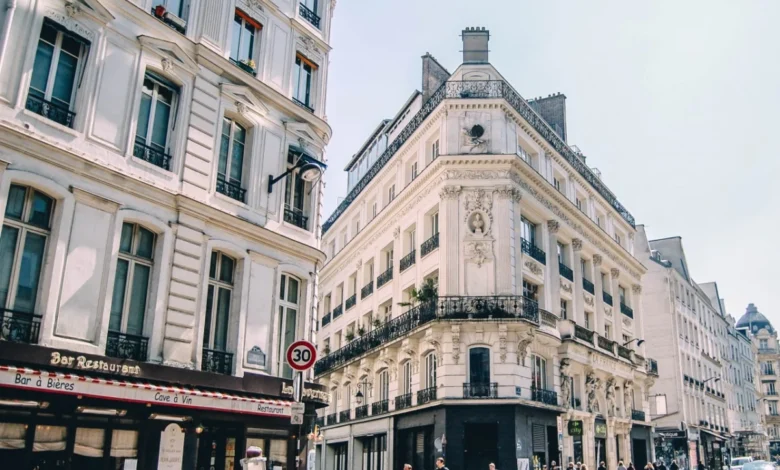
Paris remains a cornerstone of global tourism, consistently ranking as one of the most visited cities in the world. As the capital of France and a primary hub for European culture, art, and gastronomy, the city requires a strategic approach for travelers to navigate its expansive districts, known as arrondissements. This comprehensive guide outlines a five-day itinerary designed to maximize exposure to iconic landmarks such as the Eiffel Tower and the Louvre Museum while integrating logistical insights, historical context, and economic data relevant to the modern traveler.

Strategic Logistics and Urban Navigation
The infrastructure of Paris is centered around accessibility, supported by a multi-modal transportation network. Most international visitors arrive via Charles de Gaulle Airport (CDG), which handled approximately 67 million passengers in 2023, or Orly Airport (ORY). For those traveling from within Europe, high-speed rail connections through hubs like Gare du Nord and Gare de l’Est provide efficient entry points.

The Paris Metro serves as the city’s circulatory system, featuring 16 lines and over 300 stations. Urban planners and tourism experts recommend the use of the Metro over vehicular transport due to the city’s high traffic density. For tourists, multi-day passes such as the "Paris Visite" provide unlimited travel on the Metro and RER (Regional Express Network), which is essential for reaching outlying areas like the Palace of Versailles.

Seasonality significantly impacts the visitor experience. Data from the Paris Convention and Visitors Bureau indicates that while the spring and summer months (April through August) offer peak floral displays in gardens like the Tuileries and Monet’s Giverny, the winter months provide a 20% to 30% reduction in wait times at major cultural institutions. The city has recently undergone significant infrastructure upgrades in preparation for the 2024 Olympic Games, resulting in improved pedestrian pathways and expanded cycling lanes.

Chronology of a Five-Day Itinerary
A logical progression through Paris minimizes transit time and groups attractions by geographical proximity. This itinerary balances high-traffic landmarks with smaller, specialized museums.

Day 1: The Architectural Core and Western Axis
The first day focuses on the 7th and 8th arrondissements. The Eiffel Tower, originally constructed for the 1889 World’s Fair, remains the primary objective for most visitors. Standing at 330 meters, it serves as a global icon of French engineering. To manage the influx of nearly six million annual visitors, advanced reservations are now standard protocol.

Adjacent to the tower, the Trocadéro offers the most significant vantage point for architectural photography. The route then progresses to the Arc de Triomphe, commissioned by Napoleon in 1806. From the summit of the Arc, visitors can view the twelve radiating avenues of the Place de l’Étoile, including the Avenue des Champs-Élysées. This area serves as a primary commercial artery, hosting flagship stores that contribute significantly to the city’s luxury retail sector.

Day 2: Religious Heritage and the Latin Quarter
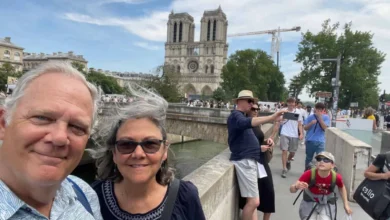
Day two centers on the Île de la Cité, the historical heart of Paris. While the Notre Dame Cathedral continues its extensive restoration following the 2019 fire—with a scheduled reopening in late 2024—the exterior remains a site of significant cultural pilgrimage. Nearby, the Sainte-Chapelle offers a masterclass in 13th-century Rayonnant Gothic architecture, featuring 1,113 stained-glass panels.

Crossing into the 5th arrondissement, travelers enter the Latin Quarter, so named because students at the nearby Sorbonne University once spoke Latin exclusively. This district houses the Panthéon, a secular mausoleum containing the remains of French luminaries such as Voltaire, Victor Hugo, and Marie Curie. The day concludes at the Luxembourg Gardens, a 23-hectare park commissioned by Marie de’ Medici in 1612.

Day 3: Artistic Evolution in Montmartre
Montmartre, located in the 18th arrondissement, represents the bohemian history of the city. Historically an independent village, it became the epicenter for the Belle Époque art movement. A walking tour of this district typically includes the Moulin Rouge, the vineyard of Clos Montmartre, and the Sacré-Cœur Basilica. The Basilica, constructed of Travertine stone which bleaches with rain, sits at the highest point in the city.

Following the exploration of Montmartre, the itinerary shifts to the Palais Garnier, an 1,979-seat opera house built from 1861 to 1875. The building is a pinnacle of Second Empire architecture. The day ends with a visit to the Galeries Lafayette, where the neo-Byzantine dome and panoramic terrace provide a free view of the Parisian skyline.

Day 4: The Monarchy and the Underground
A trip to the Palace of Versailles is a logistical necessity for understanding French history. Located approximately 20 kilometers southwest of central Paris, the palace was the principal royal residence from 1682 until the French Revolution in 1789. The Hall of Mirrors, containing 357 mirrors, remains one of the most historically significant rooms in the world, having hosted the signing of the Treaty of Versailles in 1919.

Upon returning to the city, the Catacombs of Paris offer a stark contrast. This underground ossuary holds the remains of more than six million people, relocated from overflowing cemeteries in the late 18th century. It represents a unique intersection of geology, public health history, and urban planning.

Day 5: The Museum Circuit and the Seine
The final day is dedicated to the world’s most renowned art collections. The Louvre, the world’s largest art museum, saw 8.9 million visitors in 2023. Its collection spans from ancient civilizations to the mid-19th century. To avoid "museum fatigue," experts suggest focusing on specific wings or eras.

Alternatively, the Musée d’Orsay, housed in a former railway station, focuses on Impressionist and Post-Impressionist masterpieces. For a more intimate experience, the Rodin Museum, located in the artist’s former workshop and gardens, showcases the evolution of modern sculpture. The five-day experience concludes with a night view of the Eiffel Tower’s hourly light show, which uses 20,000 light bulbs to create its signature shimmer.

Economic Impact and the Rise of River Cruising
Tourism is a vital component of the French economy, accounting for nearly 8% of the national GDP. Paris alone generates billions in revenue from accommodations, dining, and cultural fees. A notable trend in the post-pandemic travel market is the surge in river cruising along the Seine.

River cruises provide a hybrid travel model, offering the mobility of a guided tour with the amenities of luxury lodging. According to industry data, the Seine is one of the most popular routes in Europe, often linking Paris to the Normandy coast. These cruises allow travelers to see the "City of Light" from its historical water axis, passing under the Pont Alexandre III and the Pont Neuf, while eliminating the logistical friction of constant hotel transitions.

Supporting Data and Travel Analytics
Budgeting for a Parisian excursion requires an understanding of the city’s cost tiers. As of 2024, the average cost for a mid-range traveler is approximately €150 to €250 per day, including lodging, meals, and attractions. However, the "Paris Pass" and "Museum Pass" systems allow for significant savings for those visiting multiple state-run institutions.

Key Statistics for Travelers:

- Museum Attendance: The Louvre and Musée d’Orsay account for over 12 million combined annual visitors.
- Dining: France holds the record for the highest number of Michelin-starred restaurants, though the average "Boulangerie" (bakery) remains the most frequented food outlet for both locals and tourists.
- Green Space: Paris contains over 400 parks and gardens, making it one of the most forested capitals in Europe.
Official Responses and Heritage Preservation
The French Ministry of Culture and the Centre des Monuments Nationaux (CMN) have recently emphasized the importance of "sustainable tourism." In response to overcrowding at sites like the Louvre and Versailles, officials have implemented mandatory time-slot bookings and capped daily attendance.

"The goal is not just to host visitors, but to preserve the integrity of our national heritage while ensuring a quality experience," a spokesperson for Atout France, the national tourism development agency, stated in a recent report. These measures are part of a broader European effort to mitigate the impacts of "over-tourism" while maintaining the economic benefits of international travel.

Broader Implications and Future Outlook
Paris is currently in a state of transformation. The "Grand Paris Express" project, one of the largest infrastructure projects in Europe, aims to add 200 kilometers of new track and 68 new stations to the Metro network by 2030. This expansion will better connect the city center to the suburbs, potentially shifting tourism patterns and making lesser-known districts more accessible.

Furthermore, the city’s commitment to becoming "Europe’s greenest city" by 2030 has led to the pedestrianization of the Seine riverbanks and the planting of "urban forests." For the traveler, this means a city that is increasingly walkable and environmentally conscious. Navigating Paris in the coming decade will likely be characterized by faster transit, greener spaces, and a continued emphasis on the digital integration of tourism services.

In conclusion, a five-day visit to Paris offers a comprehensive overview of Western civilization’s artistic and political milestones. By understanding the logistical nuances and historical context of each site, visitors can transition from being mere spectators to informed observers of one of the world’s most resilient and culturally significant capitals.