The completion and opening of the Nichupté Bridge marks a definitive turning point in the urban evolution of Cancún, one of the world’s most prominent tourism hubs. For decades, the geography of the region—defined by the narrow strip of the Hotel Zone separated from the mainland by the Nichupté Lagoon—created significant logistical challenges for both the local workforce and the millions of international visitors who arrive annually. As a strategic infrastructure project, the Nichupté Bridge serves as a vital secondary artery, alleviating the chronic congestion that has historically plagued Kukulcan Boulevard and providing a modernized transit solution that aligns with the Mexican Caribbean’s long-term growth trajectory.
Technical Specifications and Engineering Scope
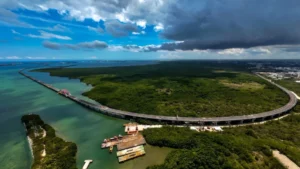
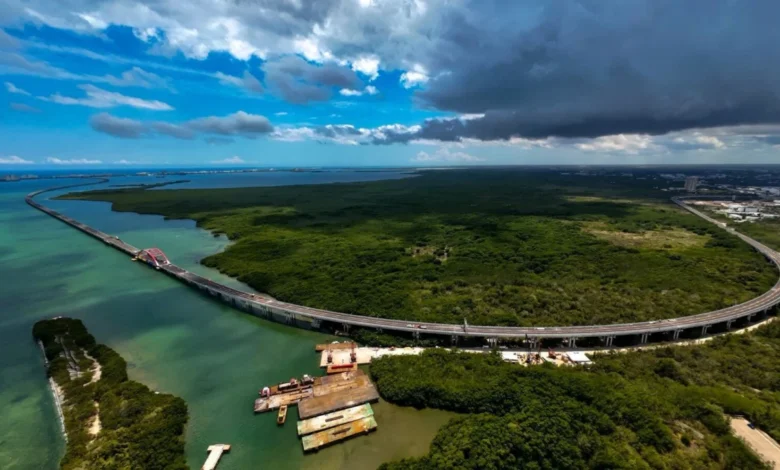
The Nichupté Bridge is not merely a local roadway but a significant feat of civil engineering designed to withstand the unique climatic and environmental conditions of the Yucatán Peninsula. Stretching approximately 8.8 kilometers (5.5 miles), the structure spans the Nichupté Lagoon, connecting the center of Cancún at the intersection of Colosio Boulevard and Kabah Avenue directly to the heart of the Hotel Zone at kilometer 13.5.
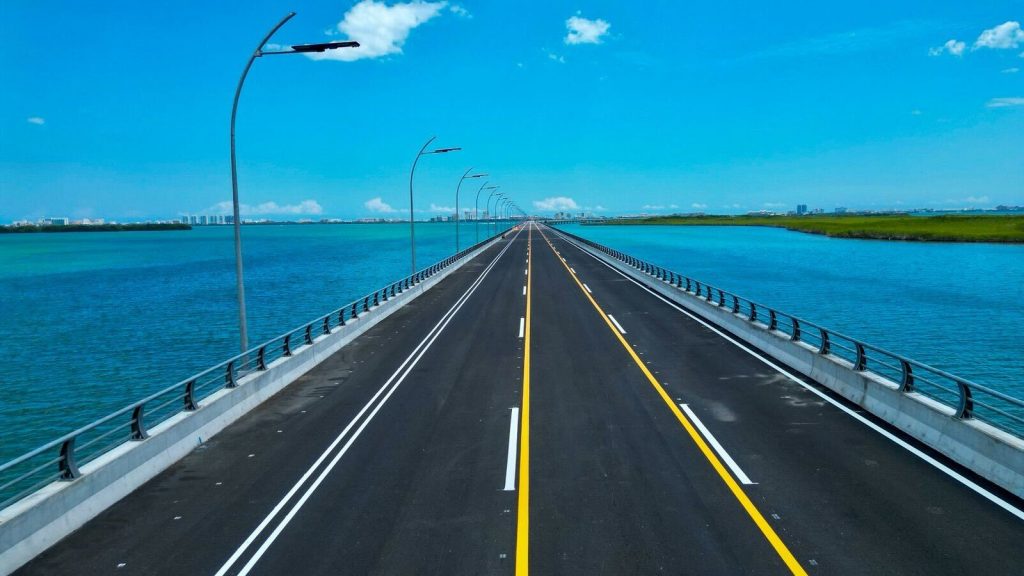
The bridge features three lanes of traffic, each approximately 3.5 meters wide. A notable aspect of its design is the inclusion of a reversible central lane, which allows authorities to adjust traffic flow based on peak demand—facilitating entry to the Hotel Zone during morning hours and exit toward the city in the evening. Furthermore, the project incorporates a dedicated bicycle path and pedestrian walkways, reflecting a modern shift toward multi-modal transportation and urban accessibility.
The construction utilized top-down engineering methods to minimize the footprint on the lagoon’s floor, a delicate ecosystem comprised of mangroves and seagrasses. By employing specialized machinery that operates from the top of the already-constructed sections, the federal and state governments aimed to reduce the environmental impact typically associated with heavy maritime construction. The project represents a federal investment of over 5.5 billion pesos (approximately $320 million USD), signaling the high priority placed on the region’s infrastructure by the Mexican government.
Historical Context and Development Timeline
The necessity for a lagoon crossing has been discussed in urban planning circles for over twenty years. Since Cancún was established as a planned tourist destination in the 1970s, it has grown from a remote fishing area into a metropolis of nearly one million residents. However, the infrastructure connecting the residential "downtown" areas with the high-density Hotel Zone remained largely static, relying almost entirely on the two ends of Kukulcan Boulevard.
The formalization of the Nichupté Bridge project began in earnest in the early 2020s as part of a broader federal initiative known as the "Strategic Works for Cancún." This package included the renovation of Luis Donaldo Colosio Boulevard (the main highway from the airport), the construction of the Cloverleaf interchange at the airport entrance, and the modernization of Chac Mool Avenue.
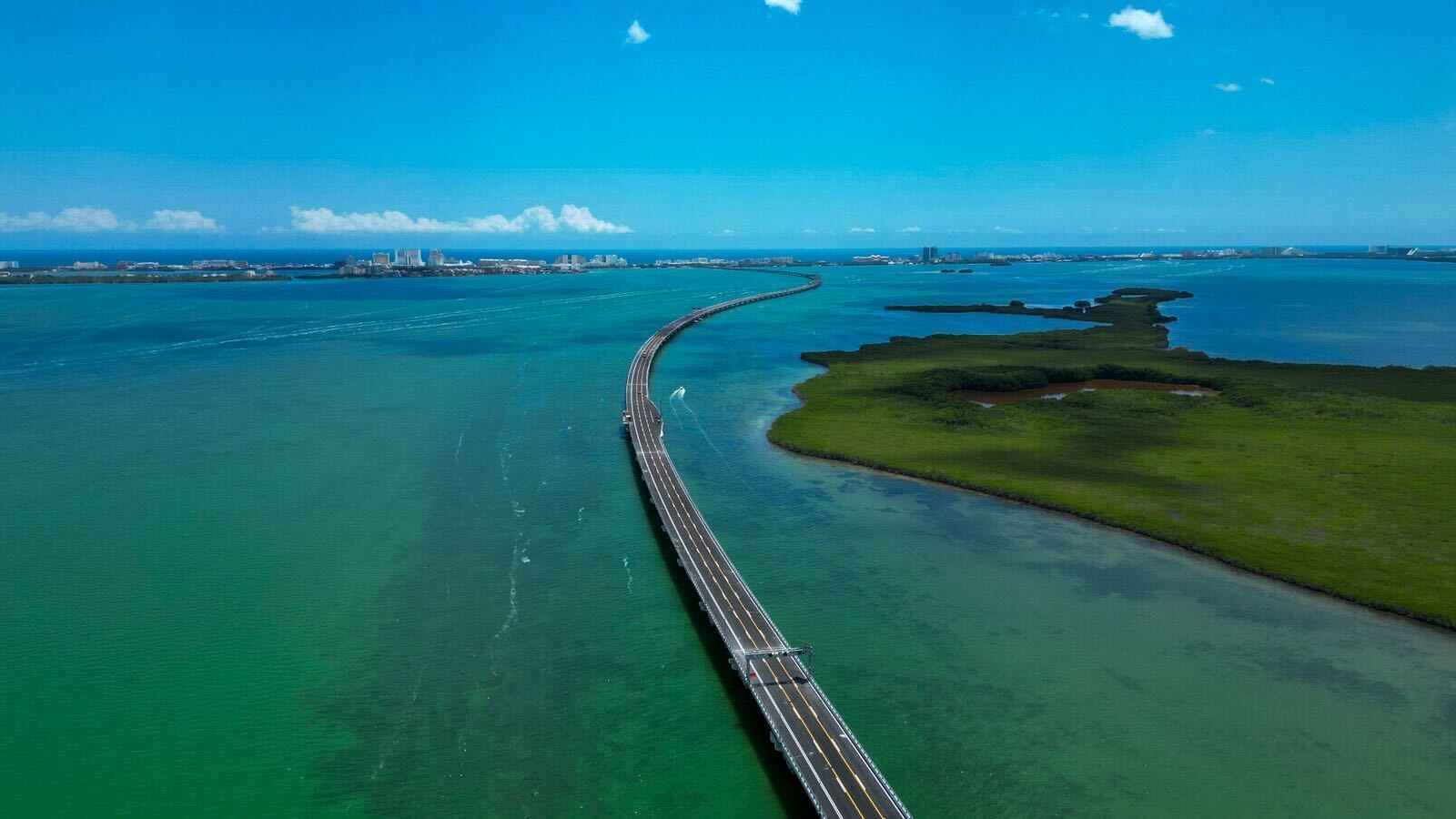
Construction of the bridge faced several delays, primarily due to the complexities of environmental impact assessments and the logistical challenges posed by the COVID-19 pandemic. However, work accelerated in 2023 and 2024, with the bridge finally reaching completion as part of a synchronized effort to upgrade the region’s transport network alongside the development of the Maya Train (Tren Maya). The inauguration of the bridge serves as a capstone to this era of intense infrastructure investment, effectively modernizing a city that had outgrown its original mid-century blueprints.
Economic and Tourism Implications
The economic impact of the Nichupté Bridge extends far beyond reduced commute times. For the tourism sector, which is the lifeblood of the Quintana Roo economy, the bridge addresses one of the most frequent complaints from international travelers: the "logistical friction" of getting to and from their resorts. During peak seasons, the trip from Cancún International Airport to the Hotel Zone could take upwards of 90 minutes; with the new bridge, that time is expected to be reduced to approximately 20 to 30 minutes.
The bridge was a central topic during the EDGE 2026 conference in San Diego, a premier gathering for travel industry leaders and luxury travel advisors. During this event, the Mexican Caribbean Tourism Board officially announced that the 2027 edition of the conference would be hosted in the Cancún-Riviera Maya region. The selection of Cancún for such a prestigious event underscores the international community’s confidence in the region’s updated infrastructure.
Andrés Martínez Reynoso, CEO of the Mexican Caribbean Tourism Board, emphasized that the bridge is a "transformational project" that reflects the region’s continued evolution. By reducing the time spent in transit, the bridge encourages tourists to explore beyond the confines of their all-inclusive resorts. Easier access to downtown Cancún is expected to provide a significant boost to local businesses, including authentic Mexican restaurants, artisan markets, and cultural sites that were previously difficult for tourists to visit without enduring heavy traffic.
Supporting Data and Urban Mobility Analysis
The data supporting the need for the Nichupté Bridge is compelling. According to traffic studies conducted by the Secretariat of Infrastructure, Communications, and Transportation (SICT), Kukulcan Boulevard was operating at nearly 120% of its intended capacity during peak hours prior to the bridge’s opening. With over 20,000 vehicles traversing the Hotel Zone daily, any minor accident or inclement weather could lead to total gridlock, impacting both the guest experience and the ability of hotel employees to reach their shifts on time.
The new bridge is projected to divert approximately 30% to 40% of the traffic from the main boulevard. This redistribution not only improves speed but also enhances safety. In the event of a hurricane or other emergency requiring a mass evacuation of the Hotel Zone, the Nichupté Bridge provides a critical third exit route, potentially saving lives by streamlining the movement of thousands of people in a compressed timeframe.
Furthermore, the project aligns with broader regional data trends. Cancún International Airport (CUN) reported record-breaking numbers in 2023, handling over 32 million passengers. As flight connectivity continues to expand—particularly with new routes from Europe and the expansion of domestic carriers—the physical infrastructure on the ground must keep pace. The bridge ensures that the "last mile" of the traveler’s journey is as efficient as the flight itself.
Official Responses and Stakeholder Perspectives
The project has received broad support from the private sector and government officials, though it was not without its critics. Environmental advocacy groups initially raised concerns regarding the impact on the lagoon’s biodiversity. In response, the government implemented a series of mitigation measures, including the reforestation of mangrove areas and the installation of specialized drainage systems to prevent road runoff from entering the lagoon waters.
Local business leaders in downtown Cancún have hailed the project as a "reunification" of the city. For many years, the Hotel Zone felt like a separate enclave; the bridge physically and symbolically bridges the gap between the tourist world and the local community. "This is about more than just cars," noted a representative from the Cancún Chamber of Commerce. "It is about making the city accessible to everyone who lives and works here."
From the perspective of the hotel industry, the bridge is viewed as a necessary amenity. Modern luxury travelers increasingly prioritize seamlessness and "invisible service." A bridge that eliminates a stressful traffic jam is considered a luxury upgrade in the same vein as a renovated lobby or a high-end spa.
Broader Impact and Future Implications
The Nichupté Bridge is a piece of a much larger puzzle. It must be viewed in conjunction with the Maya Train, which connects the airport to the rest of the Yucatán Peninsula, and the newly opened Felipe Carrillo Puerto International Airport in Tulum. Together, these projects represent a multi-billion dollar bet on the future of the Mexican Caribbean as a world-leading destination for the 21st century.
As the region moves toward the 2030s, the focus is shifting from simply building more hotel rooms to improving the quality of life and the quality of the "movement" between destinations. The Nichupté Bridge suggests that the Mexican Caribbean is thinking beyond the resort gates and toward the overall rhythm of travel itself. This holistic approach to destination management is likely to set a benchmark for other global resort hubs facing similar growth pressures.
For the traveler, the bridge means more time on the beach and less time on the asphalt. For the resident, it means a faster commute and a more connected city. For the investor, it signifies a region that is willing to spend on the infrastructure necessary to sustain its status as a global leader in tourism. Ultimately, the Nichupté Bridge is a testament to Cancún’s maturity—a transition from a burgeoning resort town into a sophisticated, interconnected metropolitan region prepared for the next generation of global tourism.