Syria, a land steeped in millennia of history, offers a travel experience that is both profoundly moving and starkly contrasting. For the intrepid traveler, the country presents an opportunity to witness firsthand a nation grappling with the aftermath of a devastating conflict while simultaneously demonstrating remarkable resilience and a determined spirit of reconstruction. Recent years have seen a cautious reopening to tourism, presenting a complex yet compelling proposition for those seeking to explore a destination often misrepresented in global media.
The Allure of the Ancient and the Echoes of Conflict
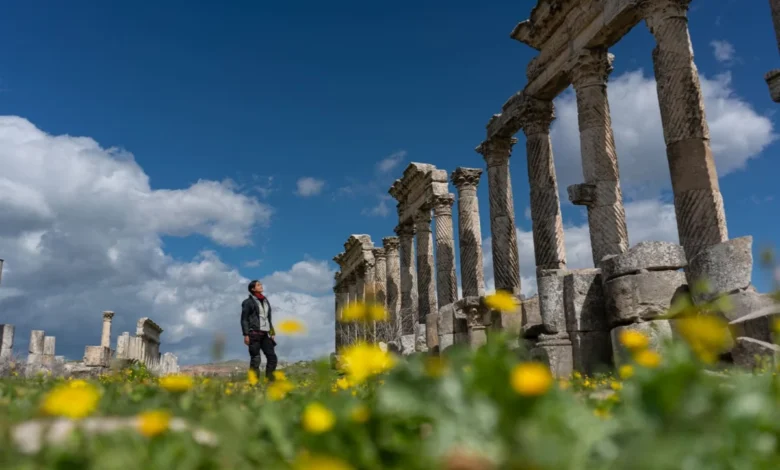
The allure of Syria for travelers lies in its unparalleled historical and cultural tapestry. Imagine traversing the ancient streets of Palmyra, a UNESCO World Heritage site, where monumental Roman facades stand as silent witnesses to a glorious past, now bearing the scars of recent conflict. Picture yourself in Damascus, the world’s oldest continuously inhabited city, where hidden courtyards in traditional Damascene homes offer serene havens, complete with the refreshing taste of cold beer and the warmth of local hospitality. Envision climbing the ramparts of an empty Crusader castle, gazing out at the shimmering Mediterranean Sea as the sun dips below the horizon. These are not mere postcard images; they are visceral experiences that the resilient Syrian landscape offers.
However, these moments of beauty and tranquility are inextricably linked to the harsh realities of war and economic hardship. Bullet-riddled Roman facades and scorched hotels are stark reminders of the conflict that has ravaged the country for over a decade. The nation’s infrastructure, particularly its energy sector, has been severely impacted. Reports indicate ongoing challenges related to power outages, exacerbated by external factors, including the protracted presence of foreign military forces in key resource-rich areas, ostensibly to "defend democracy," a phrase that elicits complex reactions within the nation.
Syria Re-emerging: A Destination Beyond the Headlines
Despite the pervasive narrative of destruction, Syria is far from a desolate wasteland. Millions of Syrians continue to live their lives, their resilience a testament to the human spirit. Prior to the conflict that erupted in 2011, Syria was a popular tourist destination, attracting millions of visitors annually and generating billions of dollars in revenue. The country’s tourism infrastructure, though impacted, retains a fundamental understanding of hospitality and visitor management. The notion that Syria is an "off-the-beaten-track" destination is, in part, a consequence of the war, yet it also signifies an opportunity for a unique and profound travel experience.
The possibility of future conflict, while a lingering concern for many, has not entirely halted efforts to revive the nation’s tourism sector. For foreign tourists, the current pathway to visiting Syria involves mandatory accompaniment by a government-approved tour guide or agency. This regulatory framework ensures a structured and, according to those involved, a safe experience for visitors. Companies like Syrian Guides, a young but experienced outfit based in Damascus, are at the forefront of this endeavor. Their teams, including individuals like Rami, Mary, and Bashar, express a deep commitment to their country’s reconstruction and are eager to showcase its potential to the world. They advocate for the possibility and safety of visiting Syria, aiming to counter the predominantly negative international perception.
The Syrian Travel Experience: A Tapestry of Contrasts
For those who venture to Syria, the reality often surpasses expectations. Damascus, for instance, reveals a city where traditional guesthouses, adorned with gurgling fountains and shaded courtyards filled with fragrant naranj trees, lie discreetly behind unassuming facades. Bustling cafes, frequented by a diverse clientele, offer spaces for relaxation and social interaction, often accompanied by the ubiquitous shisha. The luxury of having ancient castles and colonnades to oneself, a stark contrast to the crowded tourist sites elsewhere, provides an unparalleled sense of discovery. The ability to enjoy a glass of wine amidst olive groves or wander through ancient streets listening to the melodic call to prayer encapsulates Syria’s rich cultural mosaic, a blend of customs, religions, and traditions at a historical crossroads.
However, the beauty and charm of Syria are constantly juxtaposed with the enduring impact of conflict. The country remains a geopolitical battleground, a complex arena for proxy wars involving regional and global powers. The shadows of political rivalries are cast long over its resilient landscape. One might witness young shepherds tending their flocks amidst fields dotted with the skeletal remains of homes destroyed by crossfire. While city centers may glitter with the vibrant life of shisha cafes and bars, journeys between these urban hubs can be shrouded in darkness, with many villages abandoned due to violence and military occupation. This duality creates a travel experience that is simultaneously comfortable in its hospitality and infrastructure, yet profoundly uncomfortable in its confrontation with the ongoing realities of war and economic crisis.
Navigating Safety Concerns in Contemporary Syria
The question of safety is paramount for any potential traveler to Syria. While the nation has endured significant hardship, the perception of it being an insurmountable danger zone is often an oversimplification. Understanding the current security landscape requires a nuanced perspective.
The Impact of Regional Conflicts: The ongoing war in Gaza, while a humanitarian catastrophe, has had a limited and specific impact on Syria. Attacks within Syria have primarily targeted locations associated with Iranian military presence or officials, rather than indiscriminately affecting civilian areas or common tourist routes. Airspace disruptions, such as targeted strikes on runways at Aleppo and Damascus airports, have aimed to disrupt logistical chains rather than cause widespread civilian casualties. Statistically, the risk of being affected by such incidents is significantly lower than the everyday risks encountered in many other urban environments, including traffic accidents during peak hours.
Understanding the Local Security Apparatus: The Syrian government maintains a strong security presence, particularly in major cities and tourist areas. This presence, while visible, contributes to a general sense of order and security for visitors. Tourists are typically advised to adhere to local customs and regulations, and to remain aware of their surroundings, as would be prudent in any unfamiliar destination. The presence of armed groups is largely confined to specific conflict zones, which are generally avoided by organized tours.
The Role of Guided Tourism: The mandatory requirement for foreign tourists to be accompanied by government-approved guides or tour operators plays a crucial role in ensuring safety. These guides are not only knowledgeable about the country’s history and culture but are also well-versed in current security protocols and are equipped to navigate potential challenges. Their expertise allows them to tailor itineraries to minimize risks and maximize the visitor’s experience in a safe and controlled manner.
Ethical Considerations for the Modern Traveler
The decision to travel to Syria is not solely a logistical or safety concern; it also carries significant ethical weight. The motivations for visiting are as diverse as the country itself, ranging from a genuine interest in Syria’s rich history and culture to building connections with the Syrian diaspora, supporting a nascent tourism industry, or gaining a deeper understanding of life in a post-conflict nation.
However, it is crucial to differentiate between respectful exploration and exploitative "dark tourism." Travelers who are solely interested in documenting destruction, posing for photographs in rubble, or creating sensationalist content about "surviving" in a nation under duress are not only disrespectful but also undermine the long and arduous process of rebuilding that the Syrian people are undertaking. Syria is not a morbid theme park; it is a nation striving to heal and reconstruct. The world’s perception of a country should not be solely defined by its period of conflict.
For those approaching Syria with genuine curiosity, respect, and a willingness to learn, the country offers a profoundly rewarding experience. Visitors have the privilege of traveling to a nation where many of its own citizens face immense challenges in returning to or rebuilding their lives. This privilege necessitates a commitment to being respectful, culturally sensitive, and open to understanding the complexities of Syrian society. Acknowledging the nation’s struggles without glorifying them is key.
A Call to Conscious Exploration
Syria presents a unique travel opportunity, a chance to witness a nation’s indomitable spirit in the face of immense adversity. It is a land of ancient wonders and contemporary challenges, a place where history whispers from every stone and resilience echoes in the hearts of its people. For the traveler who seeks more than just a superficial experience, who is willing to engage with a destination on a deeper, more meaningful level, Syria offers an unforgettable journey.
The recommendation for such travelers is clear: if your intention is to learn, to connect, and to understand, then embarking on a journey to Syria is a path worth considering. By choosing to travel responsibly and respectfully, visitors can contribute, in their own way, to the nation’s eventual recovery and the re-establishment of its place on the global stage as a land of unparalleled history, vibrant culture, and enduring human spirit.
Transparency Note: This travel account was facilitated by Syrian Guides, a tour operator that partnered with the author for their visit. The author asserts that partnerships are entered into only with reputable companies and that endorsements are provided only when genuinely deserved. Syrian Guides, though a newer entity, comprises staff with extensive experience in the tourism sector. The author found their services to be professional, organized, and accommodating, highlighting the positive contributions of guides like Rami and Bashar to their experience. Further information and traveler reviews can be found on their website, www.syrianguides.com, and TripAdvisor.