Brand USA Faces Financial Headwinds as Pandemic-Era Funding Reserves Approach Depletion

A $250 million federal injection that provided a crucial safety net for Brand USA’s post-pandemic marketing operations is rapidly winding down, forcing the nation’s tourism promotion agency to recalibrate its long-term strategy as it navigates a landscape of reduced federal appropriations. For the past two years, this significant capital infusion—authorized in the wake of COVID-19 to stabilize the international travel sector—masked the impact of structural funding cuts that have stripped approximately $80 million from the organization’s annual operating budget. As these reserves reach their expiration point, Brand USA finds itself bracing for the full economic weight of these reductions, raising questions about the future of American international tourism competitiveness.
The Evolution of Brand USA’s Funding Model
To understand the current fiscal precipice, one must examine the unique structure of Brand USA, which was established by the Travel Promotion Act of 2009. Unlike many national tourism boards that are funded entirely by government grants, Brand USA operates through a public-private partnership model. It is primarily funded by a fee levied on international visitors traveling to the United States under the Visa Waiver Program, matched by private sector contributions in the form of cash and in-kind services.
The pandemic period fundamentally disrupted this mechanism. As international borders shuttered in 2020 and 2021, the collection of the Electronic System for Travel Authorization (ESTA) fees plummeted, depriving the agency of its primary revenue stream. In 2022, Congress intervened with a one-time $250 million appropriation to sustain the agency during the recovery phase. This capital allowed Brand USA to maintain its global marketing presence, participate in international travel trade shows, and launch promotional campaigns aimed at reintroducing the United States to skeptical global travelers. However, this was a stopgap measure, not a permanent fiscal baseline.
Chronology of Fiscal Tightening
The timeline of the agency’s financial trajectory reveals a steady transition from emergency support to austerity.
- 2010–2019: Brand USA establishes its brand identity, relying on a consistent mix of ESTA fees and private sector partnerships. Annual spending grew steadily, often exceeding $200 million as international arrivals reached record highs.
- 2020–2021: The COVID-19 pandemic leads to a near-total cessation of international travel. Revenue from visa fees collapses.
- 2022: The U.S. government authorizes a $250 million emergency grant to keep the agency operational.
- 2023–2024: Federal funding levels are reduced as part of broader budgetary negotiations. The agency utilizes its 2022 grant reserves to bridge the gap, maintaining spending levels that appear robust on the surface.
- 2025–2027: The reserves are depleted. The agency announces projected spending of $158 million for fiscal 2026 and $165 million for fiscal 2027.
- 2028 and Beyond: The agency faces a "fiscal cliff" where it must rely almost exclusively on current-year collections and private partnerships, with significantly diminished cash reserves.
Financial Projections and the 2028 Outlook
The fiscal outlook for 2028 is currently a point of concern for industry analysts. According to internal projections, Brand USA expects to execute a $114.1 million drawdown of its remaining reserves through the end of September 2027. This will leave the agency with cash reserves of approximately $51 million. While this figure might seem substantial, organization leadership has indicated that the vast majority of this capital is earmarked for emergency contingency funds, leaving very little flexibility for expansive new marketing initiatives or rapid responses to global market shifts.
The agency’s stated budget of $158 million for 2026 and $165 million for 2027 is roughly in line with the agency’s pre-pandemic tax filings. However, in an inflationary environment where the cost of international advertising, media buying, and global trade representation has risen significantly, a "pre-pandemic" budget is effectively a reduction in real purchasing power. Effectively, Brand USA is being asked to perform at 2019 levels with 2026 dollars, a challenge that few marketing organizations are equipped to handle.
Industry Implications and Competitive Stance
The broader impact of this funding contraction extends beyond the agency itself. The U.S. travel and tourism industry represents a significant portion of the nation’s GDP and is a major engine for job creation, particularly in the service, hospitality, and aviation sectors. Global competition for international visitors has intensified significantly over the last four years. Countries such as France, Italy, and Japan have invested heavily in post-pandemic tourism campaigns to reclaim their share of the long-haul travel market.
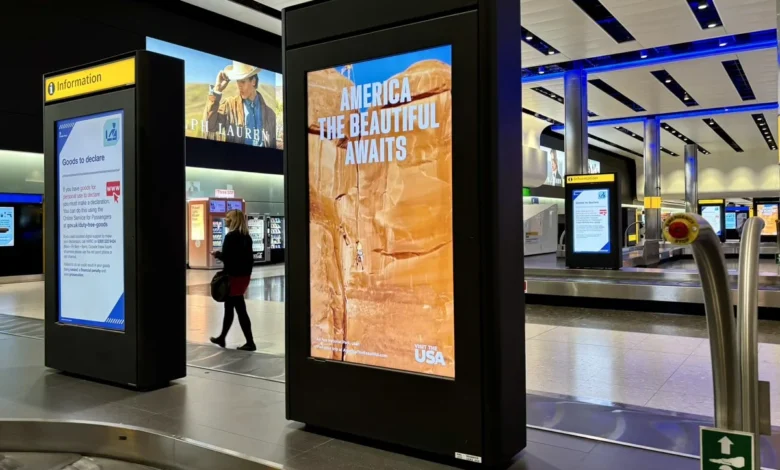
When Brand USA’s marketing budget contracts, the ripple effects are often felt by smaller U.S. destinations that rely on the agency’s umbrella branding to attract international interest. Without the "Visit The USA" promotional machine operating at full capacity, these destinations may struggle to gain visibility in key source markets such as the United Kingdom, Germany, China, and Brazil.
Analysts suggest that a reduction in marketing spend correlates directly with a slower recovery of high-value international travelers—visitors who typically stay longer and spend more than their domestic counterparts. If the U.S. market share of global travel continues to slide, the economic consequences for the hospitality industry could be profound, potentially resulting in lower tax revenues for states and municipalities that depend on tourism-related receipts.
Official Responses and Strategic Pivot
While Brand USA has not publicly signaled a crisis, the transition toward a more conservative spending posture is evident. Leadership at the agency has emphasized a strategy of "efficiency and prioritization." This includes a heavier reliance on digital marketing, where return on investment (ROI) is easier to measure, and a deeper integration with private sector partners who can provide in-kind media placements.
From the perspective of industry trade groups, such as the U.S. Travel Association, the situation highlights the necessity of long-term, stable funding. In recent legislative briefings, proponents of the travel industry have argued that the current reliance on intermittent federal injections is unsustainable. They advocate for a more predictable revenue model that can withstand geopolitical shocks and health crises, emphasizing that tourism is an export industry that pays dividends to the federal treasury through tax receipts generated by international visitors.
Analysis of the Public-Private Partnership Model
The sustainability of the public-private partnership (PPP) model is now under the microscope. In theory, the PPP model is designed to ensure that the private sector—airlines, hotel chains, and tour operators—is invested in the success of national marketing. However, when federal contributions fluctuate, it places an undue burden on these private partners to fill the void. If private contributions fail to materialize at the necessary levels, the agency’s entire mandate becomes jeopardized.
Furthermore, the reliance on the ESTA fee structure creates a feedback loop: the fee is paid by visitors who are already inclined to travel to the U.S. The primary goal of Brand USA is to entice new travelers. If the budget is cut, the ability to reach those who have not yet considered the U.S. as a destination is diminished, which in turn reduces the number of people paying the fee, ultimately leading to lower revenue for the agency. It is, in essence, a circular dependency that requires constant, robust investment to break.
Future Challenges: Beyond 2027
As the agency looks toward 2028, it will likely need to make difficult decisions regarding its global footprint. This may include closing secondary international offices, reducing participation in high-cost trade events, or scaling back its content production capabilities.
Moreover, the shifting global geopolitical landscape necessitates a more agile marketing strategy. With the rise of emerging travel markets in Southeast Asia and the Middle East, the ability to pivot resources quickly is critical. A lean budget, stripped of its contingency reserves, leaves the agency vulnerable to these shifts. If a sudden market disruption occurs—whether due to a regional conflict, an economic downturn, or a new public health concern—Brand USA may lack the liquidity to adjust its strategy, leaving the U.S. tourism sector exposed.
In conclusion, the fiscal "winding down" of Brand USA is not merely an accounting exercise; it is a signal of a changing strategic environment for American tourism. The agency has managed to maintain the appearance of stability through the careful stewardship of pandemic-era grants, but that window is closing. The coming years will serve as a definitive test of the public-private model’s resilience and the federal government’s commitment to maintaining a competitive edge in the global travel marketplace. As the reserves dwindle, the pressure on both lawmakers and private industry leaders to define a sustainable, long-term funding solution will only continue to grow.