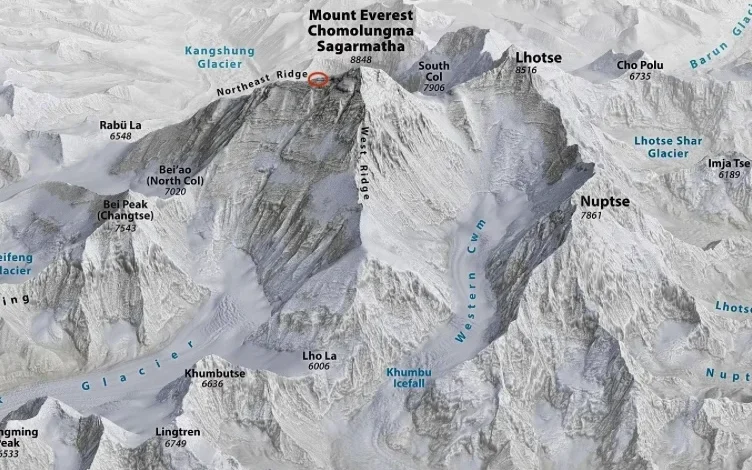
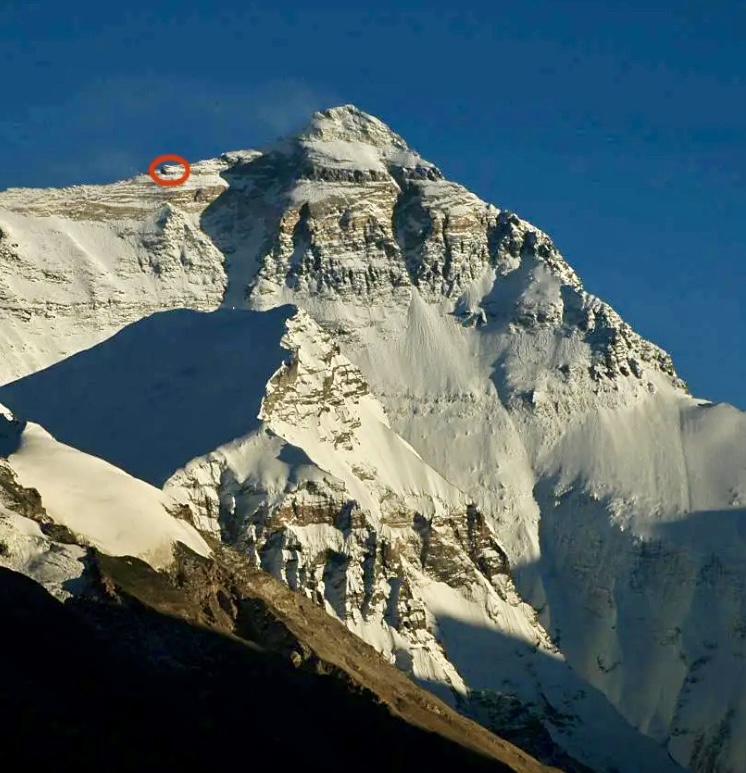
After nearly three decades serving as one of Mount Everest’s most recognizable, and grim, landmarks, the body universally known as "Green Boots" is finally the subject of an official recovery operation. Indian authorities, specifically the Indo-Tibetan Border Police (ITBP), have initiated a tender process seeking highly specialized high-altitude teams to retrieve the remains from approximately 8,500 meters (27,887 feet) on the formidable Northeast Ridge route, located on the Tibetan side of the mountain. The ambitious goal is to transport the body to Delhi by October, marking a significant, albeit somber, milestone in Everest’s history.
This mission transcends the ordinary; it is a testament to the extreme challenges of high-altitude mountaineering and the enduring quest for human dignity. The tender explicitly calls for specialist agencies boasting impeccable track records in similar, complex recovery operations, with a strong preference for recent experience on Everest itself. The operational requirements are stringent: teams must include a minimum of six Sherpas who have successfully summited Everest multiple times, underscoring the indispensable expertise and resilience required for such a perilous endeavor. Furthermore, meticulous documentation of the entire mission is mandated. Given the inherent difficulties of working within the notorious "death zone" during the fleeting summer and early autumn windows, the full expedition could span an arduous 40 days.
The Grim Landmark Identified: Dorje Morup
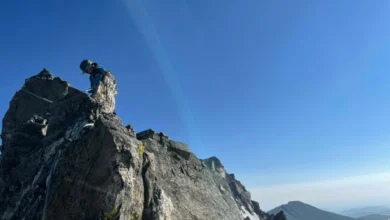
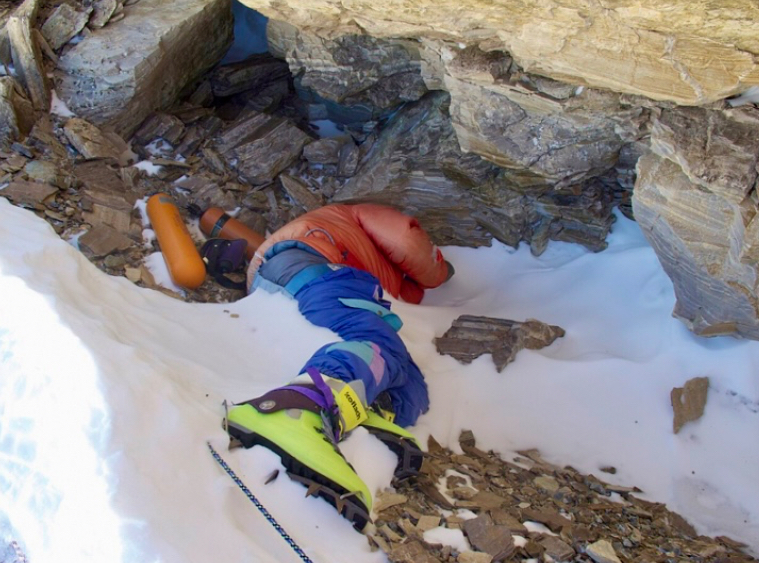
For decades, the image of a climber curled in a small, rocky alcove beneath the First Step, adorned with bright lime-green Koflach boots, became an unmistakable, albeit macabre, waypoint for climbers navigating the treacherous upper reaches of the Northeast Ridge. Its location, approximately 8,500 meters, served as a grim checkpoint, with many expeditions radioing Base Camp upon reaching it. Over time, "Green Boots" evolved into one of Everest’s most talked-about and frequently photographed landmarks, a stark reminder of the mountain’s unforgiving nature and the human cost of ambition.
The identity of "Green Boots" has long been a subject of speculation and debate within the mountaineering community. For years, the question lingered whether the remains belonged to Tsewang Paljor or Dorje Morup, two Indian climbers who perished on the same fateful day in 1996. Now, the government of India has officially resolved this enduring mystery. DNA testing, meticulously conducted in anticipation of this recovery mission, has definitively concluded that the remains are those of Dorje Morup. This confirmation provides a crucial piece of closure, not just for the mountaineering world, but more importantly, for Morup’s family, who have lived with uncertainty for nearly three decades.
Chronology of a Catastrophe: The 1996 North Side Tragedy
While the catastrophic events on Everest’s South Side during the infamous 1996 climbing season captivated global attention, immortalized in countless books and films, a parallel and equally harrowing drama unfolded with far less international coverage on the mountain’s North Side. This quieter tragedy involved an Indian police expedition, whose story remained largely overshadowed until now.
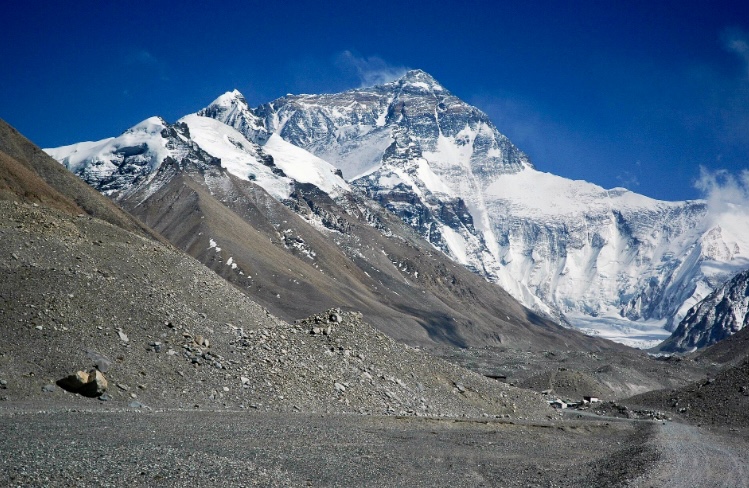
Led by Mohinder Singh, the Indian team was attempting what would have been a landmark achievement: the first Indian ascent from the Tibetan side of Everest. On May 10, 1996, a critical date in Everest’s history, seven climbers embarked on their summit push via the North Col and Northeast Ridge. Four members wisely decided to turn back at 8,500 meters, battered by rapidly deteriorating stormy weather and debilitating exhaustion. However, the remaining three – Tsewang Smanla, Dorje Morup, and Tsewang Paljor – pressed onward, driven by the elusive dream of the summit.
Late that afternoon, a radio message conveyed their supposed success: they had reached the top. Yet, shrouded in heavy cloud, persistent snow, and near-zero visibility, subsequent reviews and analyses raised serious questions about whether they had truly stood on the geological summit or fallen short by an estimated 150 meters. Despite these lingering doubts, the respected Himalayan Database officially registers their summit as valid. As darkness descended and the storm intensified into a ferocious blizzard, the three climbers found themselves trapped in the death zone, enduring a brutal night exposed to hurricane-force winds and dangerously freezing temperatures.
The following day, May 11, a Japanese team, climbing the same route, encountered the Indian climbers. They were still alive but in critical condition, severely frostbitten and incapacitated. In a move that would ignite a fierce and enduring ethical controversy, the Japanese team continued their ascent to the summit without offering substantial assistance to the distressed Indians. Tragically, all three Indian climbers – Tsewang Smanla, Dorje Morup, and Tsewang Paljor – succumbed to exposure and severe frostbite, dying on the unforgiving slopes of Everest.
The Enduring Controversy of Mountaineering Ethics
The Japanese team’s decision to prioritize their summit bid over rendering aid to the dying Indian climbers immediately sparked outrage and strong criticism from the Indian side. Initial formal complaints accused the Japanese of a profound failure in their ethical duty to assist fellow climbers in distress. While these formal complaints were later withdrawn, the profound controversy surrounding mountaineering ethics has persisted, becoming a pivotal case study in the debate over whether the achievement of the summit should ever outweigh the moral imperative to save human life.
The Himalayan Database, in its report on the incident, even pondered whether cultural differences played a role in the unfolding events, noting that in some Japanese cultural contexts, individuals might not interfere unless explicitly asked to do so. This nuanced perspective adds another layer of complexity to an already fraught situation, highlighting the diverse ethical frameworks that can collide in extreme environments. The incident remains a touchstone for discussions on the unwritten rules of the mountain, the sacrifices demanded by ambition, and the fundamental responsibilities climbers owe to one another.
The Perilous Undertaking: Challenges for the Recovery Expedition
Any recovery operation at 8,500 meters on Mount Everest is an undertaking of unparalleled difficulty and inherent risk. The "death zone," typically defined as altitudes above 8,000 meters, is an environment where the human body cannot acclimatize and begins to rapidly deteriorate. Oxygen levels at 8,500 meters are approximately one-third of those at sea level, severely impairing judgment, physical strength, and coordination. This extreme physiological stress makes even the simplest tasks Herculean and significantly elevates the risk of accidents.
Logistically, the tender issued by the ITBP underscores the monumental nature of this mission. Beyond the requirement for a proven track record, the call for at least six Sherpas with multiple Everest summits highlights their critical role. Sherpas, indigenous to the Everest region, possess not only superior physiological adaptations to high altitude but also unparalleled experience in navigating its treacherous terrain and managing complex logistics. Their strength, endurance, and intimate knowledge of the mountain are indispensable.
The technical challenges of handling a body at this altitude are immense. Frozen remains, stiffened by extreme cold and often encumbered by several layers of heavy mountaineering gear, can be extraordinarily difficult to maneuver. A frozen body can weigh significantly more than a living person, becoming a rigid, unwieldy mass. Transporting such a weight over technical rock and ice, often requiring intricate rope work and secure anchor points, demands highly specialized skills and equipment, posing significant risks to the recovery team members themselves. Guy Cotter, a seasoned New Zealand climber and long-time expedition leader with direct experience in high-altitude body retrievals, including on Everest in 1997, articulated the inherent dangers. Quoted in The Guardian, Cotter stated that while bringing remains home "brings closure, as long as it’s not putting other people at undue risk." He gravely noted, "There have been situations with body recoveries where more people have died. It’s a very thin line."
Adding another layer of complexity are the cultural considerations. Many Sherpas come from Buddhist backgrounds, where death and the handling of human remains are approached with deep reverence and specific rituals. Ensuring that the recovery is conducted with the utmost respect and sensitivity is paramount, honoring both the deceased and the beliefs of those carrying out the perilous task.
Everest’s Graveyard and the Quest for Dignity
Mount Everest, often referred to as the world’s highest open-air graveyard, is believed to hold the remains of approximately 200 climbers. Many of these bodies lie in locations where retrieval is deemed either too hazardous, logistically impossible, or prohibitively costly. Over the years, "Green Boots" became one of several such "markers," alongside others like "Sleeping Beauty" (Francys Arsentiev) and the remarkably preserved remains of George Mallory, discovered in 1999.
Recent cleanup initiatives, often led by local organizations and, at times, supported by military efforts (such as those by the Nepali Army), have demonstrated that when conditions and dedicated teams align, progress can be made. These efforts have not only removed tons of accumulated waste but also, on occasion, retrieved bodies, offering a glimmer of hope for families of the lost. However, each operation is unique, demanding meticulous planning, substantial financial investment, and the acceptance of extreme risk. The cost of retrieving a body from the death zone can easily run into tens of thousands, if not hundreds of thousands, of dollars, highlighting the financial barrier to broader cleanup efforts.
The implications of this recovery mission extend beyond the immediate task. It re-opens the broader debate on the ethics of leaving bodies on the mountain. For many, the sight of fallen climbers serves as a stark reminder of Everest’s immense power and the ultimate consequences of ambition, a natural part of the mountain’s lore. For others, the concept of leaving human remains unrecovered is a moral failing, a sign of disrespect that taints the climbing experience. The successful retrieval of Dorje Morup’s body could set a precedent, potentially encouraging more organized efforts for other identifiable individuals whose families seek closure.
For the families connected to the 1996 Indian expedition, particularly the relatives of Dorje Morup, this mission offers a profound and long-awaited possibility of dignified closure. After decades of knowing their loved one lay exposed on the world’s highest peak, the prospect of bringing him home for proper rites is immeasurable. The success of this ambitious operation hinges on a delicate confluence of factors: whether suitable and sufficiently experienced teams step forward to meet the rigorous demands of the ITBP tender, and crucially, whether the notoriously unpredictable weather in Everest’s death zone cooperates within the narrow seasonal window. If these elements align, the tragic vigil of "Green Boots" will finally come to an end, bringing a measure of peace to a decades-old sorrow.