The World’s Most Exclusive Off-Grid Escapes: A Guide to Sustainable Luxury Travel

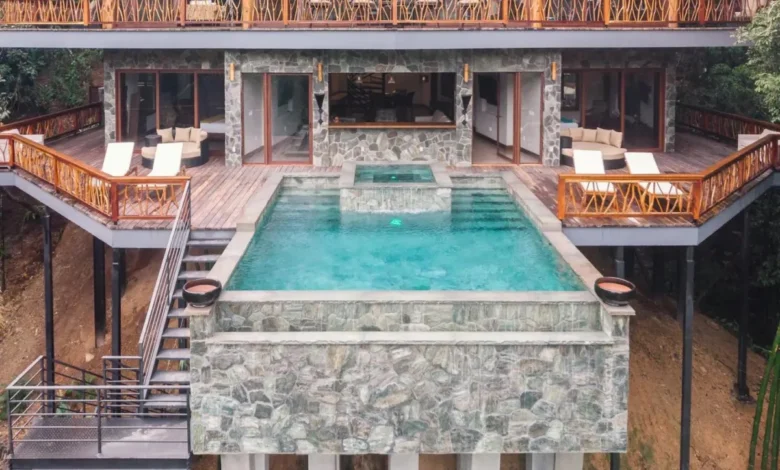
The modern travel industry is undergoing a paradigm shift as high-net-worth individuals and eco-conscious travelers increasingly prioritize isolation, sustainability, and architectural ingenuity over traditional luxury accommodations. This trend, often categorized as "off-grid luxury," leverages renewable energy, localized resource management, and remote geographical placement to provide a high-end experience that maintains a minimal carbon footprint. From the rainforests of Belize to the volcanic landscapes of Spain, these properties represent a growing segment of the global hospitality market that combines technical independence with elite-level service.
The Rise of Sustainable Seclusion
The global glamping and remote-rental market has seen significant growth since 2020, as travelers seek to mitigate the impact of over-tourism while maintaining comfort. Data from market analysts indicates that the demand for "secluded getaways" increased by over 40% between 2021 and 2023. These properties are not merely retreats; they are often sophisticated engineering projects that utilize photovoltaic solar arrays, rainwater harvesting systems, and passive cooling architectural designs to function entirely independent of municipal infrastructure.
Architectural Innovation in Remote Environments
The integration of high-design aesthetics into challenging, remote terrains is a hallmark of this movement. In Belize, the Valley Stream sanctuary serves as a primary example of this synthesis. Spanning a 200-acre private jungle reserve, the three-bedroom structure utilizes native thatch ceilings and Belizean hardwoods to achieve a bioclimatic harmony with the Maya Mountains. By operating on solar power while providing the infrastructure of a five-star resort—including private chefs and guided trail access—the property bridges the gap between rugged exploration and high-end hospitality.
Similarly, the Caipira Modernista in Catuçaba, Brazil, represents a landmark in South American sustainable design. As one of the nation’s first fully off-grid, 100-percent sustainable homes, it functions as an architectural case study. The home draws its water directly from mountain springs and utilizes extensive solar energy storage to maintain its four-bedroom footprint. This project highlights the potential for large-scale, luxury residential architecture to exist outside of urban power grids, a model that architects and urban planners are increasingly studying to understand its scalability in future sustainable housing developments.
Geographical Diversity and the Glamping Phenomenon
The concept of the "Birdbox" in Norway, located three hours north of Bergen, illustrates the minimalist approach to the trend. By stripping away excess square footage and focusing on the "living gallery" concept, these structures are designed to frame the surrounding Førdefjord and Blegja mountain range. This focus on "landscape as art" has become a central selling point for boutique operators in Northern Europe.
In the United Kingdom, the repurposing of historical vessels into off-grid living spaces offers a different value proposition. The "Boat Shack," a 1945 vessel, represents the trend of adaptive reuse. By retrofitting a historic maritime artifact with modern renewable solar energy systems, the property serves as a bridge between the industrial past and the sustainable future. This practice is increasingly encouraged by heritage boards and environmental agencies, which view the conversion of historic assets as a more sustainable alternative to new construction.
Regional Perspectives: From the Grand Canyon to the Atlas Mountains
In the United States, the Navajo Nation’s "Hogan by the River" offers a distinct experience that emphasizes cultural heritage and extreme minimalist off-grid living. Unlike the luxury-focused properties in Europe or South America, this hogan—an earth-built structure traditional to the Navajo people—prioritizes the experience of total disconnection. With no electricity or plumbing, it serves as a reminder of the historical roots of off-grid living. It is a critical example of how indigenous architectural techniques can provide a profound sense of place for travelers, provided they respect the strict cultural and legal regulations governing Navajo lands, such as the prohibition of substances on private property.
Conversely, the "Loop" in the Marrakech countryside of Morocco demonstrates how luxury can be scaled for larger groups. Accommodating up to 12 guests in a solar-powered clay-built home, it combines the aesthetic of the Atlas Mountains with modern hospitality standards. The inclusion of personal chefs and proximity to the Red City’s souks highlights the importance of "proximity-plus-privacy," a model that allows guests to experience local urban culture during the day while retreating to an isolated, self-sustaining environment at night.
Economic and Environmental Implications
The growth of the off-grid luxury market has broader implications for environmental conservation. Many of these properties act as stewards of the land they occupy. For instance, the Casa Bell in Montezuma, Costa Rica, is situated within a rainforest corridor where wildlife conservation is a direct benefit of the property’s presence. By keeping the land private and developing it with low-impact, solar-powered structures, the property owners contribute to the preservation of local biodiversity that might otherwise be threatened by traditional development or deforestation.
However, industry experts note that the environmental benefits of these properties are often offset by the carbon emissions associated with the travel required to reach them. As the aviation sector works toward carbon neutrality, the tourism industry is under increasing pressure to ensure that these "eco-friendly" destinations are not undermined by the logistics of their remote locations.
Chronology of Modern Off-Grid Development
- 2015–2017: Initial wave of "Instagrammable" remote architecture. Focus shifts toward aesthetic design in isolated locations.
- 2018–2020: Integration of serious sustainable tech. Solar battery storage costs drop significantly, allowing for larger off-grid homes to function reliably.
- 2021–2022: Global surge in demand for private, isolated travel. The "work from anywhere" movement encourages the inclusion of high-speed satellite internet (e.g., Starlink) in otherwise disconnected locations, such as NeoNauta 23 in Spain.
- 2023–Present: Maturation of the market. Travelers now expect a balance of hyper-local cultural immersion, extreme privacy, and verifiable sustainability metrics.
Analyzing the Future of Remote Hospitality
The success of these properties is contingent upon the evolution of technology. The "NeoNauta 23" project in Spain serves as a benchmark for the "digital nomad" demographic. By incorporating strong Wi-Fi and ergonomic workspaces into a three-bedroom, volcano-facing eco-house, the developers have acknowledged that the modern luxury traveler is rarely fully "unplugged." This represents a fundamental shift: the desire is for the environment to be off-grid, but for the lifestyle to remain connected.
As regulatory bodies in various countries tighten building codes to prioritize green energy, these off-grid Airbnbs are increasingly serving as test beds for new building materials and energy systems. The trend of using clay, timber, and recycled materials—coupled with modern energy-efficient appliances—is moving from the fringe of the industry to the center.
The primary challenge remains accessibility versus preservation. As these locations gain popularity, the risk of environmental degradation increases. Therefore, the future of this sector will likely depend on limited-capacity models, where the exclusivity of the stay is used to fund the protection of the surrounding wilderness. For the investor and the traveler alike, the value of these properties lies in their ability to provide a high-quality experience that does not sacrifice the very environment the guest traveled to see. Whether it is the cliffside rock pools of Belize or the volcanic terraces of the Canary Islands, the goal of the next generation of off-grid travel is to prove that luxury and sustainability are not mutually exclusive, but are, in fact, the new standard for the modern explorer.