United Still Expects to Pass On 100% of Jet Fuel Costs. Says Industry Is Turning More Premium.

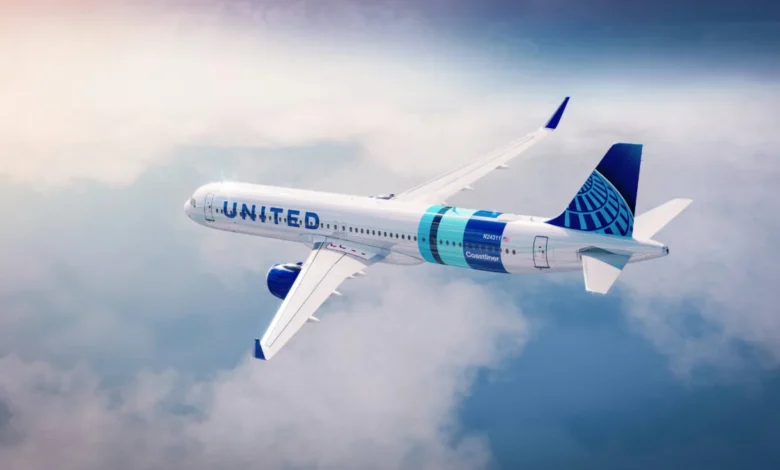
United Airlines Chief Financial Officer Michael Leskinen reaffirmed the carrier’s commitment to cost recovery during the Morgan Stanley Laguna investor conference held this Wednesday. Despite the volatility in global energy markets that has driven jet fuel prices higher in recent weeks, United’s leadership maintains that the airline’s current pricing power and product differentiation strategy will allow it to recoup 100% of fuel-related expenses by the conclusion of the fiscal year. This assertion underscores a broader industry trend where legacy carriers are betting heavily on the resilience of consumer spending, particularly among business and premium-leisure travelers who are increasingly prioritizing comfort and connectivity over the lowest available base fare.
The Dynamics of Fuel Volatility and Pricing Lags
The aviation industry is notoriously sensitive to fluctuations in the price of refined petroleum products, which historically represent one of the largest variable expenses on an airline’s balance sheet. Jet fuel prices have experienced a significant, rapid ascent, placing downward pressure on the operating margins of major carriers. However, the mechanism for passing these costs on to the consumer is not instantaneous.
As Leskinen noted during the conference, the lead time associated with ticket bookings creates a temporal mismatch. "Fuel prices have spiked pretty rapidly. We’ve got about 35% of our tickets booked already in the fourth quarter. So you can’t go back and reprice those tickets," Leskinen explained. This "pricing lag" is a fundamental reality of the airline business model, where tickets are often sold months in advance. Consequently, the financial impact of a fuel surge is felt most acutely in the short term, as airlines are forced to absorb the higher costs for tickets already sold while attempting to recalibrate pricing for the remaining inventory yet to be purchased.
Despite this logistical hurdle, the executive leadership at United remains steadfast. Leskinen emphasized that while the lag is a necessary consideration for financial analysts and investors updating their performance models, there is no structural evidence suggesting that United’s ability to pass on costs has been compromised. This confidence stems from the airline’s ongoing transformation of its onboard experience, which serves to insulate the carrier from the pure commodity-price wars of the low-cost carrier segment.
Strategic Pivot: Premiumization as a Hedge
United’s optimism is not merely a reaction to current market conditions but the result of a multi-year strategic pivot toward "premiumization." By investing heavily in its Polaris business class, United First, and the expanded "Economy Plus" offerings, the airline has successfully targeted a demographic that exhibits lower price sensitivity.
Furthermore, the integration of high-speed, satellite-based connectivity—most notably the partnership with SpaceX’s Starlink—is viewed as a critical value-add. For the modern business traveler, the ability to remain seamlessly connected at 35,000 feet is no longer a luxury but a requirement. By bundling such amenities into the ticket price or creating a more compelling value proposition, United is effectively creating a premium "moat" that allows it to maintain higher margins even as input costs, such as fuel, rise.
Industry analysts observe that this strategy mirrors the broader efforts of the "Big Three" U.S. carriers—United, Delta, and American—to diversify their revenue streams. By relying less on the commoditized, price-conscious economy passenger and more on the premium-segment traveler, airlines are finding they have greater latitude to adjust pricing without seeing a commensurate decline in demand.
Chronology of Market Pressures
The current fiscal climate is the result of a complex interplay of geopolitical events and supply-demand imbalances that have defined the post-pandemic recovery of the aviation sector.
- Early 2024: The industry entered the year with expectations of stabilized fuel costs, though geopolitical tensions in the Middle East and Eastern Europe kept oil markets on high alert.
- Mid-2024: Airlines reported strong summer travel demand, which bolstered balance sheets and allowed companies to absorb moderate fuel price increases.
- Late Q3 2024: A sudden surge in crude oil prices, driven by supply constraints and shifting macroeconomic forecasts, prompted a reevaluation of fourth-quarter margin projections across the industry.
- September 2024: During the Morgan Stanley Laguna conference, United Airlines publicly addressed the pricing lag, signaling to the investor community that while the short-term financial impact is undeniable, the long-term outlook for cost recovery remains intact.
Supporting Data and Financial Implications
The financial health of United Airlines is inextricably linked to its fuel hedging and consumption efficiency. Historically, fuel accounts for approximately 20% to 30% of an airline’s total operating expenses. For a company the size of United, a move of even a few cents per gallon can equate to hundreds of millions of dollars in additional annual expenditure.
United has consistently focused on fleet modernization as a secondary hedge against fuel volatility. By retiring older, less fuel-efficient aircraft and replacing them with newer models like the Boeing 737 MAX and Airbus A321neo, the airline is effectively lowering its "fuel burn per seat mile." This structural efficiency gain provides a permanent buffer against rising fuel costs, allowing the carrier to maintain profitability even when market prices for kerosene-based jet fuel spike.
Market data indicates that premium seat occupancy remains at historic highs, with many airlines reporting that premium cabins are driving a disproportionate share of total revenue. For United, this shift in the revenue mix is the primary reason why CFOs like Leskinen can express confidence in the face of macro-economic headwinds. If the consumer base continues to prioritize premium amenities, the airline’s ability to absorb cost increases through fare adjustments will likely hold, provided that the overall macroeconomic environment does not slide into a deep recession.
Broader Industry Impacts and Expert Reactions
The stance taken by United Airlines is being closely watched by the broader aviation sector. If United succeeds in fully passing on fuel costs throughout the fourth quarter, it will likely provide a blueprint for competitors to follow. Conversely, should the airline encounter resistance—whereby ticket prices reach a "ceiling" that discourages even premium travelers—the industry may see a shift toward capacity rationalization.
Capacity rationalization—the act of reducing the number of flights or substituting smaller aircraft on less-profitable routes—is the typical response to sustained high fuel costs and softening demand. However, current trends show that domestic capacity in the United States remains relatively disciplined, as carriers prioritize profitability over market share gains. This discipline is a departure from the pre-pandemic era, where aggressive capacity expansion often led to price wars that eroded margins for all participants.
Future Outlook: The Role of Technology and Efficiency
As the industry moves toward the end of the year, the conversation surrounding fuel costs is increasingly intertwined with the discussion of operational efficiency. The integration of Starlink, for instance, is not just about passenger satisfaction; it represents a commitment to maintaining a technological advantage that justifies premium pricing.
United’s strategy relies on the assumption that the consumer’s appetite for travel remains robust. While inflation has impacted the broader economy, the travel sector has shown remarkable resilience. The "revenge travel" phenomenon that defined 2022 and 2023 has evolved into a more permanent prioritization of experiences, supporting high load factors across major airlines.
In conclusion, United Airlines is navigating the current fuel price surge with a two-pronged strategy: aggressive revenue management and a focus on premium product differentiation. By acknowledging the lag in cost recovery while maintaining that the fundamentals of demand remain strong, the carrier is signaling to both its passengers and its shareholders that it is well-positioned to weather the current volatility. Whether this confidence will be fully borne out by fourth-quarter financial results remains a point of keen interest for industry observers, but for now, the airline remains committed to its course, betting on the strength of the premium traveler to see it through to the end of the year.
Related posts: