Hope Takes Wing: Maverick Biologists Chart New Migratory Course for Critically Endangered Northern Bald Ibis

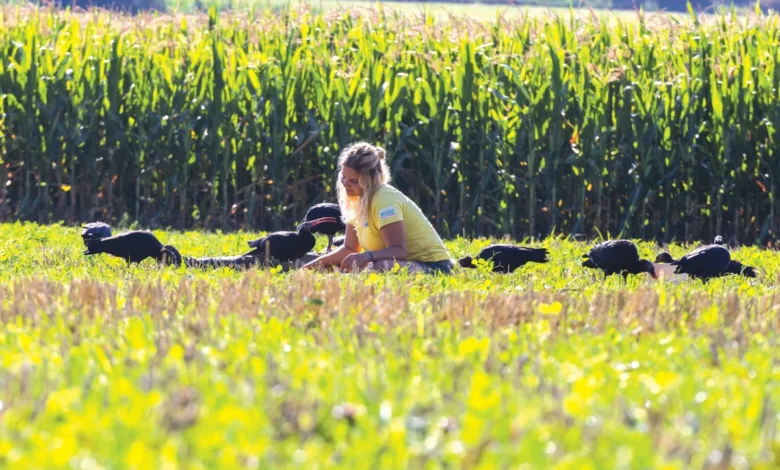
In a groundbreaking initiative battling the precipitous decline of one of the world’s rarest avian species, a dedicated team of biologists and conservationists is employing an audacious method to teach northern bald ibises a new migratory route. This pioneering effort, spearheaded by the Waldrappteam project, involves human "foster parents" raising ibis chicks and then guiding them across continents using ultralight aircraft, aiming to re-establish a self-sustaining wild population.
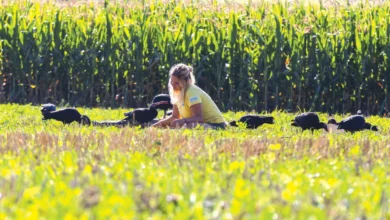
Just a few meters from a specialized aviary nestled in the picturesque southern Austrian landscape, where the rugged peaks meet lush, expansive valleys, Barbara Steininger found herself on the cusp of a profound experience. At twenty-five years old, Steininger was about to embark on an extraordinary journey into foster parenthood. "It’s not an everyday occurrence," she remarked, her voice tinged with a mix of anticipation and nerves, "especially if your fosterlings are birds." Moments later, a zookeeper from Wildlife Park Rosegg gently placed two tiny, featherless chicks into Steininger’s warm, cupped hands. Her freckled face immediately softened, illuminated by a tender smile. Two down, thirty-three more to go – a total of thirty-five precious lives entrusted to her care.
From that chilly day in April 2023, Steininger and her colleague, twenty-eight-year-old Helena Wehner, became the chicks’ sole caregivers. Their role transcended mere supervision, evolving into a demanding yet deeply rewarding form of surrogate motherhood. The regimen mirrored that of raising human infants: cuddles were deemed as essential as words of encouragement and adoration, all delivered in a specialized "baby speak" designed to foster strong bonds. Eight times a day, the two women would meticulously hand-feed the rapidly growing chicks. "Just that it’s not breast milk or formula," Wehner clarified with a wry smile, describing the specialized diet, "but a mix of shredded beef hearts and mice." Such an extraordinary level of devotion and meticulous care is reserved not for just any bird, but for some of the last remaining individuals of the critically endangered northern bald ibis.
A Species on the Brink: The Northern Bald Ibis
The northern bald ibis (Geronticus eremita), often referred to as the Waldrapp in German-speaking regions, is a distinctive, large, dark-feathered wading bird characterized by its striking unfeathered, reddish-pink head and a long, curved red bill. Once widespread across central Europe, North Africa, and the Middle East, its population suffered a catastrophic decline over centuries. By the 17th century, the species had vanished from Europe entirely, a victim of habitat loss, intensive hunting, and possibly climate shifts. Today, the northern bald ibis is classified as Critically Endangered by the IUCN.
Wild populations are currently fragmented, primarily existing in Morocco (the largest wild colony, with around 700 individuals) and a small, relict population in Turkey (fewer than 150 birds, which are semi-wild and non-migratory, fed by humans). The European population, which is the focus of the Waldrappteam’s efforts, is entirely the result of reintroduction projects. These birds are migratory, a crucial aspect of their life cycle that was lost in Europe due to the species’ disappearance. The challenge for conservationists is not just to breed them but to re-teach them the ancient art of migration.
The Waldrappteam’s Vision: Reclaiming Lost Instincts
At the heart of this ambitious conservation endeavor is Johannes Fritz, a pioneering biologist and the founder of the Waldrappteam project. Fritz’s vision emerged from the understanding that while captive breeding programs could increase numbers, they couldn’t restore the complex migratory behavior essential for a truly wild, self-sustaining population. Young birds learn their migration routes from their parents. Without wild parents, the knowledge of these ancestral pathways vanished from the European ibis population. Fritz’s innovative solution: become the parents themselves.
The project, formally known as the European Northern Bald Ibis Reintroduction Project, began in the early 2000s. Its core methodology involves hand-rearing ibis chicks from birth, allowing them to imprint on human caregivers. These caregivers then act as "foster parents" and "flight instructors," guiding the young ibises on their first migratory journey using ultralight aircraft. This technique, while complex and resource-intensive, has proven to be the most effective way to establish new migratory traditions in naive bird populations. The ultimate goal is for these human-led flocks to successfully breed and, crucially, for their offspring to independently migrate along the learned routes, eventually forming self-sufficient colonies.
The Rigorous Training Regime in Austria
The process begins in early spring, typically April, with the hatching of the chicks. The initial weeks, as experienced by Barbara Steininger and Helena Wehner, are critical for imprinting. The human foster parents wear distinctive yellow costumes, meticulously designed to mimic the shape and color of an adult ibis head when seen from the perspective of a chick. This consistent visual stimulus, combined with constant vocalizations and hands-on care, ensures the chicks bond exclusively with their human "parents." This bond is paramount; it’s what compels the birds to follow their human guides during the arduous migration.
The daily routine for the 2023 cohort of 35 chicks at Wildlife Park Rosegg was exhaustive. Beyond the eight daily feedings of a high-protein diet, the chicks required constant attention. They were encouraged to exercise their growing wings, taking short flights within controlled aviaries and later in larger enclosures. Socialization within the flock was also vital, allowing the birds to develop natural group behaviors essential for survival in the wild. As the chicks grew, their diet transitioned, and their flight training intensified. They would follow their human mentors on short flights, often accompanied by the distinctive hum of an ultralight aircraft nearby, familiarizing them with the sound and presence of their future aerial guides. This preparatory phase, lasting several months, transforms naive hatchlings into capable flyers ready for a multi-country journey.
Forging a New Path: The Migration Journey
The migration itself, typically commencing in late August or early September, is the most visually spectacular and logistically challenging phase of the project. The chosen route for the European reintroduction efforts usually leads from the breeding grounds in Austria and Germany to wintering grounds in Tuscany, Italy. This specific destination was selected for its favorable climate, abundant food resources, and the presence of protected areas where the ibises can safely spend the colder months. The journey covers approximately 1,000 kilometers, traversing diverse landscapes including the Alps, requiring careful planning and execution.
Johannes Fritz and his team of pilots take to the skies in ultralight aircraft, with the imprinted ibis flock flying alongside them. The ultralights serve as surrogate parents, leading the birds through mountain passes and over plains, navigating weather patterns, and identifying safe stopover sites for rest and foraging. Each bird is fitted with a lightweight GPS tracker, providing invaluable data on their flight paths, speed, and energy expenditure. This telemetry allows the team to monitor the birds’ health and behavior throughout the journey, intervening if necessary. The challenges are immense: adverse weather conditions, unforeseen encounters with predators, power lines, and human-made obstacles pose constant threats. The pilots must possess not only exceptional flying skills but also an intimate understanding of ibis behavior and avian migration.
Chronology of Success and Setbacks
The Waldrappteam’s project is a long-term commitment, built on years of incremental progress and learning. The first human-led migration took place in 2004, marking a significant milestone. Since then, numerous cohorts have been guided across the Alps.
- 2004: First successful human-led migration from Austria to Tuscany, Italy.
- 2008-2011: Establishment of breeding colonies in Austria and Germany, with birds returning to breed after their guided migrations.
- 2013: A significant step forward as the first generation of naturally hatched ibises successfully completed an independent migration to the wintering grounds, demonstrating the successful transmission of migratory knowledge.
- Ongoing: Continued efforts to guide new cohorts, expand breeding colonies, and monitor the wild population. The project has seen fluctuating success rates, with some birds facing challenges like illegal hunting during their independent migrations, underscoring the persistent threats.
The 2023 cohort, with its 35 new members, represents another vital link in this ongoing chain of reintroduction. Their successful guidance to Tuscany and their eventual return to breed will contribute significantly to the genetic diversity and numerical strength of the nascent European population.
Broader Impact and Implications for Conservation
The Waldrappteam’s innovative approach extends beyond the northern bald ibis, offering a powerful blueprint for the conservation of other critically endangered migratory species. The project demonstrates that with sufficient dedication, scientific ingenuity, and international collaboration, even lost natural behaviors can be rekindled. The implications are profound:
- Model for Reintroduction: The human-led migration technique has inspired similar projects for other species, proving that such intensive interventions can yield results where traditional methods fall short.
- Genetic Diversity: By reintroducing birds from various captive breeding lineages, the project helps enhance the genetic robustness of the wild population, making it more resilient to disease and environmental changes.
- Ecosystem Health: The re-establishment of a native species contributes to the overall biodiversity and health of the European ecosystems it once inhabited. The ibises act as indicators of environmental quality, and their presence helps restore ecological balance.
- Public Awareness and Education: The highly visual and engaging nature of the human-led migrations captures public imagination, raising crucial awareness about conservation challenges and fostering support for environmental protection. The image of birds flying alongside an ultralight is a potent symbol of hope and human-wildlife collaboration.
- International Cooperation: The project inherently requires seamless collaboration across multiple European nations (Austria, Germany, Italy, and transit countries), demonstrating the necessity of cross-border efforts for species conservation.
While the project has achieved remarkable successes, significant challenges remain. Illegal hunting, particularly during independent migrations, continues to be a serious threat. Habitat degradation at both breeding and wintering sites, along with climate change impacting food availability and migratory patterns, also pose ongoing hurdles. Continuous monitoring, anti-poaching measures, and habitat restoration are vital components of the long-term strategy.
Looking to the Horizon
The sight of northern bald ibises soaring over the Alps, guided by the dedicated individuals of the Waldrappteam, is more than just a captivating spectacle; it is a powerful testament to the unwavering human commitment to biodiversity. Barbara Steininger, Helena Wehner, Johannes Fritz, and countless others are not merely raising birds; they are nurturing hope. Each chick, meticulously fed and lovingly cared for, represents a step back from the precipice of extinction. The long-term vision is for a robust, self-sustaining population of northern bald ibises to once again grace the European skies, migrating freely along ancient-new routes, a vibrant symbol of what dedicated conservation efforts can achieve against formidable odds. The journey is arduous, but the resolve to see these magnificent birds thrive once more remains unbroken.