The sixth level is the most spectacular… and most scary. This chilling pronouncement from fellow travelers sets the stage for an ascent into the extraordinary at Wat Phu Tok, Thailand’s most adventurous and arguably most perilous temple. Nestled within the remote Bueng Kan province in the northeastern Isan region, this temple offers a unique blend of natural grandeur, spiritual significance, and heart-stopping adventure, attracting those who seek experiences far off the beaten path. Bueng Kan, a province often overlooked by mainstream tourism, promises visitors a haven of peace, expansive landscapes, and captivating natural wonders. Wat Phu Tok, officially known as Wat Jetiyakhiri, stands as a testament to this region’s allure, presenting a thrilling and uniquely terrifying spiritual journey.
The Lonely Mountain: A Geological and Spiritual Marvel
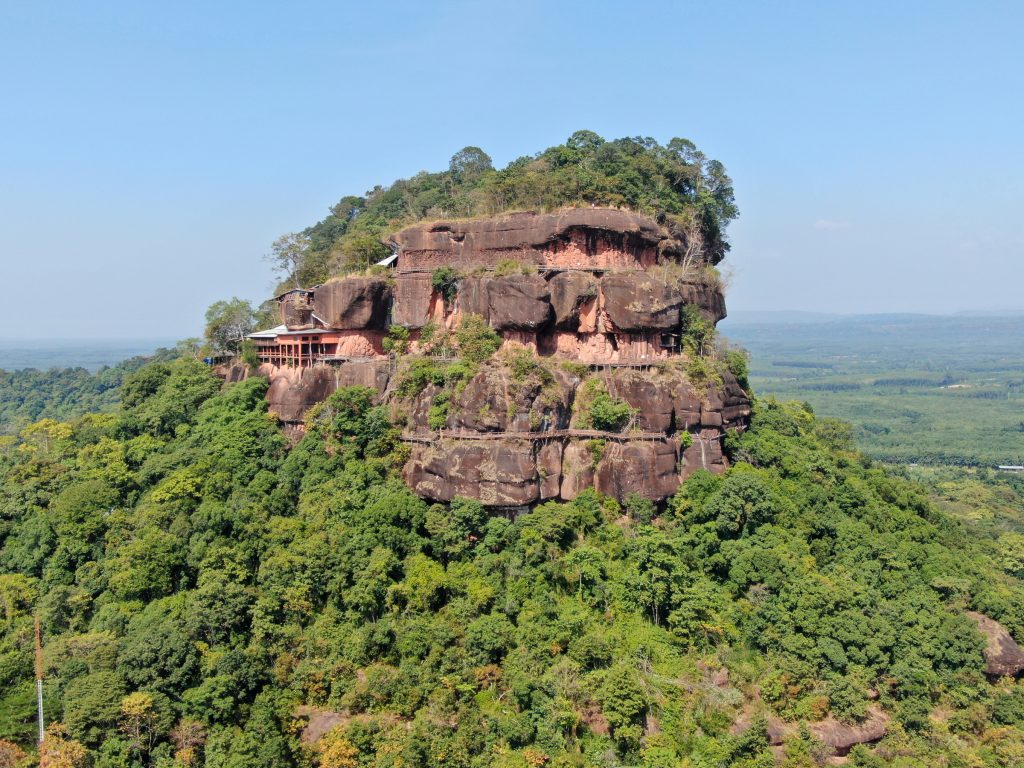
Wat Phu Tok, translating to "Lonely Mountain Temple" in the local Isan dialect, is a striking geological formation that rises dramatically from its surroundings. The mountain, standing at 359 meters, immediately evokes comparisons to iconic sites like Sigiriya in Sri Lanka, its solitary presence commanding attention. Its name, "Phu Tok," perfectly encapsulates the isolated grandeur of the site, a feeling that intensifies as one embarks on the ascent.
The temple’s genesis is rooted in the rugged terrain and the inherent challenges of the mountain. Historically, this remote area was known for its abundant wildlife, including venomous snakes, which paradoxically made it an attractive sanctuary for meditation. The desire for a peaceful yet challenging environment for spiritual practice laid the groundwork for the temple’s construction.

A Monk’s Vision: Building a Stairway to Enlightenment
The foundation of Wat Phu Tok is attributed to Monk Luang Pu Juan, a visionary who recognized the spiritual potential of the "lonely mountain." Driven by a desire to connect the earthly realm with the heavens, he embarked on an ambitious project: constructing a network of wooden staircases, ladders, and walkways that would traverse the mountain’s entirety. This intricate construction was not merely for physical access but was meticulously designed to represent the seven stages of Buddhist meditation, offering pilgrims a tangible path towards enlightenment. Each level was intended to symbolize a step in this profound spiritual journey.
Tragically, Monk Luang Pu Juan’s life was cut short in an airplane accident. However, his monumental work at Wat Phu Tok endures, meticulously maintained and continuing to inspire awe and devotion. The temple remains a majestic testament to his dedication and vision, a place where the physical challenge of the climb mirrors the spiritual discipline it represents.

The Ascent: A Journey Through Seven Levels of Wonder and Trepidation
The journey to Wat Phu Tok from Bueng Kan city is a relatively short, approximately 30-minute drive, leading visitors to a sprawling complex at the mountain’s base. Here, a large temple, a serene lake, and extensive park grounds offer a peaceful prelude to the main attraction. Ample parking is available, ensuring ease of access for visitors.
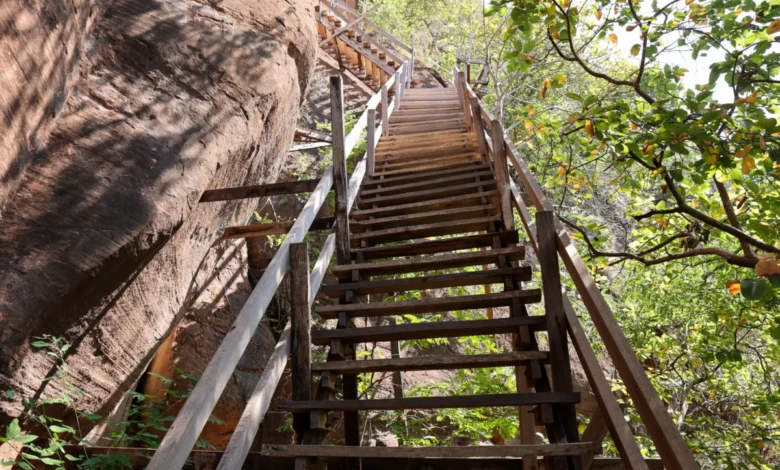
The entrance to the mountain trail is unmistakable, marked by the commencement of the wooden staircases that begin to snake their way up the red rock face. The initial stages of the climb are manageable, with the stairs gradually increasing in steepness. What sets Wat Phu Tok apart is the ingenious integration of its structures with the natural landscape. Wooden planks are sometimes angled precariously, and they can creak underfoot, yet the construction, by all accounts, feels remarkably secure and safe. This careful engineering belies the inherent danger that many visitors perceive.

The Lower Levels: A Gradual Introduction
The first few levels offer glimpses of shrines and smaller meditation spots. While these are part of the spiritual tapestry of the temple, the primary recommendation for visitors is to continue upward, progressively moving towards the more breathtaking and challenging sections. The initial stages serve as a gentle introduction, allowing climbers to acclimate to the incline and the unique environment.
The Fifth Level: A Hub of Spiritual Activity
Upon reaching the fifth level, the landscape of the temple begins to unfold in earnest. This level is characterized by a greater concentration of temples, shrines, and halls. Much of the walking here is on solid ground, providing a respite from the more exposed pathways. It is believed that the largest ordination hall of Wat Phu Tok is situated on this level, serving as a central point for religious ceremonies and gatherings.

A particular highlight on the fifth level, and indeed a significant draw for many visitors, is a small rock temple accessible via an elevated rock walkway and a delicate wooden bridge. This unique structure, perched on the mountainside, offers a sense of secluded serenity and provides a memorable detour from the main circumference trail. The architectural ingenuity and the dramatic setting make this a must-see feature.
The Sixth Level: The Pinnacle of Thrill and Spectacle
The journey to the sixth level involves another flight of wooden stairs, leading to the most renowned and exhilarating section of Wat Phu Tok. This level is a dramatic fusion of solid ground and daring wooden plank walkways, ingeniously anchored into the sheer rock face. Approximately half of the circumference of this level is comprised of these cliff-hanging pathways, offering unparalleled panoramic views and a significant adrenaline rush.

For those who appreciate heights and adventure, the sixth level is undoubtedly the apex of the Wat Phu Tok experience. The sensation of walking along these suspended walkways, with the vast expanse of the Mekong River basin and the lush green landscape of Bueng Kan stretching out below, is both awe-inspiring and profoundly thrilling. Despite the dizzying heights, the walkways are generally perceived as stable and well-maintained, providing a sense of security. However, the inherent risks are not to be underestimated; a moment of inattention could have severe consequences. The views from this level are spectacular in every direction, enhanced by the refreshing breeze.
The Seventh Level: The Summit of Mystery and Caution
The seventh and final level marks the summit of Phu Tok. This uppermost tier is known for its reputation concerning venomous snakes, prompting a general advisory for visitors to ascend at their own risk. While there are no elaborate walkways or shrines at this highest point, the reward is a commanding, unobstructed view from the mountain’s peak. However, many visitors find that the sixth level offers the most unique and captivating experience, with the seventh level serving more as a final vantage point for the truly intrepid.

Broader Context and Implications
Wat Phu Tok is more than just a tourist attraction; it represents a significant cultural and spiritual landmark for the Bueng Kan province and the wider Isan region. Its unique construction and the philosophical underpinnings of its design offer a tangible representation of Buddhist principles, making it a place of pilgrimage as well as adventure.
The temple’s existence also highlights the growing interest in ecotourism and off-the-beaten-path destinations within Thailand. As travelers increasingly seek authentic experiences beyond the popular tourist hubs, sites like Wat Phu Tok gain prominence. The careful preservation and maintenance of such unique sites are crucial for their continued appeal and for safeguarding their cultural integrity.

The "lonely mountain" of Wat Phu Tok stands as a powerful symbol of perseverance, faith, and the harmonious integration of human endeavor with the natural world. It offers a profound experience that challenges both the body and the spirit, leaving visitors with a lasting impression of Thailand’s diverse and captivating landscape.
Visitor Information and Tips
For those planning a visit to Wat Phu Tok, several practical considerations can enhance the experience:

- Timing: Arrive early in the morning or late in the afternoon to avoid the midday heat and larger crowds. The cooler temperatures will make the climb more comfortable.
- Footwear: Wear comfortable, sturdy shoes with good grip. The wooden stairs and walkways can be slippery, especially if wet.
- Hydration: Carry plenty of water. The climb can be strenuous, and staying hydrated is essential.
- Respect: As a religious site, visitors are expected to dress modestly and behave respectfully. This includes refraining from loud noises and being mindful of worshippers.
- Safety: While the structures are generally safe, exercise caution, especially on the higher levels and the cliff-side walkways. Stay on designated paths and be aware of your surroundings.
- Photography: The photographic opportunities are abundant, particularly on the upper levels. Be mindful of others when taking pictures.
Wat Phu Tok is an unforgettable destination for anyone seeking a unique blend of adventure, spirituality, and natural beauty. It is a place where the physical journey to the summit mirrors the internal quest for enlightenment, all set against a backdrop of breathtaking scenery. The temple’s daring construction and its serene yet challenging environment make it a truly remarkable testament to human dedication and the profound allure of Thailand’s less-explored regions.