Exploring Croatia’s Adriatic Spine: A Comprehensive Guide to the Zagreb to Dubrovnik Route

Croatia’s geographical and cultural tapestry unfolds dramatically along the journey from its inland capital, Zagreb, to the historic walled city of Dubrovnik on the southern Adriatic coast. This route, spanning the diverse landscapes of continental Croatia, the Kvarner Gulf, Northern and Central Dalmatia, and finally Southern Dalmatia, offers travelers an unparalleled immersion into the nation’s rich history, stunning natural beauty, and vibrant local cultures. While seemingly straightforward on a map, the true essence of this itinerary lies in its depth of experience, encouraging a deliberate pace that reveals hidden gems and iconic landmarks alike.

The Zagreb-Dubrovnik corridor, often traversed by both independent travelers and organized tours, represents a microcosm of Croatia’s appeal. From the Austro-Hungarian grandeur of Zagreb to the ancient Roman and Venetian echoes found along the coast, and the dramatic karstic landscapes of its national parks, the journey provides a continuous narrative of the country’s evolution. Unlike rushed itineraries that prioritize speed, a thoughtful approach allows for deeper engagement with each stop, transforming a mere transit into a memorable expedition. This comprehensive guide delves into key destinations along this iconic route, offering insights into their historical significance, unique attractions, and practical considerations for visitors.
Zagreb: The Inland Capital’s Enduring Charm
Zagreb, Croatia’s capital and largest city, serves as an ideal starting point, offering a gentle introduction to the country’s rhythm before the bustling coastal towns. Located in the northwest, it stands as a testament to Central European influence, characterized by its well-preserved Upper Town (Gornji Grad) and the more modern, vibrant Lower Town (Donji Grad). Historically, Zagreb’s strategic position at the crossroads of Central Europe and the Adriatic region fostered its growth from medieval settlements into a significant cultural and economic hub, officially becoming the capital in 1557 under the Habsburg monarchy.

Visitors to Zagreb often find its relaxed atmosphere a welcome contrast to the summer crowds of the coast. Key attractions include the iconic St. Mark’s Church with its colorful tiled roof, the historic Stone Gate, and the bustling Ban Jelačić Square, the city’s main public space. Cultural institutions such as the Museum of Broken Relationships, the Mimara Museum, and the Croatian National Theatre offer unique perspectives on Croatian identity and artistry. The city’s robust café culture, particularly evident around Tkalčićeva Street and Cvjetni Trg, encourages leisurely exploration and immersion in local life. Data from the Croatian National Tourist Board consistently shows Zagreb as a year-round destination, attracting approximately 1.3 million tourists annually, with significant draws being its renowned Advent Christmas Market and numerous cultural festivals. For dining, establishments like Pod Zidom Bistro are renowned for their seasonal, refined Croatian cuisine, emphasizing local ingredients, while Noir 43 offers a sophisticated, intimate setting for evening drinks, embodying Zagreb’s understated elegance and burgeoning nightlife.
Opatija: The Adriatic’s Imperial Riviera
Moving southwest from Zagreb, the route introduces Opatija, a distinguished resort town on the Kvarner Gulf with a distinct historical character. Known as the "Old Dame" of Croatian tourism, Opatija flourished in the late 19th and early 20th centuries as a fashionable health resort for the Austro-Hungarian elite. Its legacy is evident in the grand Belle Époque villas, meticulously manicured parks such as Angiolina Park, and the iconic Lungomare, a picturesque 12-kilometer coastal promenade that stretches from Volosko to Lovran.

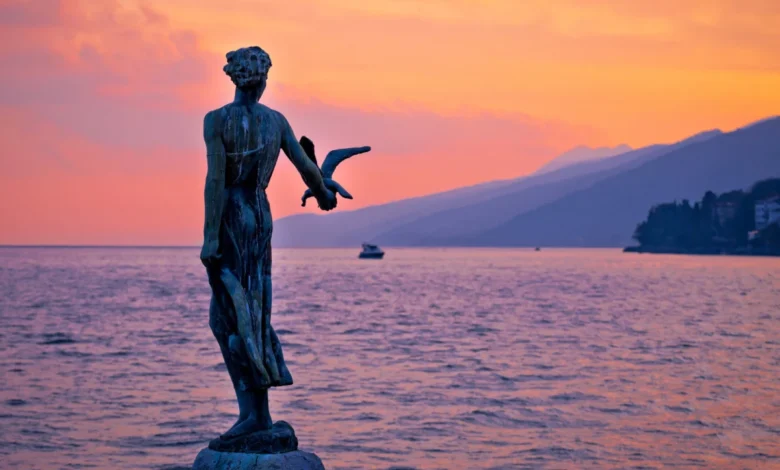
Opatija’s appeal lies in its serene sophistication, offering a slower pace compared to the more vibrant Dalmatian coast. The town’s architecture, influenced by Viennese secession and Italian renaissance styles, provides a picturesque backdrop for leisurely strolls. The famous "Maiden with the Seagull" statue, a prominent symbol of Opatija, stands gracefully by the sea, reflecting the town’s enduring romantic allure. While specific visitor numbers for Opatija alone are often aggregated with the broader Kvarner region (which sees over 2 million overnight stays annually), its consistent popularity with a mature demographic seeking tranquility, wellness tourism, and refined leisure is well-documented. Local tourism officials frequently highlight Opatija’s historical significance and its role as a pioneer in Croatian tourism. Hemingway Bar, with its prime waterfront location, provides an ideal spot for enjoying cocktails and the Adriatic vista, while Roko restaurant offers reliable, traditional Croatian fare in the town center, appealing to both locals and discerning travelers seeking authentic regional cuisine.
Rab: The Island of Four Bell Towers
Further south, accessible by ferry from the mainland port of Stinica, lies the island of Rab, a destination often described as a delightful surprise for those venturing beyond the typical coastal routes. Rab’s medieval old town, perched dramatically on a peninsula, is instantly recognizable by its four distinctive bell towers, giving it a unique skyline. Its history is deeply rooted in Roman times, when it was known as Arba, and later under Venetian rule from the 13th to the 18th centuries, which contributed significantly to its architectural heritage and urban planning.

Rab offers a more intimate and manageable island experience than some of its larger counterparts. Its narrow, stone-paved streets invite unhurried exploration, leading to charming squares, historic churches like the Cathedral of the Assumption of the Blessed Virgin Mary, and remnants of its Roman past. A unique aspect of Rab is its abundance of sandy beaches, particularly in the Lopar area, a relative rarity on Croatia’s predominantly pebble and rock-strewn coast. These beaches, such as Paradise Beach (Rajska Plaža), offer gentle slopes and shallow waters, making them particularly attractive for families and those seeking relaxed seaside leisure. The island’s permanent population, around 8,000, swells significantly in summer, though it retains a tranquil charm compared to major tourist hubs. The local tourism board emphasizes sustainable development and cultural preservation, highlighting the island’s natural beauty and authentic character. Banova Vila, strategically located for unparalleled sunset views over the harbor, is a favored spot for evening drinks, while Šanpjer offers a more upscale dining experience, focusing on fresh seafood and local ingredients, reflecting Rab’s rich culinary traditions.
Zadar: Ancient Echoes and Modern Marvels
Continuing south along the mainland coast, Zadar emerges as a vibrant urban center that skillfully blends millennia of history with contemporary art installations. Founded by the Romans in the 1st century BC, Zadar’s Old Town is a treasure trove of ancient ruins, including a well-preserved Roman Forum dating back to the 1st century AD, juxtaposed with medieval churches like the iconic St. Donatus Church and robust Venetian fortifications. Its strategic position made it a crucial maritime and administrative center throughout history, frequently contested by various empires.

Zadar’s unique draw lies in its innovative waterfront attractions: the Sea Organ and the Sun Salutation. The Sea Organ, an architectural sound art object designed by Nikola Bašić, uses sea waves to create hauntingly beautiful music through a series of underwater pipes and resonant chambers. Adjacent to it, the Sun Salutation, a large circular installation comprising 300 multi-layered glass plates, collects solar energy throughout the day to create a mesmerizing light show at sunset, celebrating the city’s connection to the natural elements. These installations have garnered international acclaim and contribute significantly to Zadar’s appeal as a distinctive destination. Visitor numbers to Zadar have steadily increased, with the city recording over 1.2 million overnight stays annually in recent years, highlighting its growing prominence as a cultural and tourist hub. The balance between historical depth and modern artistic expression is often cited by visitors as a key differentiator. Pin&Jino Tapas Bar offers a relaxed, social dining experience perfect for sampling local flavors in a casual setting, while The Garden Lounge provides a chic daytime setting for cocktails by the sea, embodying Zadar’s laid-back yet sophisticated vibe.
Krka National Park & Šibenik: Nature’s Grandeur and Medieval Fortifications
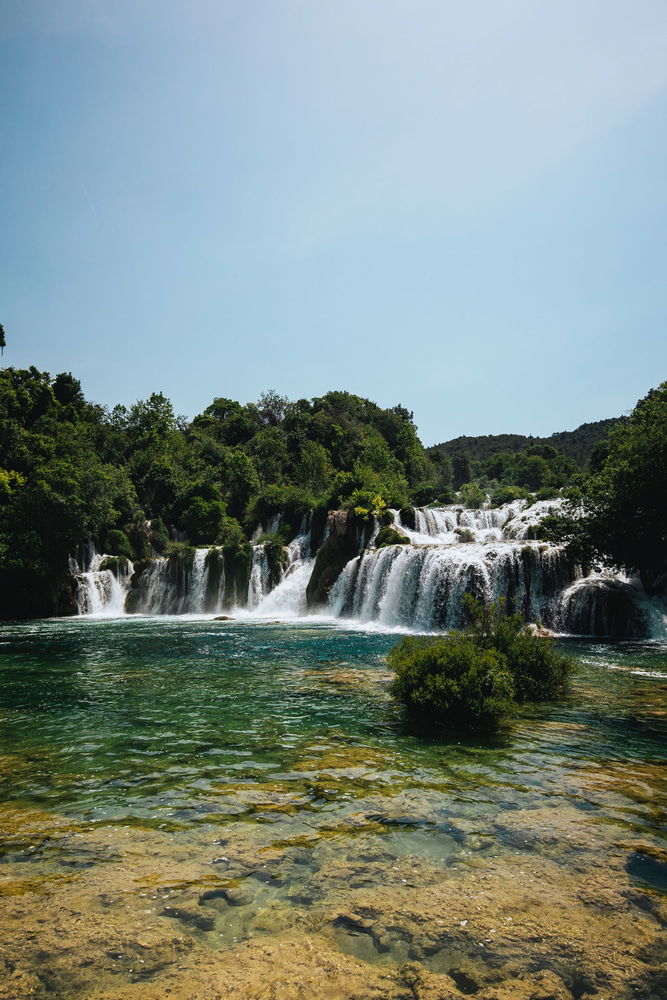
A short detour inland from Zadar brings travelers to Krka National Park, a protected area renowned for its spectacular waterfalls, diverse ecosystem, and historical significance. The Krka River, which carves its way through a karstic canyon, forms a series of magnificent cascades, most notably Skradinski Buk, one of Croatia’s most famous natural wonders. The park’s well-maintained wooden walkways allow visitors to explore the falls, lakes, and islets, while also observing traditional water mills and the remains of ancient fortifications, including the Roški Slap waterfall and Visovac Island with its Franciscan monastery. The park is home to over 800 species of plants and numerous animal species, making it a significant biodiversity hotspot. Annually, Krka National Park attracts over 1 million visitors, balancing accessibility with crucial conservation efforts.

Adjacent to the park is Šibenik, a city that often surprises visitors with its authentic Dalmatian charm and rich history. Unlike many other coastal cities, Šibenik was founded by Croats rather than Romans or Greeks, giving it a unique cultural identity dating back to the 11th century. Its most celebrated landmark is the UNESCO-listed Cathedral of St. James, a masterpiece of Renaissance architecture built entirely from local stone, without the use of mortar or other binding materials. The city’s medieval old town, characterized by narrow, winding stone streets, numerous staircases, and hidden squares, is framed by four impressive fortresses (St. Michael, Barone, St. John, and Subicevac), offering panoramic views of the archipelago. Šibenik’s less-commercialized atmosphere provides a genuine insight into local life and culture. While smaller than Split or Dubrovnik, its cultural significance and natural beauty are increasingly recognized by discerning travelers. For an exceptional culinary experience, Pelegrini, a Michelin-starred restaurant situated opposite the Cathedral, offers an elevated take on Dalmatian cuisine, while Vintage Bar provides a more casual, local setting for drinks, reflecting the city’s unpretentious character.
Korčula: The Mini-Dubrovnik of the Adriatic
Further south, accessible via a short ferry ride from Orebić on the scenic Pelješac peninsula, lies the island of Korčula, often affectionately dubbed a "mini-Dubrovnik" due to its impressive medieval walled town. However, Korčula offers a distinct experience, characterized by a calmer ambiance and a more intimate connection with local culture. The town of Korčula, built on a small oval-shaped peninsula, boasts stunning Venetian architecture, with its narrow streets arranged in a herringbone pattern to provide natural ventilation and protection from prevailing winds. It is also famously associated with the legendary birthplace of Marco Polo, the renowned 13th-century explorer.
Korčula’s history is deeply intertwined with maritime trade and strategic importance, evident in its defensive walls and towers that once protected the Republic of Ragusa (Dubrovnik). The island is also renowned for its rich cultural traditions, including the Moreska sword dance, a dramatic performance with roots in medieval Spain, performed during summer festivals. Beyond the historic town, Korčula is celebrated for its exquisite white wines, particularly Grk and Pošip, produced from indigenous grape varieties grown in the island’s fertile valleys, such as those near Lumbarda. The island attracts a significant number of visitors, especially those seeking a blend of historical exploration, natural beauty, and gastronomic delights. The more relaxed pace compared to the mainland coastal cities is a frequently praised aspect. Massimo Cocktail Bar, uniquely situated in a tower accessible by a ladder, offers an adventurous climb for pre-dinner drinks with panoramic views, while LD Restaurant, a fine-dining establishment, provides a memorable culinary journey, emphasizing local ingredients and innovative techniques within a refined setting.
Dubrovnik: The Pearl of the Adriatic
The culmination of the journey is Dubrovnik, arguably Croatia’s most famous destination, widely known as the "Pearl of the Adriatic." A UNESCO World Heritage site since 1979, its impeccably preserved medieval city walls enclose a treasure trove of Baroque architecture, ancient monasteries, and charming piazzas. Founded in the 7th century, Dubrovnik (historically Ragusa) flourished as an independent maritime republic from the 14th to the early 19th century, rivaling Venice in wealth and diplomatic prowess, a legacy evident in its opulent palaces and sophisticated urban planning.

Despite its immense popularity and the challenges of managing large tourist flows (especially from cruise ships, which bring in hundreds of thousands of day-trippers annually), Dubrovnik continues to captivate visitors. Walking the 2-kilometer (1.2-mile) city walls offers breathtaking panoramic views of the red-tiled roofs, the shimmering Adriatic, and the surrounding Lokrum island. The Stradun (Placa), the city’s main promenade, bustles with life, while hidden alleys reveal quaint shops and restaurants. Key historical sites include the Rector’s Palace, Sponza Palace, and the Franciscan Monastery (home to one of the oldest pharmacies in Europe). The Dubrovnik Cable Car provides an alternative perspective, ascending Mount Srđ for unparalleled vistas of the Old Town and the Elaphiti Islands. For a quintessential Dubrovnik experience, Buža Bar, precariously perched on cliffs outside the city walls, offers iconic sunset views with drinks. For dining, Sesame, located just outside the Pile Gate of the Old Town, is lauded for its consistently high-quality, relaxed Mediterranean cuisine, providing a welcome respite from the more tourist-centric establishments within the walls. Tourism officials continually work to balance visitor experience with preservation, implementing initiatives to manage crowds and promote sustainable practices.
Navigating the Route: Logistics and Implications
Traversing the Zagreb-Dubrovnik route presents various logistical considerations. For self-drivers, the journey offers unparalleled flexibility but demands navigation of Croatia’s ferry system for island hopping, which can be time-consuming and subject to seasonal changes and long queues, especially during peak summer months. Traffic congestion and parking availability in popular coastal towns can also be significant challenges. Public transport, primarily an efficient bus network connecting major cities and inter-island ferries operated by companies like Jadrolinija, provides an alternative, albeit with less flexibility for spontaneous detours or off-the-beaten-path exploration.

However, a growing number of travelers are discovering the advantages of small-ship cruises or catamaran tours along this coastline. These boutique-style voyages, distinct from large international cruise liners, typically accommodate a smaller number of passengers (often 30-50) and are specifically designed to navigate the intricate Croatian archipelago and dock in smaller ports. This mode of travel offers several compelling benefits:
- Seamless Logistics: Passengers unpack once and avoid the daily hassle of coordinating transport, accommodation, and ferry schedules, significantly reducing travel stress.
- Enhanced Accessibility: Many destinations along the route, particularly the historic island towns, are best experienced from the water, with ships often docking within walking distance of key attractions, providing immediate immersion.
- Unique Perspective: Traveling by sea provides unparalleled views of Croatia’s dramatic coastline, its countless islands, and the pristine Adriatic waters, offering an experiential dimension fundamentally different from road travel.
- Curated Experience: These cruises often include guided excursions,