Beyond the Lens: Reimagining Indigenous Tourism in the Age of Social Media and Digital Representation

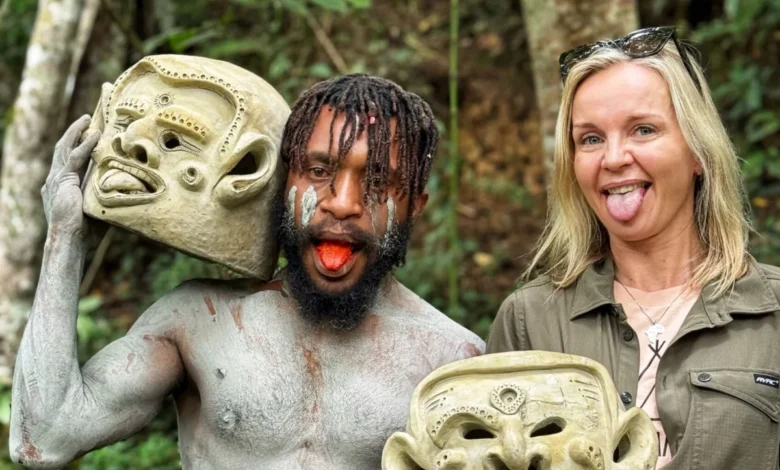
The intersection of global travel and digital content creation has reached a critical juncture, raising profound ethical questions about the representation of Indigenous communities in the 21st century. After sharing her experiences online following a visit with the Hadzabe hunter-gatherers in Tanzania, Anniina Sandberg, a seasoned cultural anthropologist and founder of Visit Natives, observed a disturbing trend in public discourse. The digital feedback she received frequently bypassed the nuances of the Hadzabe’s complex social structures and ancient wisdom, focusing instead on portraying the community as objects of curiosity or entertainment. This realization has sparked a broader conversation within the travel industry: in an era of ubiquitous smartphones and the relentless pursuit of social media engagement, where is the line between meaningful cultural exchange and the commodification of Indigenous lives?
Sandberg, who has spent over two decades working alongside communities including the Maasai and Hadzabe in Tanzania, Sami families in Norway, Berber communities in Morocco, and various Indigenous groups in Papua New Guinea, argues that the current trajectory of "content-driven" travel risks reducing human beings to tourism products. As the CEO of Visit Natives, Sandberg has positioned herself at the forefront of Indigenous-led tourism, advocating for a model that prioritizes the dignity and agency of the hosts over the aesthetic desires of the traveler.
The Digital Paradox: Visibility versus Vulnerability
The rise of platforms like Instagram and TikTok has provided a double-edged sword for Indigenous communities. On one hand, digital visibility can offer a platform for political advocacy and the promotion of community-led businesses. On the other hand, the demand for "viral" content often rewards the sensational and the exotic. Sandberg highlights that while sustainable tourism discussions have traditionally centered on environmental footprints and economic leakage, the psychological and social impact of social media is frequently overlooked.
"I’ve seen that Indigenous people are very vulnerable," Sandberg noted in an interview with Ethical Traveler. "People can misuse the experience just to create content that is about getting clicks and views." This pursuit of engagement often leads to the "flattening" of cultures—a process where complex histories, spiritual beliefs, and modern struggles are condensed into a single, visually striking image that conforms to Western stereotypes of the "noble savage" or the "primitive" inhabitant. When Indigenous people are used as backdrops for influencer photography, the power dynamic shifts from mutual respect to a form of digital voyeurism.

A Chronology of Engagement and the Shift Toward Ethics
The evolution of Sandberg’s work reflects a broader shift in the field of anthropology and tourism management. In the early 2000s, much of the interaction between travelers and Indigenous groups was mediated by large-scale tour operators who often treated these encounters as "human zoos"—short, staged stops where rituals were performed for a fee.
Sandberg’s approach, honed over twenty years of fieldwork, sought to dismantle this hierarchy. Living with a Maasai family for over a year provided her with a foundational understanding of the importance of integration over observation. In recent years, the founding of Visit Natives marked a formal transition toward a model where Indigenous families are the primary stakeholders and decision-makers. This chronology of work emphasizes that ethical tourism is not an accidental outcome but a deliberate practice requiring years of relationship-building and a deep understanding of local customs.
The Mechanics of Meaningful Exchange: Beyond the Day Trip
One of the primary critiques Sandberg levels against the modern tourism industry is the obsession with convenience. Most "cultural tours" are designed to fit into a tight itinerary, lasting only a few hours. These visits often disrupt the natural rhythm of community life, forcing hosts to perform their identity on a schedule.
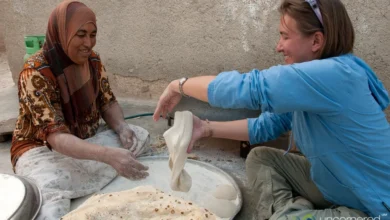
To counter this, Sandberg advocates for multi-day stays that mimic the experience of being a guest in someone’s home. Visit Natives intentionally avoids fixed itineraries, allowing encounters to unfold naturally. By sharing meals, participating in daily chores, and sleeping under the same roof, the traveler transitions from a spectator to a participant. This immersive approach is designed to foster genuine human connection, which Sandberg describes as the "core of humanity." When a traveler spends three days learning the intricacies of reindeer herding with a Sami family in the Arctic or gathering tubers with the Hadzabe, the relationship ceases to be transactional and becomes relational.
The Complexity of Informed Consent in the Digital Age
A central pillar of Sandberg’s advocacy is the re-evaluation of consent. In the context of travel photography, consent is often reduced to a simple nod or a verbal "yes." However, Sandberg points out that truly informed consent is much more complex, particularly when there is a digital divide. Many Indigenous communities may not fully grasp the global reach of the internet or how an image might be manipulated, reshared, or used in commercial advertising without their knowledge.

"When communities don’t know their rights, or don’t fully understand how their images might be used, it becomes much more complicated," Sandberg explained. For consent to be ethical, it must be based on transparency. Travelers and operators have a responsibility to explain where a photo might be posted and what the implications are. Furthermore, Sandberg emphasizes the need for fair compensation and the right of the community to refuse being photographed at any time, without fear of losing tourism revenue.
Industry Implications and the Need for a Global Code of Conduct
The issues raised by Sandberg are supported by a growing body of data regarding the "Instagrammability" of travel. According to various industry reports, over 40% of travelers under the age of 33 prioritize how "Instagrammable" a destination is when making travel plans. This pressure creates an environment where tourism operators may encourage Indigenous hosts to dress in traditional attire even when it is not a ceremonial occasion, just to satisfy the traveler’s lens.
The broader implication is a potential erosion of cultural authenticity and a reinforcement of colonial-era tropes. Sandberg argues that the responsibility for change rests not just on the individual traveler, but on the industry as a whole. She calls for a universal code of conduct for Indigenous tourism that includes:
- Community-Led Initiatives: Ensuring that the communities themselves design the tourism experiences.
- Education of Travelers: Providing pre-trip orientations that address cultural etiquette and the ethics of digital sharing.
- Transparency in Revenue: Ensuring a significant portion of the proceeds stays within the community to support land rights and cultural preservation.
- Agency in Representation: Giving Indigenous people the power to decide how their stories are told to the world.
Analysis: The Vulnerability of Land and Culture
The vulnerability of Indigenous groups is often exacerbated by external pressures such as land dispossession and climate change. In Tanzania, groups like the Maasai have faced ongoing challenges regarding grazing rights and land conservation policies. In Norway, the Sami people navigate the complexities of maintaining reindeer herding traditions amidst industrial expansion and changing weather patterns.
When tourism is handled unethically, it can become another form of extraction, taking the community’s image and "vibe" without contributing to its long-term survival. Conversely, when tourism is community-led and ethical, it can serve as a vital tool for cultural preservation. It provides an economic incentive for younger generations to stay within their communities and maintain traditional knowledge, rather than migrating to urban centers for low-wage labor.

Conclusion: The Human Core of Travel
Ultimately, Anniina Sandberg’s work suggests that the future of travel lies not in the perfection of the photograph, but in the depth of the experience. The rise of social media has made it easier than ever to see the world, but perhaps harder than ever to truly understand it. By moving away from the "content-first" mindset, travelers have the opportunity to experience the world as a rich mosaic of diverse perspectives.
As Sandberg notes, the most valuable moments are often the simplest ones—the ones that are rarely captured on camera. Eating together, sharing a laugh over a language barrier, or simply sitting in silence under a vast Tanzanian sky are the experiences that build empathy and cross-cultural solidarity. The goal of ethical Indigenous tourism is to ensure that these interactions are grounded in dignity and reciprocity, ensuring that the "rich mosaic" of human culture remains vibrant for generations to come. For those seeking to engage with the world more deeply, the message is clear: put down the camera, open the mind, and remember that the person on the other side of the lens is a host, not a product.