Beyond the Lens: Reimagining Indigenous Tourism in the Age of Social Media and Cultural Commodification

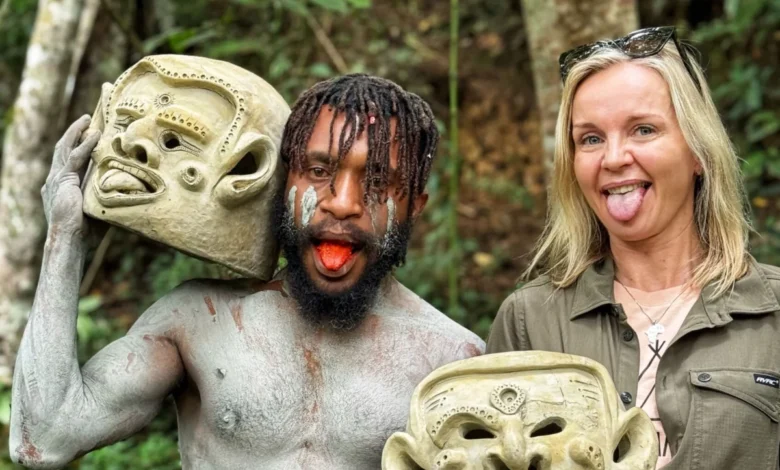
When cultural anthropologist Anniina Sandberg returned from a visit with the Hadzabe hunter-gatherers in Tanzania and shared her experiences online, she expected a dialogue rooted in curiosity and cross-cultural understanding. Instead, she encountered a digital landscape that frequently reduced one of the world’s last remaining hunter-gatherer tribes to a source of novelty and amusement. The responses she observed highlighted a growing rift in modern travel: the tendency for social media audiences to view Indigenous communities not as complex, contemporary societies, but as "exotic" spectacles designed for entertainment.
This realization served as a catalyst for Sandberg, who has spent over two decades working at the intersection of anthropology and travel. As the founder and CEO of Visit Natives, Sandberg has become a leading voice in the push for Indigenous-led tourism—a model that seeks to dismantle the traditional power dynamics of the travel industry. In an era defined by the "experience economy" and the ubiquitous presence of high-definition cameras, the central question of her work has become increasingly urgent: where is the line between meaningful cultural exchange and the transformation of human beings into tourism products or social media content?
The Global Context of Indigenous Tourism
The rise of Indigenous tourism is part of a broader global shift toward sustainable and experiential travel. According to industry data, the global adventure tourism market, which frequently overlaps with Indigenous-led experiences, was valued at approximately $290 billion in 2022 and is projected to expand significantly by 2030. Furthermore, the World Tourism Organization (UNWTO) has identified "community-based tourism" as one of the fastest-growing sectors in the industry. However, this growth brings significant risks.
For many Indigenous communities, tourism represents a double-edged sword. On one hand, it offers a vital source of income that can support land rights battles, fund education, and provide an economic incentive to preserve traditional languages and practices. On the other hand, the "commodification of culture" can lead to what sociologists call "staged authenticity," where communities feel pressured to perform a version of their culture that fits Western stereotypes of the "primitive" or "untouched" native.

Sandberg’s observations suggest that social media has accelerated this process. "When we talk about sustainable tourism, we have focused on environmental issues and social issues, but we rarely talk about the impact of social media," Sandberg told Ethical Traveler. The pressure to generate "likes" and "shares" often encourages travelers to seek out the most visually striking or "unusual" aspects of a culture, frequently stripping away the historical and social context that makes those practices meaningful.
A Chronology of Engagement: From Research to Reform
Sandberg’s journey toward founding Visit Natives was not a sudden pivot but the result of a twenty-year evolution. Her career began in the early 2000s, rooted in traditional academic fieldwork.
- Early 2000s: The Maasai Fieldwork: Sandberg spent over a year living within a Maasai boma (homestead) in Tanzania. This immersive period allowed her to move beyond the superficial "safari" interactions common in the region. She lived as a member of the family, gaining insights into the daily struggles and triumphs of the Maasai people.
- Mid-2010s: Identifying the Gap: After years of working with various groups, including the Sámi reindeer herders in Norway and Berber communities in Morocco, Sandberg identified a recurring problem: Indigenous people were often the subjects of tourism but rarely the owners of the narrative or the primary beneficiaries of the revenue.
- 2018–Present: The Launch of Visit Natives: Sandberg established Visit Natives to provide a platform for Indigenous-led experiences. The organization was built on the principle that the communities themselves should dictate how they are portrayed and how many visitors they receive.
- 2020s: The Digital Shift: As platforms like Instagram and TikTok became the primary drivers of travel trends, Sandberg shifted her focus toward the ethics of digital representation, advocating for a "code of conduct" for content creators visiting sensitive cultural sites.
The Social Media Paradox: Visibility vs. Exploitation
The vulnerability of Indigenous communities in the face of digital media is a primary concern for Sandberg. "People can misuse the experience just to create content that is about getting clicks and views," she noted. This dynamic often results in the "flattening" of complex cultures. For example, a sacred ritual may be filmed and edited into a 15-second clip set to trending music, completely divorcing the act from its spiritual significance.
The impact of this is two-fold. First, it reinforces harmful stereotypes, portraying Indigenous peoples as "stuck in time" rather than as modern people navigating the 21st century. Second, it can create a "zoo effect," where travelers arrive with the expectation of seeing a performance rather than engaging in a human-to-human interaction.
Industry analysts point out that this is not just an ethical issue but a practical one. When tourism becomes purely extractive—taking photos and leaving nothing but a digital footprint—it fails to contribute to the long-term resilience of the host community. Sandberg argues that truly sustainable tourism must include "digital sustainability," ensuring that the online representation of a community does not undermine its dignity or rights.

Redefining the Experience: The "Home" vs. "Stage" Model
To combat the pitfalls of traditional tourism, Sandberg distinguishes between a curated "tourism experience" and a "meaningful cultural exchange." Most traditional tours are designed for convenience. They are "plug-and-play" modules where travelers arrive, witness a dance or a demonstration, and leave within hours. These interactions often take place on a "stage"—a space specifically designated for tourists that exists outside the community’s natural rhythm.
In contrast, Visit Natives promotes a model that Sandberg compares to being invited into someone’s home. The organization eschews day trips and fixed itineraries in favor of multi-day stays. Whether living with Sámi families in the Arctic or the Asaro Mudmen in the Papua New Guinea Highlands, travelers are encouraged to participate in the mundane aspects of daily life: cooking, herding, and conversation.
"The core of humanity is just spending time with each other," Sandberg said. By removing the pressure of a schedule, the power dynamic shifts. The host is no longer a performer, and the traveler is no longer a spectator. They become participants in a shared human experience. This approach also allows for "incidental learning"—the deep insights that occur during a shared meal rather than a rehearsed lecture.
The Ethics of Informed Consent in the Digital Age
One of the most complex issues Sandberg addresses is the nature of consent. While many travelers believe that asking "Can I take a photo?" constitutes ethical behavior, Sandberg argues that true informed consent is much deeper.
Many Indigenous communities, particularly those in remote areas, may have a limited understanding of the global reach of social media. They may agree to a photo without realizing it could be viewed by millions of people or used in commercial advertisements. "When communities don’t know their rights, or don’t fully understand how their images might be used, it becomes much more complicated," Sandberg explained.

True consent, according to the Visit Natives model, requires:
- Transparency: Explaining exactly where an image will be posted and who might see it.
- Agency: Ensuring the community has the right to say no without fear of losing tourism revenue.
- Fair Compensation: Recognizing that if a community’s image is used to promote a brand or a platform, they should share in the economic benefits.
Industry Responsibility and the Path Forward
Sandberg is clear that the burden of ethical engagement should not fall solely on the traveler. Tourism operators and the wider travel industry must be held accountable. She advocates for a universal "code of conduct" for Indigenous tourism that prioritizes community autonomy and long-term wellbeing over short-term profit.
Many Indigenous groups face ongoing challenges regarding land displacement, climate change, and political marginalization. In this context, tourism can sometimes be a "choice of desperation." Sandberg believes that ethical providers have a responsibility to ensure that tourism serves the community’s long-term interests rather than making them more vulnerable to outside exploitation.
The implications of this shift are profound. If the industry moves toward Sandberg’s model, travel could become a powerful tool for cultural preservation and global empathy. If it continues down the path of "content-first" tourism, it risks turning the world’s most diverse cultures into mere backdrops for the digital age.
Ultimately, Sandberg’s work is a reminder that travel is not just about the places we go, but about the way we choose to see the people we meet. By prioritizing dignity, reciprocity, and genuine connection, travelers can move beyond the role of the consumer and become partners in the preservation of the world’s rich cultural mosaic. As Sandberg concludes, "It’s very human. The core of humanity is just spending time with each other."