Beyond the Lens Navigating the Ethics of Indigenous Tourism in the Age of Social Media

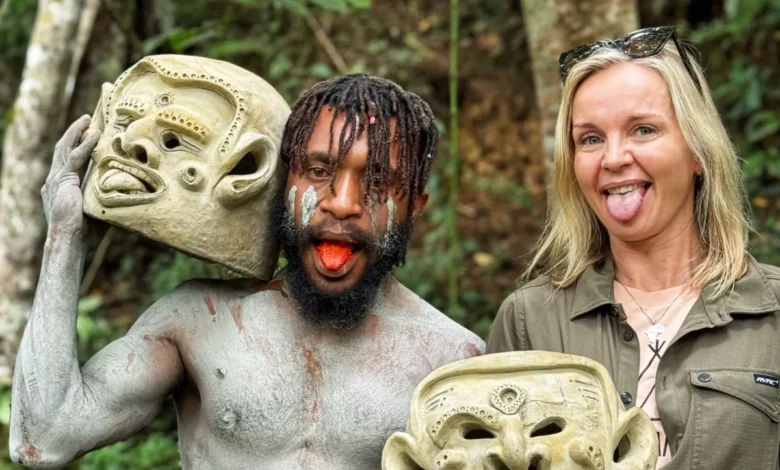
The intersection of global travel and digital content creation has reached a critical juncture, prompting cultural anthropologists and tourism experts to re-evaluate the impact of the "experience economy" on the world’s most vulnerable populations. Anniina Sandberg, a seasoned cultural anthropologist and the founder of Visit Natives, has spent more than two decades documenting the lives of Indigenous communities, from the Maasai and Hadzabe of Tanzania to the Sámi of Norway and the tribes of Papua New Guinea. Her observations reveal a troubling trend: the transformation of sacred traditions and daily survival into commodified entertainment for social media consumption. As the reach of platforms like Instagram and TikTok expands into remote corners of the globe, the line between genuine cultural exchange and the exploitation of Indigenous identities has become increasingly blurred, necessitating a fundamental shift in how the travel industry operates.
The Rise of Digital Voyeurism and the Exoticization of Culture
The catalyst for Sandberg’s recent advocacy was a series of interactions following her visit to the Hadzabe hunter-gatherers in Tanzania. Upon sharing her experiences online, she noticed that the digital discourse often bypassed the nuances of the community’s history and challenges, focusing instead on the "novelty" of their lifestyle. This phenomenon, which Sandberg describes as "sensationalizing and exoticizing," reduces complex human beings to caricatures designed to garner clicks, likes, and shares.
In the modern travel landscape, "authenticity" has become a high-value currency. However, when authenticity is pursued solely for the purpose of content creation, it often leads to the flattening of culture. Sandberg argues that social media has introduced a new layer of vulnerability for Indigenous peoples. While traditional sustainable tourism frameworks have long prioritized environmental conservation and economic social issues, they have largely ignored the psychological and sociological impact of the "influencer" gaze. The pressure to provide "attention-grabbing" content encourages travelers to seek out the most visually striking or "primitive" aspects of a culture, often at the expense of the community’s dignity and privacy.
A Chronology of Engagement: From Fieldwork to Ethical Enterprise
The development of Sandberg’s philosophy on ethical tourism did not happen in a vacuum; it is the result of a lifelong commitment to ethnographic study and community immersion. Her journey began more than 20 years ago, characterized by long-term residencies within Indigenous groups.

- The Tanzania Years (Early 2000s): Sandberg lived for over a year within a Maasai boma in Tanzania. This period of fieldwork was foundational, moving her beyond the role of a researcher to that of a family member. She participated in daily chores, shared meals, and witnessed the complexities of land rights and modernization facing the Maasai.
- Expanding the Scope (2010s): Her work expanded to include the Hadzabe, one of the last hunter-gatherer tribes in Africa, and the Berber communities of Morocco. During this time, she noted the increasing presence of day-trip tourism, which she felt prioritized tourist convenience over community wellbeing.
- The Founding of Visit Natives: Recognizing a gap in the market for truly respectful and community-led travel, Sandberg founded Visit Natives. The organization was built on the principle that Indigenous people should have the agency to tell their own stories and control the terms of their engagement with the outside world.
- Global Advocacy (Present Day): Today, Sandberg operates across multiple continents, including the Arctic regions of Norway with the Sámi and the Highlands of Papua New Guinea with the Asaro Mudmen. Her focus has shifted toward educating the modern traveler on the ethics of the digital footprint.
Supporting Data: The Growth of Indigenous Tourism and the Social Media Influence
The urgency of Sandberg’s message is supported by broader industry data. According to the World Tourism Organization (UNWTO), Indigenous tourism is one of the fastest-growing sectors of the global travel industry. Pre-pandemic estimates suggested that the market for cultural tourism was growing at an annual rate of 15%, with a significant portion of travelers expressing a desire for "transformative" experiences in remote locations.
Furthermore, a study by Expedia Group found that nearly 40% of Gen Z and Millennial travelers prioritize "Instagrammability" when choosing a destination. This digital-first mindset creates a transactional relationship with travel. When applied to Indigenous lands, this translates into a demand for "photo-ops" that can be captured in minutes. This stands in stark contrast to the reality of Indigenous life, which is often defined by slow rhythms, oral traditions, and deep connections to the land—elements that cannot be distilled into a 15-second video clip.
The economic reality is also a factor. Many Indigenous communities face systemic poverty and limited access to resources. This makes them susceptible to tourism operators who offer short-term financial gains in exchange for "staged" cultural performances. Sandberg warns that without a strict code of conduct, these communities risk becoming "tourism products" rather than active participants in a global dialogue.
The Informed Consent Crisis in the Digital Age
One of the most complex issues Sandberg identifies is the concept of informed consent. In a Western context, consent is often viewed as a simple "yes" or "no" to having a photo taken. However, in communities where digital literacy is low and the concept of a global, permanent internet is foreign, "yes" does not necessarily mean "informed."
Sandberg points out that many individuals may agree to be photographed without understanding that their image could be seen by millions of people, used in advertisements, or subjected to derogatory comments online. "When communities don’t know their rights, or don’t fully understand how their images might be used, it becomes much more complicated," she explains.

To combat this, ethical tourism requires a higher standard of transparency. This includes:
- Contextual Education: Explaining to the community where the photos will go and who will see them.
- Equitable Compensation: Ensuring that the financial benefits of the visit go directly to the community and its members, not just to outside agencies.
- Agency and Veto Power: Empowering communities to set "no-photo" zones or times when visitors are not allowed to document their lives.
Shifting the Paradigm: Immersion over Itineraries
To address these challenges, Visit Natives has pioneered a model that prioritizes human connection over traditional sightseeing. A key component of this approach is the rejection of the "day trip." Sandberg argues that brief visits encourage a spectator-performer dynamic. Instead, her organization focuses on multi-day stays where travelers live alongside families.
In this model, there is no fixed itinerary. Travelers participate in the natural ebb and flow of daily life—gathering water, herding livestock, or preparing communal meals. This "home-sharing" approach strips away the artifice of the tourist experience. When a traveler sleeps under the same roof and eats the same food as their host, the power dynamic shifts from "observer and observed" to "host and guest."
This methodology aligns with the "Slow Travel" movement but adds a layer of anthropological responsibility. By removing the pressure to "see it all" in a few hours, travelers are forced to engage with the humanity of their hosts. As Sandberg notes, the core of humanity is simply spending time with each other, a process that cannot be rushed or scheduled for the sake of a travel brochure.
Industry Responses and the Path Toward a Global Code of Conduct
The issues raised by Sandberg are beginning to resonate within the wider tourism industry. Organizations like the George Washington University International Institute of Tourism Studies and the World Indigenous Tourism Alliance (WINTA) have begun advocating for the adoption of the UN Declaration on the Rights of Indigenous Peoples (UNDRIP) as a framework for tourism development.

There is a growing consensus that tourism operators must adhere to a strict code of conduct that includes:
- Community-Led Design: Indigenous communities must be the primary architects of the tourism experiences offered on their lands.
- Cultural Preservation over Adaptation: Traditions should not be altered to fit the convenience or comfort of the traveler.
- Educational Mandates: Operators must provide travelers with pre-trip education regarding the history, etiquette, and political struggles of the host community.
Analysis of these trends suggests that the future of Indigenous tourism depends on the industry’s ability to police itself. If travelers continue to treat Indigenous lands as "content playgrounds," the resulting backlash could lead to communities closing their borders to outsiders entirely, or the total erosion of the cultural heritage that travelers claim to value.
Broader Impact: Tourism as a Tool for Sovereignty
Ultimately, Sandberg believes that when done correctly, tourism can be a powerful tool for Indigenous sovereignty. It can provide the economic means for communities to remain on their ancestral lands, fund local education, and revitalize languages that are at risk of extinction.
The distinction lies in the intent. Ethical tourism is not about "saving" a culture or "consuming" it; it is about recognizing the world as a rich mosaic of diverse perspectives. For Sandberg, the most valuable travel experiences are those that leave the traveler changed, not just their social media feed.
As global travel continues to rebound and expand, the insights provided by cultural anthropologists like Anniina Sandberg serve as a vital reminder. The camera lens can be a bridge for understanding, or it can be a wall that separates us from the true essence of the people we visit. The responsibility to choose the former lies with the traveler, the operator, and the platforms that host our digital lives. By prioritizing dignity, reciprocity, and genuine human connection, the travel industry can move beyond the "product" and return to the "person."