Allegiant Air Completes 1.5 Billion Dollar Acquisition of Sun Country Airlines to Reshape the Low-Cost Carrier Landscape

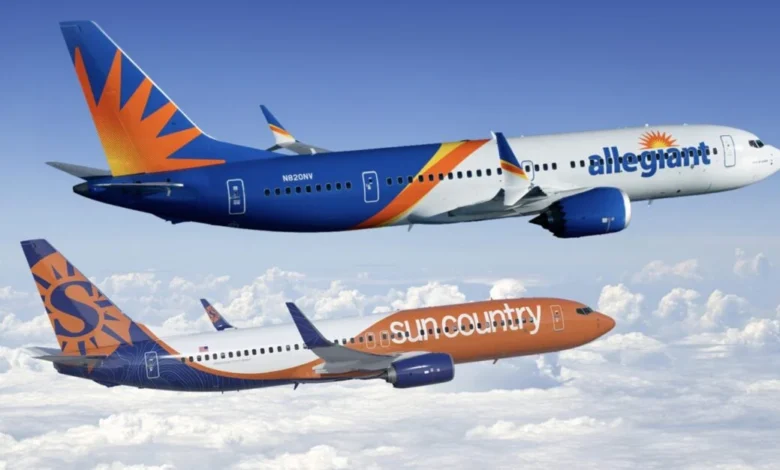
The landscape of the United States aviation industry underwent a significant transformation this Wednesday as Allegiant Air officially closed its $1.5 billion acquisition of Minnesota-based Sun Country Airlines. The completion of the transaction comes just five months after the two low-cost carriers first announced their intent to merge, signaling a rapid consolidation phase within a sector currently reeling from the recent collapse of Spirit Airlines. While the deal effectively marks the end of Sun Country as an independent entity, the integration process is expected to span several years, during which time the brand will gradually be absorbed into the Allegiant umbrella.
The acquisition represents a strategic pivot for Allegiant Travel Co., the parent company of Allegiant Air, as it seeks to diversify its revenue streams and expand its fleet capacity. For Sun Country, once the "hometown favorite" of the Twin Cities, the merger concludes a turbulent but ultimately profitable chapter as a private-equity-backed carrier. As the industry watches the integration of these two distinct business models, questions remain regarding the long-term impact on competition, particularly at Minneapolis-St. Paul International Airport (MSP), where Sun Country has long served as the primary check against the dominance of Delta Air Lines.
The Terms and Timeline of the Acquisition
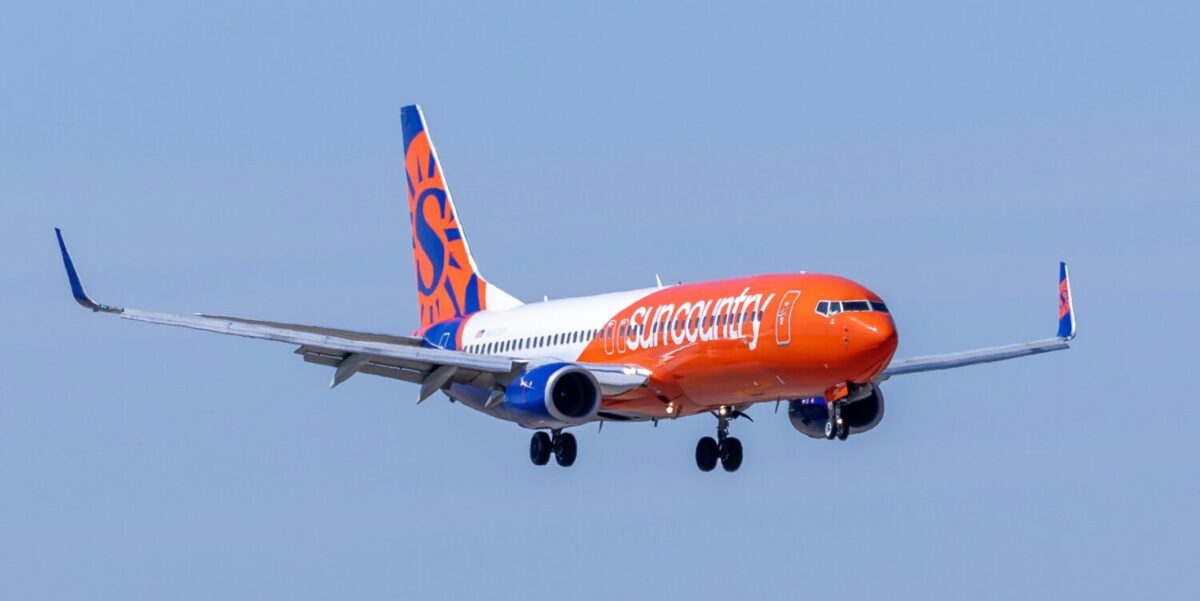
The $1.5 billion deal, which includes the assumption of debt, was finalized following a standard regulatory review period. The transition is structured to minimize immediate operational disruptions. In the short term, Sun Country Airlines will continue to operate as a separate brand. Its fleet of Boeing 737s will remain in their current livery, and its flight crews, ground staff, and administrative personnel will continue their duties under existing contracts.
However, the long-term roadmap involves a total integration of Sun Country’s assets into Allegiant’s operational framework. This includes the migration of reservation systems, the rebranding of aircraft, and the consolidation of gates and airport slots. Industry analysts suggest that the full absorption of Sun Country could take between 24 and 36 months, depending on the speed of FAA certifications for a single operating certificate.
The timing of the deal is particularly noteworthy, occurring less than two weeks after the formal shutdown of Spirit Airlines. The exit of Spirit and the absorption of Sun Country leave the American "ultra-low-cost carrier" (ULCC) market significantly more concentrated, a trend that has drawn the attention of consumer advocacy groups and federal regulators alike.
A Tale of Two Business Models
The merger of Allegiant and Sun Country is a study in contrasting strategies within the budget travel space. Allegiant Air, based in Las Vegas, has built its reputation on a unique "out-and-back" model. The airline primarily connects small-to-medium-sized cities—such as Appleton, Wisconsin, or Punta Gorda, Florida—to major leisure destinations like Las Vegas, Orlando, and Phoenix. Allegiant’s strategy centers on avoiding direct competition with major "legacy" carriers, often flying routes where they are the sole operator.
Sun Country Airlines, conversely, has evolved into a hybrid carrier with a more diversified portfolio. Under the ownership of Apollo Global Management, which took the airline private in 2017, Sun Country moved away from its legacy roots to adopt a low-cost model. However, unlike Allegiant, Sun Country maintained a significant presence in a major hub (MSP) and developed three distinct lines of business: scheduled passenger service, charter flights for professional sports teams and the U.S. military, and a robust cargo operation flying for Amazon Air.
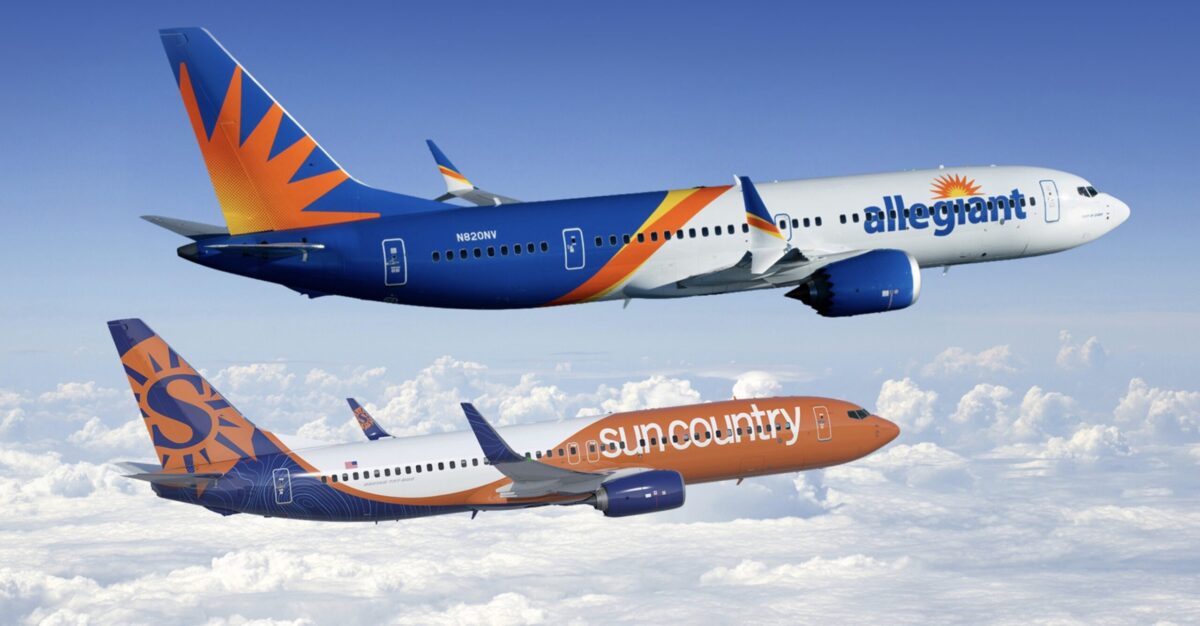
This cargo component was likely a primary driver for Allegiant’s interest. Sun Country’s contract with Amazon provided a steady, recession-resistant revenue stream that is rare in the volatile airline industry. By acquiring Sun Country, Allegiant gains immediate access to this cargo infrastructure and a more modern fleet of Boeing 737-800s, which contrasts with Allegiant’s historically heavy reliance on older Airbus A320 family aircraft.
The Impact on the Minneapolis-St. Paul Market
The most immediate concern for travelers lies in the Upper Midwest. For decades, Sun Country has been the "David" to Delta Air Lines’ "Goliath" at Minneapolis-St. Paul International Airport. Delta currently controls roughly 70% of the market share at MSP, and Sun Country’s presence has historically been the only factor preventing a total monopoly on many routes.
Economists often cite the "Southwest Effect" or the "Sun Country Effect," wherein the presence of a low-cost carrier on a specific route forces legacy airlines to lower their fares to remain competitive. With Sun Country now under Allegiant’s control, there are fears that this competitive pressure may wane. Allegiant has historically shown little interest in engaging in price wars with legacy carriers at major hubs. In fact, Allegiant exited the Minneapolis market entirely just one year ago, citing the difficulty of competing in a hub dominated by a major carrier.
While Allegiant executives have publicly committed to maintaining a "significant presence" in Minneapolis for the foreseeable future, industry skeptics point to the history of airline mergers as a cautionary tale. Often, when a larger carrier acquires a smaller one, the less profitable hub-to-hub routes are abandoned in favor of more lucrative point-to-point leisure routes. If Allegiant decides to redeploy Sun Country’s aircraft to serve routes between Florida and the Southwest, Twin Cities travelers could face a sharp increase in ticket prices as Delta’s dominance goes unchallenged.
Historical Context: The Evolution of Sun Country
Sun Country’s path to this $1.5 billion acquisition has been anything but smooth. Founded in 1982 by a group of former Braniff International Airways employees, the airline was once beloved for its high level of service and "Minnesota Nice" branding. However, the airline faced multiple bankruptcies in the early 2000s and changed ownership several times.
A turning point occurred in 2018, shortly after Apollo Global Management took control. The new leadership implemented a rigorous cost-cutting strategy, introducing fees for carry-on bags and seat assignments—a move that alienated many long-time customers. The airline’s reputation took a further hit in April 2018 when it "stranded" hundreds of passengers in Mexico. After a late-season blizzard canceled the final flights of the season from Mazatlán and Puerto Vallarta, the airline told passengers they were on their own to find flights home on other carriers, as Sun Country had no more scheduled service to those cities for the remainder of the year.
Despite these PR disasters, the "new" Sun Country became a financial powerhouse. By leaning into the charter and cargo markets, it achieved some of the highest profit margins in the industry. It was this financial stability, combined with its unique niche in the cargo sector, that made it an attractive target for Allegiant.
Industry Reactions and Regulatory Outlook
The closing of the deal has elicited mixed reactions from industry stakeholders. Wall Street analysts have generally viewed the merger as a positive move for Allegiant, noting that the $1.5 billion price tag is a fair valuation for Sun Country’s diversified assets. The acquisition is expected to be accretive to Allegiant’s earnings within the first full year of integrated operations.
"This is a consolidation of strength," noted one aviation analyst. "Allegiant is not buying a failing airline; they are buying a highly efficient machine that knows how to make money in niches that the big four airlines—Delta, United, American, and Southwest—don’t want to touch."
Consumer advocates, however, are less optimistic. The American Antitrust Institute has previously expressed concerns that the continued disappearance of small, independent airlines reduces choices for travelers and leads to higher ancillary fees. With Spirit Airlines gone and Sun Country being absorbed, the "ultra-low-cost" tier of the market is now dominated by just a few players, including Frontier and the newly expanded Allegiant.
The Department of Transportation (DOT) and the Department of Justice (DOJ) allowed the merger to proceed, likely because the two airlines had very little route overlap. Allegiant’s focus on small-city-to-leisure-destination routes and Sun Country’s focus on MSP-based travel meant that the merger did not technically eliminate direct competition on many specific city-pairs.
Broader Implications for the Aviation Industry
The Allegiant-Sun Country merger is a symptom of a broader shift in the global aviation economy. Rising labor costs, fluctuating fuel prices, and the massive capital requirements for new aircraft have made it increasingly difficult for small, independent carriers to survive. Consolidation is seen by many executives as the only way to achieve the scale necessary to compete with the legacy giants.
Furthermore, the pilot shortage that has plagued the industry for the last several years has hit regional and low-cost carriers the hardest. By merging, Allegiant and Sun Country can consolidate their pilot pipelines and training facilities, potentially easing the staffing pressures that have led to flight cancellations in the past.
As the integration progresses, the aviation world will be watching to see if Allegiant can successfully manage the complexities of Sun Country’s diverse operations. Managing a passenger airline is difficult enough; managing a passenger airline, a sports charter service, and a cargo fleet for a retail giant like Amazon requires a level of operational sophistication that will test Allegiant’s leadership.
For the flying public, the message is clear: the era of the independent, regional budget carrier is drawing to a close. As Sun Country’s orange-and-blue planes eventually fade into Allegiant’s livery, the industry moves one step closer to a landscape defined by fewer choices and a more standardized, fee-driven travel experience. Whether Allegiant honors its vow to remain a fixture in the Twin Cities remains to be seen, but for now, the "hometown airline" of Minnesota has officially embarked on its final descent.