Leica’s Unwavering Honesty: A Masterclass in Brand Identity and the Future of Camera Design

In an industry characterized by relentless feature creep and the pursuit of universal appeal, Leica Camera AG stands as a singular entity, a manufacturer that refuses to compromise its core identity. This steadfast commitment, rather than any single product, is what continues to captivate photographers, even those who will never own a Leica themselves. Unlike its competitors, Leica does not chase ephemeral autofocus benchmarks set by Sony, nor does it aspire to the video specification arms race dominated by Canon. It eschews the strategy of cramming every conceivable feature into a new body and marketing it as a revolutionary all-in-one creative tool. Instead, Leica meticulously crafts expensive cameras designed around a distinct shooting experience, pricing them commensurate with the cost of producing that unique experience. This deliberate focus allows the rest of the industry to exhaust itself in a bid to be everything to everyone, while Leica cultivates a loyal following through its unwavering clarity. This strategic focus, more than any individual camera model, solidifies Leica’s relevance and provides a compelling case study for the future of camera design in 2026 and beyond.
The Essence of Leica’s Offering: Beyond Specifications
The conventional approach to evaluating cameras centers on a detailed analysis of their specifications: sensor resolution, autofocus points, video capabilities, continuous shooting rates, buffer depth, weather sealing, and battery life. By these metrics, Leica cameras appear to be poor value propositions at virtually any price point. The Leica M11, retailing for approximately $10,400, notably lacks autofocus entirely. The Q3, a fixed-lens full-frame compact, comes with a 28mm lens and is priced at $7,350. Even the SL3, a more modern mirrorless offering, is available for around $7,485, and its autofocus system, while improved, is generally described by reviewers as "competitive" rather than class-leading.
From a purely spec-sheet perspective, these cameras should logically struggle to find a market. Competitors across all price segments consistently offer more functionality per dollar. Yet, Leica continues to sell these models, consistently raises prices, and invariably finds a discerning clientele eager for precisely what these cameras offer, and nothing more. The honest answer to what Leica is truly selling is not simply "cameras" in the conventional sense. It is a deliberate and curated shooting experience that intentionally omits many of the features that other manufacturers consider essential. This includes the manual focus rangefinder experience of the M-series, the singular simplicity of the fixed lens on the Q-series, and the robust, L-mount integration of the SL-series. Each Leica camera represents a conscious decision about what to exclude, and it is this deliberate omission that forms the core of the product.
The Pillars of Leica’s Philosophy: M, Q, and SL Systems
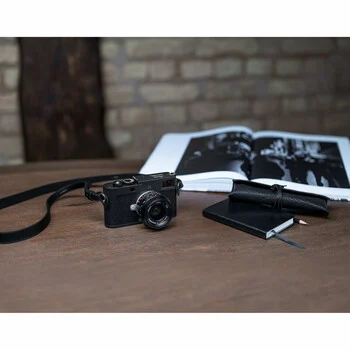
Leica’s M-system stands as the purest embodiment of its philosophy. This digital rangefinder camera is intentionally devoid of autofocus, advanced video features, and dual memory card slots. Its user interface has remained remarkably consistent across decades of iteration, appealing to a niche of photographers who actively seek a slower, more deliberate approach to image-making. The M11-P, priced at $10,400 in black and $10,650 in silver chrome following a March 2026 price adjustment, is designed for individuals who wish to be intentionally slowed down, to meticulously consider each frame, and to engage in a hands-on process rather than delegating creative control to the camera.
This approach is not universally appealing. The M-system’s manual focus and minimalist feature set can be a source of frustration for many photographers. Leica itself does not shy away from this reality. Its marketing campaigns do not position the M as the ideal camera for sports, events, weddings, or fast-paced documentary work. Instead, the company asserts that the M is simply "the M"—a camera that is either precisely what a photographer desires or entirely unsuitable.
The Q-system, however, broadens Leica’s appeal by offering a more accessible entry point without sacrificing the brand’s core aesthetic. The Q3 and the newer Q3 43 are full-frame, fixed-lens compact cameras that do incorporate autofocus, video capabilities, and tilting screens. These models are targeted at photographers who desire the distinctive Leica image rendering and build quality but find the rangefinder learning curve daunting. The Q3, in particular, represents the closest Leica comes to a "conventional" camera and is perhaps the most likely model for photographers outside the dedicated Leica community to consider for practical use. While its price point, $7,350 for the 28mm Q3 and $7,950 for the 43mm Q3 43, remains substantial compared to competitors, the Q-series effectively translates the Leica aesthetic into a functional photographic tool.
The SL-system represents a third, compelling path for Leica. The SL3 and SL3-S are full-frame mirrorless bodies that participate in the L-mount alliance, a collaborative venture with Panasonic and Sigma. This partnership grants SL buyers access to a comprehensive and robust ecosystem of lenses at prices that are often more accessible than Leica’s own premium glass. The SL3-S, in particular, has emerged as an unexpected favorite among hybrid shooters. Leica has consistently delivered substantial firmware updates, including the significant Firmware 4.0 update in December 2025, which introduced Camera-to-Cloud connectivity, enhanced autofocus performance, and dedicated support for anamorphic shooting. On the SL front, Leica is not merely leveraging nostalgia; it is actively building a sophisticated working platform for filmmakers and photographers who are willing to invest in superior build quality and engineering. For those seeking to explore a broad spectrum of photographic genres and ascertain how a specific system aligns with their workflow, resources like "The Well-Rounded Photographer" offer comprehensive guidance across eight genres with eight different instructors, emphasizing that fundamental craft principles remain transferable regardless of the camera body used.
Navigating the Leica Price Conversation
Leica cameras are undeniably expensive, and their lenses command even higher prices. A typical kit comprising an M11 and two Summilux lenses can easily reach a replacement value of $25,000. For many Leica owners, this represents a significant financial commitment. For others, it is a purchase that transcends conventional consumer calculus, existing in a realm where price is secondary to the perceived value of the experience.
Leica is acutely aware of its premium pricing. Unlike much of the industry, the company rarely attempts to obscure this reality through disingenuous "feature-per-dollar" messaging. Even when financing options are presented, the underlying pitch remains resolutely premium, not entry-level. Leica does not engage in "affordable entry point" marketing campaigns that suggest a novice photographer can acquire an M-system camera for the price of a used full-frame Sony. Instead, the company sets prices based on the cost of production at Leica’s scale and desired margin, empowering buyers to determine whether that valuation aligns with their personal priorities.
This transparency has a dual effect. It unequivocally positions Leica as a brand not intended for the mass market. A professional photographer evaluating the acquisition of a Leica body is making a considered decision about a premium purchase with specific, understood trade-offs, rather than questioning whether marketing has inflated the perceived value. Regardless of other criticisms, the proposition offered by Leica is always clear.
Lessons for an Evolving Industry
The photography industry has spent the last decade engaged in a pervasive trend: making every camera perform every task. Mirrorless bodies are routinely marketed as hybrid photo-video tools, vlogging cameras, sports cameras, studio cameras, travel companions, and content creation platforms, often simultaneously. The consequence of this broad approach is that most modern cameras perform numerous functions acceptably, but few excel exceptionally. This necessitates increasingly aggressive marketing efforts each year to convince consumers that marginal differences between models represent significant advancements.
Leica presents a compelling counter-example to this industry-wide strategy. Each Leica camera is designed to excel at a select few tasks, while explicitly abstaining from performing many others. The M-series does not shoot video. The Q-series is restricted to its fixed lens. The SL-series does not attempt to replicate the rangefinder experience. Each camera body possesses a distinct identity, targets a specific user, and serves a clear use case. The pricing reflects the depth of commitment to that identity rather than the breadth of features it encompasses.
The question arises whether other manufacturers could sustain a business model based on such focused specialization at scale. It is unlikely for giants like Canon, Sony, and Nikon, whose business models are predicated on mass production and broad market penetration. However, the underlying lesson is universally applicable: a camera meticulously designed with a specific user in mind, built without compromise to cater to secondary markets, and priced at its genuine worth, offers a more coherent and satisfying product than one attempting to serve all buyers. Leica demonstrates the viability of this model, even if the broader industry remains hesitant to adopt it.
The Enduring Significance for All Photographers
It is crucial to acknowledge that the vast majority of photographers reading this article will likely never purchase a Leica camera, and this is entirely acceptable. Leica’s primary objective is not to sell a camera to every photographer. The brand’s enduring significance lies in the clarity of its product strategy, which serves as an invaluable reference point for every purchasing decision a photographer will make.
When evaluating a new camera body, photographers are encouraged to ask the "Leica question": what is this camera truly designed for? This question transcends the superficiality of spec sheets and marketing claims, delving into the specific shooting experience the camera is engineered to facilitate. Many cameras struggle to answer this question with clarity because they were not conceived around a distinct user experience. Instead, they were designed to perform well in comparative spec-sheet analyses. Leica’s willingness to create cameras with unambiguous identities, clearly defined trade-offs, and targeted audiences serves as a potent reminder that the spec-sheet-driven approach to camera acquisition is a choice, not an inherent requirement.
One does not need to buy a Leica to glean valuable insights from the brand. The crucial takeaway is to recognize that a camera possessing a clear identity often holds more intrinsic value than one merely boasting superior specifications. This understanding empowers photographers to critically assess which cameras on the market genuinely possess a distinct purpose and identity.
Leica’s commitment to its premium pricing strategy remains steadfast. The price increases implemented in March 2026, which added several hundred dollars to most M-system bodies and lenses, underscore this commitment. Concurrently, the U.S. pricing for the SL3 and SL3-S bodies remained unchanged, perhaps signaling where the company perceives its most significant competitive pressures. The brand will likely continue to occupy a distinct niche within the photographic landscape, revered by its devoted audience and potentially dismissed by others as irrelevant to mainstream professional practice. Both of these positions are defensible, yet both risk overlooking the more profound implications of Leica’s approach.
Leica can be considered the most honest camera company because it builds what it builds, charges what it charges, and demands nothing more. In an industry increasingly dominated by marketing that promises everything while delivering competence across a wide spectrum of functions, this unwavering clarity possesses significant value, irrespective of whether the camera prices themselves are within reach. The photographers who ultimately derive the most benefit from Leica are not always those who purchase its products. They are the ones who, by observing Leica’s unwavering dedication to its principles, have learned to critically question what a camera is truly intended for before making a purchase.