World of Hyatt Implements Massive Award Chart Overhaul as Luxury Redemptions Soar in Price

The global hospitality landscape witnessed a significant shift this week as World of Hyatt officially implemented a comprehensive restructuring of its loyalty program’s award chart. Following a month-long notice period, the changes took full effect on Wednesday, marking what industry analysts describe as one of the most substantial devaluations in the program’s history. The core of the update involves the replacement of Hyatt’s long-standing three-tier pricing model—comprising off-peak, standard, and peak rates—with a more complex five-tier system. This new framework has introduced unprecedented volatility into award pricing, particularly at high-end properties where redemption costs have surged by as much as 67% in some instances.
An extensive analysis of nearly 1,300 Hyatt properties worldwide, encompassing approximately 368,000 bookable award nights through May 2027, reveals a stark reality for travelers. While the hotel group previously maintained a degree of predictability within its eight hotel categories, the transition to five tiers has effectively narrowed the availability of low-cost redemptions at sought-after destinations. The data indicates that at top-tier Category 8 properties, which include flagship brands such as Park Hyatt and Alila, not a single date across the entire calendar became more affordable. Conversely, more than two-thirds of nightly stays at these elite hotels now require significantly more points than they did prior to the Wednesday rollout.

A Structural Shift Toward Dynamic Pricing
For years, World of Hyatt was celebrated by loyalty enthusiasts for its commitment to a fixed award chart, which allowed travelers to extract "outsized value" by redeeming points for luxury stays that would otherwise cost thousands of dollars in cash. While Hyatt has not fully transitioned to the entirely dynamic pricing models utilized by competitors like Marriott Bonvoy or Hilton Honors—where point costs can fluctuate daily based on cash rates—the new five-tier system represents a significant step in that direction.
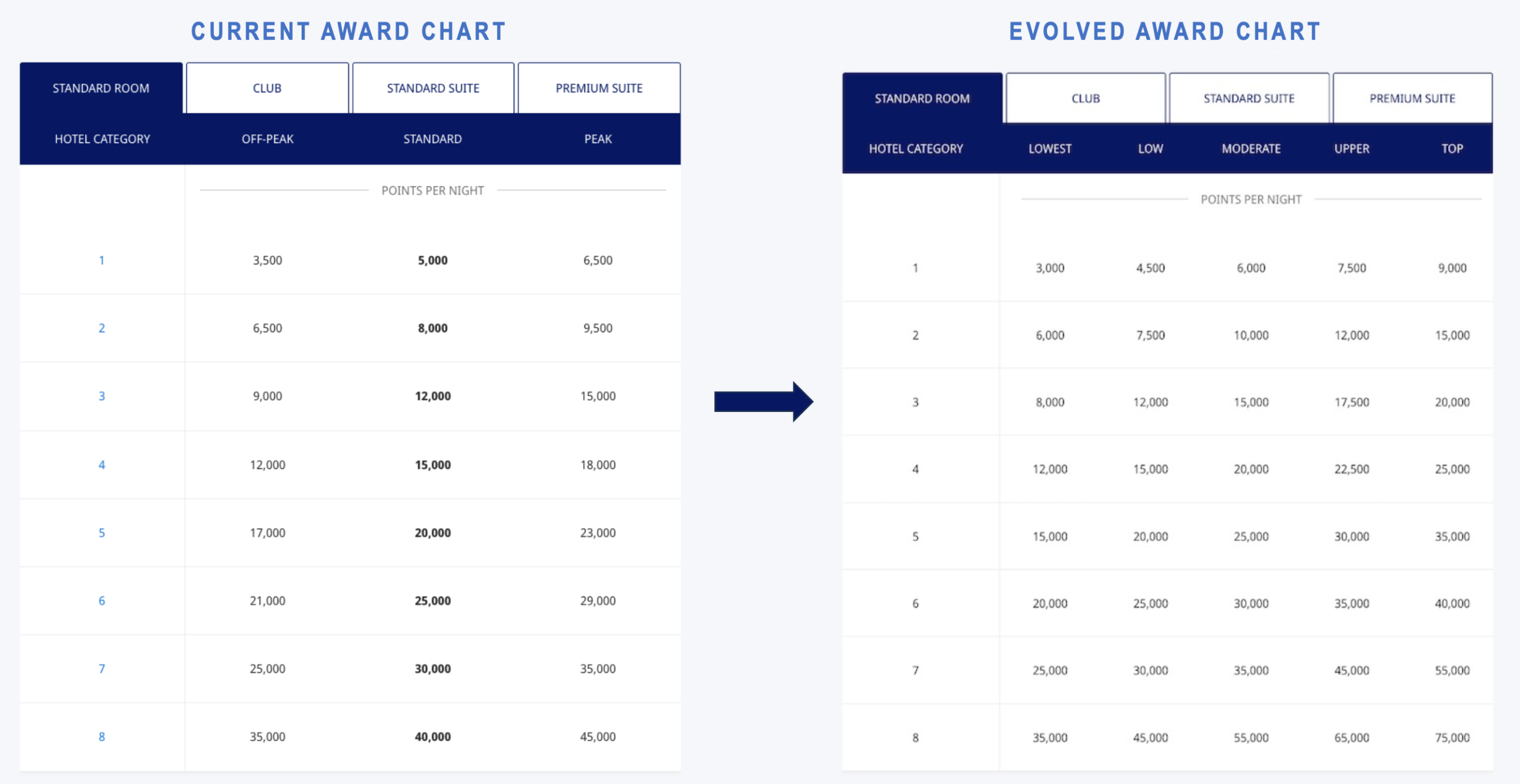
The new chart expands the range of points required within each of the eight existing hotel categories. In the previous model, a Category 8 hotel would cost between 35,000 and 45,000 points. Under the new five-tier structure, the floor remains at 35,000 for the lowest-demand dates, but the ceiling has been raised to a staggering 75,000 points for "top" demand periods. This wider variance gives individual hotels more flexibility to adjust pricing based on seasonal demand, local events, and occupancy levels, often at the expense of the consumer’s purchasing power.
The Impact on Luxury Portfolios
The most severe repercussions of this overhaul are concentrated at the top of the Hyatt portfolio. Category 7 and Category 8 properties, which represent the pinnacle of the brand’s luxury offerings, have seen their "lowest" award tiers become increasingly elusive. According to the data analysis, only 20% to 21% of available nights at these high-end hotels are currently priced in the bottom tier (25,000 to 35,000 points, respectively).
The Park Hyatt Paris-Vendôme serves as a primary example of this pricing surge. Previously, the hotel maintained a predictable range of 35,000 to 45,000 points. Following the update, the 45,000-point rate—formerly the maximum—has become the new baseline for the majority of available dates. On peak dates, such as early August, the price has spiked to 75,000 points per night. This represents a 67% increase overnight for the exact same room. Furthermore, the analysis found that 83% of the bookable dates at this specific property are now more expensive than they were 24 hours prior.
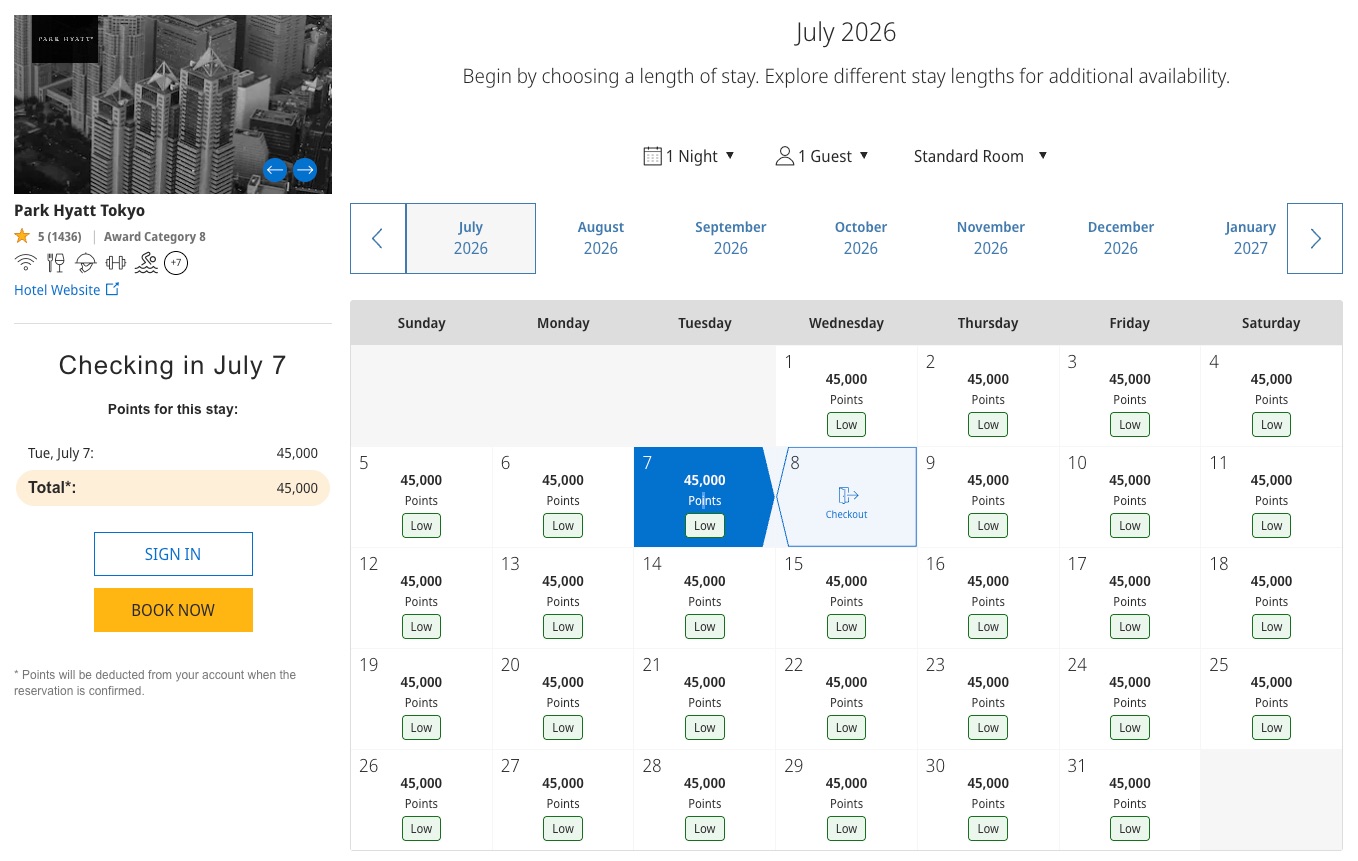
Similar trends are observed at the Park Hyatt Tokyo. For the month of July, every single available night was previously priced at either 35,000 or 40,000 points. Under the new system, every night has been adjusted upward to 45,000 points. These changes suggest a concerted effort to curb the high-value redemptions that have made Hyatt points particularly valuable to holders of transferable currencies like Chase Ultimate Rewards and Bilt Rewards.
Regional Hotspots: Japan and the Maldives
Geographically, Japan has emerged as the market most negatively impacted by the transition. The country has seen a post-pandemic surge in tourism, leading to high cash rates and occupancy. Hyatt appears to have responded by aggressively applying the higher tiers of the new award chart across its Japanese properties.
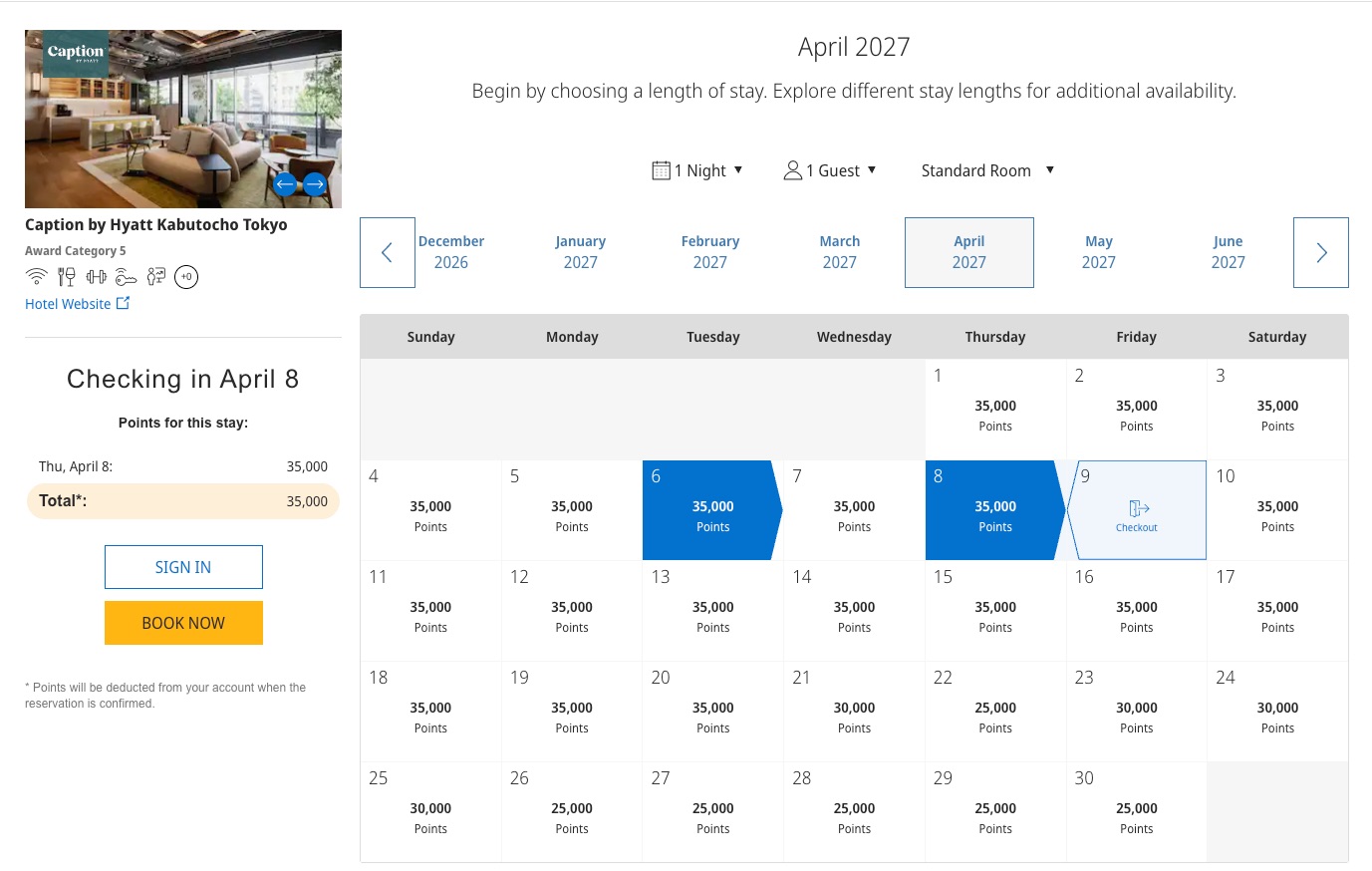
Beyond the luxury segment, mid-tier hotels in Japan are also feeling the pressure. The Caption by Hyatt Kabutocho Tokyo, a Category 5 property, previously capped its award rates at 23,000 points. Under the new five-tier system, travelers looking to book for the spring cherry blossom season can expect to pay 35,000 points per night. More than a third of bookable dates at this property now fall into the top two pricing tiers, both of which exceed the previous peak rate.
In the Maldives, the Alila Kothaifaru provides a clear illustration of the new pricing volatility. While a traveler can still find "lowest demand" nights for 25,000 points during the rainy season, the cost for a stay during the peak winter months now reaches 55,000 points. This represents a more than 100% variance between the cheapest and most expensive nights within the same hotel category.
Mixed Results for the Middle Market
While the top end of the market faces a clear devaluation, the impact on Category 4, 5, and 6 properties is more nuanced. These mid-tier hotels often serve as the "sweet spot" for many travelers, particularly those utilizing Category 1-4 or 1-7 Free Night Awards earned through credit card spend or brand milestones.
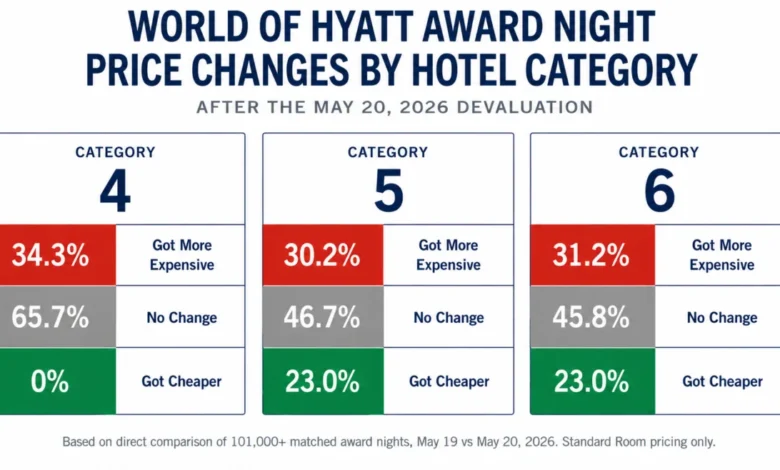
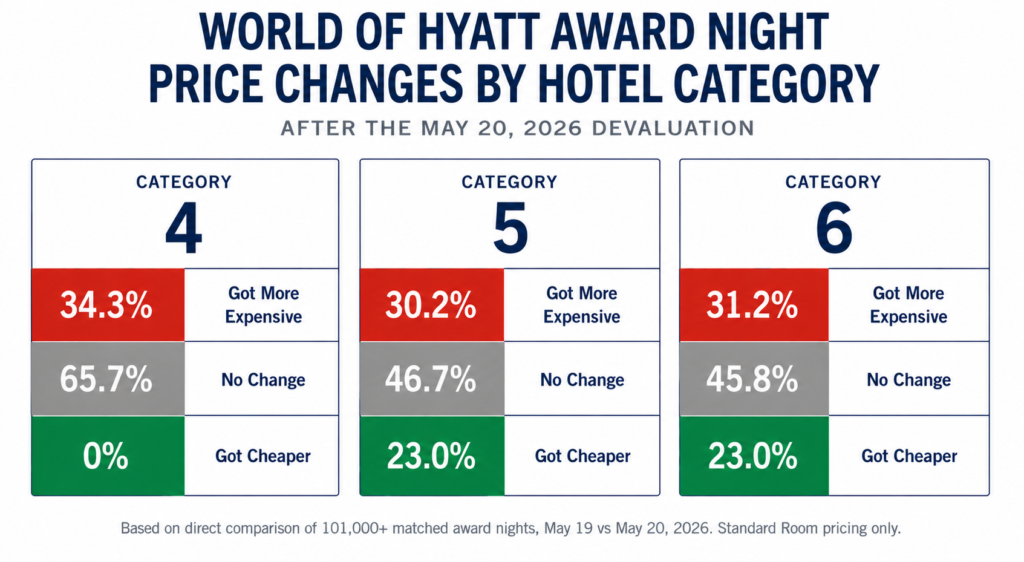
At Category 5 and 6 properties, approximately 25% of available award nights actually saw a decrease in price. For instance, the Hyatt Place Santa Barbara (Category 6) saw its off-peak rate drop from 21,000 to 15,000 points, providing a rare win for budget-conscious travelers. However, Category 4 properties—crucial for the use of standard Hyatt free night certificates—did not fare as well. The analysis found that not a single Category 4 award night became cheaper. Instead, 65.7% of nights remained flat, while 34.3% increased in price. Properties like the Hyatt Regency Seattle and the Hyatt Regency Coral Gables saw their peak rates climb, making them more difficult to justify for point redemptions.
The Myth of Improved Availability
A common justification offered by hotel loyalty programs during devaluations is that higher point requirements will lead to better award availability. By increasing the "cost" of a room, the logic suggests that fewer people will book, leaving more dates open for those willing to pay the premium.
However, the initial data following Hyatt’s changeover contradicts this theory. Overall award availability remained largely stagnant, and in some high-demand sectors, it actually decreased. At Category 8 properties, availability dropped by approximately 4% as the new rates went live. This may be partially attributed to a "pre-devaluation surge," where savvy travelers booked stays at the old rates before the Wednesday deadline, effectively stripping the calendar of available rooms. Nevertheless, there is currently no evidence to suggest that the higher price points have unlocked a significant volume of new award inventory.
Industry Reactions and Corporate Rationale
While Hyatt has not issued an itemized rebuttal to the findings of recent data analyses, the company has previously defended the move as a necessary evolution to manage its growing portfolio. In communications leading up to the change, Hyatt emphasized that the new tiers would allow for more "flexibility" and noted that they would phase in the steepest rates gradually throughout the year.
Corporate spokespeople have historically argued that such changes are essential to compensate hotel owners fairly. When a guest redeems points, the loyalty program reimburses the hotel owner. If a hotel is nearly full, the program often has to reimburse the owner at a rate close to the average daily cash rate. By increasing the point requirements during high-occupancy periods, Hyatt can better align its internal costs with market realities.
Loyalty program members, however, have expressed significant frustration on social media and travel forums. The consensus among frequent guests is that the move diminishes the value of the "Globalist" elite status and reduces the incentive to consolidate hotel stays within the Hyatt ecosystem.
Broader Implications for Travel Loyalty
The World of Hyatt restructuring is indicative of a broader trend in the travel industry toward the "gamification" of loyalty. As programs move away from fixed charts and toward dynamic or multi-tiered models, the burden of finding value shifts increasingly to the consumer. Travelers must now utilize more sophisticated tools and spend more time monitoring calendars to ensure they are not redeeming points at a poor value.
Furthermore, this change places more pressure on transferable point programs. When Hyatt points were worth a consistent 2.0 cents each, transferring points from a credit card was a straightforward decision. With the new volatility, that value proposition becomes less certain.
As the industry watches Hyatt’s transition, the long-term impact on member retention remains to be seen. While the program still offers significant perks for its top-tier elites—such as waived resort fees and free breakfast—the increased cost of the rooms themselves may lead some travelers to diversify their loyalty. For now, the "doomsday" predicted by many has arrived, leaving Hyatt loyalists to navigate a landscape where their points simply do not go as far as they once did.