The Ultimate Guide to Using Your Smartphone and Mobile Data in Europe Without Breaking the Bank


Staying connected while traveling across Europe has evolved from a luxury into an absolute necessity for modern globetrotters. Whether navigating historic cobblestone streets via digital maps, translating foreign languages on the fly, booking high-speed rail tickets, or sharing memories on social media, a reliable high-speed data connection is indispensable. However, utilizing an iPhone or Android smartphone abroad can quickly transform from a minor convenience into a confusing and exceptionally expensive ordeal for travelers who fail to plan ahead.
With international telecommunications markets varying drastically between North America and the European Union, understanding the underlying infrastructure, carrier agreements, and cost structures is critical. This comprehensive analysis breaks down everything international travelers need to know to secure affordable, high-speed mobile data, evaluate physical SIM versus eSIM technologies, and implement practical strategies for managing connectivity expenses while abroad.
Smartphone Compatibility and Network Infrastructure in Europe
For the vast majority of international travelers originating from North America, device compatibility is no longer a primary hurdle. Virtually all modern smartphones manufactured after 2016, including the iPhone 7 series and newer models, are fully equipped to interface seamlessly with Europe’s advanced mobile telecommunications infrastructure. Network bands utilized by European carriers align well with contemporary multi-band devices, meaning users rarely experience hardware-level connectivity issues upon landing.
Upon arrival at a European destination, major American telecommunications providers—such as Verizon, AT&T, and T-Mobile—maintain established commercial partnerships with local European operators. Consequently, inbound devices will typically connect automatically to a host network once international roaming settings are enabled on the user’s handset.

Despite this seamless handshake between networks, relying on standard carrier-provided international plans often presents significant financial and operational drawbacks. Major US carriers frequently levy steep daily roaming fees, restrict data volumes, or throttle connection speeds to legacy 3G or 2G networks. As a result, consumers frequently discover that expensive international packages fail to deliver the performance required for modern data-intensive applications. To circumvent these limitations, an increasing number of travelers opt for prepaid European eSIM and physical SIM data plans provided by third-party vendors or regional operators, which routinely offer double the data allowances at a fraction of the cost.
Evaluating American Carrier International Roaming Options
For travelers prioritizing convenience above all else, purchasing an international add-on through an existing domestic carrier remains the most straightforward path to connectivity. Major providers make it easy to upgrade accounts via online portals or customer service applications, allowing the device to register on a European network with minimal user intervention.
However, financial implications can be severe. Standard daily international passes from major domestic carriers typically start at a baseline of $10 per day, with some specialized packages scaling up to $15 daily while capping high-speed allotments at modest thresholds, such as 100 megabytes. Beyond these caps, speeds are frequently throttled down to sluggish 3G or 2G rates. Furthermore, traditional voice calls can accrue charges averaging $1 per minute, while standard SMS text messages may cost upwards of $25 cents per transmission.
Industry experts and frequent travelers frequently note a persistent discrepancy between marketed capabilities and actual performance. Although major domestic carriers frequently advertise 4G LTE or even 5G availability under international roaming agreements, end-users routinely report being throttled to legacy data speeds. At 3G speeds, essential travel tools such as real-time GPS navigation, web-based translation, and digital transit ticketing can become frustratingly sluggish or entirely unusable.
Carrier-Specific Breakdown: T-Mobile, Verizon, and AT&T
T-Mobile established a distinct market advantage several years ago by introducing complimentary, unlimited international data and texting across select mid-tier and premium consumer plans, alongside discounted calling rates in over 210 countries. Subscribers utilizing plans such as Magenta or Magenta MAX receive unlimited text and data privileges, though high-speed allotments are typically capped at 5GB of 4G LTE data, after which speeds drop to unlimited 2G throughput. While 5GB is generally sufficient for brief itineraries focusing on light web browsing, email management, and occasional map usage, extended vacations will quickly exhaust this allowance. To secure additional high-speed capacity, customers must purchase supplementary International Passes.
Verizon occupies a less favorable position for international budget-conscious travelers. Its standard international offerings involve mandatory daily fees that scale rapidly over multi-week itineraries, delivering relatively conservative data thresholds before initiating speed reductions. While coverage reliability is generally strong due to robust roaming partnerships, the cost-per-gigabyte ratio remains exceptionally high compared to local European alternatives.
AT&T offers structured international day passes that mirror its primary domestic competitors. While the service provides predictable billing structures by capping daily fees after a specific number of days within a single billing cycle, the cumulative cost over a two-to-three-week European holiday can easily exceed the price of a dedicated regional data plan by several hundred dollars.
The Rise of Prepaid eSIMs and European SIM Cards
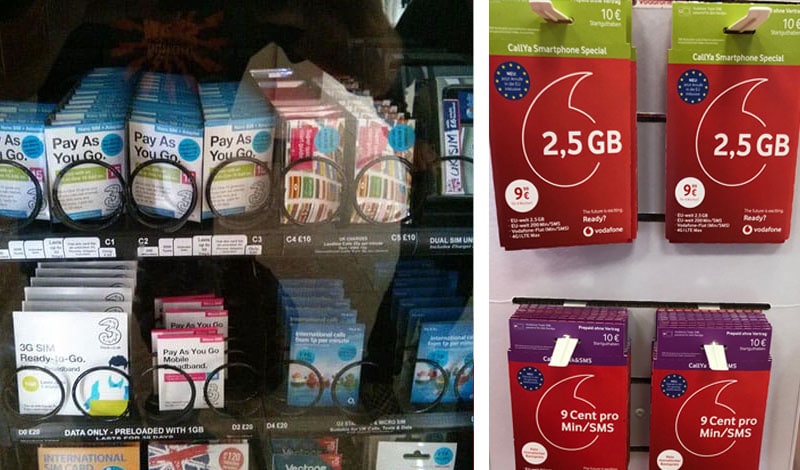
To bypass the inflated costs associated with domestic carrier roaming, savvy travelers increasingly turn to prepaid European SIM cards or digital eSIM solutions. The European mobile telecommunications market is characterized by fierce regulatory oversight and intense corporate competition, driving prices down while dramatically expanding data allowances.
Under European Union regulations, international roaming surcharges within member states were officially abolished. Consequently, a prepaid SIM card or eSIM purchased in one EU nation will function seamlessly across other member territories without incurring additional cross-border fees. Consumers can routinely secure prepaid bundles offering 20GB or more of high-speed data alongside local talk and text for approximately €20 to €30.

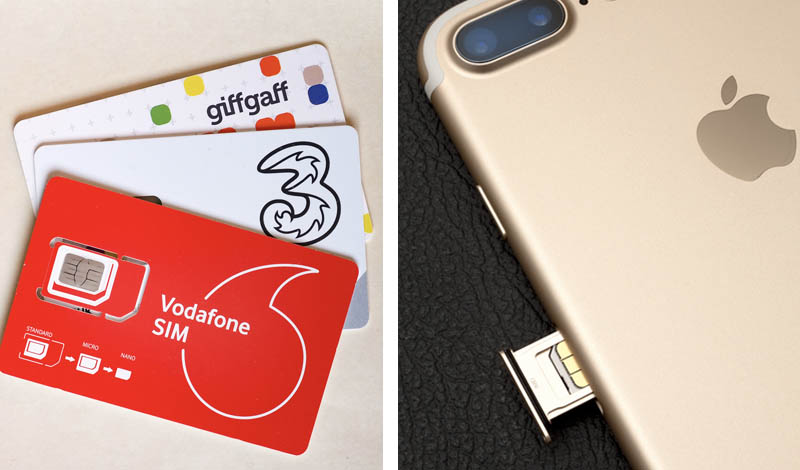
The primary operational hurdle of traditional physical SIM cards involves the logistics of acquisition, device configuration, and potential language barriers when seeking in-person support. Additionally, swapping a physical domestic SIM card for a foreign variant temporarily replaces the user’s domestic phone number, rendering traditional voice calls and SMS verification codes inaccessible unless the user maintains a dual-SIM device.
The Technological Shift Toward eSIM Integration
The rapid proliferation of embedded SIM (eSIM) technology has largely resolved the logistical friction associated with traditional physical cards. An eSIM is a digital SIM profile embedded directly into the smartphone’s hardware, allowing users to download and activate a cellular plan remotely via a QR code or provider application.

Industry analysts emphasize several distinct advantages of eSIM deployment for international travel. Because eSIM profiles exist purely in software, users can purchase, install, and activate regional data plans before departing their home countries. Furthermore, eSIM technology enables dual-SIM functionality on compatible smartphones. Travelers can maintain their primary domestic SIM active for emergency text verifications and incoming banking alerts while simultaneously utilizing a dedicated European eSIM data profile for navigation and web browsing.
Prominent third-party digital providers, such as SimOptions, Holafly, and various regional aggregators, offer specialized European packages tailored to diverse travel durations and data consumption patterns.
Unlocking Mobile Devices Prior to Departure
A critical prerequisite for utilizing foreign SIM cards or international eSIMs is ensuring that the smartphone is factory-unlocked. Many North American mobile operators historically utilized network locking software to restrict devices to their proprietary infrastructure until installment contracts or lease agreements were fully satisfied.
Travelers intending to use third-party SIM cards must contact their domestic carrier well in advance of departure to request an official device unlock. Carriers maintain specific eligibility criteria, frequently requiring that the device be fully paid off and associated with an account in good standing. Because the administrative review and unlocking process can occasionally encounter bureaucratic delays, telecommunications experts strongly advise initiating this procedure at least two weeks prior to travel.
In scenarios where a carrier refuses to unlock a device due to active financing agreements, alternative strategies must be deployed. Many seasoned travelers repurpose an older, fully unlocked secondary smartphone exclusively for international travel. Older devices are ideally suited for basic navigational and communication tasks, mitigating the financial and emotional anxiety associated with losing or damaging a primary handset while navigating unfamiliar urban centers. Alternatively, travelers may choose to rely strictly on localized Wi-Fi hotspots and camera functionality while keeping their locked primary device safely stowed.
Leading Prepaid SIM and eSIM Providers for Europe
Selecting the optimal data provider depends heavily on itinerary length, anticipated data consumption, and device capabilities. Several standout options dominate the contemporary travel telecommunications market:
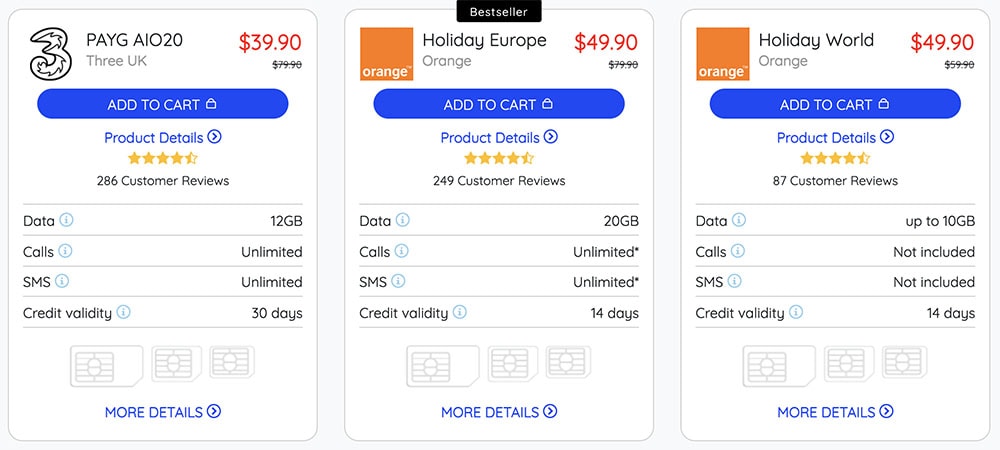
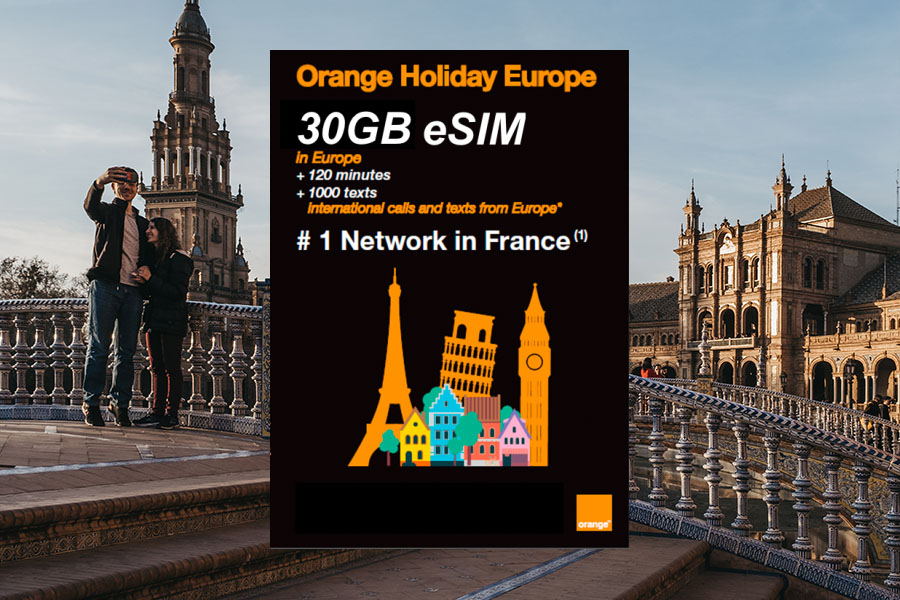
Orange Holiday Europe Prepaid SIM/eSIM: Widely regarded as the benchmark for comprehensive European travel packages, Orange provides robust coverage through one of France’s premier telecommunications networks. Standard packages frequently include generous data allocations—such as 20GB of 4G/5G data valid for 14 days—alongside international voice minutes and text messaging originating from an assigned European number. For extended itineraries, supplementary data top-ups can be purchased digitally.
Bouygues Telecom Vacation Prepaid Plan: Operating similarly to major French competitors, Bouygues offers robust multi-country data bundles designed specifically for international visitors. Their digital eSIM variants provide substantial data thresholds over extended validation windows, ensuring reliable coverage across major urban and rural corridors within the EU.
Holafly Unlimited Data eSIM: Holafly has carved out a distinct market niche by offering unlimited data eSIM packages configured for specific day counts ranging from 5 to 90 days. Ideal for heavy media consumers who frequently stream video or upload large content files, Holafly plans eliminate the anxiety of data caps. Recent updates to their European offerings also incorporate an assigned phone number facilitating limited voice calling capabilities across select regions.
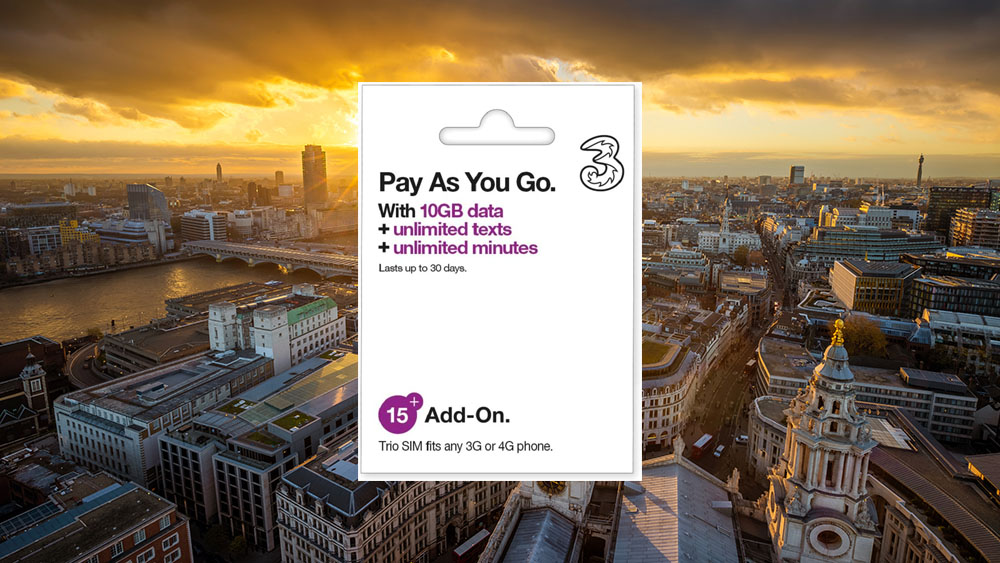
Three UK Pay-As-You-Go Plans: Representing another major European carrier, Three offers competitive short- and long-term data bundles characterized by extended validation windows—often spanning 30 days—making them exceptionally cost-effective for leisurely, multi-week backpacking excursions across the continent.
Practical Strategies for Minimizing Data Consumption Abroad
Even with generous data packages, proactive data management remains essential to prevent unexpected depletion caused by background synchronization and cloud backups. Modern operating systems continuously transmit telemetry, photo libraries, and application updates in the background unless explicitly restricted.
To optimize data longevity, travelers should implement several foundational adjustments:

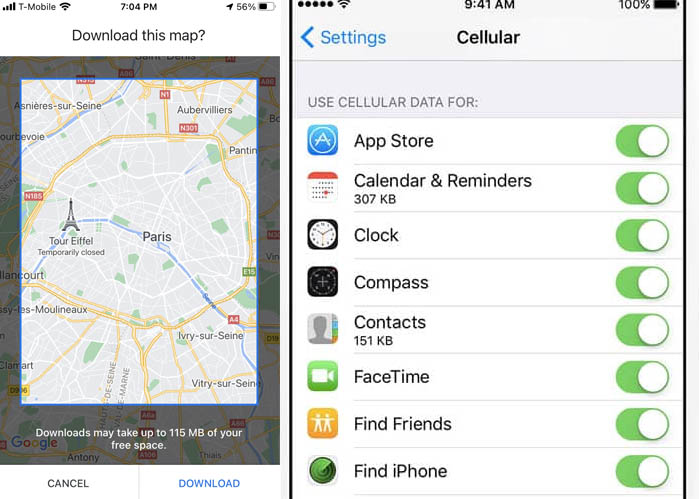
- Restrict Background App Refresh: Manually disable background data access for bandwidth-heavy social media, cloud storage, and video-streaming applications within the smartphone’s system settings.
- Utilize Offline Navigation: Leverage applications like Google Maps to download comprehensive regional maps prior to departure. Because GPS hardware functions independently of cellular data networks, downloaded maps allow for accurate real-time pedestrian and vehicular navigation without consuming cellular bandwidth.
- Prioritize Wi-Fi Calling and Messaging: Utilize internet-based communication platforms such as WhatsApp, FaceTime, and iMessage over available secure Wi-Fi networks to conduct voice calls and message contacts without incurring international toll charges.
- Invest in Portable Power Reserves: Intensive utilization of location-based mapping software, high-brightness displays, and continuous cellular data polling accelerates battery depletion. Carrying a compact, high-capacity portable external battery charger—such as an Anker PowerCore unit—ensures uninterrupted device uptime throughout long days of sightseeing.
Conclusion
Navigating the complexities of international telecommunications requires careful preparation, realistic budgeting, and an objective assessment of technological alternatives. By proactively unlocking devices, evaluating the financial trade-offs between domestic carrier roaming passes and regional prepaid eSIMs, and implementing prudent data-saving habits, international travelers can ensure seamless, reliable connectivity throughout their European journeys while avoiding unexpected financial surprises upon their return.