Beyond the Classroom: How International Travel and Cultural Immersion Shape Childhood Development and Resilience

The intersection of childhood education and experiential learning has long been a subject of study for developmental psychologists, educators, and sociologists alike. While traditional classrooms remain the cornerstone of foundational knowledge acquisition—delivering mathematics, literature, and formal sciences through standardized curricula—a growing body of educational research points to the profound developmental benefits of experiential education outside the familiar confines of home. Chief among these immersive experiences is family travel, which modern educators and developmental experts identify as a powerful catalyst for building emotional resilience, global literacy, and psychological adaptability in children and adolescents.

According to data compiled in the Family Travel Association’s 2025 U.S. Family Travel Survey, the perceived benefits of travel among parents are both widespread and distinct. Approximately 71 percent of surveyed parents with children aged seven and older reported that traveling with their children substantially broadened their worldview, while 61 percent noted a measurable increase in their children’s curiosity regarding foreign cultures. Furthermore, 58 percent observed significant gains in self-confidence among their offspring. These findings suggest that leisure travel functions as an organic laboratory for cultivating complex life skills that are notoriously difficult to replicate within the predictable, low-stakes environment of a standard classroom.
To understand the mechanics of this developmental phenomenon, education experts emphasize the shift from passive observation to active participation. L-Taundra Everhart, an education specialist and Master of Education holder with over two decades of public education experience, notes that while schools intentionally design programs to foster problem-solving, emotional regulation, and resilience, these attributes are typically exercised in controlled settings. Travel, conversely, thrusts young people into real-world scenarios where outcomes are unscripted, schedules fluctuate, and linguistic or cultural barriers must be negotiated in real time.

The integration of children into the logistical realities of travel represents a fundamental shift in parenting and pedagogical strategies over the past several decades. Historically, family vacations were designed primarily around adult itineraries or passive entertainment, with children acting as mere passengers. Contemporary travel philosophies, however, increasingly view children as active stakeholders in the journey. Whether navigating complex metropolitan transit systems, budgeting daily allowances in foreign currencies, or deciphering unfamiliar foreign scripts, young travelers are routinely handed incremental responsibilities that challenge their self-perception and expand their behavioral boundaries.
The Developmental Timeline of Experiential Learning: From Early Childhood to Adolescence
The cognitive and emotional impact of travel evolves systematically across different developmental stages of childhood. In early childhood, typically spanning ages zero to five, travel primarily introduces sensory novelty. Infants and toddlers exposed to shifting environments, diverse sounds, and unfamiliar linguistic cadences begin developing neural pathways associated with sensory adaptability long before they retain conscious, episodic memories of the locations visited.
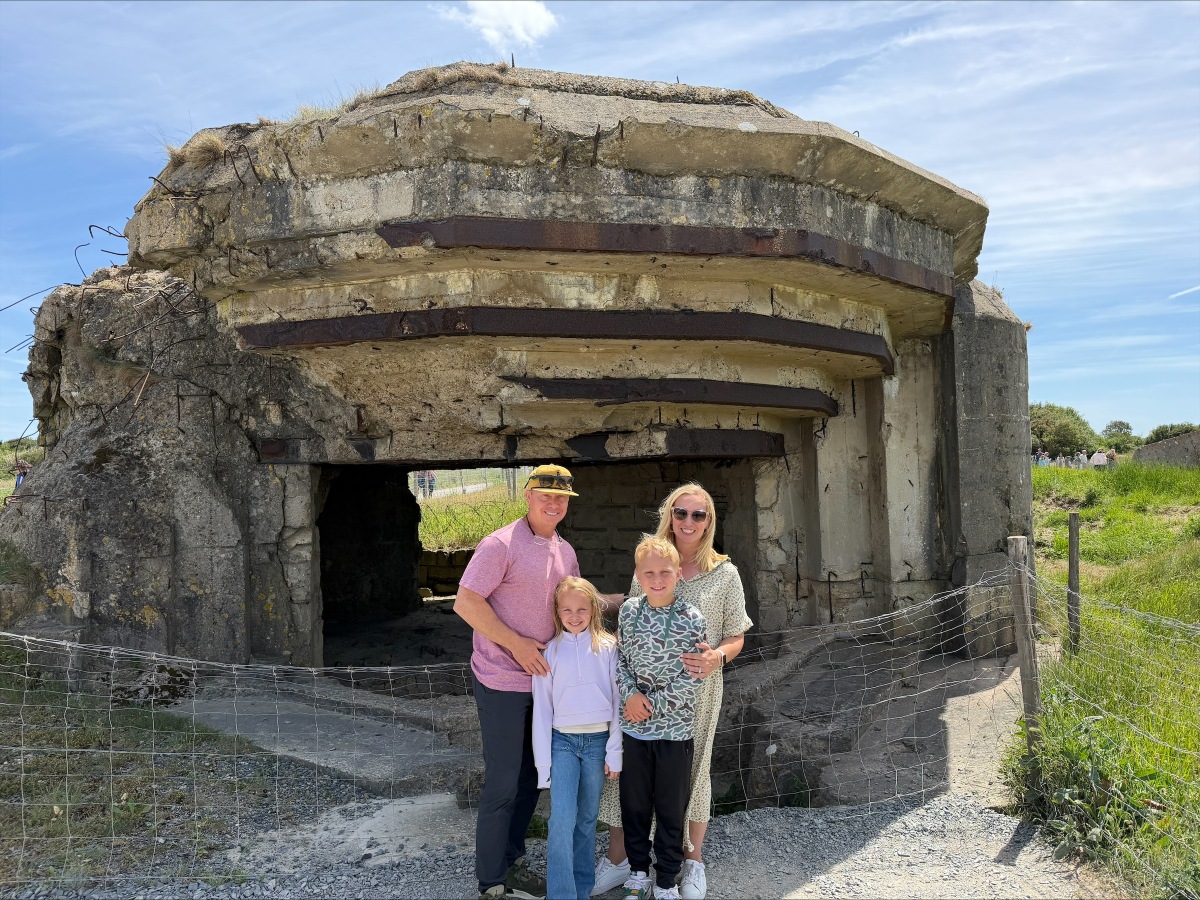
As children enter middle childhood—roughly ages six to twelve—travel transitions into an active exercise in cognitive mapping and social awareness. This is the developmental window wherein children begin to grasp abstract geopolitical concepts, historical chronology, and cultural relativism through tangible encounters. Standing before the historic ruins of the Roman Colosseum or examining a preserved World War II bunker along the coast of Normandy transforms abstract textbook chapters into concrete historical realities. Educational psychologists refer to this as anchored learning, where intellectual concepts are permanently linked to specific spatial and emotional experiences.

By adolescence, roughly ages thirteen to eighteen, travel serves as a crucible for identity formation and interpersonal communication. Teenagers immersed in foreign environments frequently find themselves stripped of their familiar social scaffolding—peer groups, local status symbols, and routine creature comforts. Negotiating this discomfort fosters authentic autonomy. Extended journeys, particularly those involving long transit hours or unstructured itineraries, frequently yield spontaneous, reflective dialogues between parents and teenagers that rarely occur within the hyper-scheduled confines of modern suburban life, which is often dominated by academic tutoring, competitive athletics, and digital distractions.
Core Competencies Fostered Through Immersive Travel

Education specialists and seasoned family travel advocates have identified several specific developmental competencies that are uniquely stimulated by navigating unfamiliar domestic and international landscapes:
-
Adaptive Problem-Solving and Crisis Mitigation
Travel is inherently unpredictable. Flight delays, sudden weather shifts, missed rail connections, and language barriers inevitably disrupt even the most meticulously planned itineraries. When Plan A collapses, children witness firsthand the process of formulating a functional Plan B. Educational experts emphasize that experiencing manageable adversity—such as finding an alternative route after missing a train or locating a new dining option when an establishment is closed—teaches children that temporary frustration is not a terminal failure. Overcoming these hurdles engenders a collective familial relief and instills a lasting internal narrative: "We encountered a problem, and we solved it."
-
Cultivating Comfort with the Unfamiliar
In modern domestic settings, children operate within a high degree of predictability. Bedtimes, meal compositions, domestic layouts, and daily commutes are standardized. Travel systematically dismantles these baseline assumptions. New sleeping quarters, strange culinary ingredients, unfamiliar sanitary facilities, and rapid cultural shifts force the juvenile brain to calibrate its expectation of normal. Regularly confronting the unfamiliar reduces baseline anxiety regarding uncertainty, rendering children demonstrably more willing to embrace new academic subjects, social circles, and extracurricular challenges later in life. -
Autonomous Self-Efficacy ("I Can Do This")
Handing a child tangible operational responsibilities—such as holding the family’s transit passes, reading a paper street map to locate a specific monument, ordering a meal in a local bakery, or asking a concierge for directions—produces a profound psychological shift. Industry experts who observe family dynamics across various travel modalities note that children who are permitted to independently navigate urban centers or rural expanses display a dramatic acceleration in resourcefulness. The resulting self-efficacy leaves an indelible impression on the developing psyche, reinforcing personal autonomy.
-
Decentering the Self: Challenging the Universal "Normal"
Ethnocentrism is a natural cognitive default for young children, who initially use their immediate household and community as the universal benchmark for human existence. International travel disrupts this insular perspective by exposing youth to disparate architectural styles, religious practices, family structures, and socio-economic realities. Witnessing alternative ways of organizing human society communicates a powerful, wordless lesson: there is no singular correct method for structuring daily life. This realization forms the bedrock of genuine cultural empathy and global citizenship. -
Mastery of Procedural Competence and Executive Functioning
The logistics of modern transit—managing baggage, adhering to strict security protocols, monitoring departure boards, and pacing physical endurance over miles of walking—require sophisticated executive functioning. Involving children directly in these mundane yet essential administrative tasks transforms them from passive dependents into engaged participants. These micro-skills exercise the prefrontal cortex, enhancing organizational capabilities, patience, and situational awareness.
Quantitative Data and Parent Observations
The empirical support for these developmental assertions extends beyond anecdotal observations from seasoned travelers. Comprehensive surveys conducted within the tourism and family education sectors consistently demonstrate that parents recognize tangible, long-lasting shifts in their children following significant travel experiences. Beyond the aforementioned metrics from the Family Travel Association regarding broader worldviews and cultural curiosity, longitudinal observations from family travel specialists indicate that youth exposed to regular travel exhibit higher adaptability indices when transitioning to new schools, entering tertiary education, or entering the global workforce.

Furthermore, the ubiquity of digital technology has introduced a modern imperative for experiential travel. With children and adolescents spending unprecedented hours interacting with screens, virtual environments, and algorithmic content, travel provides an inescapable, high-stimulus analog reset. While device management is an ongoing challenge in contemporary parenting, physical immersion in majestic natural environments—such as transitioning from the sensory overload of urban commercial centers to the profound silence of the Grand Canyon or the Swiss Alps—compels youth to look up, engage with tangible reality, and develop a quiet, reflective appreciation for the natural world.
Implications for Modern Parenting and Educational Policy
As educational paradigms shift toward holistic development, emotional intelligence, and 21st-century workforce readiness, the role of experiential learning outside the classroom is receiving renewed institutional attention. While formal schooling remains irreplaceable for structured knowledge transfer, policymakers and educators increasingly acknowledge that the cognitive resilience, cross-cultural competence, and adaptive problem-solving skills forged through travel are vital economic and social assets.
For families, the mandate does not necessarily require opulent international expeditions or continuous global relocation. The developmental dividends of travel can be harvested through regional road trips, domestic cultural explorations, or weekend excursions into unfamiliar socio-economic environments. The critical variable is not the financial cost or the geographic distance covered, but the intentionality of the engagement. By relinquishing rigid parental control, inviting children to participate in logistical problem-solving, and embracing the inevitable hiccups of the road, parents can transform standard leisure trips into enduring masterclasses in human resilience and global awareness.