U.S. Treasury Secretary Scott Bessent Signals Potential Sanctions on Chinese AI Firms for Intellectual Property Theft

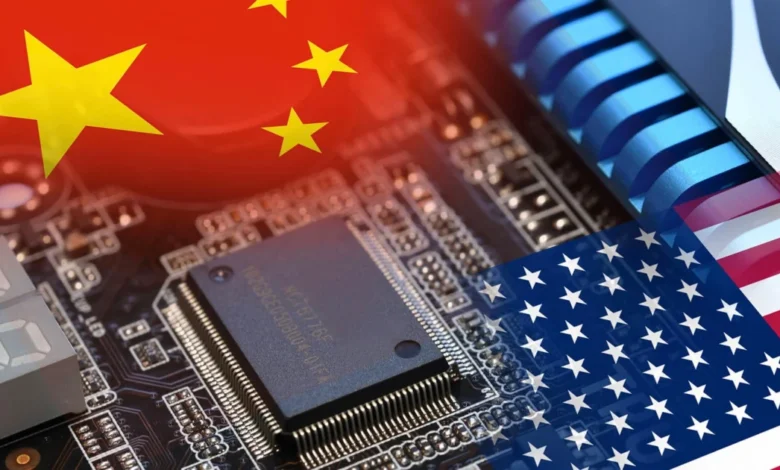
The United States is escalating its scrutiny of China’s rapidly advancing artificial intelligence sector, with Treasury Secretary Scott Bessent issuing a stern warning of potential sanctions against Chinese AI firms accused of intellectual property theft from American technology companies. This declaration signals a significant hardening of the U.S. stance in an intensifying global race for AI dominance, particularly as Chinese models demonstrate increasing sophistication, even when facing restrictions on cutting-edge hardware.
Bessent articulated the administration’s position during an interview on Fox Business yesterday, stating, "This administration supports open source models, but what we do not support is IP theft. If we see, especially, that overseas models are stealing from our great companies, we have the ability to sanction them because of this theft." His remarks underscore a growing concern within the U.S. government and the tech industry that China may be leveraging illicit means to accelerate its AI development, potentially undermining American innovation and market leadership.
The timing of Bessent’s statement is particularly noteworthy, coinciding with the recent release of Moonshot AI’s Kimi K3 model. This new Chinese AI offering has garnered attention for its impressive performance capabilities, achieved without direct access to the most advanced, state-of-the-art computer chips that are primarily manufactured by U.S. firms and their allies. This development has amplified fears among American companies that their proprietary AI technologies could be effectively replicated and deployed by Chinese competitors, potentially disrupting the established technological hierarchy.
A Growing Tide of Accusations and Concerns
The threat of sanctions follows a period of mounting apprehension expressed by American technology giants. For months, leading U.S. companies have been alerting the White House to the potential for their AI innovations to be copied and released as open-source projects by foreign entities. This proactive engagement highlights the industry’s deep-seated worries about the security of their intellectual property in the fast-paced and often opaque world of AI development.
A significant development in this ongoing saga occurred earlier this year when Anthropic, a prominent U.S. AI research company, publicly accused Moonshot AI and two other Chinese AI firms – DeepSeek and MiniMax – of "illicitly" extracting the capabilities of its advanced Claude AI model. This practice, known as "distillation," involves using the outputs of a large, sophisticated "teacher" model to train a smaller, more efficient "student" model. While distillation is reportedly a common technique within the AI industry, the manner in which it was allegedly employed by these Chinese firms has drawn sharp criticism and legal scrutiny.
As Gizmodo aptly described the process, it’s akin to a student model learning by directly observing and mimicking the performance of a teacher model. However, the accusation from Anthropic suggests that this learning process may have bypassed legitimate licensing or development pathways, raising serious questions about intellectual property infringement. The presence of watermarks from American large language models (LLMs) on Chinese AI outputs, as noted by Secretary Bessent, further corroborates these concerns and paints a concerning picture of potential IP misappropriation.
Echoes of Past Disputes and a Complex Landscape
The controversy surrounding AI intellectual property theft is not entirely novel. The discovery of American LLM watermarks on Chinese AI models serves as a potent reminder of similar disputes in the broader digital content landscape. A notable parallel can be drawn to the legal battle between Getty Images and Stability AI. Getty Images alleged that its copyrighted images, complete with watermarks, were being reproduced in outputs generated by Stability AI’s Stable Diffusion model. This past conflict underscores the persistent challenges of protecting digital assets in an era of rapidly advancing generative AI.
The debate over AI development and intellectual property also exposes an inherent irony, particularly for those within the creative industries who have long voiced concerns about their own work being used without permission to train AI models. The very companies now decrying the alleged theft of their AI capabilities are, in some instances, part of an industry that has faced similar accusations.
Microsoft CEO Satya Nadella, a key figure in the AI landscape, recently highlighted this perceived hypocrisy. In a public statement on X (formerly Twitter), Nadella remarked, "While the great innovation that comes from model providers having fair use rights to train models on public data is needed, I find it ironic that the status quo is to then turn around and impose restrictive terms on distillation." His comment suggests a complex and perhaps contradictory environment where companies advocate for broad access to data for their own development while seeking to restrict the methods by which others can learn from their creations.
A Chronology of Escalating Tensions
The current U.S. government stance represents an escalation of a developing trade and technology dispute. While specific dates of initial accusations are sometimes obscured by internal industry discussions, the public and governmental pronouncements have become more pronounced in recent months.
- Early 2026 (Estimated): Anthropic reportedly makes accusations against Moonshot AI, DeepSeek, and MiniMax regarding the illicit extraction of Claude’s capabilities. This marks a significant public airing of concerns about distillation practices.
- Mid-2026: U.S. tech companies begin to more vocally warn the White House about the potential for widespread IP theft of AI technologies by foreign entities, particularly in the context of open-source releases.
- July 20, 2026 (Reported by Axios): News emerges that the U.S. government is contemplating a comprehensive ban on Chinese open-source AI models, signaling a potential shift towards more aggressive policy measures.
- July 21, 2026 (Reported by TechCrunch): American companies continue to emphasize their concerns to the White House regarding the potential for foreign firms to copy and release their AI technology as open source.
- July 22, 2026 (Reported by Fox Business & Gizmodo): U.S. Treasury Secretary Scott Bessent issues a direct threat of sanctions against Chinese AI firms engaged in intellectual property theft. He also notes the discovery of American LLM watermarks on Chinese models.
The Broader Geopolitical and Economic Implications
The intensifying U.S.-China AI rivalry has profound implications that extend far beyond the technology sector. Artificial intelligence is widely recognized as a foundational technology for future economic growth, national security, and global influence. The ability to lead in AI development is seen as critical for maintaining a competitive edge in areas ranging from defense and cybersecurity to healthcare and advanced manufacturing.
The U.S. Treasury’s threat of sanctions, and the broader discussion of banning Chinese open-source models, highlights the intersection of national security concerns and economic policy. Sanctions, if imposed, could disrupt supply chains, limit market access for Chinese AI firms, and potentially trigger retaliatory measures from Beijing. This could lead to a further bifurcation of the global technology landscape, with diverging standards, protocols, and ecosystems emerging in the U.S. and China.
Furthermore, the debate over open-source AI and distillation touches upon fundamental questions about innovation, fair competition, and the future of intellectual property in the digital age. While proponents of open-source AI emphasize its role in democratizing access to technology and fostering rapid development, concerns about IP protection and the potential for exploitation remain significant.
The U.S. government’s posture, as articulated by Secretary Bessent, suggests a willingness to use economic levers to protect its technological interests. The coming days and weeks will be crucial in determining the specific actions the Trump administration will take, and how these actions will shape the trajectory of global AI development and U.S.-China technological relations. The outcome of these deliberations could set precedents for intellectual property enforcement and competition in the burgeoning field of artificial intelligence for years to come.
Related posts: