The 2026 summer season on the Greenland Ice Cap has officially concluded, marked by the successful east-to-west traverses of two high-profile expeditions. While the majority of polar adventurers prefer the established window of May—when consistent light, stable temperatures, and logistical support from other teams are at their peak—this year’s late-summer participants faced the unique, volatile challenges of an environment in flux. Led by the guiding expertise of Ousland-Colliard and a specialized military contingent, these teams have demonstrated that while the Greenland interior is becoming more accessible, the physical and psychological toll of crossing the world’s second-largest ice mass remains immense.
The Ousland-Colliard Traverse: A Test of Resilience
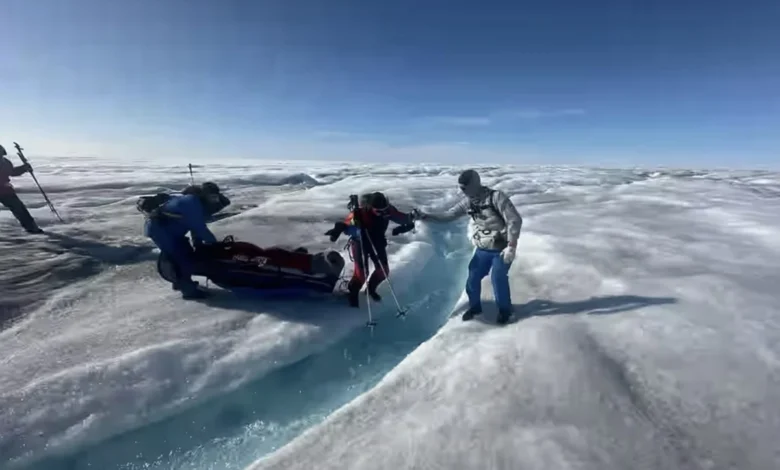
The expedition led by Angus Staples, representing the renowned Ousland-Colliard guiding firm, set off from the East Greenland hub of Tasiilaq on August 15. The team, consisting of four clients, faced immediate environmental hurdles that are increasingly typical of late-season travel. Unlike the frozen, solid ground often encountered in spring, the team began their journey by navigating heavily crevassed terrain and complex river systems.
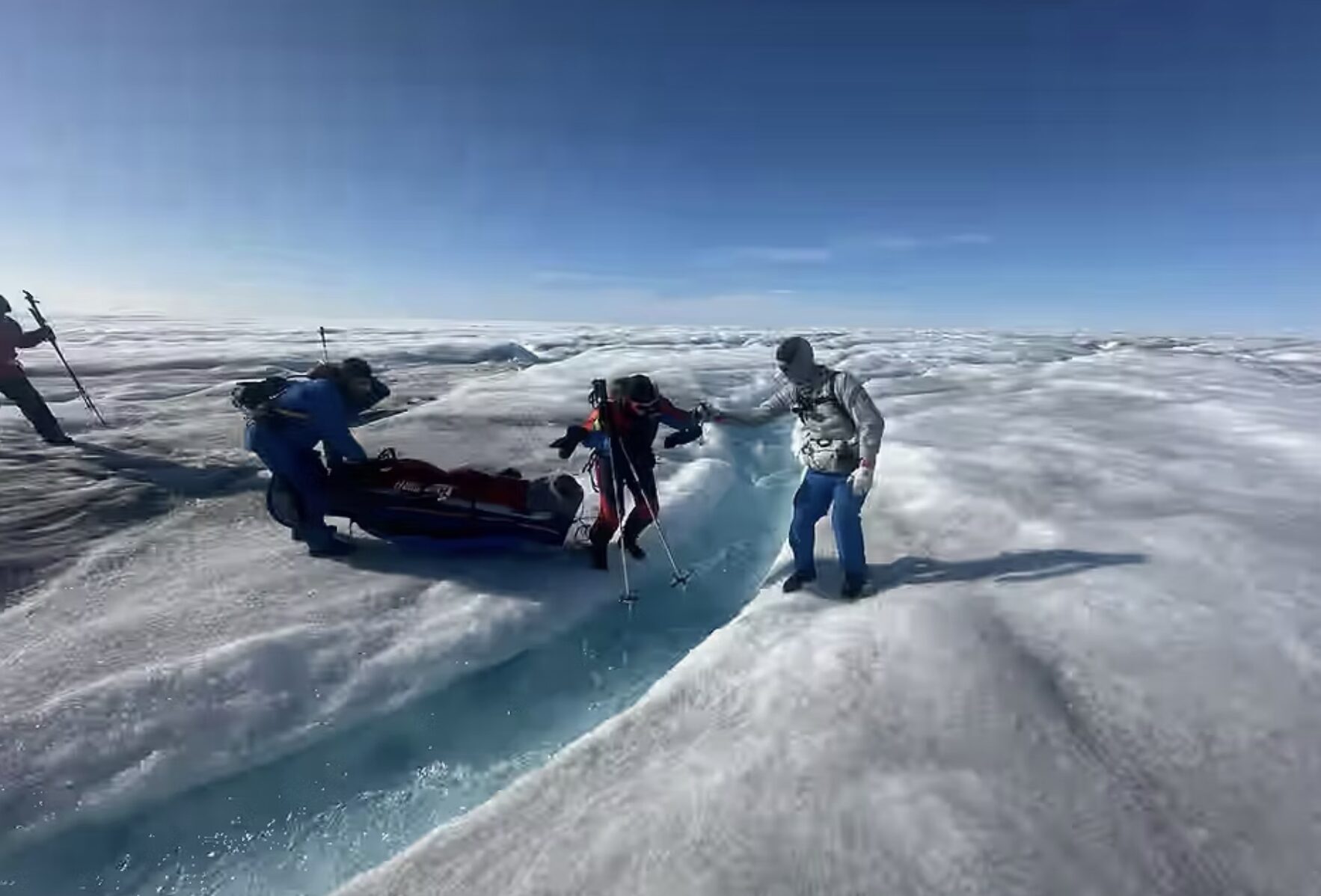
For the first five days, the expedition was defined by slow, methodical progress. As the ice sheet’s peripheral glaciers thin due to seasonal melting, the "ice ridges"—some reaching over a meter in height—forced the team to utilize unconventional navigation strategies. The crux of the early journey occurred on the sixth day, when a massive, impassable river system required the group to engage in collective labor, manhandling their heavy supply sleds across shifting, marshy ice.
Staples’ blog documented the transition from the chaotic, watery coastal fringe to the steady, monotone expanse of the high plateau. The psychological shift was as significant as the physical one; after reaching the ice sheet proper, the team traded the sight of distant mountain peaks for a horizon of absolute white. The climb to the high point of 2,500 meters was achieved by day 19, a milestone that signaled a crucial change in the expedition’s rhythm. According to the team’s logs, the transition from the wind-buffeted eastern slopes to the more predictable, though equally grueling, western descent allowed for increased daily distances, with the group consistently covering 20km in 10-hour shifts.
The Greenland Legacy: Honoring Historical Routes
While the Ousland-Colliard team focused on modern logistical efficiency, the "Greenland Legacy" expedition, led by Tony Lancashire and comprised of members from the UK armed forces, opted for a journey rooted in historical significance. The eight-man team, including notable adventurers Josh Bakker-Dyos and Tom Blankenstein, designed their route to pay homage to the 1888 milestone established by Norwegian explorer Fridtjof Nansen and Otto Sverdrup.
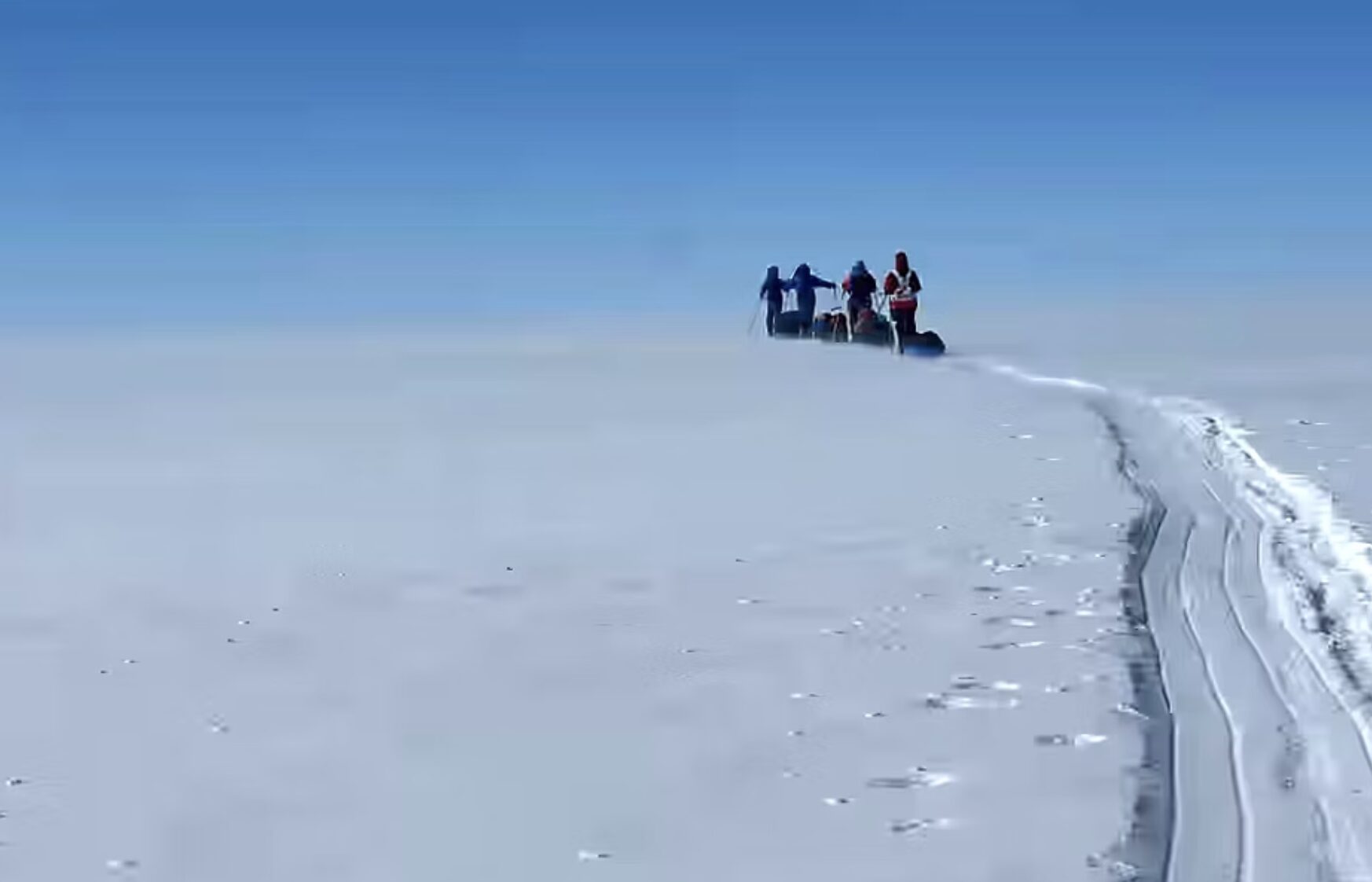
The logistical complexity of the Legacy expedition was significant. To reach the starting point, several team members sailed from Norway to Iceland, and subsequently to Greenland, effectively recreating the multi-modal approach of 19th-century explorers. Starting from the original Nansen landing site in Umivik Bay, the team traversed the ice sheet toward the Austmannadalen nature reserve.
The group concluded their journey in 30 days, covering a total distance of approximately 666km. By finishing at Ameralik Fiord and utilizing water transport to reach Nuuk, the team effectively bypassed the modern road-link exit used by commercial groups, opting instead for a finish that mirrored the logistical constraints of the original pioneers. This variation on the Nansen route required not only technical ice navigation but also advanced maritime planning, highlighting the evolution of expedition logistics in the modern era.
Chronology of the 2026 Season
The progression of both teams illustrates the specific windows available for trans-Greenland travel:
- August 15: Ousland-Colliard team departs Tasiilaq.
- August 20: The team navigates the major river system, a critical junction in the eastern sector.
- September 3: The Ousland-Colliard group reaches the 2,500m high point, marking the transition to the western descent.
- September 8: The Ousland-Colliard team reaches the DYE-2 radar station.
- September 16: Completion of the Ousland-Colliard journey at Point 660.
- Mid-August to Mid-September: Parallel progress of the Greenland Legacy team, utilizing a southern-biased route based on Nansen’s 1888 expedition.
Analytical Overview: The Changing Face of Greenland Travel
The success of these two groups underscores the dual nature of modern Arctic exploration. On one hand, satellite communication, advanced weather forecasting, and modern equipment (such as lightweight, durable sleds and high-calorie rations) have lowered the mortality risk compared to the early 20th century. However, the physical reality of the ice cap is shifting.
Climate-driven changes—specifically the expansion of melt-zones and the increased instability of coastal glaciers—have made the "shoulder seasons" more dangerous. The rivers encountered by Staples’ team are a direct consequence of warmer late-summer temperatures, which force expeditions to traverse active drainage channels rather than solid, predictable ice. The "marshy ice" reported by the Ousland-Colliard team is a trend that climate scientists have monitored for decades, confirming that the ice sheet is not just shrinking, but fundamentally altering its surface topography.
For commercial guiding companies, this creates a complex dilemma: the demand for Greenland crossings is growing among high-net-worth adventure travelers, yet the window for "safe" travel is narrowing. The 2026 season serves as a case study in how human persistence must now adapt to a landscape that is becoming increasingly fluid.
Broader Implications and Safety Protocols
The successful completion of these two expeditions serves as a testament to the rigorous training protocols maintained by professional guiding services and military units. In the event of an accident—such as a crevasse fall or a medical emergency—the distance to the nearest search-and-rescue (SAR) asset remains the primary constraint.
Both teams relied on robust communication arrays, including satellite tracking and redundant power systems, to maintain contact with base support. For the UK military team, the journey was not merely an exploration but an opportunity to test the endurance of personnel in extreme environments, providing valuable data on long-term caloric output and cold-weather equipment performance.
As the season closes, the Greenland tourism board and local authorities in Kangerlussuaq and Nuuk have noted the increased interest in long-distance trekking across the ice. While this provides an economic boost to local communities, it also places a greater burden on the existing, limited SAR infrastructure. Officials emphasize that despite the successful outcomes of the 2026 season, the Greenland Ice Cap remains a high-consequence environment where experience, meticulous planning, and professional guidance are the only effective safeguards against the unpredictability of the Arctic climate.
Looking ahead to the 2027 season, the focus for expedition planners will likely remain on early-season departures. However, as the Ousland-Colliard team has proven, the late-summer period remains a viable, albeit technically challenging, alternative for those equipped to handle the shifting, melting landscape of the world’s largest island.
Related posts: