Stepping Into the Void: Exploring Botswana’s Makgadikgadi Salt Pans and the Great Zebra Migration

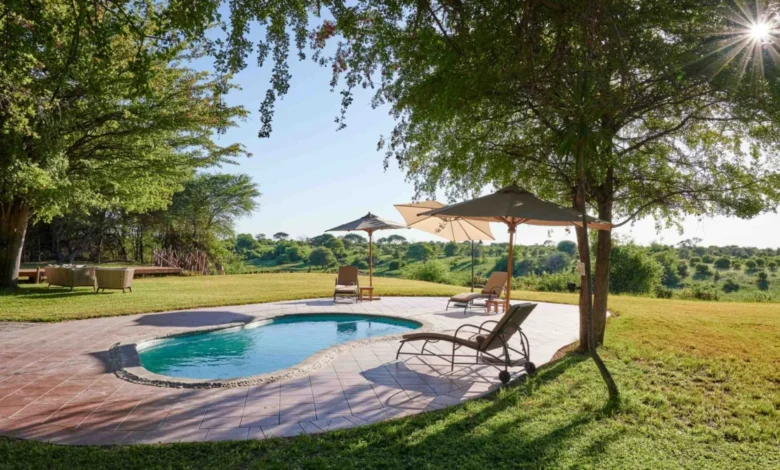
The northeastern region of Botswana presents travelers with a striking and unexpected safari juxtaposition: camping on the cracked, lunar-like earth of the Makgadikgadi Salt Pans, followed by witnessing a dramatic wildlife migration across a dried-up riverbed. Spanning roughly 6,200 square miles (16,000 square kilometers) within the vast Kalahari Basin, the Makgadikgadi Salt Pans are the remnants of the ancient Lake Makgadikgadi, which once covered an area larger than Switzerland before evaporating over millennia.

This remote landscape, situated southeast of the Okavango Delta, offers an off-grid experience characterized by absolute silence, dark skies free of light pollution, and a unique seasonal ecosystem. Travelers venturing into this arid expanse confront a stark environment where high salt concentrations prevent grass from growing and trees from germinating, creating a surreal panorama visible even from the Moon.

The Evolution and Geography of the Kalahari Basin
The geological history of the Makgadikgadi Basin dates back millions of years, shaped by tectonic shifts and fluctuating climatic conditions. The ancient Lake Makgadikgadi once supported a flourishing aquatic and terrestrial ecosystem. As tectonic plates moved and regional rainfall patterns shifted, the colossal lake gradually shrank, leaving behind a series of saline depressions, shorelines, and seasonal wetlands.

Today, the basin transforms dramatically depending on the time of year. During the dry season, which generally runs from May through October, the landscape appears as a barren, sun-baked desert of cracked mud. However, the arrival of the wet season from November onwards completely alters the terrain. Rains fill the perimeter salt pans and ephemeral lakes, sparking an ecological revival that draws vast numbers of migratory species. Among these is one of Africa’s most remarkable mammalian journeys: approximately 15,000 zebras undertaking a 310-mile (510-kilometer) round-trip migration between the Okavango Delta and Moremi region and the Makgadikgadi Pans in search of fresh grazing lands and water.

Immersive Wilderness: The Salt Pan Sleep-Out Experience
Navigating this remote territory requires experienced leadership. Local guides, such as Mathale Mosheti—affectionately known as "Metal"—bring decades of expertise in regional geology, birdlife, and conservation to visitors. Operating as part of seasonal excursions offered by 100-percent Botswana-owned Desert & Delta Safaris from properties like Leroo La Tau lodge, the salt pan sleep-out places travelers directly onto the barren flats for a night under the stars.

Accommodations during these excursions are intentionally minimal yet comfortable, consisting of raised bedrolls fitted with thick duvets inside protective bivvy bags, complemented by basic mobile sanitation facilities. This minimalist approach forces visitors out of their modern comfort zones, replacing urban noise with profound silence. The evening routine typically involves gathering around a campfire for locally produced refreshments, followed by stargazing under southern hemisphere constellations such as the Southern Cross and the prominent band of the Milky Way, unfettered by artificial light.

Wildlife Dynamics Along the Boteti River Valley
Beyond the stark beauty of the salt pans, the western boundary of Makgadikgadi Pans National Park centers around the Boteti River, a historic outflow of the Okavango Delta. The river’s hydrology has experienced significant fluctuations over the decades. Having receded in the mid-1980s due to diminished floodwaters and low rainfall, the riverbed remained largely dry through the 1990s, sustaining only isolated waterholes for resident hippopotamuses, Nile crocodiles, zebras, and wildebeests. A return of record rainfall in 2009 partially revived the watercourse, though its flow remains inherently unpredictable.

During the peak dry season, the Boteti River ravine acts as a vital lifeline, concentrating an abundance of wildlife along its banks. Visitors staying at elevated properties like Leroo La Tau—whose thatched chalets overlook the valley—witness complex ecological interactions daily. Herbivores such as African savanna elephants, blue wildebeests, impalas, and zebras congregate at shrinking waterholes.

Experienced guides emphasize strict safety protocols when navigating these dense animal concentrations. Standard field procedures dictate maintaining spatial awareness around large herds, particularly elephants, ensuring vehicles can move forward rather than relying on slower reverse maneuvers. Furthermore, guides use these safaris to educate visitors on niche partitioning among species, such as how zebras prefer taller grasses while wildebeests target shorter shoots, allowing multiple species to graze harmoniously in shared habitats.

Conservation Challenges and Community Integration
The management of wildlife corridors adjacent to national parks presents ongoing socio-economic and ecological challenges. Human-wildlife conflict remains a critical issue for local communities residing on the borders of protected areas. Incidents where predators like lions cross boundaries to prey on livestock often result in retaliatory killings by farmers whose livelihoods depend on agriculture and animal husbandry.

Conservation initiatives in Botswana increasingly focus on community empowerment, local education, and sustainable tourism frameworks to bridge the gap between wildlife preservation and human economic security. Operators such as Desert & Delta Safaris emphasize local management and staff empowerment across their portfolio of camps and lodges, including Chobe Game Lodge, which hosts Botswana’s first all-female-led guiding team.

Industry analysts note that sustainable tourism models must actively factor in the economic realities of rural communities living alongside major wildlife reserves. Mitigating human-wildlife friction requires continuous investment in community-based natural resource management, ensuring that local populations derive tangible benefits from conservation efforts rather than bearing solely the costs of wildlife proximity.

As global interest in low-emission, high-impact nature travel grows, destinations like the Makgadikgadi Salt Pans and the Boteti River valley offer a compelling blueprint for balancing raw wilderness immersion with rigorous environmental stewardship and community engagement.