The Acoustic Trail: How One Hiker Mapped 2,650 Miles of the Pacific Crest Trail Through Sound

For thousands of outdoor enthusiasts who attempt to conquer the Pacific Crest Trail (PCT) each year, the journey is typically preserved through a visual medium. Hikers rely on high-resolution cameras, smartphones, and heavily filtered social media posts to document their grueling 2,650-mile passage from the Mexican border at Campo, California, to Manning Park in British Columbia, Canada. However, for 41-year-old Los Angeles resident Tom Kelly, the defining elements of America’s second-longest continuous footpath were never meant to be viewed. Instead, they were meant to be heard.
Following two years of meticulous audio editing, Kelly has released a free, publicly accessible interactive sound map cataloging 200 distinct acoustic waypoints along the PCT. The digital project transforms raw field recordings captured during his 2023 thru-hike into an immersive auditory archive. Users navigating the map can click through a geographical interface to experience everything from the chittering of cliff swallows near La Posta Creek and the piercing hum of desert insects at dusk to the ominous, mechanical thrum of the San Gorgonio Pass Wind Farm in the Coachella Valley.
The initiative emerges at a time when acoustic ecology—the study of the relationship between human beings and their sonic environment—is gaining significant traction among conservationists, urban planners, and environmental scientists. By capturing the acoustic reality of North America’s premier western trail, Kelly’s project transcends traditional travelogue formats, offering an unvarnished, transparent cross-section of the modern wilderness experience.
From Childhood Listening Stations to the Sierra Nevada
Kelly’s fascination with sound is not a recent development, nor was it born on the rugged inclines of the Cascade Range. Growing up in Wisconsin, his earliest sensory memories involved sitting quietly in his parents’ backyard sandbox, tuning in to the repetitive, melancholic calls of mourning doves. Simultaneously, he developed an early affinity for music, experimenting with unconventional tones on a toy keytar before formalizing his education at Columbia College Chicago, where he earned a degree in music composition in 2018.
His transition into field recording occurred organically during an international trip to Istanbul. Armed with a portable audio recorder, Kelly discovered that capturing the ambient soundscape of a foreign city offered a profound depth of immersion that standard photography and videography simply could not match.
"I was like, this could be cool because I can immerse myself in these spaces in a way that you can’t with photography or taking videos on your phone," Kelly explained. "You can close your eyes, put on a soundscape, and kind of be transported back there."
Following his college graduation, Kelly sought an extended escape from studio desks and urban environments. His initial foray into long-distance backpacking began with short trips on Minnesota’s Superior Hiking Trail. A subsequent visit to Yosemite National Park in 2019 crystallized a long-term ambition: to secure a permit and thru-hike the entirety of the PCT.
The global COVID-19 pandemic disrupted his initial timeline, forcing a pivot that led him to explore Idaho’s Sawtooth Mountains and complete a three-week thru-hike of the Superior Hiking Trail. After enduring another year of predominantly indoor employment through 2022, Kelly reached a professional and personal breaking point. He resigned from his job, secured his PCT permit for the following year, and prepared for a monumental journey that would fundamentally alter his relationship with the natural world. Packing specialized audio recording equipment into his backpack was not an optional afterthought; it was the primary objective of the expedition.
Chronology of an Acoustic Expedition
Kelly’s trek along the Pacific Crest Trail was defined as much by logistical and physical hurdles as it was by aesthetic discoveries. His recording methodology evolved dynamically over the course of the 2023 expedition, shaped by equipment upgrades, physical exhaustion, and the inescapable realities of modern infrastructure intersecting with remote wilderness.
Initially launching his hike with a lightweight setup comprising a Sony a10 handheld recorder and small LOM mikroUsi microphones, Kelly quickly realized the limitations of consumer-grade audio gear against the relentless elements of the American West. Breaks from the trail allowed him to reevaluate his hardware configuration, ultimately transitioning to a high-end microphone paired with a makeshift windshield and a Zoom F3 field recorder, compactly housed within a 1.5-liter Cotopaxi hip pack.
The physical demands of recording while maintaining a thru-hiking pace proved formidable. Long-distance backpacking relies heavily on momentum and consistent daily mileage to ensure hikers traverse high mountain passes before the arrival of winter snows. Stopping to record disrupted this delicate rhythm. Extended pauses lasting longer than 30 minutes forced Kelly’s body into physical recovery mode, occasionally requiring him to bypass compelling acoustic environments simply to make up for lost miles. Conversely, there were instances where he set up his rig only to capture silence or unusable white noise.
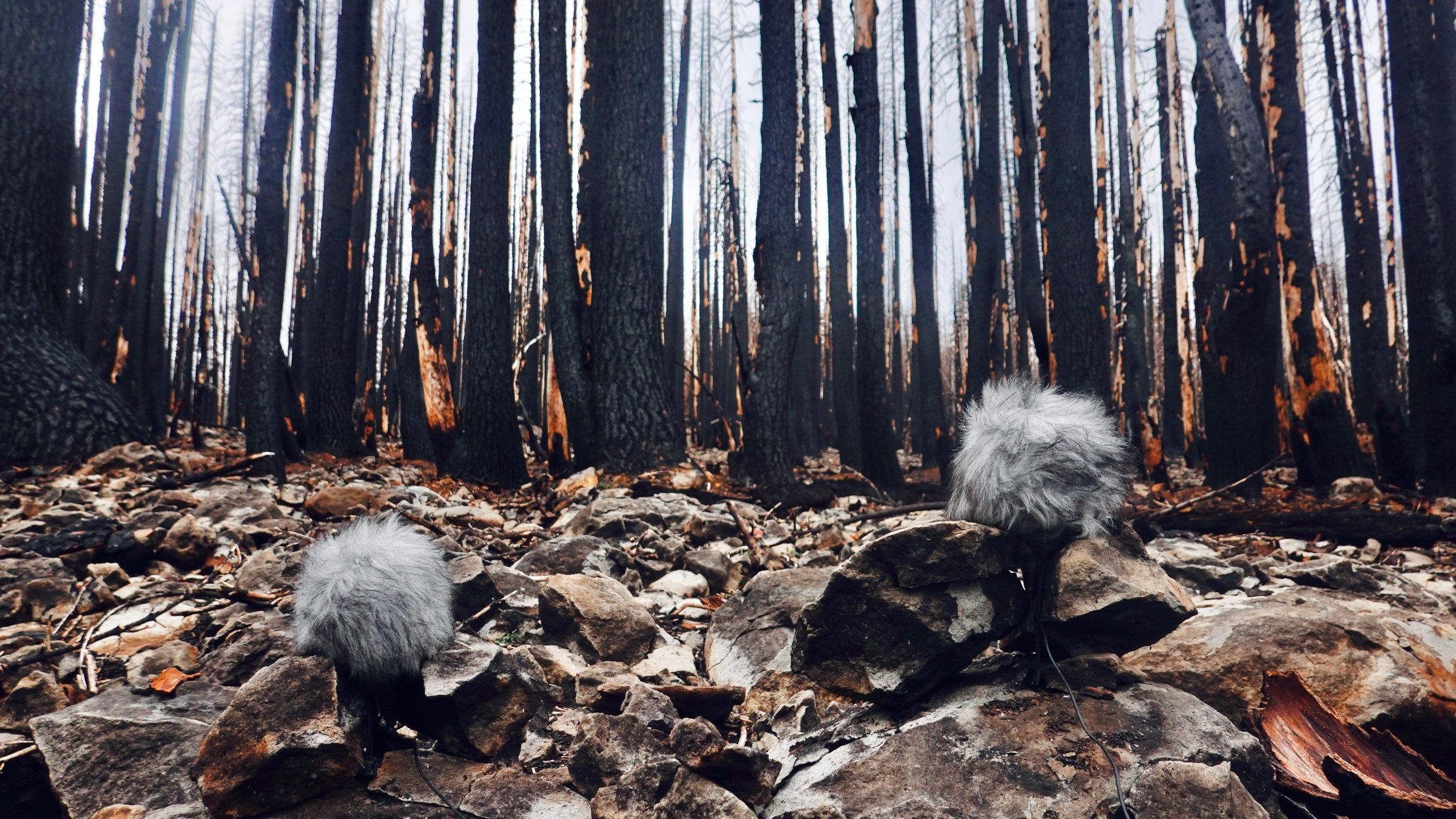
The raw material amassed over the course of the trek was voluminous. Kelly originally accumulated roughly 350 individual recordings totaling approximately 50 hours of audio. Through a rigorous two-year post-production and editing phase, that library was pared down to the final 200 entries now featured on his digital sound map.
The Illusion of Pristine Wilderness
One of the most striking revelations of Kelly’s project is the pervasive presence of anthropogenic noise—human-generated sound—even in areas ostensibly designated as protected wilderness. Soundscape conservationists have long argued that natural quiet is a rapidly diminishing natural resource, threatened by commercial aviation, highway traffic, and suburban expansion.
Throughout his journey, Kelly discovered that finding pockets of absolute acoustic purity was a logistical challenge. The proximity of major West Coast flight paths and interstate corridors meant that aircraft engines and distant vehicular traffic frequently bled into the natural soundscapes of Southern and Northern California, Oregon, and Washington.
Rather than editing out these human intrusions to manufacture an idealized, romanticized version of the wilderness, Kelly chose to retain them. The resulting sound map presents a balanced, honest depiction of the trail. For instance, an audio file recorded in May 2023 near the San Gorgonio Pass Wind Farm in the Coachella Valley captures not only the intense physical strain of a desert crossing—characterized by blowing sand, high temperatures, and the footsteps of passing fellow hikers—but also the low, ominous mechanical drones of the nearby wind turbines.
This juxtaposition is intentional. By documenting both pristine biological choruses and the subtle, persistent hum of human civilization, Kelly’s archive serves as an authentic sociological document of the trail’s current environmental state.
Cultural Implications and the Psychology of Slowth
Beyond its ecological and artistic merits, Kelly views the PCT sound map as a form of cultural resistance against modern digital saturation. In an era dominated by hyper-documentation, algorithmic feeds, and the constant pressure to curate personal identity visually on social media, the audio project offered a deliberate retreat from self-promotion.
"I just want to create a nice experience, and there’s something for everybody in there," Kelly notes.
The months spent listening attentively to the landscape transformed into a therapeutic exercise. As the weeks progressed and Kelly pushed deeper into the backcountry, he found his internal biological rhythm syncing with the glacial, unhurried pace of the natural world rather than the frantic tempo of contemporary urban society. Relieved of traditional digital demands, his auditory perception sharpened, allowing him to discern micro-sounds—such as the staccato cadence of an alpine trickle or the delicate flutter of high-altitude foliage—that routinely escape the notice of hurried travelers.
Furthermore, the accessibility of the completed project reflects a deliberate rejection of modern data-harvesting practices. The sound map is hosted freely online without paywalls, mandatory user registrations, tracking cookies, or promotional email collection requirements.
Broader Impacts on Acoustic Conservation
As anthropogenic noise pollution continues to draw scrutiny from environmental agencies, including the National Park Service’s Natural Sounds and Night Skies Division, independent projects like Kelly’s provide valuable baseline data regarding the acoustic health of public lands. By archiving the biotic and abiotic sounds of the Pacific Crest Trail at a specific juncture in the 21st century, the sound map establishes a historical record that researchers can utilize to monitor ecological shifts, habitat degradation, and changes in wildlife distribution over time.
For the public, the map offers an egalitarian portal to the wilderness. Whether utilized by prospective thru-hikers scouting trail conditions, urban residents seeking cognitive respite, or former backpackers longing to reconnect with the physical sensations of the trail, Kelly’s 200 acoustic waypoints bridge the geographical divide between the wilderness and the armchair listener.
Ultimately, the project validates a fundamental truth of the great outdoors: while breathtaking vistas define the landscape visually, it is the invisible, interwoven symphony of the wind, water, and wildlife that truly brings the wilderness to life.