Hyatt’s Top-End Award Redemptions and Transfer Rules Shift as Travelers Face New Points Realities


The landscape of award travel is undergoing significant structural shifts, bringing heightened scrutiny to hotel loyalty programs, airline route planning, and credit card transfer partnerships. At the center of these developments is World of Hyatt, which faces mounting pressure from frequent travelers following substantial modifications to its award charts and impending changes to valuable credit card transfer ratios. As loyalty enthusiasts reevaluate their points portfolios, broader trends across the aviation and hospitality sectors—ranging from Department of Transportation regulatory proposals to shifting transatlantic flight networks—are reshaping how consumers approach travel planning.

The Evolution of World of Hyatt Award Redemptions and Chase Transfer Dynamics
The World of Hyatt loyalty program, long heralded by points and miles enthusiasts as the gold standard for hotel redemptions due to its predictable award chart and outsized value, is currently navigating a turbulent period. Travelers are confronting the compounding effects of Hyatt’s spring award chart restructuring, which introduced dynamic and higher-priced tiers, alongside looming deadlines for flexible points transfers.

Historically, cardholders of eligible Chase Sapphire and Ink Business products could seamlessly transfer Ultimate Rewards points to World of Hyatt at a straightforward 1:1 ratio. This mechanism allowed members to extract exceptional value—frequently exceeding two to three cents per point—by redeeming points for luxury properties, boutique resorts, and high-demand urban hotels. However, recent programmatic adjustments and shifting banking partnerships have created a sense of urgency and concern within the travel community.
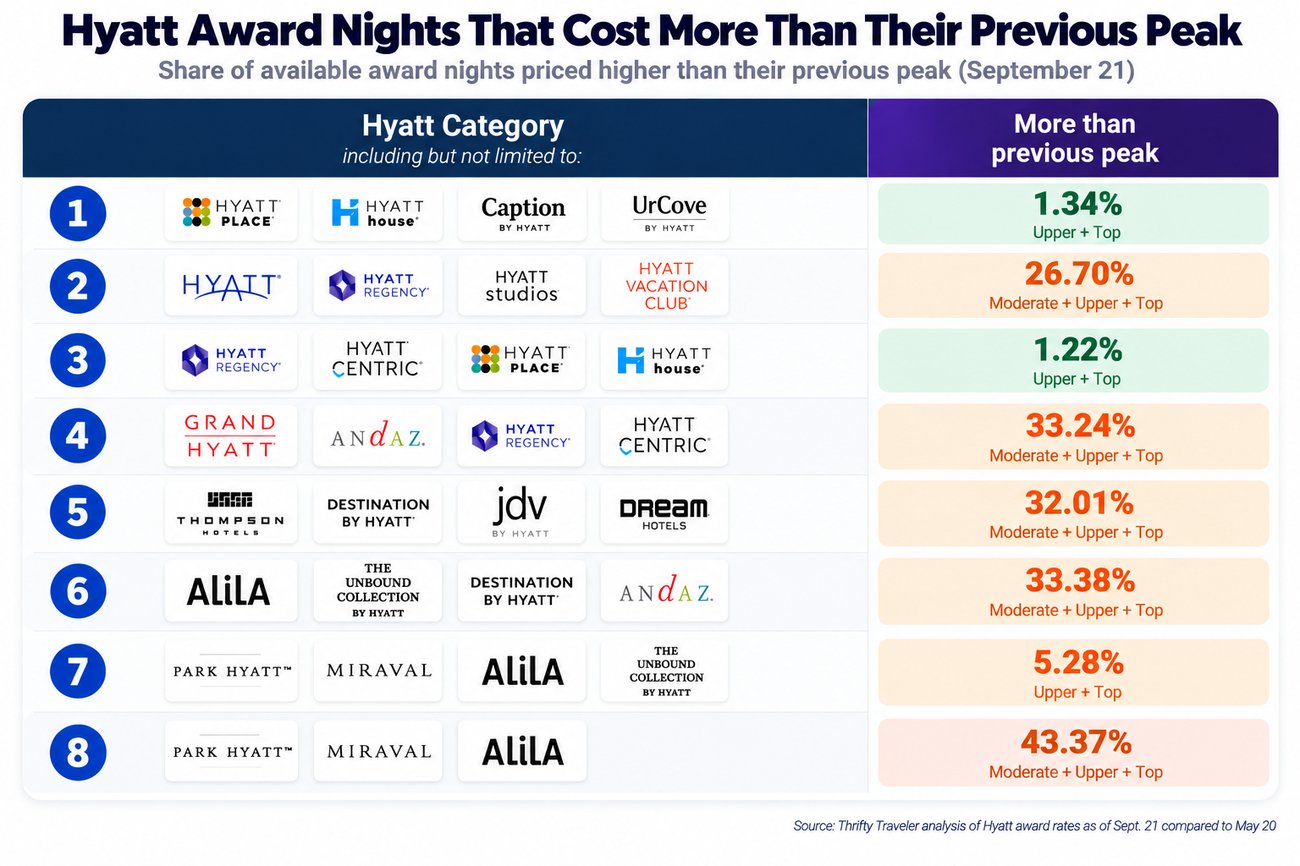
Data compiled from hundreds of thousands of historical award nights indicate that Hyatt’s highest-tier properties—specifically Category 8 hotels and resorts—have experienced a dramatic erosion of value. Under previous iterations of the loyalty program, top-end redemptions were strictly capped at 45,000 points per night. Recent programmatic changes have decoupled these redemptions from traditional caps, introducing pricing tiers that scale up to 55,000, 65,000, and 75,000 points per night. Industry analyses reveal that nearly half of all award stays at Category 8 properties now exceed the historical 45,000-point ceiling.
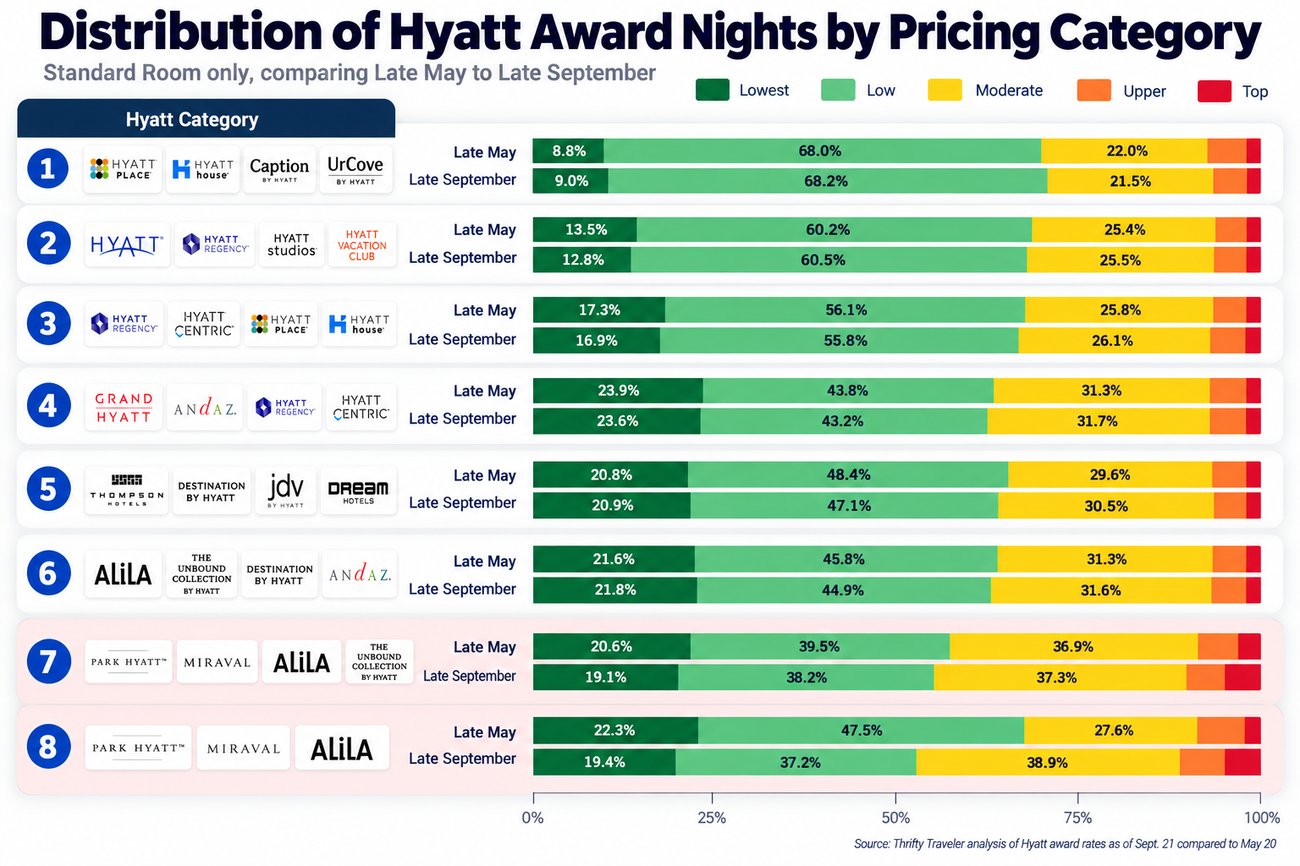
This steady migration of premium inventory into higher points brackets has forced loyalty program members to reconsider the wisdom of speculative points transfers. While transferring a large balance of credit card rewards to a hotel partner in anticipation of future travel was once viewed as a low-risk strategy, the diminishing predictability of Hyatt’s award inventory has introduced substantial devaluation risk. Consequently, financial and travel advisors recommend a more tactical approach: auditing upcoming travel itineraries, verifying award availability in real time, and executing transfers only when a firm booking is ready to be secured.
Emerging Regulatory Scrutiny on Airline Seat Dimensions
Beyond the hospitality sector, the regulatory environment governing commercial aviation is facing potential disruption. The U.S. Department of Transportation (DOT) and its advisory committees are actively evaluating new transparency measures designed to empower consumers with standardized, comparable data regarding airline seating configurations.
The Aviation Consumer Protection Advisory Committee recently convened to discuss the trajectory of the federal government’s ongoing consumer dashboard initiatives. Originally established under the Biden administration to provide clear, accessible insights into airline policies regarding flight delays, cancellations, and family seating guarantees, the dashboard ecosystem could soon expand to include a third critical category: economy seat size.

Under the proposed framework, airlines would be required to participate in a standardized federal dashboard explicitly detailing cabin dimensions across their fleets, including seat length, overall width, and pitch—the industry measurement for legroom. While sophisticated travelers frequently utilize third-party aggregators and flight search engines to cross-reference aircraft configurations, casual flyers often find it challenging to compare the physical comfort of a basic economy product across competing carriers.
Proponents of the proposed seat-size dashboard argue that mandatory disclosure will introduce necessary accountability into a market where ultra-low-cost carriers and major network airlines offer vastly different onboard experiences. For instance, comparing a high-density configuration with 28 inches of pitch against a more traditional layout featuring 32 inches of legroom can fundamentally alter the passenger experience on a multi-hour flight. While the advisory committee has not yet finalized its formal recommendations or implementation timeline, the proposal underscores a broader regulatory push toward radical transparency in consumer air travel.

Transatlantic Route Adjustments: Delta Air Lines and British Airways Modify Networks
International flight planning for the upcoming peak and shoulder seasons is also reflecting strategic realouts among major global carriers. Network adjustments announced by Delta Air Lines and British Airways highlight contrasting approaches to capacity management, fleet deployment, and regional demand.

Delta Air Lines has finalized its European route expansion for the summer season, though its additions are comparatively restrained against the backdrop of aggressive network growth by competitors. Beginning in May, Delta will introduce new seasonal nonstop service connecting Boston (BOS) to Venice (VCE), alongside a new route linking Detroit (DTW) to Athens (ATH) starting in June. Both routes will be serviced by widebody aircraft featuring traditional cabin configurations, including Delta One, Premium Select, and main cabin seating.
At the same time, Delta is extending the operational window for several existing European routes, initiating spring flights earlier and maintaining schedules further into the autumn shoulder season. Cities such as Rome, Catania, Porto, Prague, and Copenhagen will see extended seasonal availability, catering to travelers seeking lower destination density and reduced pricing outside peak summer months.

However, these adjustments occur alongside targeted capacity reductions. Delta has dialed back frequencies on specific transatlantic corridors, such as Minneapolis-St. Paul (MSP) to Dublin (DUB), following strategic shifts by competing carriers like Aer Lingus. This contrasts sharply with the expansion strategies pursued by United Airlines and American Airways. Leveraging the long-range capabilities of narrowbody aircraft such as the Airbus A321XLR, United and American have introduced numerous new transatlantic routes to secondary European markets—such as Ljubljana, Luxembourg, Marseille, Ibiza, Vienna, and Porto—markets that previously lacked direct U.S. connectivity due to the economic impracticality of deploying large widebody jets.
Simultaneously, British Airways surprised industry analysts by scaling up its frequency between St. Louis (STL) and London Heathrow (LHR) to daily service during the early summer months. The route, which previously operated four times weekly, will run daily from mid-April through June before adjusting frequencies during the height of the summer peak. Aviation analysts suggest these targeted schedule enhancements reflect precise corporate travel demand and regional economic indicators within mid-sized metropolitan markets.

Credit Card Rewards Ecosystem and Eligibility Rules
As consumers navigate these shifts in travel loyalty and airline networks, the credit card rewards landscape continues to evolve, accompanied by strict internal governance by major financial institutions. Premium travel credit cards, such as the Capital One Venture and Venture X portfolios, remain popular vehicles for accumulating flexible miles, yet understanding issuer eligibility rules is increasingly critical for applicants.

Financial institutions have systematically refined their sign-up bonus restrictions to manage acquisition costs and deter reward cycling. For instance, Capital One enforces a multi-year restriction policy across its primary travel card lines, stipulating that individuals who have received a welcome bonus on either the Venture or Venture X card within a preceding 48-month window are ineligible for new promotional offers. Because this exclusionary period is calculated from the date the previous bonus posted rather than the account opening date, consumers must carefully audit their credit history before submitting new applications.
Furthermore, approval algorithms for premium financial products remain highly sophisticated and opaque. Beyond standard credit score benchmarks, issuers evaluate overall revolving credit limits, recent inquiry velocity, and existing exposure across the bank’s entire portfolio. For travelers seeking to maximize their rewards potential to offset rising costs in both the hotel and airline sectors, conducting preliminary eligibility checks has become an essential prerequisite in navigating the modern points and miles ecosystem.