For millions of travelers, the inaugural journey to Barcelona is defined by a specific, well-trodden circuit: the spires of the Sagrada Família, the whimsical mosaics of Park Güell, the medieval corridors of the Gothic Quarter, and the crowded thoroughfares of La Rambla. While these landmarks remain the pillars of the city’s tourism economy—collecting millions of visitors annually—the seasoned traveler often finds that the true character of Catalonia’s capital lies beyond the periphery of its most famous postcards. Returning to the city offers a unique opportunity to shift from the role of a sightseer to that of an observer of local culture, shifting the focus toward neighborhood integration, regional exploration, and historical depth.
The Evolution of Barcelona’s Tourism Landscape
The demographic profile of visitors to Barcelona has shifted significantly over the last decade. Data from the Barcelona Tourism Observatory indicates that repeat visitation rates have climbed, with a growing segment of international tourists opting for longer stays that favor suburban immersion over central-city transit. This shift has forced a reevaluation of how the city manages its tourism flow. With local government initiatives aiming to disperse visitors away from the hyper-congested Ciutat Vella (Old City), the promotion of lesser-known districts like El Raval, Gràcia, and Poblenou has become a strategic priority for regional planners.
Historically, the city’s layout reflects a distinct layering of eras. The Roman foundations of Barcino, the medieval expansion of the Gothic Quarter, and the 19th-century Eixample urban planning project all provide context for why certain areas feel distinct. Understanding this chronology is essential for the repeat visitor; where the first trip is often about aesthetics, the second is about context.

Diving into the Local Fabric: Neighborhood Deep Dives
To move beyond the tourist map, one must examine the socio-economic diversity of the city’s districts. El Raval, once a peripheral zone of the walled city, has transformed into a melting pot of global cultures. The establishment of the Museu d’Art Contemporani de Barcelona (MACBA) in the 1990s served as a catalyst for urban renewal, yet the neighborhood retains its gritty, authentic edge. For the returning visitor, El Raval represents a departure from the polished, reconstructed history of the Gothic Quarter.
In contrast, the district of Gràcia offers a glimpse into the life of the city before the 1897 annexation that incorporated it into the metropolitan grid. Gràcia maintains a village-like atmosphere, characterized by its narrow, pedestrian-friendly streets and a high density of local squares, or plaças. This architectural preservation acts as a living history lesson, showcasing a lifestyle that predates the modern tourist boom.
The Gastronomic Shift: Beyond La Boqueria
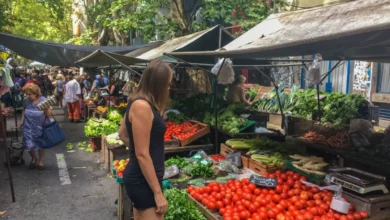
While La Boqueria remains one of Europe’s most iconic markets, it has increasingly faced criticism for becoming a commodity for tourists rather than a utility for residents. A more nuanced culinary experience can be found in the Sant Antoni market. Following its massive 2018 renovation, the structure has reclaimed its role as a neighborhood hub. Analysis of local market trends suggests that Sant Antoni and its surrounding streets have become the epicenter for the city’s contemporary culinary scene. Unlike the high-turnover stalls of La Rambla, the businesses in Sant Antoni cater to a local demographic, providing a more accurate reflection of modern Catalan gastronomy.

Similarly, the neighborhood of Poble Sec has gained prominence for its concentration of pintxos culture. While pintxos are traditionally associated with the Basque Country, the street of Carrer de Blai has become a notable cultural cross-pollination point in Barcelona. This shift illustrates the broader trend of neighborhoods becoming specialized lifestyle hubs that sustain the city’s evening economy outside of the traditional downtown core.
Historical Context: The Legacy of Montjuïc
Montjuïc remains one of the most misunderstood areas of the city. Often reduced to a panoramic viewpoint accessed by cable car, its significance is rooted in complex political history. The hill served as a military vantage point for centuries, with the castle acting as a site of political incarceration and execution, particularly during the Spanish Civil War and the Franco regime.
The 1929 International Exposition and the 1992 Olympic Games further layered the area’s identity, leaving behind a juxtaposition of neoclassical exhibition halls and high-performance athletic infrastructure. A comprehensive visit requires acknowledging these layers. When observers look at the Olympic Stadium or the botanical gardens, they are witnessing the evolution of Barcelona’s ambition to become a global city, a transition that is often lost on the casual observer.
Industrial Rebirth: The Case of Poblenou

Perhaps the most significant urban transformation in recent history is that of Poblenou. Formerly the industrial heart of the city—often referred to as the "Catalan Manchester"—the district is now the focal point of the 22@ innovation district. This project is a prime example of urban regeneration, where former textile factories have been retrofitted into technology hubs, universities, and art studios.
For the returning visitor, exploring Poblenou provides a look at the future of the city. It is here that one can observe the intersection of Barcelona’s manufacturing heritage and its aspirations as a center for the digital economy. This is not a place of traditional monuments, but of architectural adaptation, which arguably offers a more profound insight into the city’s resilience.
Regional Connectivity and Economic Dispersion
Barcelona functions as an ideal gateway to the wider Catalonia region. The high-speed rail network (AVE) has significantly reduced travel times to key provincial cities, encouraging day-trippers to extend their reach. Girona, for instance, is accessible in under 40 minutes. With its remarkably preserved Jewish Quarter and medieval defensive walls, Girona serves as a historical counterpart to the urban sprawl of Barcelona.
Furthermore, the wine region of Alella, located just north of the city, provides an opportunity to support the local agricultural economy. Catalonia’s wine industry has seen a resurgence in interest, with many small-scale, family-run wineries moving toward organic and biodynamic production. Integrating these regional visits into a trip not only alleviates the pressure on Barcelona’s central tourist sites but also provides a more sustainable economic distribution across the region.

Implications for Sustainable Tourism
The trend toward "slower" tourism is more than a preference; it is a necessity for the preservation of the city’s liveability. Official statements from the Barcelona City Council have frequently emphasized the need for a "high-value" tourism model, which prioritizes the length of stay and the dispersion of visitors over sheer volume.
The implication for the traveler is clear: by engaging with neighborhoods, utilizing regional rail, and choosing locally-operated businesses, the visitor contributes to a more balanced urban ecosystem. The "checklist" approach to travel, which focuses on the rapid consumption of sights, is increasingly viewed as an obsolete model for a city struggling with the impacts of mass tourism.
Conclusion: A Continuous Discovery
The second or third visit to Barcelona represents a shift from consumption to immersion. When the pressure to visit the Sagrada Família or the Picasso Museum is removed, the visitor is free to engage with the city’s lived reality. Whether it is wandering through the industrial corridors of Poblenou, sampling regional wines in Alella, or participating in the pintxos culture of Poble Sec, these experiences provide a more authentic connection to the Catalan capital.

Ultimately, the city of Barcelona is not a collection of monuments to be checked off, but a complex, evolving organism. Its streets, markets, and squares are a dialogue between its medieval past and its modern ambitions. By choosing to explore the nuances of its districts, the returning visitor does more than see the city—they begin to understand it. The objective of such travel is not to see more, but to see deeper, ensuring that the legacy of the city remains as vibrant for the local resident as it is for the visitor.
Related posts: