Beyond the Basilica: A Second-Timer’s Guide to Experiencing the Unseen Barcelona

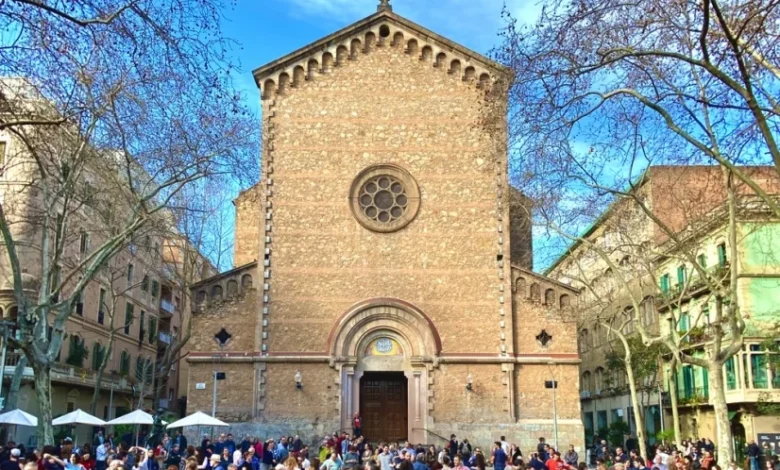
The global tourism economy has long been dominated by the checklist itinerary. For millions of travelers arriving in Catalonia’s capital annually, the inaugural visit to Barcelona is defined by a familiar sequence of landmarks: Antoni Gaudí’s sweeping architectural masterpieces, the dense labyrinth of the Gothic Quarter, and the bustling pedestrian artery of La Rambla. However, urban tourism analysts and regional destination marketers note a significant behavioral shift among returning international travelers. Rather than repeating the traditional sightseeing circuit, repeat visitors increasingly seek out localized urban neighborhoods, regional gastronomy, and peripheral day-trip excursions. This evolving trend reflects a broader transformation in post-pandemic European travel, where visitors prioritize immersion over exhaustion and depth over superficial landmark collection.
To understand why a second trip to Barcelona offers an entirely different proposition, one must examine the logistical pressures facing the city’s primary historic core. Data from the Barcelona Tourism Board indicates that historic districts such as Ciutat Vella and specific architectural hubs experience severe seasonal congestion, particularly during the peak spring and summer months. On an initial voyage, visitors frequently find themselves navigating dense crowds, limiting their exposure to the city’s broader socioeconomic and cultural fabric. Returning travelers, conversely, are uniquely positioned to venture beyond the central tourist grid, engaging directly with the multi-layered history, industrial heritage, and distinct municipal identities that characterize Catalonia’s larger metropolitan region.

Deconstructing the Metropolis: Neighborhood Exploration and Urban Evolution
One of the most profound revelations for a returning visitor is the realization that Barcelona is not a monolithic entity, but rather a confederation of distinct villages unified under municipal administration during the late 19th and 20th centuries. This historical annexation strategy created a mosaic of neighborhoods, each retaining its own architectural vernacular, social dynamics, and economic profile.
Just across the bustling divider of La Rambla lies El Raval, a district whose historical narrative diverges sharply from the aristocratic elegance of the Eixample or the medieval grandeur of the Gothic Quarter. Historically known as Barri Xinès, El Raval has served for over a century as a primary port of entry for immigrant communities, establishing it as one of the most culturally diverse sectors of the metropolis. Urban sociologists point to El Raval as a prime example of managed gentrification meeting resilient working-class traditions. While contemporary visitors will encounter modern art spaces such as the Museu d’Art Contemporani de Barcelona (MACBA)—designed by Richard Meier and opened in 1995 as a catalyst for urban renewal—the neighborhood retains its raw, unpolished edge. The surrounding plazas, notably Plaça dels Àngels, function as open-air community hubs where skateboarders, local residents, and students intersect, offering a visceral snapshot of modern urban life.
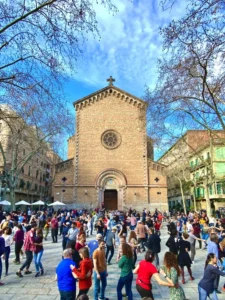
Further north, the former independent municipality of Gràcia provides an entirely contrasting spatial experience. Absorbed into Barcelona during the 1897 expansion plan known as the Pla Cerdà, Gràcia successfully resisted the rigid grid system imposed on other districts. Consequently, its urban morphology is characterized by narrow, winding streets that abruptly open into intimate public squares, such as Plaça del Sol. Urban planners frequently cite Gràcia as a masterclass in human-scale urban design, where commercial activity remains heavily anchored by independent shopkeepers, artisanal bakeries, and neighborhood co-operatives rather than multinational retail chains. For the traveler returning to Barcelona, spending an afternoon anchored in a Gràcia plaza offers a deliberate deceleration from the frantic pace of the city center.

Industrial Heritage and Contemporary Gastronomy
Beyond architectural sightseeing, secondary tourism patterns emphasize culinary anthropology and industrial repurposing. The evolution of Barcelona’s public markets illustrates this transition. While the historic Mercat de La Boqueria remains an architectural and cultural monument directly off La Rambla, its sheer popularity has transformed it primarily into a tourist attraction. In contrast, the Mercat de Sant Antoni, situated in the Eixample-adjacent neighborhood of the same name, offers an authentic immersion into local daily commerce.
Following an ambitious, multi-year infrastructural renovation that concluded in 2018, the Mercat de Sant Antoni successfully married 19th-century ironwork architecture with modern municipal utility. The market operates not merely as a food purveyor for fresh meats, seafood, and produce, but as a community anchor. On Sundays, the surrounding perimeter transforms into a historic open-air market for collectors trading rare books, stamps, and coins. The surrounding Sant Antoni neighborhood has subsequently emerged as a premier culinary district, housing innovative cafes and bistros that cater predominantly to local residents rather than transient visitors.
A similar narrative of adaptive reuse defines Poblenou, situated along the city’s eastern industrial coastline. Once hailed as the "Catalan Manchester" due to its dense concentration of textile factories and manufacturing plants during the Industrial Revolution, Poblenou underwent significant structural decline in the mid-to-late 20th century. However, municipal regeneration initiatives—accelerated significantly by the 1992 Summer Olympic Games—transformed abandoned warehouses into creative design studios, technology hubs, and contemporary art spaces. Urban economists view Poblenou as a blueprint for post-industrial transition, where heritage preservation coexists with the expansion of the digital economy. Cultural geographers recommend guided walking tours through the district to fully comprehend the juxtaposition of 19th-century brick chimney stacks against modern architectural interventions.

Meanwhile, evening dining culture shifts away from sit-down tourist menus toward the communal ritual of the pintxos crawl, particularly along Carrer de Blai in Poble Sec. Stemming originally from Basque culinary traditions, the local adherence to bite-sized snacks served on wooden skewers encourages dynamic social interaction. Diners circulate between multiple establishments, pairing regional wines with artisanal tapas, thereby dissolving the formal barriers of traditional dining formats.
Expanding Horizons: Maritime Perspectives and Regional Excursions
For travelers seeking to recontextualize the urban landscape, shifting perspectives from land to sea offers immediate spatial clarity. While the maritime frontage of Barceloneta is heavily trafficked by beachgoers, chartering a vessel or joining a scheduled sailing excursion from the Port Olímpic provides a comprehensive architectural panorama. From the water, the integration of Barcelona’s medieval maritime history, its 19th-century urban expansion, and the post-industrial Olympic waterfront becomes visually coherent, illustrating the city’s enduring relationship with the Mediterranean Sea.
Furthermore, a second or third visit to Barcelona logically extends beyond municipal borders into the broader territory of Catalonia. Regional tourism authorities actively promote secondary hubs to alleviate urban congestion while distributing economic benefits to surrounding provinces.

Just north of Barcelona, nestled between the coastal mountain ranges and the sea, lies the Designation of Origin (DO) of Alella. As one of Spain’s smallest wine-producing regions, Alella has a winemaking history dating back to Roman times. Specializing predominantly in crisp, aromatic white wines produced from the native Pansa Blanca (Xarel·lo) grape, the region offers half-day and full-day enotourism itineraries that remain remarkably inaccessible to mass-market tour buses. Industry analysts note that agricultural tourism in Alella provides a vital economic buffer for local viticulturists facing urban sprawl from the expanding Barcelona metropolitan area.
For those pursuing broader historical and geographical day trips, the high-speed rail and regional train networks provide seamless connectivity to world-class destinations within a 40-to-60-minute radius:
- Montserrat: Located roughly 50 kilometers northwest of Barcelona, this multi-peaked mountain range houses the renowned Santa Maria de Montserrat abbey. Beyond its spiritual significance and the veneration of the Black Madonna, the jagged conglomerate rock formations serve as a premier destination for regional hiking and geological study.
- Girona: Situated approximately 40 minutes north via the AVE high-speed rail line, Girona boasts a meticulously preserved medieval quarter, Romanesque and Gothic churches, and a historically significant Jewish Call (old Jewish quarter). The city’s recent prominence as a filming location for international fantasy television series has amplified its international profile without diluting its historical gravitas.
- Sitges: Located 35 kilometers south along the Mediterranean coast, Sitges offers a distinct coastal charm characterized by modernist architecture, an extensive seaside promenade, and a legacy as a historic sanctuary for artists and the LGBTQ+ community since the late 19th century.
Implications for the Future of Urban Tourism
The strategic pivot toward secondary neighborhood exploration and regional day-tripping is not merely a matter of personal preference for the seasoned traveler; it represents a crucial alignment with sustainable tourism management. Destination management organizations (DMOs) across Southern Europe are increasingly urging visitors to disperse beyond hyper-concentrated historic centers to preserve local infrastructure, reduce carbon footprints, and maintain the authentic livability of host communities.

As Barcelona continues to refine its municipal tourism policies—balancing economic dependency on the sector with residents’ demands for affordable housing and public space—the responsibility increasingly falls upon the traveler to engage more consciously. By looking past the initial checklist of monuments, repeat visitors contribute to a more equitable distribution of tourism revenue while uncovering the complex, living narrative of a city that continually reinvents itself.