Holafly Launches Global eSIM Subscription Plans to Streamline International Connectivity for Long-Term Travelers

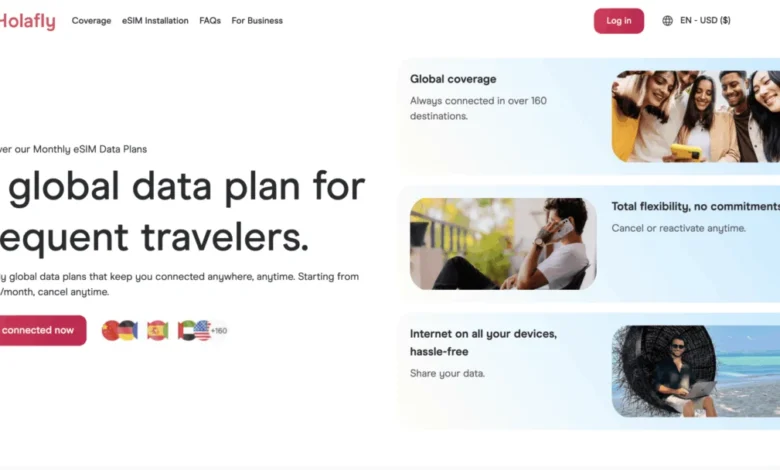
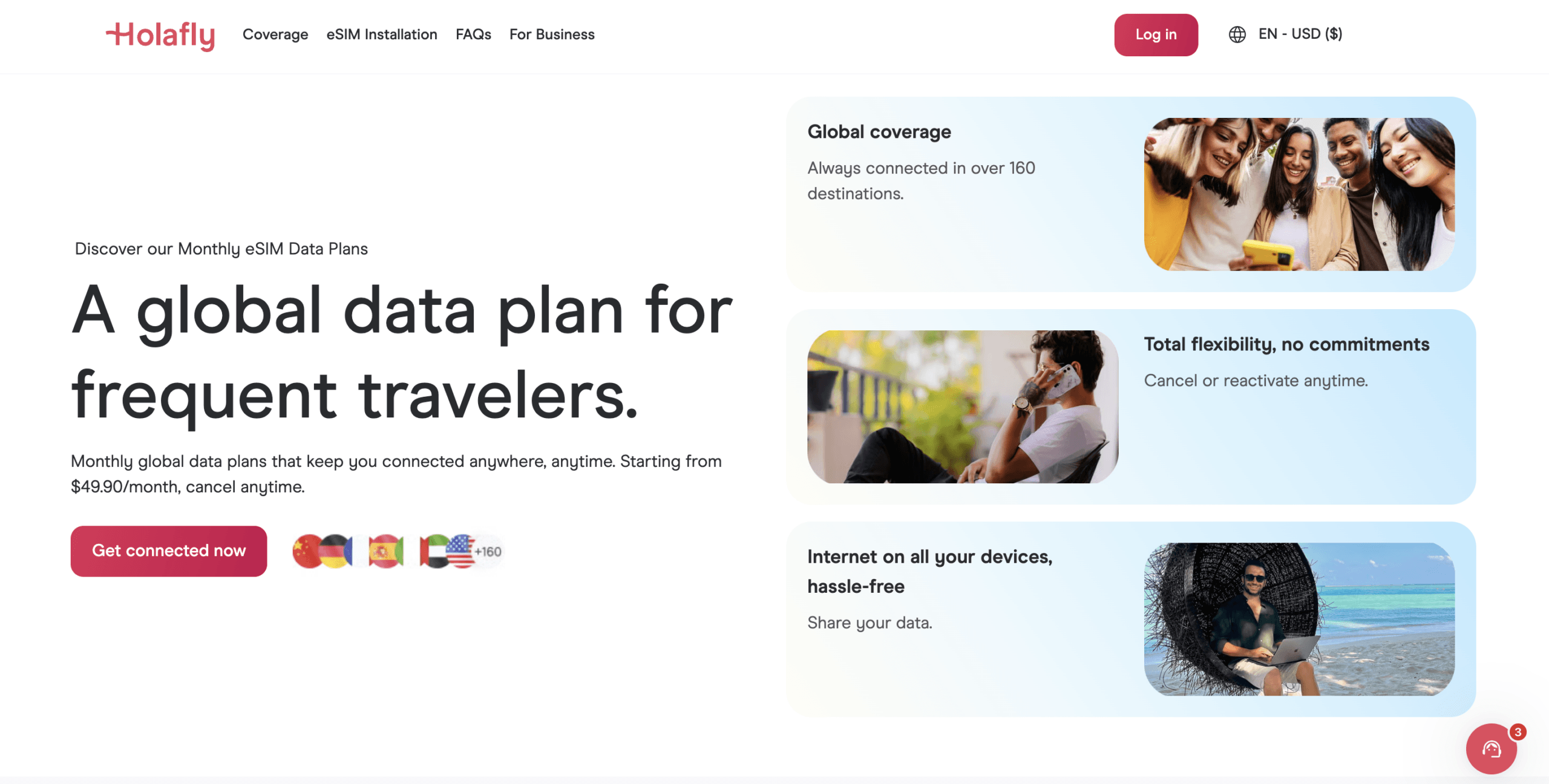
The international telecommunications and travel technology sector has witnessed a significant shift with the official rollout of Holafly Plans, a continuous global eSIM subscription service designed to eliminate the logistical hurdles of cross-border data management. Unlike traditional localized eSIM products that require manual configuration for every new country or region, the newly introduced offering provides a single, recurring digital SIM profile capable of operating seamlessly across more than 160 destinations. This development marks a departure from standard prepaid travel data models, offering a solution tailored specifically to the growing demographic of digital nomads, remote professionals, and multi-destination travelers who require continuous connectivity without the friction of frequent re-purchasing.
Background Context and Evolution of Travel Connectivity
For decades, international travelers faced a cumbersome landscape of telecommunications logistics. Historically, maintaining connectivity abroad meant either paying exorbitant roaming fees to domestic home carriers—often exceeding $100 per month for severely restricted data tiers—or navigating foreign retail storefronts upon arrival to purchase physical local SIM cards. The latter option frequently introduced language barriers, compatibility issues, and temporary disruptions in communication while crossing borders.
The emergence of embedded subscriber identity module (eSIM) technology fundamentally transformed this dynamic. Built directly into smartphone hardware, eSIMs allowed users to download digital profiles via software activation rather than swapping physical plastic cards. While this innovation reduced physical friction, the market remained saturated with single-trip or single-destination products. Travelers embarking on multi-country itineraries were still required to purchase separate packages for each jurisdiction, continually scanning new QR codes and managing expiring data limits every time their travel trajectory changed.
Recognizing a gap in the market for individuals who spend the majority of the year outside their home countries, telecommunications providers began exploring subscription-based models. Holafly Plans represents the latest evolution in this space, conceptualized to replicate the convenience of a domestic mobile carrier while operating on an international scale and avoiding the steep cost structures traditionally imposed by major legacy network operators.

Product Architecture: Tiers, Pricing, and Core Features
Holafly Plans operates on a recurring subscription model available in monthly, quarterly, or annual billing cycles. The service is divided into two primary tiers—Light and Unlimited—each structured to accommodate varying consumption profiles while maintaining global coverage spanning over 160 countries.
The Unlimited Plan is engineered for data-intensive users, such as remote workers, content creators, and professionals requiring constant tethering capabilities. It features unthrottled data allowances alongside an unrestricted mobile hotspot capability, permitting users to connect laptops and secondary devices without incurring additional charges or speed caps. Furthermore, subscribers to the Unlimited tier are allocated a local phone number originating from the United States, United Kingdom, or Canada, enabling the direct reception of SMS text messages—a critical requirement for two-factor authentication and financial verification processes abroad.
Conversely, the Light Plan provides a structured monthly data allocation of 25GB, accompanied by hotspot functionality across the same geographic footprint. This tier is optimized for travelers whose mobile data consumption primarily centers around navigation, messaging applications, and casual web browsing.
To address customer retention and value proposition, both subscription tiers incorporate a proprietary feature designated as "Always On." Once a plan is activated, users automatically receive a baseline allocation of 1GB of backup data every month for life, a provision that persists even if the primary subscription is eventually canceled. Pricing structures scale according to commitment duration; quarterly subscriptions yield approximately a 10% cost reduction, while annual commitments provide savings of roughly 15%. For comparison, the Unlimited annual tier averages approximately $55 USD per month, undercutting traditional international roaming add-ons offered by major North American and European legacy carriers.
Comparative Market Analysis
To contextualize the financial and operational impact of Holafly Plans, industry analysts have evaluated its metrics against prevailing alternatives in the global telecommunications marketplace.
| Feature / Cost Metric | Holafly Plans (Unlimited Tier) | Major Domestic Carrier Roaming Passes | Traditional Single-Destination eSIMs |
|---|---|---|---|
| Average Monthly Cost | $55 – $65 USD (depending on billing cycle) | $100 – $300 USD ($10/day international add-on fees) | $60 – $120 USD (dependent on region and frequency) |
| Data Volume & Speed | Unlimited, unthrottled high-speed data | Capped daily allocations, followed by severe throttling | Fixed packages (typically 5GB to 10GB per destination) |
| Operational Friction | Minimal (single installation, auto-reconnect across 160+ countries) | Low initial setup, but financially prohibitive | High (repetitive purchasing, scanning new QR codes per border crossing) |
| Hotspot Capabilities | Fully included for multiple devices | Frequently restricted, throttled, or charged additionally | Varies widely by local network operator |
The comparative data underscores the primary economic advantage of global subscription models: economies of scale achieved through continuous service agreements rather than transactional, short-term data purchases.
Implementation and User Onboarding
The technical deployment of a Holafly Plan relies on standard digital provisioning protocols established within the consumer electronics industry. Upon purchasing a subscription through the provider’s platform, the user receives a digital installation package, typically deployed via a QR code or direct integration within a dedicated mobile application.
The installation procedure requires only a few minutes:
- Selection of the desired tier (Light or Unlimited) and billing frequency (monthly, quarterly, or annual).
- Receipt of the digital installation credentials via email or application prompt.
- Integration of the eSIM profile into the smartphone’s operating system settings.
- Activation upon arrival in any supported international destination, at which point the device automatically negotiates a connection with local partner networks.
The service is backed by round-the-clock technical support infrastructure to assist with device compatibility checks, network handoff troubleshooting, and account management. Additionally, the company provides a flexible cancellation policy alongside extended refund parameters to mitigate consumer risk associated with long-term digital subscriptions.
Industry Implications and Broader Market Outlook
The introduction of continuous international eSIM subscriptions reflects a broader maturation within the travel technology sector. As remote workforces expand and international travel rebounds to pre-pandemic levels, consumer demand has shifted decisively away from fragmented, transactional services toward integrated, frictionless utilities.
Legacy mobile carriers, long accustomed to capturing high-margin international roaming revenues from business and leisure travelers, face increasing pressure from agile, software-defined competitors. While traditional operators retain advantages in domestic network infrastructure and native voice calling bundles, innovations such as bundled local SMS reception and unthrottled global hotspot access challenge the traditional dominance of multinational telecom conglomerates.
Market analysts project that adoption of global eSIM subscriptions will accelerate among frequent travelers and corporate expatriates, driven by the predictability of flat-rate billing and the elimination of unexpected roaming charges. As more network operators establish direct roaming agreements across developing and developed markets alike, consumer expectations will likely institutionalize global, cross-border connectivity as a standard utility rather than a luxury travel add-on.