The Ultimate Guide to Travel Backpacks: Navigating the Evolving Landscape of Portable Luggage

The travel luggage market has witnessed a significant transformation, with an unprecedented array of travel backpacks now available to consumers. This expansion is largely attributed to manufacturers increasingly prioritizing the distinct needs of modern travelers, who seek comfortable, functional, and aesthetically pleasing bags specifically designed for agile, point-to-point urban journeys. This comprehensive guide delves into the current state of travel backpack innovation, offering an expert-informed analysis of leading models and crucial considerations for selecting the ideal companion for diverse travel styles.
Evolution of Travel Backpack Design
For decades, the term "backpacking" evoked images of rugged, top-loading hiking packs designed for wilderness trails. However, the rise of budget airlines, the digital nomad phenomenon, and a general preference for lighter, more mobile travel have spurred a paradigm shift. Today’s travel backpacks are engineered for the urban jungle, offering features that prioritize ease of access, carry-on compliance, and streamlined aesthetics over pure wilderness utility. Industry analysis indicates a steady growth in the global travel luggage market, with a compound annual growth rate (CAGR) reflecting increasing consumer demand for specialized and versatile travel solutions. This growth underscores the industry’s responsiveness to evolving traveler preferences, moving beyond traditional suitcases and hiking rucksacks.

Expert Insights into Top Travel Backpacks
Extensive testing of numerous popular travel bags has revealed several standout options, catering to a spectrum of travel requirements and budgets, typically ranging from $100 to $300. The following selections represent a blend of robust construction, ergonomic design, and smart organizational features.
Osprey Farpoint & Fairview: The Versatile All-Rounder
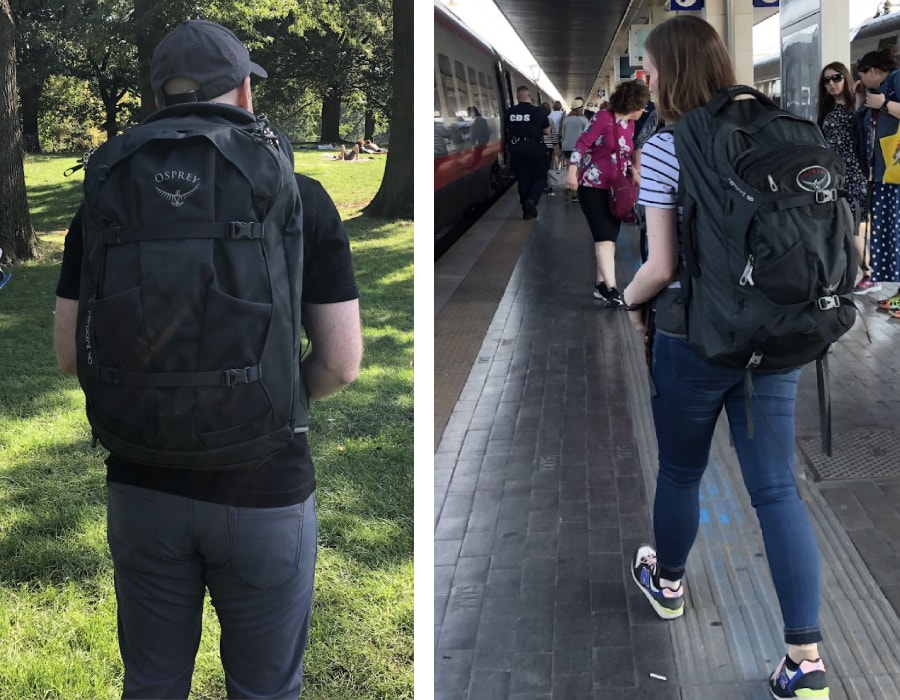
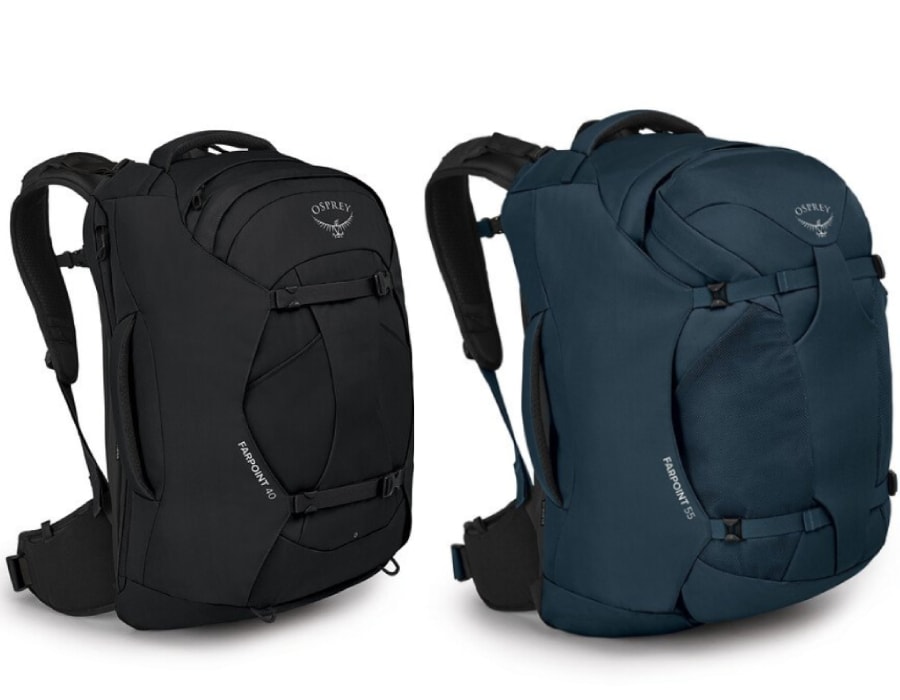
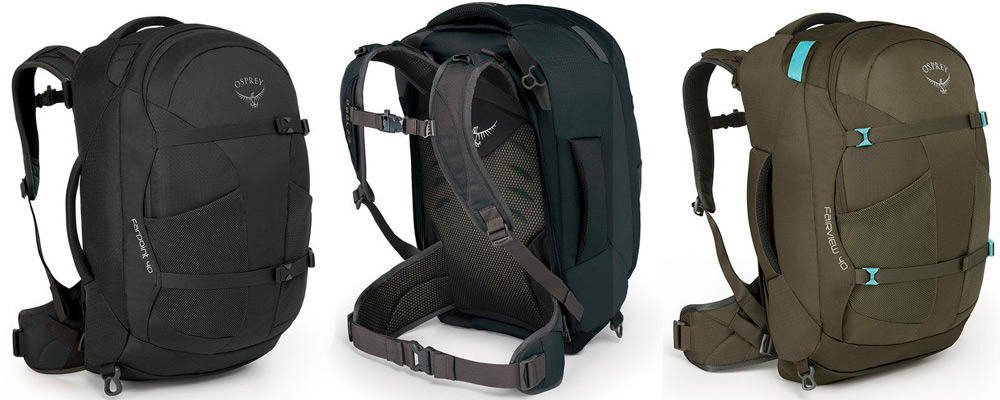
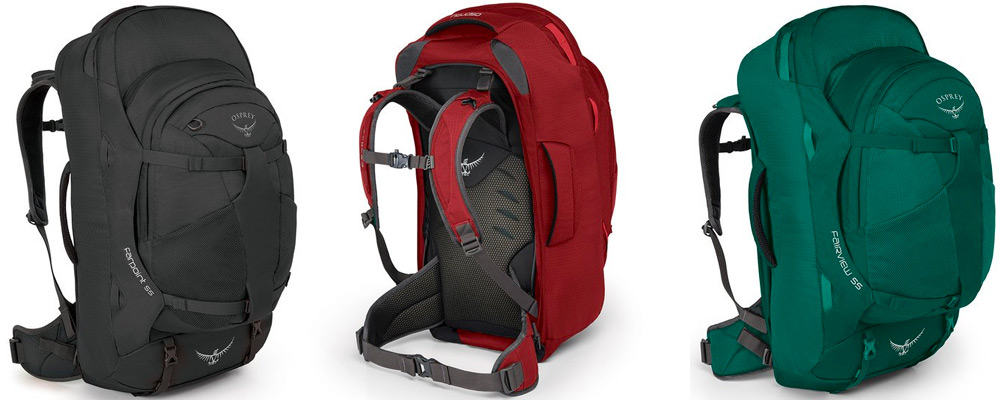
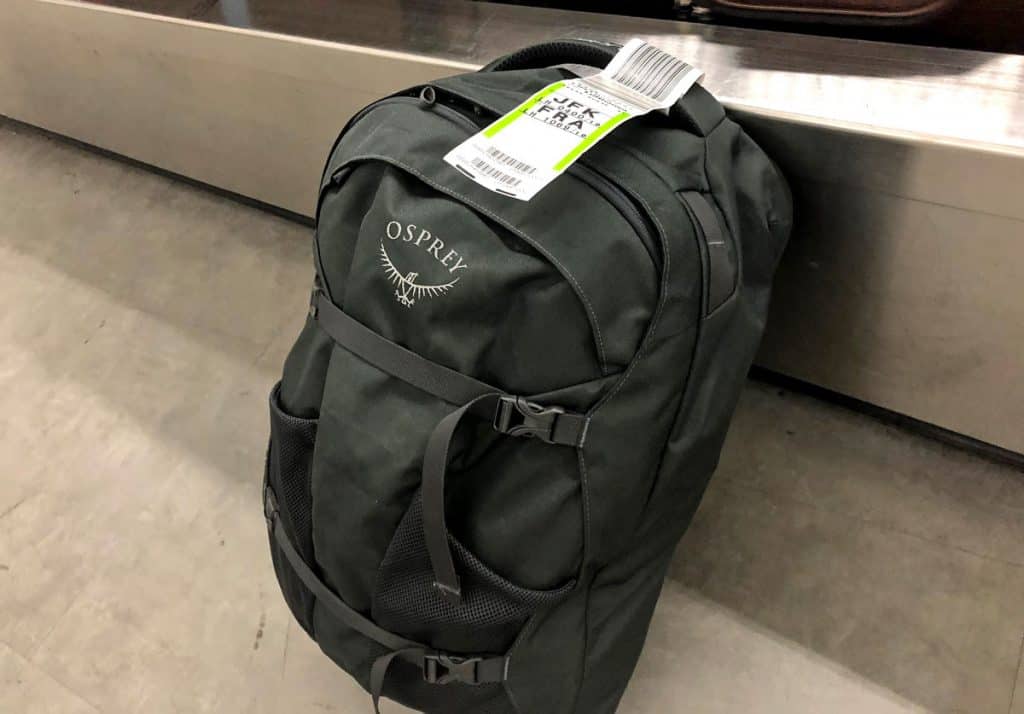
The Osprey Farpoint (and its female-specific counterpart, the Osprey Fairview) stands out as a consistently favored all-around travel backpack. A significant redesign in 2022 enhanced its carry-on compliance by slightly shortening its dimensions and introducing welcomed improvements such as a repositioned laptop compartment and an upgraded mesh-covered rigid foam back panel.
The Farpoint/Fairview series distinguishes itself with a high-quality hiking-style shoulder harness, ensuring superior comfort during extended wear, combined with a practical suitcase-style opening for effortless packing. Its relatively lightweight construction and the ability to zip away straps for checking further contribute to its versatility and protection against baggage handling damage. It is important to note that while the Farpoint 55L includes a detachable 15L daypack, the main bag size is consistent across both the 40L and 55L versions.

- Farpoint/Fairview 40L Specs: Carry-on compliant, designed for comfortable urban travel.
- Farpoint/Fairview 55L Specs: Includes a detachable daypack, offering expanded capacity for varied trip needs.
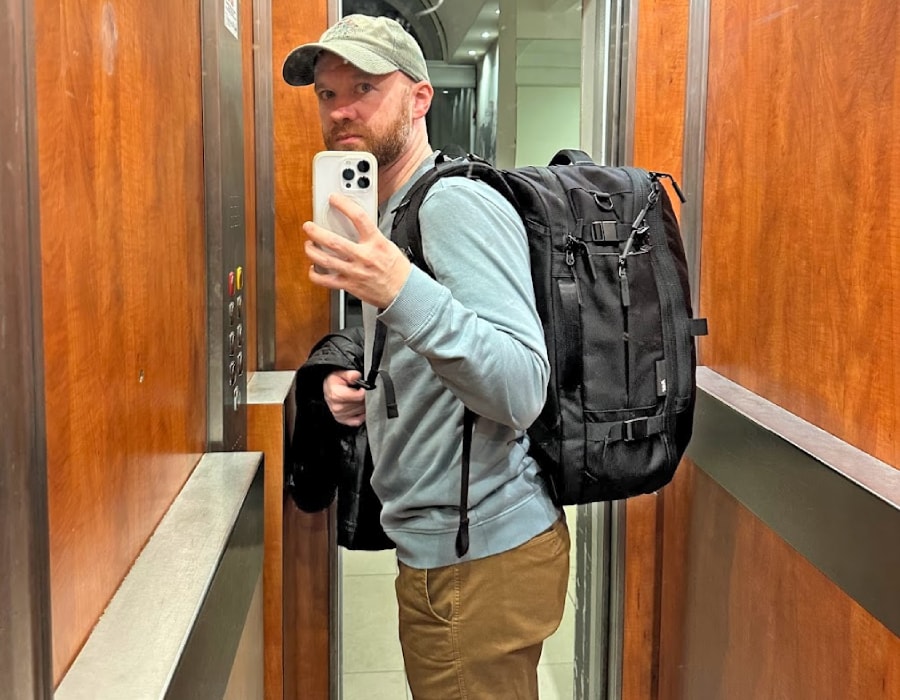
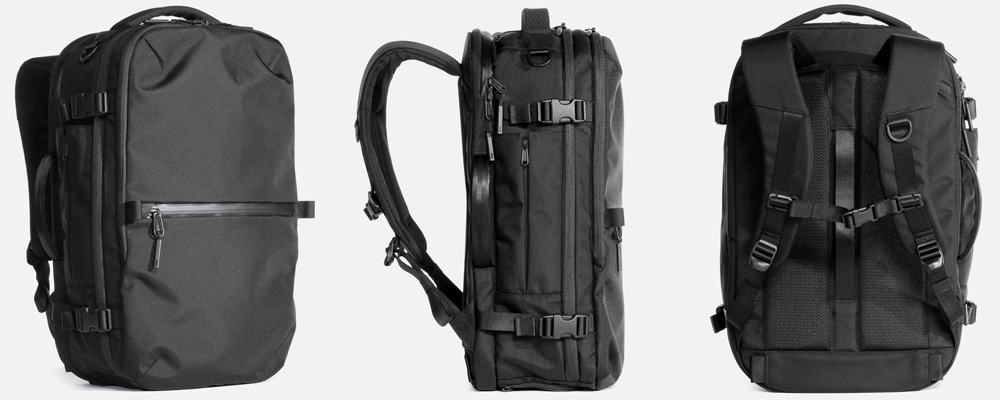
Aer Travel Pack 3: The Urban Minimalist’s Choice
Updated in 2022, the Aer Travel Pack 3 represents a significant enhancement over its predecessor, the Aer Travel Pack 2. This 35L backpack is a heavy-duty, minimalist travel solution characterized by its sleek urban/utilitarian styling and intelligently designed pockets for superior organization.
Crafted for both style and functionality, the Aer Travel Pack 3 is ideal for urban exploration and perfectly suits minimalist travelers or those using it in conjunction with a larger suitcase. Its 35L capacity ensures easy compliance with most airline carry-on size specifications, often fitting under airline seats. Aer utilizes high-quality materials and robust fabrics, complementing well-padded, ergonomically curved shoulder straps for enhanced comfort.
- Aer Travel Pack 3 Specs: 35L capacity, urban aesthetic, robust construction, dedicated organization pockets, improved harness system.
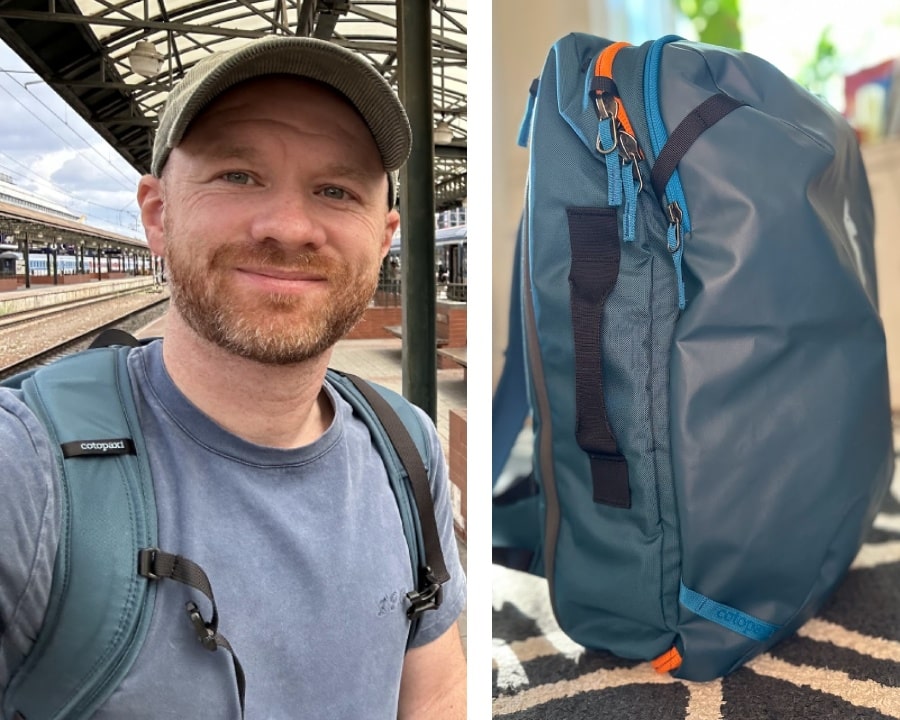
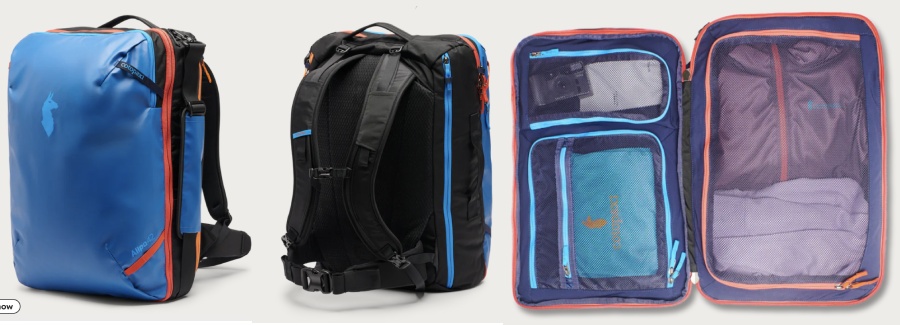
Cotopaxi Allpa 42L Travel Pack: Style Meets Smart Design
The Cotopaxi Allpa 42L has garnered significant attention in travel backpack reviews, celebrated for its optimal carry-on size and distinctive style, a rarity in the travel backpack segment. Its performance in diverse urban settings, such as Prague and Berlin, highlights its comfort, sturdy construction, and exceptional durability.
The Allpa 42L’s design incorporates multiple pockets, facilitating intuitive organization. Noteworthy features include sturdy, tamper-resistant zippers and color-coded zipper pulls that streamline access to compartments. While a 35L version is available, the 42L is generally recommended for trips exceeding three to five days, balancing capacity with carry-on limits.
- Cotopaxi Allpa 42L Specs: 42L capacity, carry-on compliant, distinctive style, robust zippers, multiple organizational pockets, tamper-resistant features.
Osprey Sojourn Porter: The Gear-Hauling Specialist
Redesigned in 2021, the Osprey Sojourn Porter series remains a strong contender for travelers needing to transport a significant amount of gear at a competitive price point. While its comfort level, though adequate for city travel, may not match the Farpoint/Fairview, the Sojourn Porter excels as a purpose-built gear-hauling backpack.
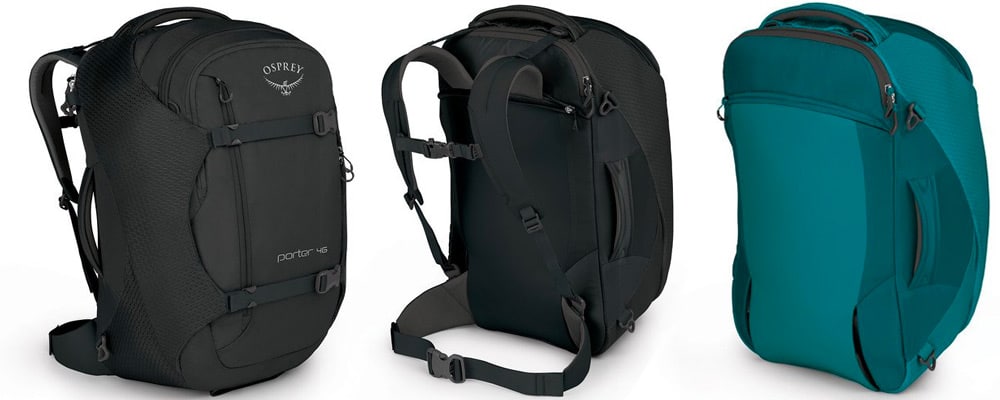
Its unique "turtle shell" shape maximizes internal packing space, allowing for an impressive volume of contents. The 46L version is widely recommended for its near-carry-on compliance, while the 30L caters to ultra-minimalist travelers. The 65L variant is typically reserved for those with substantial packing needs.
- Osprey Sojourn Porter 30L/46L/65L Specs: Varied capacities, "turtle shell" design for maximum packing, robust construction, suitable for city hopping.
Tortuga Travel Backpack 40L: The Feature-Rich Powerhouse
The Tortuga Travel Backpack 40L is recognized as one of the most comprehensive and durable travel backpacks available. Its "built like a tank" reputation stems from its construction with extremely tough, water-resistant sailcloth fabric, originally designed for racing boat sails.
This backpack integrates a robust hiking-style shoulder harness and hip belt for superior comfort, effectively distributing weight. Its 40L capacity is carry-on compliant, and its intelligent design boasts extensive organization features, making it a solid choice for travelers who prioritize every conceivable travel-centric feature. A 30L version is also available for those requiring less capacity.
- Tortuga Travel Backpack 40L Specs: 40L capacity, highly durable sailcloth fabric, robust hiking-style harness and hip belt, extensive organization, carry-on compliant.
Kelty Redwing Tactile: The Budget-Friendly Hybrid
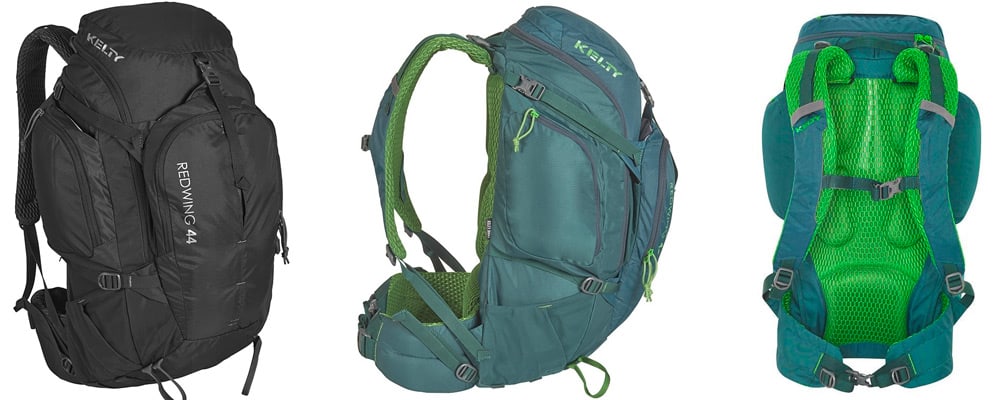
Often overlooked due to its marketing as a hiking backpack, the Kelty Redwing Tactile is a surprisingly solid and budget-friendly travel option. It functions as a hybrid, offering the comfort of a hiking backpack with a quasi-suitcase opening for easier packing. Kelty has also introduced the new Redwing Traveler (30L, 40L, 50L) specifically designed for travel, which shows promising enhancements.
The primary drawback of the Redwing Tactile is its aesthetics, resembling a traditional outdoorsy hiking pack rather than a sleek urban bag. Its less streamlined profile might also be a minor inconvenience in crowded spaces. However, for travelers prioritizing comfort and affordability over style, it presents a compelling choice.
- Kelty Redwing 44/32/40 (Women’s) Specs: Hybrid design (hiking comfort, travel accessibility), multiple sizes, budget-friendly.
Osprey Atmos/Aura: Best Hiking-Style Backpack for Comfort
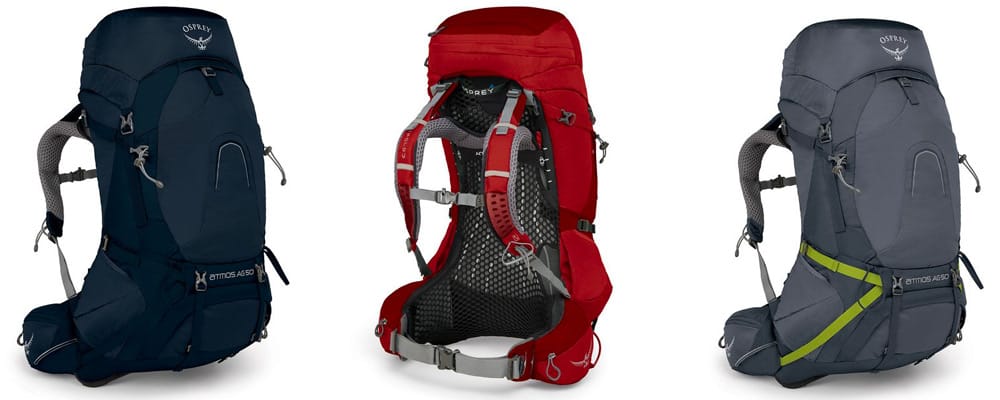
For travelers whose priority is unparalleled comfort and capacity, the Osprey Atmos (and its female equivalent, the Osprey Aura) line of hiking backpacks is an excellent consideration. While these are top-loading bags, which can be less convenient for frequent access to items, their design prioritizes long-duration wear.
The Atmos/Aura series excels in ergonomic comfort, featuring advanced shoulder harnesses and hip belts designed to be worn for hours. Though typically too large to be "technically" carry-on compliant for many airlines, their lightweight construction and superior suspension system make them a joy to carry, especially when traversing varied terrain or making long transfers. For those with a more generous budget, the Osprey Aether offers an even more premium hiking backpack experience.
- Osprey Atmos/Aura 50L Specs: Superior comfort-focused hiking harness, lightweight, high capacity, top-loading design.
eBags Mother Lode Travel Backpack: The Economical Carry-On
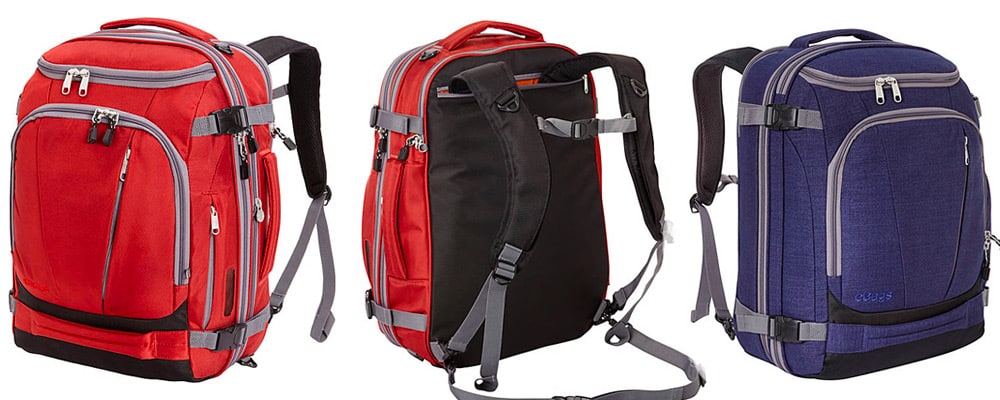
The eBags Mother Lode Travel Backpack is a cost-effective, max carry-on size backpack engineered for city travel. Its affordability makes it an attractive option, but this comes with a trade-off: a more basic shoulder harness, which may not provide optimal comfort for prolonged use or heavy loads.
Despite this, its purpose-built design for urban travel and generous carry-on dimensions offer significant value for budget-conscious travelers seeking maximum packing space without incurring checked bag fees. The Mother Lode Jr. offers a slightly smaller option.
- eBags Mother Lode Travel Backpack Specs: Max carry-on size, budget-friendly, purpose-built for city travel, basic harness system.
Patagonia Black Hole: The Durable Duffle-Style Option
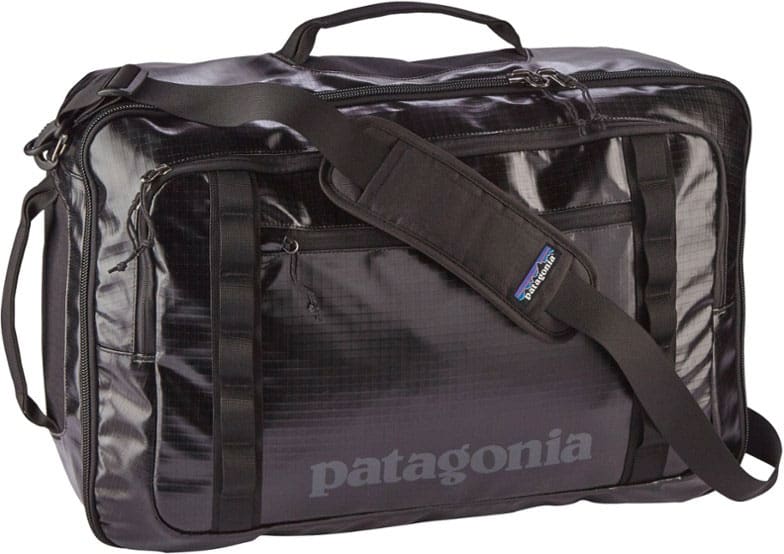
The Patagonia Black Hole, while not a traditional "travel backpack," has cultivated a dedicated following. It functions more as a soft-sided suitcase with integrated basic backpack straps, often preferred as a shoulder bag.
The 45L Black Hole MLC (Maximum Legal Carry-On) is characterized by its sleek, minimalist design, devoid of external dangling straps, projecting a stylish urban aesthetic. Renowned for its robust construction and ability to accommodate a substantial amount of gear, it is an excellent choice for travelers who prioritize durability and a clean profile over a dedicated backpacking harness system.
- Patagonia Black Hole MLC Specs: 45L capacity, durable duffle-style design, minimalist aesthetic, robust construction, versatile carrying options.
The Strategic Advantage of Travel Backpacks
Embracing travel with only a backpack offers unparalleled freedom and a minimalist approach to exploration. This method necessitates careful consideration of what to pack, encouraging smarter, more efficient travel habits. The inherent limitation of space compels travelers to curate their belongings, ultimately reducing unnecessary bulk.
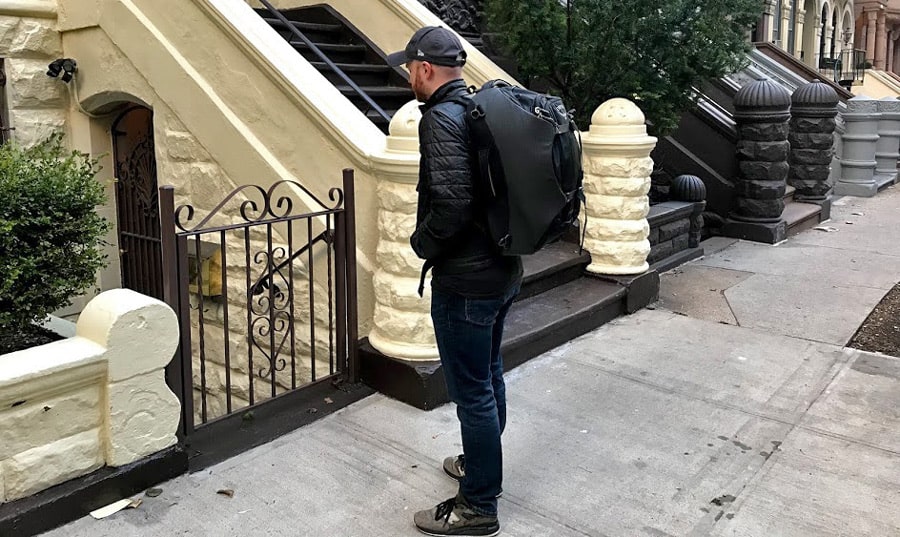
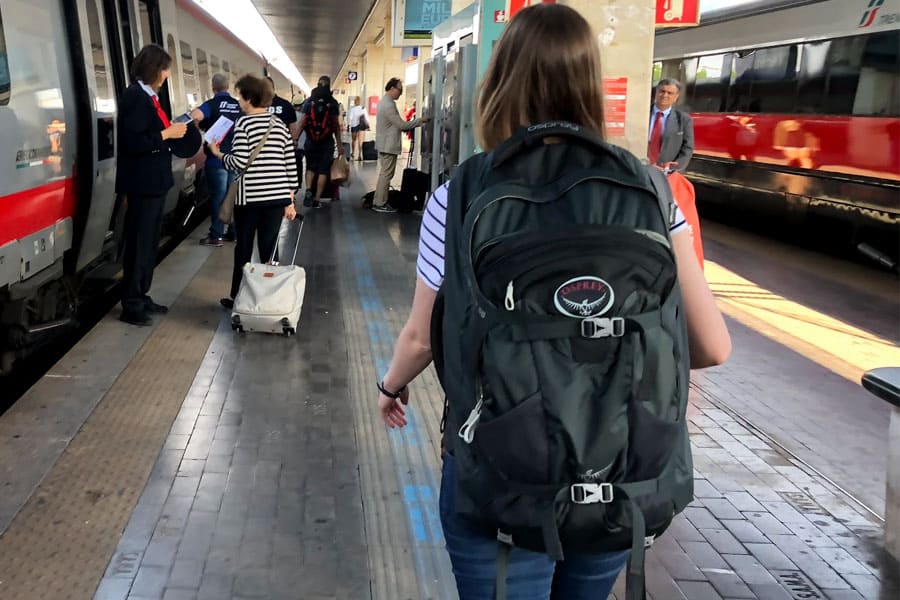
This light load significantly enhances mobility, allowing seamless navigation through bustling train stations, charming cobblestone streets, and countless staircases—challenges often exacerbated by traditional wheeled luggage. Furthermore, opting for a carry-on size backpack eliminates the financial burden of checked bag fees and mitigates the risk of lost luggage, a growing concern for air travelers.
A Comprehensive Buyer’s Guide: Choosing Your Ideal Travel Backpack
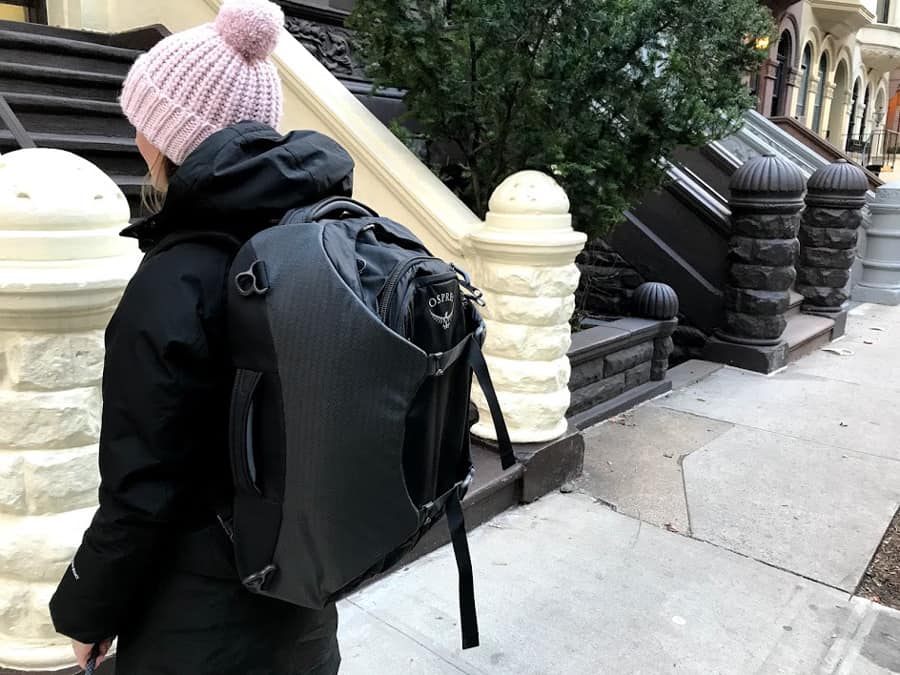
Selecting the perfect travel backpack involves evaluating various features against individual travel needs. Given the diverse market, a "one-size-fits-all" solution is rarely appropriate.
Travel Backpack Sizes (Liters)
Backpacks are typically measured in liters, but actual volume and practical capacity can vary between brands due to different measurement methodologies and bag shapes. Generally, the maximum carry-on size is around 43-45 liters, though airline-specific dimensions and weight limits should always be verified.
- 20-30 Liters: Ideal for day trips, minimalist weekenders, or as a secondary personal item.
- 30-40 Liters: Optimal for carry-on travel of 3-7 days, suitable for light packers on longer trips with laundry access.
- 40-45 Liters: The sweet spot for maximum carry-on capacity, versatile for extended trips with efficient packing.
- 45-55+ Liters: Generally requires checking the bag, offering substantial capacity for gear-heavy travel or those who prefer more space.
- Note: Trip length does not always dictate backpack size, as laundry cycles enable consistent packing for varying durations.
Travel Backpacks vs. Hiking Backpacks: A Fundamental Distinction
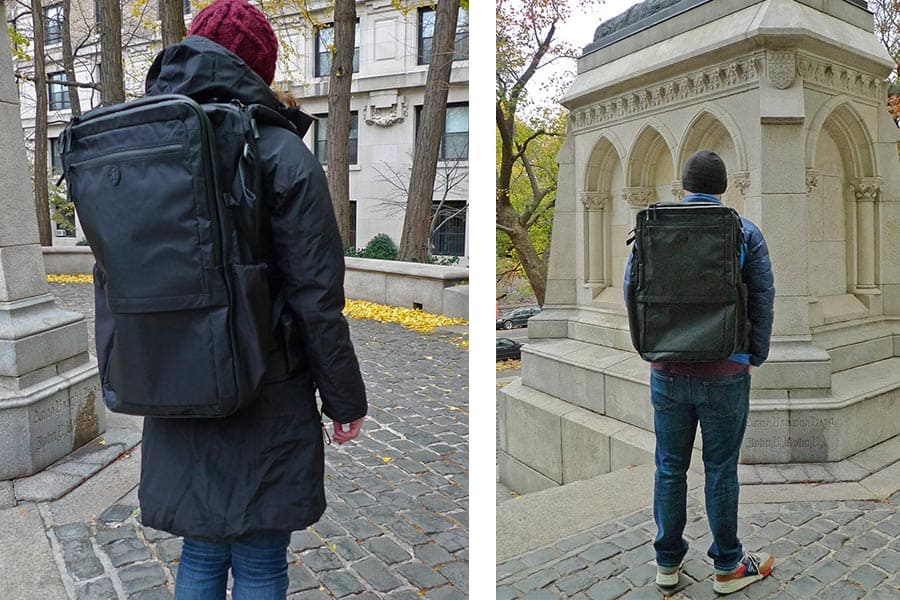
The market broadly categorizes backpacks into "travel" and "hiking" styles, each with distinct design philosophies. Travel-style backpacks are predominantly recommended for urban exploration due to their tailored features.
Clamshell/Suitcase Opening vs. Top Opening: The most prominent difference lies in access. Travel backpacks feature a full-zip, suitcase-like opening, allowing complete visibility and easy retrieval of contents. Hiking backpacks, conversely, are typically top-loading with a drawstring closure, which can make accessing items buried at the bottom cumbersome.
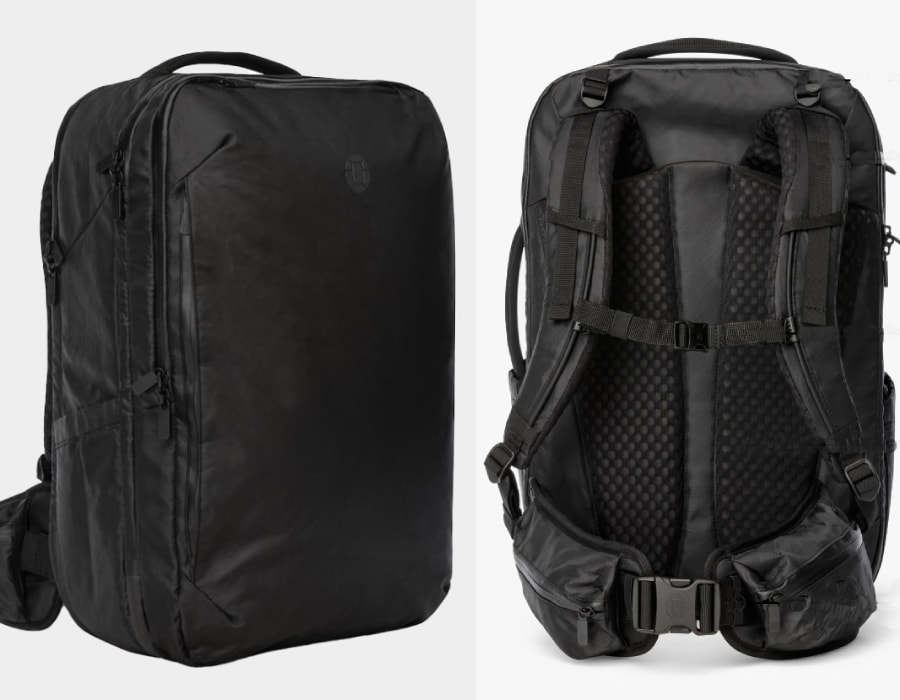
Suspension System (Shoulder Straps & Hipbelt): Hiking backpacks generally offer superior comfort for prolonged wear, thanks to their advanced shoulder harnesses and hip belts designed to sit close to the body and distribute weight efficiently. While some modern travel bags incorporate robust suspension systems, they may not always match the ergonomic refinement of dedicated hiking packs. The presence of a hip belt significantly aids in transferring weight from shoulders to hips, enhancing comfort for heavier loads. Padding on shoulder straps also contributes to comfort, balancing against added weight and bulk.
Size & Layout: Travel backpacks often feature a boxier, suitcase-like shape, maximizing interior space and making packing more efficient. Hiking backpacks tend to be longer and narrower, which, while comfortable by keeping the load close to the back, can make internal space utilization less straightforward.
Weight: Hiking backpacks are typically lighter due to their minimalist construction, often lacking the numerous compartments and robust external features of travel bags. The base weight of a backpack is a crucial factor, especially with airlines increasingly imposing strict weight limits for carry-on luggage, which can force travelers to pack less or incur additional fees.
Final Thoughts: Travel vs. Hiking Backpacks: Despite minor comfort differences, travel-style backpacks generally offer greater practicality for urban travel. They also tend to have more discreet, less brightly colored designs compared to their hiking counterparts, which can be advantageous for blending into city environments.
Travel Backpack Configuration, Pockets, & Layout
Most travel backpacks feature a primary large compartment supplemented by smaller pockets for organizing essentials. Manufacturers strive to balance extensive organization with maintaining a lightweight and streamlined profile. Strategically placed exterior pockets, particularly a top pocket for frequently accessed items like phones or sunglasses, are highly valued. Overly compartmentalized bags can sometimes add unnecessary bulk without significant practical benefit.
Laptop Compartment
For travelers carrying electronics, a well-designed laptop compartment is critical. Ease of access from the exterior of the bag is paramount for airport security checks. The optimal placement is typically against the back panel, which provides better protection and maintains a balanced load, reducing strain. Compartments located at the front of the bag may offer less protection and potentially shift the center of gravity, affecting comfort.
Travel Backpack Structure and Internal Frame
Effective weight distribution and stability are achieved through a backpack’s internal structure. This is commonly implemented via a lightweight internal frame (e.g., internal poles) or a large plastic sheet integrated into the back panel. Internal frames offer greater rigidity and stability for heavier loads, while plastic sheets provide adequate support for most travel scenarios, keeping the load tight against the body.
Stowable Shoulder Straps & Hip Belt
The ability to stow away shoulder straps and hip belts is a significant advantage. This feature not only protects the straps from damage when checking the bag on airlines but also streamlines the bag’s profile, making it easier to navigate narrow airplane or train aisles and to fit into overhead compartments or under seats.
Travel Backpack Materials/Fabrics
The majority of travel backpacks are constructed from synthetic materials, predominantly nylon, chosen for its optimal balance of lightweight durability. Fabric specifications often include numbers (e.g., 210D, 420D, 1680D) indicating thickness and weight (higher numbers mean thicker/heavier fabric), alongside terms like Ripstop, CORDURA, or Ballistic Nylon, which describe the weave and inherent durability. While specific fabric details are interesting, most reputable brands utilize materials that provide sufficient durability for typical travel use.
Sturdy Zippers
Zippers are a common point of failure in luggage. YKK zippers are considered the industry standard for reliability and are a strong indicator of a bag’s overall quality. Weather-sealed zippers offer an additional layer of protection against moisture, a beneficial but not always essential feature.
Top and Side Handles
Robust handles positioned on the top and sides of a backpack significantly enhance usability. They facilitate easier handling when maneuvering through tight spaces, loading onto transportation, or simply repositioning the bag without needing to wear it.
Weather Resistance
While some level of weather resistance is desirable, absolute waterproofing is rarely a critical requirement for urban travel. Most bags offer some protection against light rain, and for heavier downpours, a dedicated rain cover (often sold separately) provides adequate defense for contents.
Backpack Style and Aesthetics
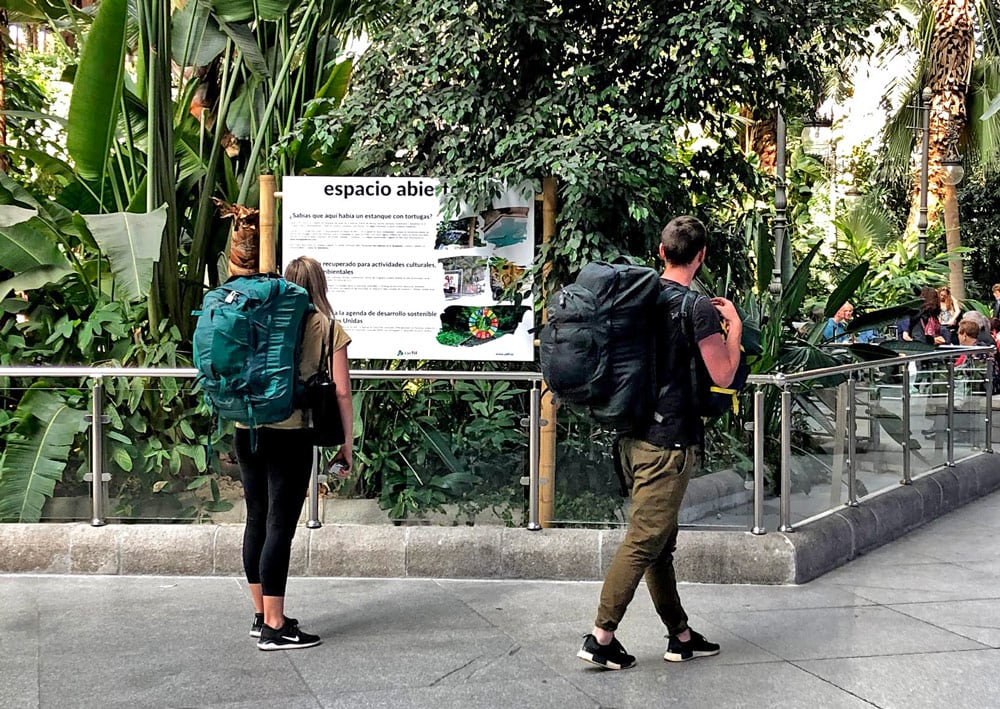
Travel backpacks exhibit a range of styles, from sleek, minimalist urban designs to more rugged, outdoorsy appearances. The choice often comes down to personal preference, with many travelers favoring urban styling to avoid appearing overtly "touristy." However, a trade-off can sometimes exist, where highly styled bags may offer less ergonomic comfort compared to more functionally oriented designs.
Travel Backpack Prices
Quality travel backpacks represent a significant investment, with prices typically starting around $140 and extending to over $350 for premium models. Budget-conscious travelers can explore second-hand markets (e.g., online marketplaces) or look for clearance deals on previous season’s models from outdoor retailers.
Matching Your Backpack to Your Travel Style
The most critical factor in selecting a travel backpack is aligning it with one’s specific travel style and needs:
- Weekend Trips / Minimalist Travel: Smaller bags (30-35L) with sleek designs and basic organization.
- Extended Urban Travel (Carry-on Only): Mid-range bags (40-45L) with robust harness systems, suitcase-style openings, and intelligent organization.
- Adventure/Hiking Combined with Travel: Hybrid designs or comfortable hiking packs (45-55L+) prioritizing ergonomic support, potentially sacrificing carry-on compliance.
- Business Travel / Digital Nomad: Bags with dedicated, easily accessible laptop compartments, professional aesthetics, and efficient organization for electronics.
- Budget Travel: More affordable options that balance essential features with cost, potentially compromising on advanced comfort systems or premium materials.
Optimizing the Travel Experience: Packing Tips and Accessories
Regardless of the chosen backpack, effective packing strategies are paramount. Packing cubes are an indispensable accessory for compartmentalizing clothing and other items, enhancing organization and accessibility within the main compartment. These accessories transform the often-chaotic experience of living out of a backpack into a more orderly system. Many brands offer proprietary packing cubes, though universal options from manufacturers like Eagle Creek are widely available and highly recommended for their durability and efficiency.
Conclusion and Outlook
The modern travel backpack market offers an impressive range of solutions tailored to the diverse needs of today’s globetrotters. From ultra-minimalist urban packs to robust gear-haulers, the evolution in design reflects a keen understanding of traveler demands for comfort, functionality, and style. By carefully considering factors such as size, suspension, access, and materials, travelers can select a backpack that not only meets their practical requirements but also enhances their overall journey, enabling a more agile, cost-effective, and enjoyable exploration of the world. The trend towards specialized, carry-on-compliant designs is expected to continue, further refining the art of portable travel.