Cranfield Aerospace Solutions Abandons Hydrogen Passenger Flight Ambitions Amid Financial Restructuring

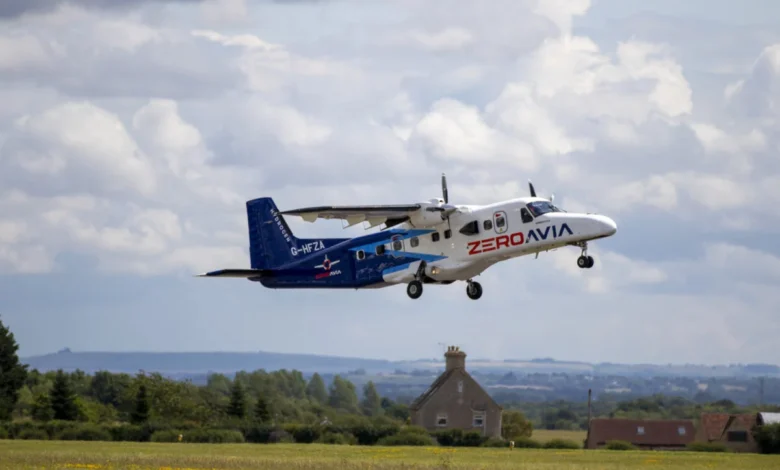
Cranfield Aerospace Solutions, once a vanguard in the race to decarbonize regional aviation, has officially abandoned its goal of developing a hydrogen-powered passenger aircraft. The company, which had garnered significant attention for its "Project Fresson" initiative, confirmed in its latest filings with the UK’s Companies House that it is pivoting its business strategy away from zero-emission passenger transport. This move marks a definitive end to its efforts to convert the nine-seat Britten-Norman Islander into a hydrogen-fuel-cell-powered transport, a project that had been viewed as a litmus test for the viability of short-haul green aviation.
The Strategic Pivot: From Passenger Planes to Drones and Consultancy
The transition away from passenger flight is not merely a pause but a fundamental change in the company’s operational focus. According to the board of directors, the decision was necessitated by a need to improve the long-term outlook of the business, which has faced mounting fiscal pressures. Cranfield Aerospace Solutions is now redirecting its research and development resources toward the design and production of hydrogen-powered unmanned aerial systems (UAS), or drones.
This pivot reflects a broader shift in the company’s business model toward sectors with more immediate commercialization potential. By targeting the drone market, the company aims to serve a wider range of industrial and logistical segments that do not face the same stringent, time-consuming certification hurdles required for passenger-carrying aircraft. Furthermore, the company is reviving its legacy services, specifically its aerospace design consultancy—the cornerstone of the business before the high-stakes gamble on hydrogen passenger flight. Additionally, the firm’s motorsport simulator division has secured an exclusive contract with a premier venue entertainment provider, leading to the establishment of a new factory to support this growing revenue stream.
Chronology of a Failed Ambition
The trajectory of Cranfield Aerospace Solutions serves as a case study in the volatility of the green aviation sector. Project Fresson was conceived with the ambitious goal of proving that existing regional aircraft could be retrofitted with zero-emission propulsion systems.
- Initial Launch: The project gained early momentum by leveraging the Britten-Norman Islander, a robust aircraft staple for island-hopping routes in the UK and beyond.
- Funding Challenges: Throughout the development cycle, the company relied on a mix of government grants and shareholder loans to sustain operations as capital-intensive R&D costs mounted.
- 2025 Retrenchment: By the third quarter of 2025, it became clear that the path to certification for passenger flight was far more costly and technically complex than original estimates suggested.
- Formal Withdrawal: The late filing of the company’s accounts in late 2025 provided the first public confirmation that the passenger flight program had been permanently shelved.
Financial Reality: A Struggle for Sustainability
The financial statements for the year ending September 29, 2025, paint a stark picture of the challenges inherent in aerospace innovation. The company reported a loss of £4.5 million, an increase from the previous year’s loss of £4.3 million. While revenue saw a significant uptick, growing to £6.9 million from £1.9 million, this growth was primarily driven by the simulator business rather than aviation innovation.
The company’s liquidity remains tight. With just £414,000 in cash reserves and a debt burden of £13.4 million in convertible loan notes, the firm is heavily reliant on the continued support of its shareholders and the prospect of future grant funding. The interest on these notes, fixed at 12%, represents a significant liability, though the company has successfully pushed repayment deadlines beyond September 2026.
Perhaps most striking is the valuation of the "hydrogen-fueled prototype aircraft" on the company’s balance sheet, which remains pegged at £16.3 million. There has been no write-down for this asset, despite the cancellation of the passenger flight program. Given that the company’s net assets total only £937,000, any impairment of this intangible asset would effectively render the company’s balance sheet insolvent, highlighting the fragile nature of its current fiscal standing.
Broader Implications for the Green Aviation Sector
Cranfield’s retreat is emblematic of a broader cooling in the venture-backed green aviation space. The "hydrogen revolution" in flight, once characterized by high-profile announcements and rapid investment, is now facing a harsh reality check: the "valley of death" between prototype and commercial product is significantly wider and more expensive than many startups anticipated.
The failure of Maeve Aerospace in June 2026, which left major backers like Delta, SkyWest, and Japan Airlines without a promised hybrid-electric regional jet, signaled the start of a consolidation period. Similarly, ZeroAvia, a prominent player in the field, was forced to reduce its headcount by half in 2026. These events underscore a growing consensus among analysts that the decarbonization of aviation will not be a quick transition driven by small startups, but rather a long-term capital-intensive process likely requiring major aerospace incumbents to lead the way.
Aviation decarbonization analyst Adrian Norris, speaking on the state of the industry following the Maeve collapse, noted that the timeline to revenue is simply too long for many current startups to survive. "Billions are needed, years before there is any possibility of generating revenue," Norris remarked. "Sadly, Maeve won’t be the last to fail."
Analysis: Can Consultancy Sustain the Dream?
The decision to return to design consultancy and drone manufacturing is a defensive move intended to ensure the survival of the company’s core expertise. By diversifying its revenue streams, Cranfield is attempting to mitigate the risks associated with the high-burn rate of aviation R&D.
However, the transition poses its own risks. Transitioning from a bespoke, highly regulated aerospace engineering firm focused on safety-critical passenger aircraft to a more diverse consultancy and simulator firm requires a significant shift in corporate culture and operational capability. Furthermore, the reliance on government grants and continued shareholder loans suggests that the company has not yet achieved a sustainable, profit-generating business model.
The delay in filing the 2025 accounts—occurring more than four months after the June 29 deadline—suggests internal turmoil and the difficulties of navigating the company’s financial restructuring. For investors and stakeholders, the next 12 months will be critical. The company’s ability to successfully scale its simulator production and secure profitable contracts for its new drone initiatives will determine whether Cranfield can survive the current industry shakeout.
Conclusion: The End of an Era
The abandonment of Project Fresson marks a sobering moment for the UK aerospace industry. It highlights the discrepancy between the technical feasibility of zero-emission flight and the commercial reality of bringing such technology to market. As the industry moves away from the "hype phase" and into a period of rationalization, firms that cannot demonstrate a clear, near-term path to profitability are likely to follow in the footsteps of Cranfield and Maeve.
While the dream of a hydrogen-powered passenger Islander has vanished, the expertise gained during the project’s tenure remains within the engineering team. Whether this knowledge can be successfully repurposed in the drone sector or through consultancy services remains to be seen. For now, the company remains a cautionary tale of the immense capital and time requirements needed to transform aviation, serving as a reminder that in the race to net-zero, endurance is just as important as innovation.