Barcelona to Ibiza Without Flying: A Practical Guide to Reaching the White Island by Ferry


The maritime corridor between Barcelona and Ibiza represents one of the most vital transport links in the Mediterranean, serving as a primary artery for both tourism and logistics. While the flight time between Barcelona-El Prat Airport (BCN) and Ibiza Airport (IBZ) is frequently clocked at under 60 minutes, a growing segment of travelers is opting for the nine-hour ferry crossing. This shift is driven by a combination of economic factors, environmental considerations, and the logistical advantages of maritime transport over aviation. For those navigating the Balearic Sea, the transition from the Catalan capital to the "White Island" via ferry offers a strategic alternative that bypasses the traditional stresses of modern air travel, such as restrictive baggage policies and the high costs of peak-season car rentals.
The Maritime Landscape: Operators and Infrastructure
The route is currently serviced by three major maritime operators: Balearia, Grandi Navi Veloci (GNV), and Trasmed. Balearia, a prominent Spanish shipping company, utilizes a fleet of conventional ferries equipped with extensive vehicle decks. GNV, an Italian operator under the MSC Group, and Trasmed, which is part of the Grimaldi Group following its acquisition of Trasmediterranea, provide year-round services that ensure consistent connectivity.
The geographical distance of approximately 149 nautical miles (276 kilometers) is typically covered in 8 hours and 30 minutes to 9 hours and 30 minutes. During the low season, the frequency of sailings fluctuates between five and seven per week. However, as the summer peak approaches from June through September, the schedule intensifies to daily departures to accommodate the surge in tourism. These sailings are predominantly scheduled as overnight journeys, with vessels departing Barcelona between 21:45 and 22:00 and arriving in Ibiza Town between 06:15 and 07:30 the following morning.

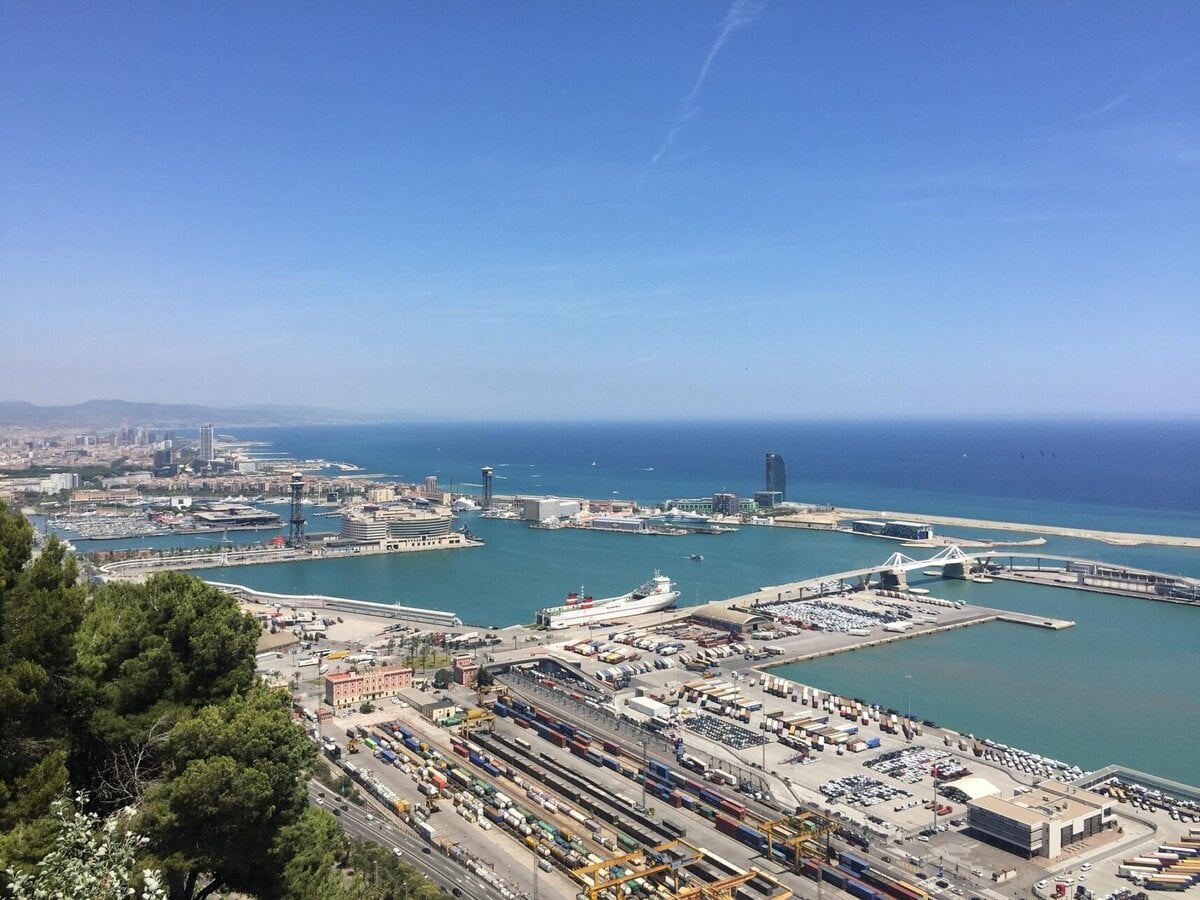
The Port of Barcelona, one of Europe’s largest and most complex maritime hubs, utilizes several terminals for these departures. Balearia foot passengers generally utilize the Terminal Nord near the World Trade Center, while GNV and Trasmed operate from the F2 international terminal at Moll de Sant Bertran. Vehicle boarding for Balearia is often directed to Terminal F4 at Moll Adossat. In Ibiza, ferries dock at the Estacio Maritima Botafoc, located approximately 1.5 kilometers from the UNESCO-listed Dalt Vila (Old Town).
Economic and Logistical Analysis: Ferry vs. Flight
The decision to take the ferry is frequently rooted in a pragmatic analysis of cost and convenience. While budget airlines may offer low base fares, the total cost of air travel often escalates when factoring in surcharges for checked luggage, sports equipment, and ground transportation to and from remote airport terminals.
In contrast, maritime operators maintain more generous baggage policies. Balearia, for instance, imposes no weight restrictions on personal luggage provided the passenger can carry it unassisted. Trasmed allows up to 30 kg for seat passengers and 40 kg for those in cabins. This makes the ferry particularly attractive for long-term visitors, digital nomads, and athletes traveling with surfboards or diving gear.
Furthermore, the ferry serves as the only viable method for transporting personal vehicles. The Balearic Islands have historically faced challenges regarding rental car availability during the high season. Industry data indicates that rental prices in Ibiza can double in July and August, with many agencies running out of stock for larger family vehicles weeks in advance. By transporting their own cars, motorcycles, or campervans, travelers eliminate the need for agency queues and the associated costs of damage waivers and high daily rental rates.
Onboard Accommodation and Service Standards
The vessels deployed on the Barcelona–Ibiza route are full-sized conventional ferries designed for long-haul comfort rather than high-speed transit. This "floating hotel" model offers two primary tiers of accommodation: reclining seats and private cabins.
Reclining seats are the most economical option, with off-peak fares occasionally falling below €20. These are situated in air-conditioned lounges. However, industry experts and frequent travelers note that for overnight crossings, the cabin supplement—ranging from €50 to €150—is a significant value proposition. A standard cabin provides a private environment with beds, linens, and en-suite facilities, allowing passengers to arrive in Ibiza rested.
The onboard infrastructure includes cafeterias, full-service restaurants, and bars. While Balearia’s newer vessels feature outdoor terraces and pet-friendly cabins with video surveillance, the culinary offerings are generally functional. Market analysts suggest that while onboard dining provides necessary sustenance, many travelers prefer to dine in Barcelona prior to departure to take advantage of the city’s superior gastronomic scene.
Chronology of a Typical Crossing
A standard journey follows a precise chronological sequence designed to maximize the traveler’s time on the island:
- Check-in (20:00 – 21:00): Passengers arrive at the Port of Barcelona. Vehicle operators are required to check in at least 90 minutes before departure, while foot passengers are generally allowed a 60-minute window.
- Departure (22:00): The vessel clears the Barcelona breakwater. This timing allows for a full night’s sleep while the ship traverses the open Mediterranean.
- Transit (22:30 – 05:30): The ship maintains a steady cruising speed. This period is the primary window for rest.
- Arrival (06:30 – 07:30): The vessel enters the Port of Ibiza. The early arrival time is strategically advantageous, as it allows travelers to reach their accommodation or local cafes before the standard business day begins.
- Disembarkation (07:30 – 08:00): Foot passengers exit the ship directly into the harbor area, followed by the discharge of vehicles from the lower decks.
Environmental Impact and the Slow Travel Movement
The maritime route aligns with the burgeoning "slow travel" movement, which emphasizes the journey as an integral part of the experience rather than a hurdle to be cleared. From an environmental perspective, the carbon footprint of a ferry crossing per passenger kilometer can be lower than that of a short-haul flight, particularly when vessels are operating at high capacity and utilizing modern, more efficient engines.
Environmental advocates point out that the aviation industry’s impact on the fragile Balearic ecosystem is a point of ongoing local debate. By utilizing existing maritime infrastructure, travelers contribute to a more diversified and potentially more sustainable tourism model. The overnight ferry also reduces the demand for one night of hotel accommodation, further lowering the overall resource consumption of the trip.
Strategic Implications for Balearic Tourism
The connectivity provided by the Barcelona–Ibiza ferry has broader implications for regional tourism. It facilitates multi-island itineraries, allowing travelers to move from the mainland to Ibiza, and subsequently to Formentera or Mallorca via inter-island services.
According to tourism analysts, the ability to "island-hop" without returning to a major airport hub encourages longer stays and higher spending across multiple local economies. The ferry route effectively integrates Ibiza into the broader Spanish Mediterranean coastal network, making it accessible to road-trippers and those exploring the Iberian Peninsula by rail.

Practical Data and Travel Specifications
For those planning a crossing, the following data points are essential for logistical preparation:
- Average Fares: Foot passenger tickets range from €14 to €30 during off-peak periods, rising to €40 to €80 in the summer. Vehicle transport starts at approximately €30 but can exceed €150 for larger vans or during peak demand.
- Seasickness Considerations: The route crosses open water. While summer conditions are typically calm, the Mediterranean can become choppy between October and March. Maritime experts recommend that passengers prone to motion sickness choose cabins on lower decks near the ship’s center of gravity to minimize the sensation of movement.
- Port Access: The Barcelona ferry terminals are accessible via the Drassanes metro station (Line 3) or by taxi from the city center (approx. €10–€15). In Ibiza, the harbor is serviced by local taxis and a 20-minute walking path to the city center.
- Pet Policy: All three major operators permit pets, though specific regulations regarding crates and muzzles apply. Balearia’s specialized pet cabins represent a premium tier of service for animal owners.
Conclusion and Fact-Based Analysis
The ferry from Barcelona to Ibiza remains a cornerstone of Balearic transport. While it cannot compete with aviation on raw speed, it excels in utility, cost-effectiveness, and passenger comfort. By transforming a travel day into an overnight rest period, it maximizes the time available for leisure or business on the island. As airline fees continue to rise and the demand for sustainable travel options grows, the maritime route is expected to maintain its relevance as a preferred choice for a diverse range of Mediterranean travelers. The integration of modern fleet technology and more streamlined booking platforms has further solidified the ferry’s position as a practical, professional, and reliable alternative to flying.