Controversial Yosemite Land Swap Proposal Sparks Outrage and Legal Scrutiny Over Public Park Privatization

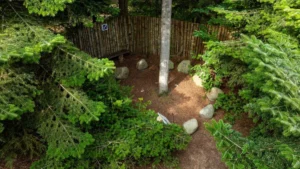
The debate over the commercialization and preservation of America’s federal public lands intensified significantly following investigative reports revealing that the federal administration has quietly engaged with a private equity firm regarding a contentious land exchange within Yosemite National Park. The proposed arrangement centers on an 83-acre privately held parcel known as Hazel Green Ranch, situated immediately adjacent to the park’s western boundary. If finalized, the transaction would facilitate the construction of a dedicated access road linking the property directly to the park interior, effectively bypassing standard public entry points and park reservation systems.
The disclosure has triggered an immediate and widespread backlash from conservation organizations, labor unions, federal lawmakers, and public figures. Critics argue that the initiative establishes a dangerous precedent for the privatization of national park infrastructure, potentially trading the public’s right to equitable access for private financial gain. As federal officials issue conflicting statements and legal experts analyze the viability of the undertaking, the controversy has reignited longstanding debates concerning the commercial development of protected natural areas, resource management under federal agencies, and the growing tension between elite tourism and public accessibility.
Chronology of the Hazel Green Property and Legal Battles
The origins of the current dispute trace back nearly three decades, rooted in previous attempts to develop the secluded Hazel Green parcel into a high-end commercial resort. Historical records and legal documents indicate that the 83-acre property, located approximately three miles into the park from the Oak Flat entrance near Mariposa County, has long been viewed by developers as a lucrative real estate asset contingent upon securing direct transportation links to Yosemite Valley.
In 1998, developer Lewis Geyser acquired Hazel Green Ranch with the explicit intention of constructing an upscale, eco-friendly resort featuring a 150-room hotel and approximately 80 private cabins. During the formulation of the National Park Service’s Yosemite Valley Plan—an initiative designed to mitigate severe traffic congestion within the park—Geyser proposed offering portions of his property for overflow parking. However, this proposal was contingent upon the Park Service constructing a connecting access road. When the agency rejected the offer in 2000, the prospective resort lost its primary logistical advantage.
Following this rejection, the development effort shifted to legal avenues. Between 2007 and 2012, Geyser pursued a series of lawsuits and appeals against the Department of the Interior and the National Park Service. The litigation sought judicial recognition of rights to use and improve two historic 1870s-era stagecoach routes crossing federal land to reach Big Oak Flat Road. Federal courts ultimately rebuffed these efforts, with judicial rulings affirming the Park Service’s authority to deny unauthorized road construction on federal property. In 2012, local administrative officials noted that the resort project remained economically unviable without guaranteed vehicular access through park lands.
The property changed hands in 2024 when Geyser sold Hazel Green Ranch for $4 million to an LLC controlled by Kingsbarn Realty Capital, a Las Vegas-based private equity firm. The firm, which oversees a multi-billion-dollar portfolio of income-generating real estate properties nationwide, organized the venture under the designation "Sanctuary at Yosemite." Over the subsequent months, representatives for the firm engaged directly with National Park Service personnel to negotiate a land swap that would trade federal acreage for the right to construct a sub-mile access road into the park.
Conflicting Official Statements and Corporate Confirmation
The public revelation of the discussions prompted swift denials from federal authorities, followed by admissions from the private developer and its legal counsel that negotiations had indeed taken place.
On August 28, a spokesperson for the Department of the Interior issued a categorical denial regarding reports of secret dealings to transfer National Park Service land. The representative characterized the initial investigative reports as relying on anonymous allegations designed to fabricate a false political narrative, asserting that no political pressure had been applied to achieve a predetermined outcome regarding park property.
Approximately ten hours after the Department of the Interior’s statement, attorney Lanny Davis, representing Kingsbarn Realty Capital, released a public confirmation acknowledging active cooperation with National Park Service staff at Yosemite. Davis stated that over the preceding six months, the firm and its legal representatives had collaborated with park personnel to establish safe transit from the Hazel Green property to the park entrance, culminating in the identification of a land exchange proposal for an access road spanning less than half a mile.
Further details emerged on September 1, when Kingsbarn CEO Jeff Pori informed national media outlets that Department of the Interior officials had directed the firm to coordinate with local park staff during in-person consultations held the previous year. Pori confirmed that the Hazel Green parcel was undergoing formal appraisal—a prerequisite step for the Park Service to determine an equivalent parcel of federal land to acquire in exchange. He verified that the intended development would mirror previous iterations, incorporating extensive lodging and cabin facilities designed to cater to high-income visitors.
Economic Implications and Asset Valuation
Financial analysts and park advocates point out that securing a direct, private vehicular artery into one of the nation’s most visited national parks would dramatically elevate the market value of the Hazel Green property. While acquisition costs for the LLC stood at $4 million in 2024, real estate experts suggest that obtaining a dedicated entrance bypass could escalate the commercial valuation of the resort project well into the nine-figure range.
Yosemite National Park currently accommodates millions of annual visitors through established entry gates, including Arch Rock, Big Oak Flat, Hetch Hetchy, South Entrance, and Tioga Pass. While the park contains three historical private inholdings—Wawona, Foresta, and Aspen Valley—these tracts remain entirely enclosed by federal land, requiring residents and visitors to pass through standard entrance checkpoints. Hazel Green uniquely borders national forest service roads connected to Highway 120 outside park boundaries while resting mere feet from internal park infrastructure.
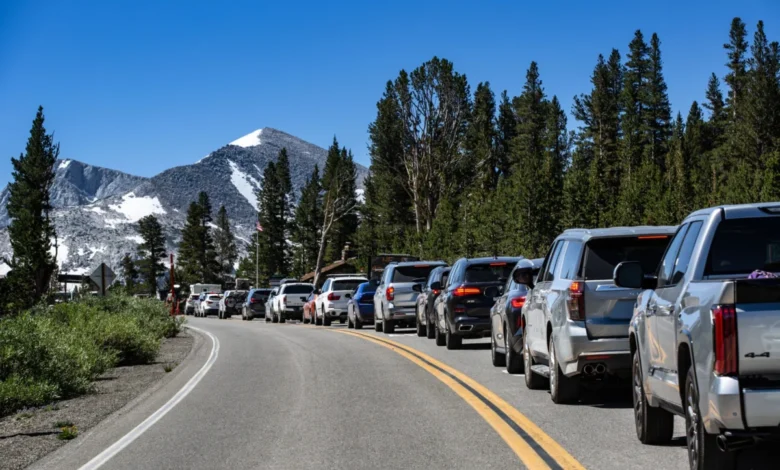
A private road connecting the proposed resort directly to the park floor would grant future guests the ability to bypass mandatory entrance gates and reservation quotas—privileges currently unavailable to the general public and park employees alike, many of whom commute from communities outside the park boundaries. Critics emphasize that if the National Park Service were to staff a dedicated entrance booth for the development, the financial and operational burden would fall upon an agency workforce that has experienced recent staffing reductions.
Legislative, Legal, and Environmental Hurdles
The feasibility of the land swap remains subject to significant regulatory, legislative, and judicial obstacles. Under federal guidelines, major land exchanges involving national parks typically require thorough environmental review, public comment periods, and, in many instances, explicit congressional approval through appropriations legislation.
However, Department of the Interior statements have suggested that specific administrative land exchanges may proceed without congressional authorization if the project proponent agrees to absorb all associated financial costs. This assertion has drawn immediate pushback from federal lawmakers representing California. Senators Alex Padilla and Adam Schiff publicly stated their opposition to the project, signaling potential legislative blocks in Congress.
Legal scholars and former federal officials have also questioned the legality of the transaction under existing conservation statutes. Jon Jarvis, who served as Director of the National Park Service during the Obama administration, noted that the proposed land swap conflicts with the mandates of the Redwood Act of 1978 and the Organic Act of 1916. These statutes require that any administrative action or authorization concerning park lands must serve the highest public value and align with the primary mission of resource preservation and public enjoyment, rather than conferring exclusive commercial advantages to private entities.
Furthermore, environmental regulations mandate the preparation of an Environmental Impact Statement (EIS) and comprehensive public participation processes before federal property can be transferred or altered. Although public opposition and environmental reviews have occasionally failed to halt controversial federal land transfers in other regions—such as the transfer of Arizona’s Oak Flat area to a foreign mining firm—conservationists maintain that the absence of a must-pass legislative rider leaves the Yosemite proposal vulnerable to successful litigation and administrative cancellation.
Broader Precedent and Public Reaction
The backlash against the Hazel Green land swap extends far beyond local conservation circles, drawing concern from prominent outdoor athletes, environmental coalitions, and labor organizations. Groups such as the National Parks Conservation Association, the Sierra Club, the National Federation of Federal Employees, and the Yosemite Union have formally condemned the initiative. Alex Honnold, a professional free-solo climber and prominent figure within the Yosemite community, publicly criticized the proposal, characterizing it as a shortsighted compromise of future public resources for immediate financial enrichment.
Local historians and long-term residents argue that the primary danger of the transaction lies in the precedent it establishes. Observers note that if a private equity firm can successfully negotiate a dedicated entry corridor into Yosemite National Park, similar commercial entities may seek comparable arrangements across the broader national park system, undermining the foundational principle that public lands should remain accessible to all citizens on an equal basis.
As administrative reviews continue, the future of the Hazel Green land swap hinges on the outcome of impending legal challenges, congressional oversight, and the willingness of the Department of the Interior to withstand mounting public pressure against the commercialization of federal protected areas.