Navigating Mobile Data in Europe: The Complete Traveler Guide to Staying Connected Without Breaking the Bank


Staying connected while traveling through Europe has transitioned from a luxury convenience to an absolute operational necessity for modern international travelers. Whether navigating historic cobblestone streets via real-time GPS, managing digital train tickets, or coordinating accommodations on the fly, reliable high-speed internet access is crucial. However, utilizing a standard American smartphone on European networks can quickly become a confusing and exceptionally expensive endeavor for unprepared tourists.
Understanding the mechanics of international telecommunications infrastructure, mobile carrier agreements, and prepaid digital alternatives allows travelers to optimize their connectivity while minimizing unnecessary expenses. Modern mobile technology has evolved significantly over the past decade, transforming how international roaming, physical subscriber identity modules (SIMs), and embedded subscriber identity modules (eSIMs) function across borders.
Device Compatibility and Carrier Infrastructure Realities

For the vast majority of travelers carrying modern smartphones manufactured after 2016, such as the iPhone 7 and newer Android equivalents, hardware compatibility across European mobile infrastructure is virtually guaranteed. European cellular networks operate on GSM standards that align seamlessly with contemporary global smartphone design, ensuring that device compatibility rarely presents an obstacle. Furthermore, major United States mobile service providers—including Verizon, AT&T, and T-Mobile—maintain extensive roaming partnerships with local European telecommunication giants. Upon arrival at a European destination, a domestic smartphone will typically connect automatically to a local network partner, provided international data roaming is enabled within the device settings.
Despite this seamless connectivity, relying on standard international add-on packages from primary US carriers frequently introduces significant financial drawbacks. Major domestic providers routinely charge a flat daily rate—often starting at ten to fifteen dollars per day—for international roaming packages. These plans frequently impose restrictive data caps, or throttle data speeds down to sluggish 3G or 2G connections after a meager daily allowance is exhausted. Historical user data and consumer reports consistently indicate that even when carriers advertise high-speed LTE capabilities abroad, actual network performance frequently degrades, making essential tasks like loading digital maps or browsing basic web pages frustratingly slow.
Evaluating Major US Carrier International Offerings
Different domestic carriers approach international roaming with varying degrees of consumer-friendliness. T-Mobile historically disrupted the market by introducing inclusive international texting and data features across select higher-tier plans, such as Magenta and Magenta MAX. These plans provide unlimited texting and data across more than 210 countries, frequently bundling up to 5GB of high-speed data before throttling speeds to 2G levels. While 5GB suffices for short getaways focused on light email and social media use, extended itineraries quickly exhaust these limits. Travelers requiring sustained high-speed connectivity must purchase supplementary international passes to maintain performance.
Conversely, legacy carriers like Verizon and AT&T generally rely on daily fee structures that can accumulate rapidly over the course of a multi-week European vacation. While these daily roaming add-ons eliminate the administrative burden of swapping hardware components, the cumulative cost often scales to hundreds of dollars per month. Consequently, budget-conscious travelers increasingly turn to alternative solutions provided by third-party prepaid data vendors and European network operators, where rates are often half as expensive and data speeds match or exceed domestic performance.
The Rise of Prepaid European SIM and eSIM Solutions
To bypass the inflated costs associated with domestic carrier roaming, savvy travelers frequently opt for prepaid European data plans utilizing physical SIM cards or digital eSIM technology. Europe boasts a highly competitive telecommunications market featuring dozens of regional and national mobile operators. This intense commercial rivalry drives down prices while forcing providers to offer generous data allowances that far surpass typical American mobile plans. It is common to find prepaid packages offering substantial data pools—such as 20 gigabytes or more—for roughly twenty euros, frequently inclusive of local talk and text capabilities.
A critical regulatory factor benefiting travelers within the European Union is the abolition of intra-EU roaming charges. Established by European Commission regulations, a prepaid SIM card purchased in one EU member state functions seamlessly across other member states without incurring extra international roaming fees. This regulatory framework enables seamless multi-country travel without requiring users to purchase new credentials upon crossing national borders.

The technological shift from traditional physical SIM cards to embedded eSIM profiles has further streamlined international connectivity. Modern eSIM-compatible smartphones allow users to purchase, download, and activate a digital data profile entirely online prior to departure. Unlike physical SIM cards, which require opening the device tray and temporarily removing the domestic SIM, an eSIM operates concurrently with the primary home carrier SIM. This dual-SIM functionality ensures that travelers can maintain active connectivity on their home phone number for essential two-factor authentication texts and emergency calls while simultaneously routing all mobile data through the affordable European prepaid profile.
Procuring and Activating Prepaid European Data Plans

Travelers opting for European prepaid data have two primary acquisition pathways: purchasing physical or digital plans prior to departure via international resellers, or acquiring local plans upon arrival in Europe.
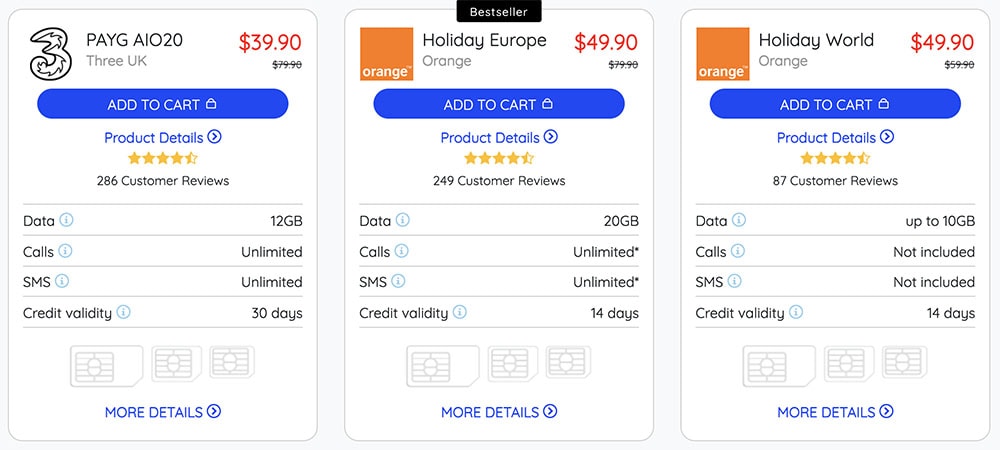
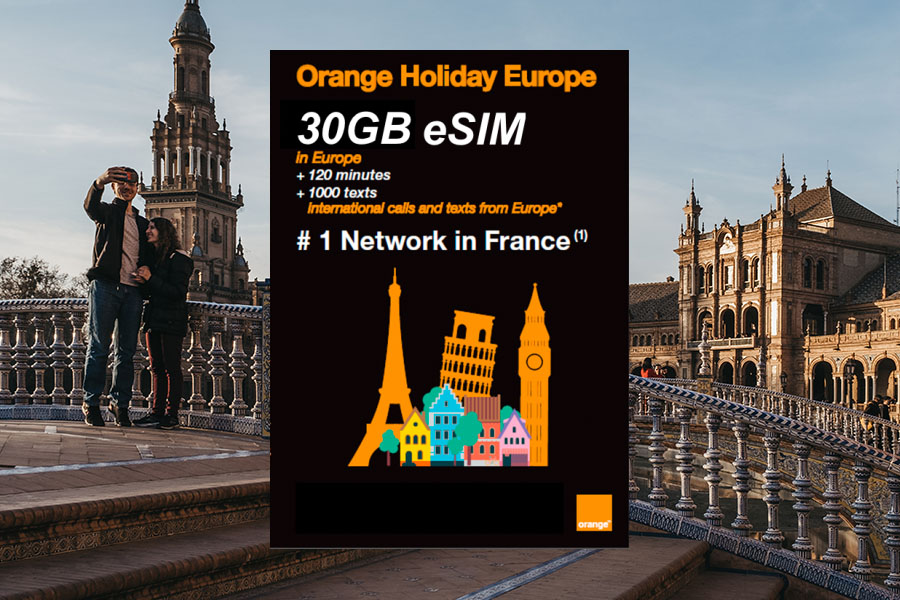
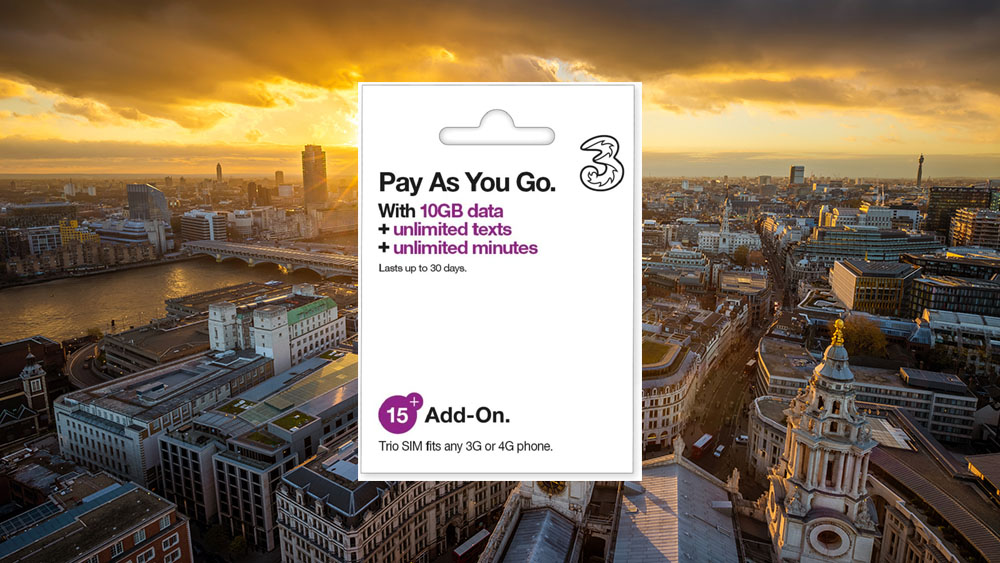
Buying connectivity solutions in advance—such as popular offerings from authorized digital resellers like SimOptions or Holafly—offers the distinct advantage of immediate activation upon landing. Brands like Orange Holiday and Bouygues Telecom provide robust prepaid packages tailored specifically to international visitors. The Orange Holiday Europe plan, for example, typically delivers generous high-speed data allotments valid for a fourteen-day period, supported by Orange’s extensive network coverage spanning major European urban centers and rural transit corridors. Holafly, an emerging leader in the eSIM sector, offers customized plans featuring unlimited data structures across various trip durations, complete with regional phone numbers to facilitate local reservations and voice communication.
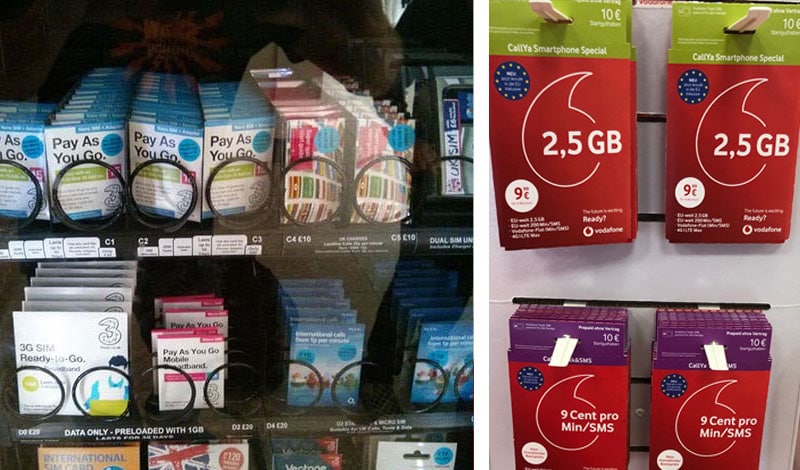
For those preferring to purchase physical SIM cards upon arrival, options abound at major European international airports, metropolitan kiosks, convenience stores, and dedicated carrier storefronts. However, purchasing locally occasionally introduces administrative hurdles. Certain European jurisdictions enforce strict telecommunications laws requiring identity verification to combat fraud. Consequently, buyers may be required to present a valid passport and register a local address—such as a hotel or rental accommodation—to successfully activate a prepaid physical SIM card.
Device Unlocking and Technical Preparedness
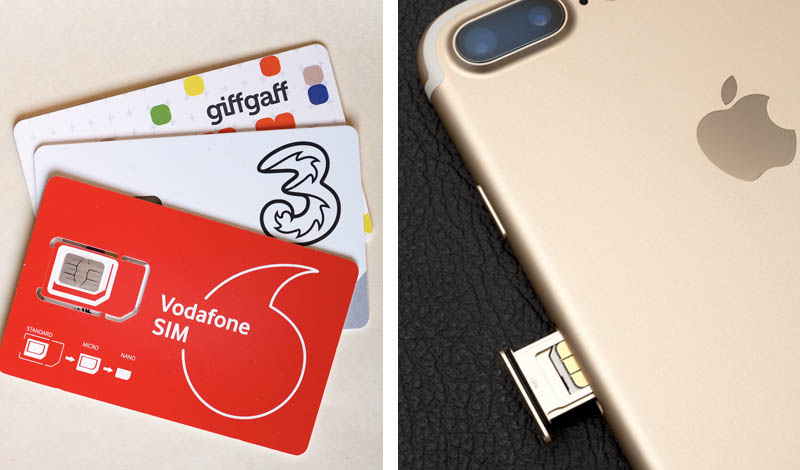
A vital prerequisite for utilizing third-party SIM or eSIM profiles is ensuring that the smartphone is factory-unlocked. Many American mobile network providers traditionally lock subsidized devices to their proprietary networks via software restrictions. Travelers attempting to insert a foreign SIM card into a locked device will encounter error messages and network rejection. Resolving this requires contacting the domestic carrier well in advance of departure to request a formal network unlock. Carriers typically require that the device be fully paid off or that the associated service contract terms have been successfully fulfilled.
In scenarios where a primary smartphone cannot be unlocked due to active financing agreements, travelers frequently adopt secondary contingency strategies. Utilizing an older, fully unlocked backup smartphone dedicated exclusively to travel purposes is a widespread industry recommendation. Alternatively, travelers can rely on disconnected device usage—leveraging the primary locked smartphone exclusively for photography while utilizing localized offline applications and accessing complimentary Wi-Fi networks available within cafes, hotels, and public transportation hubs.
Strategic Data Management and Cost Reduction
Even with affordable prepaid data plans secured, effective digital hygiene is essential to prevent unexpected data exhaustion. Modern smartphone operating systems and background applications frequently consume cellular data continuously for synchronization, cloud backups, and social media feed refreshes. Travelers can drastically reduce unnecessary consumption by navigating device settings to manually disable background data access for non-essential applications.
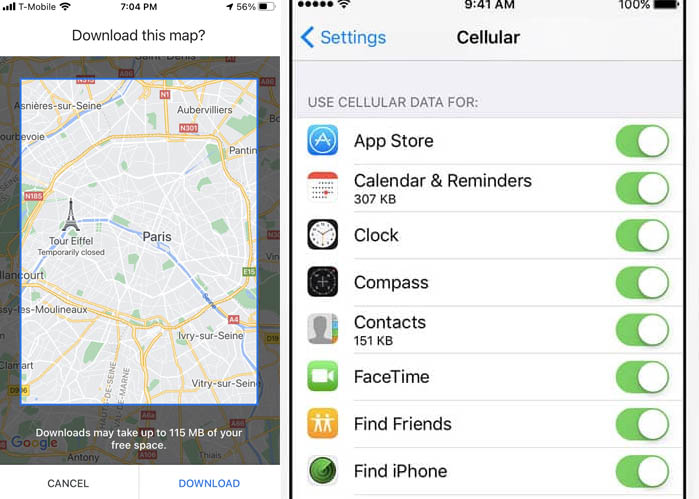
Additionally, leveraging offline navigation tools significantly mitigates data reliance. Applications such as Google Maps allow users to download comprehensive regional map data over high-speed Wi-Fi prior to embarking on daily excursions. Because global positioning system (GPS) location tracking functions independently of cellular data networks, downloaded offline maps provide reliable turn-by-turn navigation without consuming mobile data allowances. Similarly, prioritizing internet-based communication platforms like WhatsApp for voice calls and messaging aligns with standard European communication habits, facilitating seamless coordination with local hosts, tour operators, and travel companions.
Industry Analysis and Future Outlook

The continuous expansion of global eSIM adoption and the ongoing harmonization of cross-border telecommunications regulations signal a declining market share for traditional, high-cost international roaming add-ons. As telecommunication infrastructure modernizes and consumer demand for transparent, flexible mobile data solutions intensifies, major domestic carriers face mounting pressure to restructure their international offerings. For the contemporary traveler, the proliferation of digital prepaid alternatives ensures that maintaining high-speed, cost-effective connectivity across international borders is more accessible, reliable, and affordable than ever before.
Related posts: